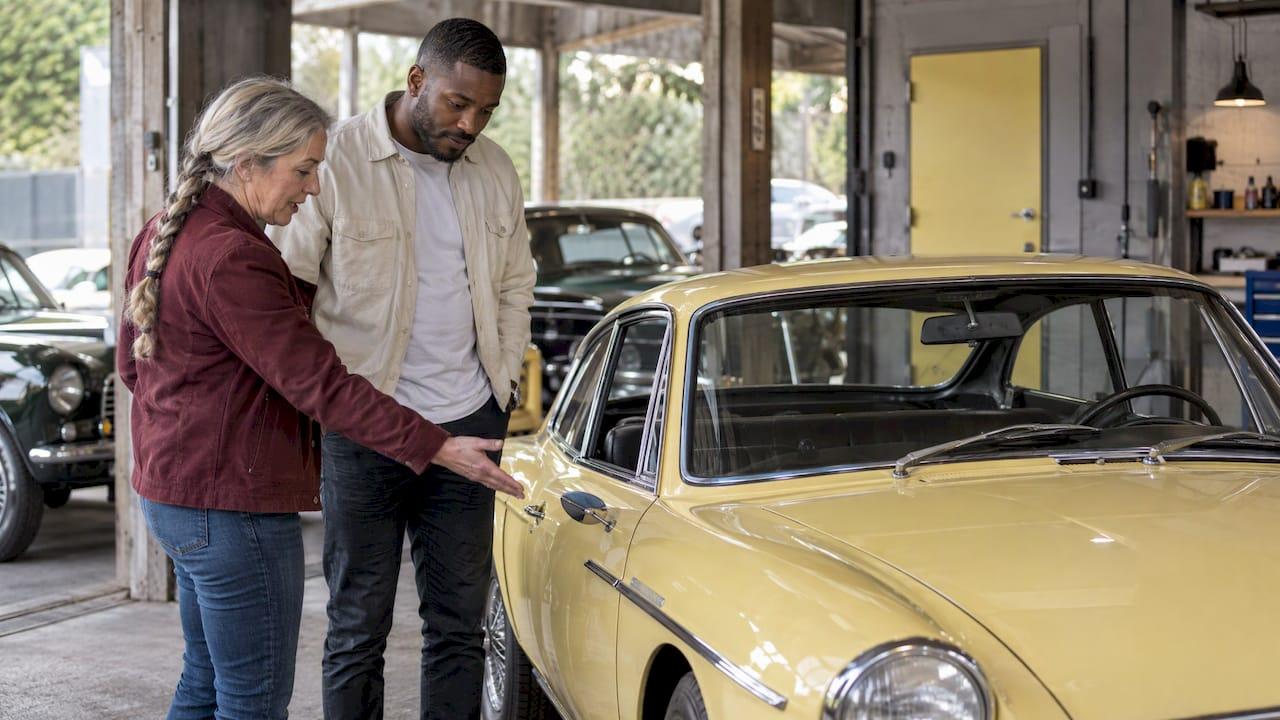
The fastest way to see a classic car in person is to pick the car first, then ask the seller for a set time. You can also find a show or cruise-in near you and walk the rows. Both work, and they answer different needs. A scheduled viewing is for a car you might buy. A show is for browsing, learning and meeting owners.
This guide covers both. You'll see how to book a one-on-one viewing or test drive, what to bring, and how to find public events across the U.S. You'll also learn how to confirm an event is actually happening before you drive there.
TL;DR
- To view a car you may buy, contact the seller with the exact vehicle, two or three time windows and your questions. Ask for the title, service records and extra photos ahead of time.
- At Butter Classics, you can schedule a test drive or request a quote on any listing, and we also offer financing pre-qualification and delivery or pickup.
- To view cars at a public event, use a U.S. directory such as Old Cars Weekly's calendar or Car Show Schedule, then check the organizer's own page.
- Always confirm date, hours, admission and weather plans with the organizer within a day or two of the event.
Table of Contents
- Two ways to "view" a classic car
- How to schedule a viewing for a car you want to buy
- What to do during the viewing
- If you can't travel: viewing a car remotely
- Viewing classics at shows, cruise-ins and meets
- Where to find events near you
- How to confirm an event is really happening
- Tips for getting the most from a show
- Our perspective on viewing a classic
- Ready to see one in person?
- Before you commit: a short checklist
- FAQ
- Sources
Two ways to "view" a classic car
People type this search for two very different reasons, so decide which one is yours.
You want to look at a specific car for sale. You need an appointment. The seller sets aside time, has the car ready, and you bring your questions. This is how you decide whether to buy.
You want to see lots of classics. You need an event: a cruise-in, a cars-and-coffee morning, a regional show or a big national meet. No appointment, but you do need the right date, venue and admission details.
Many buyers do both. They go to a few shows to learn what a good example looks like, then book a viewing on the car they want. Walking past forty Mustangs and talking to their owners is a great way to learn which years, options and colors you like.
How to schedule a viewing for a car you want to buy
A good viewing starts before you arrive. Here is the order we suggest.
1. Pick the exact car
Name the vehicle you want to see, with its stock number or listing link. "Do you have any old Broncos?" is a chat. "I'd like to see the listed Bronco on Thursday afternoon" is a booking. Sellers respond faster to the second.
If you're still deciding, our classic car buying guide for first-time buyers walks through what to narrow down first: era, body style, budget and how you plan to use the car.
2. Offer two or three time windows
Give the seller a few options rather than one. Daytime is best because natural light shows paint, panel gaps and rust you'd miss in a dim garage. Avoid rain if you can, since water hides paint flaws and makes underbody checks messy.
Plan on at least an hour for a careful look plus a drive. If you're bringing an independent inspector, tell the seller so they can block more time.
3. Ask for documents before you go
A viewing is far more productive when you've already reviewed the paperwork. Ask for:
- A photo of the title (and confirmation the name on it matches the seller)
- Service and restoration records
- The VIN, so you can run a history check
- Extra photos of the underbody, engine bay and interior
Our guide to the VIN-first check on a classic car lists the places to find and compare the number. Older cars are tricky, and pre-1981 VINs follow different rules, so our classic car history check guide is worth a read before you book travel.
4. Decide who comes with you
A second set of eyes helps. A friend who knows the model is great. A professional inspector is better for a big purchase. Our pre-purchase inspection guide explains what a thorough inspection covers, and the dealer inspection checklist shows what a well-prepared seller should be able to show you.
5. Confirm the day before
Send a short message the day before: your arrival time, who is coming and whether you plan to drive the car. It keeps everyone on the same page and shows the seller you're serious.
What to do during the viewing
Start with a slow walk around the car in daylight. Look at panel gaps, paint texture, glass, trim and tires. Then check the interior, the engine bay and, if the seller allows, the underside. Our guide on evaluating vintage car condition before you buy gives a full walk-through.

Then drive it. A test drive tells you things photos can't: how the steering feels, whether it tracks straight, how the brakes bite, and whether the engine runs smoothly once warm. Use our classic car test drive checklist so you don't forget anything while you're grinning behind the wheel.
The discipline of a structured, hands-on evaluation isn't unique to cars. Buyers of big-ticket vehicles in other worlds follow the same logic, such as a pre-owned yacht evaluation built around a sea trial. Whatever you're buying, you want to see it work under real conditions before you commit.
Quick bring-along list
- Driver's license and proof of insurance (many sellers ask before a test drive)
- A flashlight and a small magnet for checking body filler
- A notepad or your phone for photos of the VIN plate, title and odometer
- Your list of questions, written down in advance
- Pre-approval information if you plan to buy that day
If you can't travel: viewing a car remotely
Some of the best cars are a plane ride away. That's normal in this hobby. Ask for a live video walk-around, close-up photos of problem areas and a cold-start video. For a car you haven't seen in person, read our advice on avoiding title scams when buying sight unseen first.
Our nationwide inventory isn't tied to a single lot, and we offer personalized delivery or pickup, so you can take your time and arrange the logistics that suit you.
Viewing classics at shows, cruise-ins and meets
Events come in several formats, and knowing the difference helps you pick one that suits your goal.
| Format | What it's like | Good for |
|---|---|---|
| Cruise-in | Casual, often weekly or monthly, usually free to attend | Talking with local owners, seeing everyday classics |
| Cars and coffee | Morning meetup, informal | Quick look, variety of cars |
| Local show | Registered cars, often a trophy or prize giveaway | Seeing a curated group in one place |
| Regional or national show | Thousands of cars, paid admission, vendors | A full day of browsing |
| Swap meet and car corral | Parts vendors plus cars for sale | Hunting for a car or parts |
Examples of how they differ
The Downtown Cruise-In & Classic Car Show in Eustis, Florida, is a good example of a local show. According to the city's event page, it runs on the fourth Saturday of most months at Ferran Park from 2:00 to 5:00 PM, draws about 150 classic cars and offers free day-of registration.
At the large end, the Hershey Region AACA Eastern Fall Meet happens the first full week in October. It includes a car corral with over 1,000 cars for sale and a car show of roughly 1,200 cars on the last day.
A big West Coast example is the Goodguys All American Get-Together in Pleasanton, California. For the 2026 edition, the Alameda County Fairgrounds listing showed more than 3,000 show cars and trucks, adult admission of $28.67 and parking at $15. Treat those figures as a snapshot of a past year. Prices and dates change, so check the current listing.

Free and paid viewing
Small cruise-ins are often free for spectators. Big events charge admission, and the top-tier concours can cost hundreds of dollars. The 2026 Pebble Beach Concours, for example, listed general admission at $550 before August 1 and $650 after. But the surrounding week has free options. Eastward Drive's guide notes that the Tour d'Elegance offers free roadside viewing along 17-Mile Drive and Highway 1, and that Concours Village and RetroAuto have free spectator access.
Where to find events near you
No single list is complete, so use two or three.
- Old Cars Weekly's car show calendar covers local, state and national antique car shows, events and swap meets, with admission and hours on many entries.
- Car Show Schedule describes itself as a large U.S. directory you can browse by state, date, keyword or near you.
- CruiseInFinder lists more than a thousand U.S. car shows and cruise-ins, which is handy for finding the small local ones.
- DriveShare's events platform lists thousands of classic car events, including recurring weekly meetups like Sunday-morning cars and coffee.
Also look at local clubs, a nearby car museum's event page and community boards. Many of the best weekly gatherings are never listed on a national site.
How to confirm an event is really happening
Calendars are only as fresh as the organizers who feed them. Directories may be updated daily, but an organizer can cancel or move a show without the calendar changing. Before you drive, run this quick routine:
- Find the organizer's own page. A city, club, museum or promoter page beats a third-party listing. Every directory entry should link to one.
- Check the date and the hours. Look for set-up and registration times, which differ from spectator hours. At the AACA Southeastern Spring Nationals in Charlotte, for example, the event flyer listed 8 AM for the public and 7 AM for vendors.
- Look at the admission rules. Is it free, ticketed, or a flat parking fee? Is registration needed to show a car, or just to attend?
- Read the weather policy. Outdoor shows often have a rain date or a cancellation notice, usually posted on the organizer's page or social feed.
- Re-check the day before. A last look the evening before, and again the morning of, catches late changes.
- Plan parking. Large events can use shuttles or restricted lots. At Pebble Beach, for instance, one guide notes that general-admission guests shuttle in from designated lots.
As a rule of thumb, if the only evidence of an event is a year-old listing, treat it as unconfirmed until the organizer says otherwise. Recurring events, such as a fourth-Saturday cruise-in, are the most dependable, but still worth a quick check around holidays.
Tips for getting the most from a show
- Go early. Cars are fresh, crowds are thin and owners have time to chat.
- Ask owners questions. What was the hardest part of the restoration? What would they do differently? Most love to talk.
- Take notes and photos. Jot down models, options and colors you like.
- Bring cash. Small shows often charge a few dollars at the gate or sell raffle tickets.
- Look for for-sale signs. Some shows have a car corral where owners list cars right on the windshield.
If you spot a model you love, write down the year and trim. Then browse our classic car inventory to see what's available and book a viewing.
Our perspective on viewing a classic
We've seen a lot of buyers fall in love with a car at a show and then feel stuck on what to do next. Here's our advice: turn that excitement into a plan.
A great viewing is simple. Pick the exact car, set a time, ask for the paperwork up front and bring someone who'll tell you what you need to hear. We built Butter Classics around that idea. Every listing comes with detailed photos and specifications so you know what you're walking up to.
We also think buying a classic shouldn't mean being limited to what's parked down the street. Our inventory is nationwide, and we offer personalized delivery or pickup. Our Butter Certified vehicles come with our Worry Free Guarantee, which is designed to give you confidence once you've found the one.
And if you need a hand with the money side, financing pre-qualification is available so you can shop knowing your numbers. Come see a car, drive it, ask us anything. We love this stuff.
Tony
Ready to see one in person?
Browse our classic cars for sale: trucks, muscle cars, Broncos, Mustangs, Corvettes and more. When something catches your eye, you can schedule a test drive or request a quote right from the listing. Want to get pre-qualified first? We can help with classic vehicle financing so you know your budget before you go.
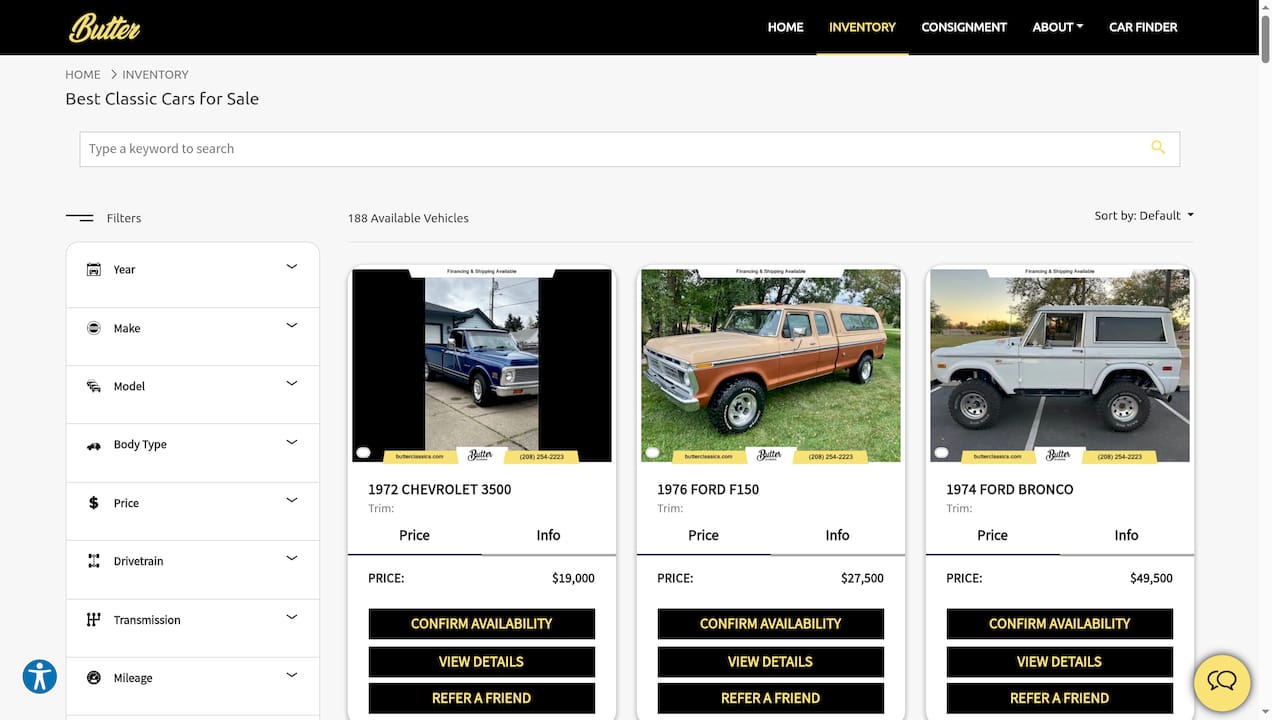
If you're on the other side of the deal and have a classic to sell, you can consign your vehicle with us and let buyers across the country come to you.
Before you commit: a short checklist
Once you've seen the car, take a breath. Compare what you saw to the listing, confirm the VIN against the title, and think about the market. Our classic car market trends checklist can help you judge whether the price makes sense. If you have a car to trade, the trade-in evaluation checklist shows how to prepare it.
FAQ
How far ahead should I schedule a classic car viewing?
Give the seller a few days when you can, especially if you plan to bring an inspector or travel from out of town. If the car is local and you're flexible, a same-week appointment is often realistic. Always confirm the day before.
Do I need to bring anything to a test drive?
Bring your driver's license and proof of insurance, since sellers commonly ask for them. A flashlight, a notepad and your list of questions help too. If you're planning to buy, bring your financing details.
Are classic car shows free to attend?
It depends on the event. Small cruise-ins and cars-and-coffee meetups are often free for spectators, while large shows charge admission and sometimes parking. Check the organizer's page for the current price.
How do I know a car show hasn't been cancelled?
Start with the organizer's own page or social feed rather than a directory listing. Look for weather or rain-date notices, and re-check the day before and the morning of. If you can't find a recent update, contact the organizer directly.
Can I view a classic car if I live far away?
Yes. Ask for a live video walk-around, detailed photos and a cold-start video, and review the title and VIN beforehand. With Butter Classics, nationwide inventory and personalized delivery or pickup make distance easier to manage.
Sources
- Old Cars Weekly car show calendar
- Car Show Schedule directory
- CruiseInFinder
- DriveShare events
- Downtown Cruise-In & Classic Car Show, Eustis, FL
- Hershey Region AACA
- Goodguys 42nd All American Get-Together, Alameda County Fairgrounds
- AACA Southeastern Spring Nationals flyer
- Pebble Beach Concours d'Elegance 2026 guide
- 75th Pebble Beach Concours d'Elegance 2026 guide
- Pre-owned yacht evaluation