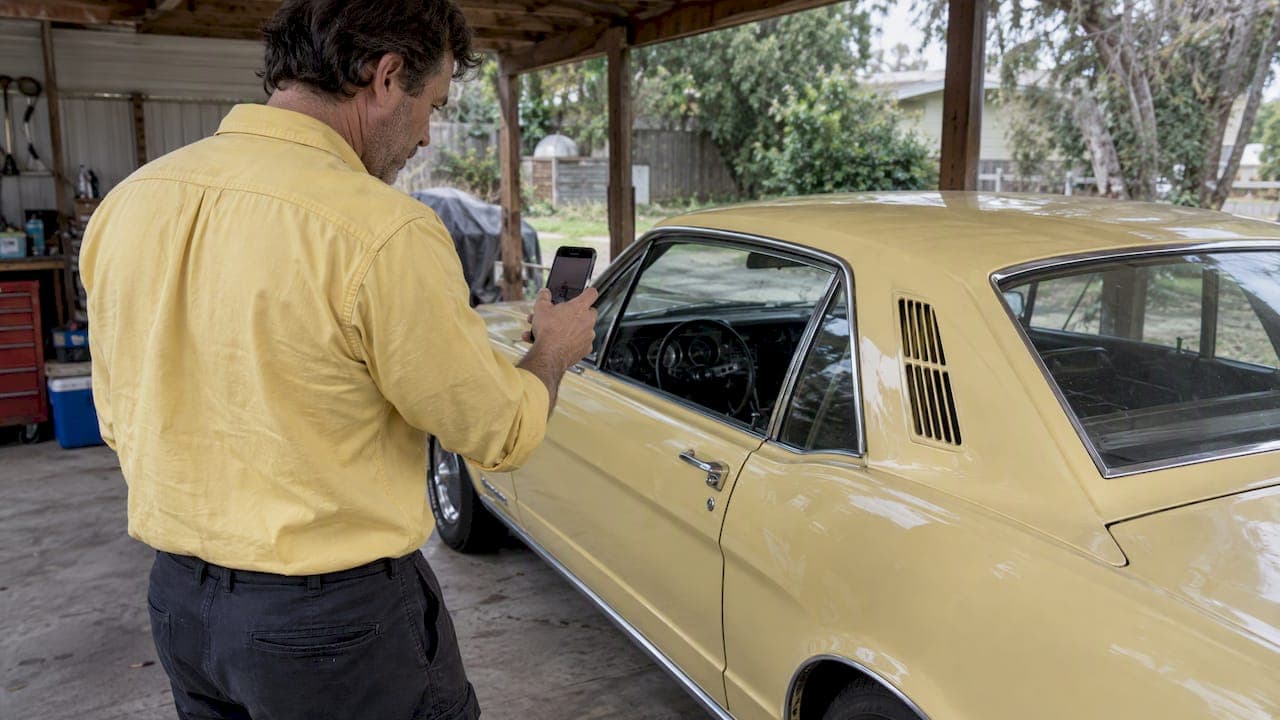
Video hosting sites, museum virtual tours and curated playlists are useful places to watch classic car walkarounds, and a good one shows you body lines, interior wear, engine bay details and how a car carries itself. For a car you might buy, treat the footage as a screening tool. Experts caution that video is not a substitute for a physical inspection by a knowledgeable mechanic.
TL;DR:
- Search video platforms using the make, model, year, and terms such as cold start or undercarriage; check descriptions for VIN, mileage, and specifications.
- Choose museum tours for factory details and provenance, event footage for atmosphere, and buyer focused inspections for close ups, chassis views, and engine starts.
- Review footage from a full car view through body seams, door jambs, glass, interior, and underside, then request daylight close shots of unclear areas.
- A video can miss structural rust, suspension play, and hidden collision repairs; ask for a cold start and arrange an independent mechanic’s inspection before buying.
- Save timestamped screenshots and notes by model, year, and VIN, then compare cars in similar condition categories rather than relying on one video.
Table of Contents
- Where do you find the best classic car walkaround videos?
- Which types of walkaround videos suit your goal?
- How do you watch a walkaround like a pro?
- Which museum and collection tours are worth your time?
- How do you build a playlist and watchlist for the cars you care about?
- Why we put walkaround video at the center of every listing
- Ready to act on a promising video? Here is how we help
- FAQ
- Sources
Where do you find the best classic car walkaround videos?
Not every walkaround is worth your time, so it helps to know where the good ones live and how to dig them out. Start with three kinds of sources, because each one gives you something different.
- Video hosting platforms offer a wide selection of videos, including show arrivals, owner tours, dealer walkarounds and enthusiast channels. Quality varies a lot, so you will sort the gems from the shaky phone clips.
- Museum virtual tours are curated and usually come with context. Many automotive museums run online heritage galleries that let you explore historic collections from your couch.
- Curated playlists and channel libraries save you the digging. A channel that films the same model across different cars can give you a comparison set.
Search wording matters more than most people think. Add "walkaround," "collection tour," "POV" or "cold start" to the make, model and year, and you will separate quick show clips from videos made for serious viewing. Add a trim or engine code when you know it, since that filters out the generic results.
Read the description before you press play. Sellers and channels often list the VIN, engine, transmission, mileage and notable history there, and that text tells you whether the video was shot to inform or just to entertain.
Use the platform tools too:
- Click timestamps in the description or comments to jump straight to the engine bay or the undercarriage shots.
- Slow the playback speed when a camera pans quickly over a panel gap or a paint edge.
- Save or follow playlists for the models you care about, so every new upload lands in one place.
- Use the platform's save feature, or your own notes, to build a reference library you can return to when you compare cars.
If you want a head start on what to ask a seller after you spot a promising car, our guide on virtual inspection triage and timestamped photos walks through the requests that get useful answers.
Which types of walkaround videos suit your goal?
Pick the format that matches what you want out of the video, and you will save yourself a lot of squinting at the wrong footage. Here is how the main formats break down.
- POV and event walkarounds put you in the crowd at a show or on the lawn at a gathering. They are great for atmosphere, scale and first impressions. They usually leave out close-ups, engine starts and any look underneath.
- Collection and museum tours bring curated context, steady camera work and higher production values. They often include close shots of badges, instrument panels and factory finishes. What they skip is condition detail on a car for sale, since the car is not for sale.
- Buyer-focused inspections are shot for people who might spend real money. Expect panel close-ups, door jambs, engine starts, chassis shots and sometimes a short drive. What they can still omit is whatever the seller would rather not highlight, which is why you ask for extras.
You can usually tell the purpose from the title and description. Words like "cold start," "undercarriage," "VIN" and "for sale" point to a buyer-focused video. Words like "arrival," "show floor" or "meet" point to atmosphere. A museum or curator name signals a heritage tour.
Match the format to your goal:
- Appreciation: show walkarounds and museum tours.
- Provenance and model research: museum tours and expert model videos.
- Pre-purchase screening: buyer-focused inspections with a cold start and clear close-ups.
One more habit worth building: watch a few videos of the same model in different formats before you judge any single car. Seeing how a fender line or a dash should look on a well-kept example makes oddities in the next video pop out.
How do you watch a walkaround like a pro?
Professionals do not wander around a car at random. Industry inspection guidance recommends a structured sequence: begin with an overview from a distance, move to close-up inspection of body details, then finish with the interior and structural areas. You can watch a video the same way, and you should pause often.
- Watch the whole video once without stopping. Get a feel for the car's stance, how the panels sit and whether the seller seems open or rushed.
- Study the distance shots. Look at the stance and the gaps. Does the car sit level? Do the doors, hood and trunk line up evenly on both sides?
- Move to the body close-ups. Look for waves in the reflections, uneven paint texture, overspray at edges and seams that do not match left to right. Ripples in a reflection can hint at filler or past bodywork.
- Check door jambs, glass and trim. Jambs show original paint, factory seams and signs of repaint. Glass condition matters too, and our partners at Auto Glass Kings explain how windshield crack types affect repair options, which is a good reason to ask for a close shot of the glass.
- Look under and around. Frame rails, floor pans and suspension mounts tell the real story. If the video never shows the undercarriage, note that gap.
- Listen to the cold start. Cold starts can reveal mechanical issues, like excessive blue smoke or unusual knocks, that a warmed-up engine might mask. If the engine is already running when the video begins, ask for a cold-start clip.
- Scan the interior. Check upholstery fit, seat frames for rust, gauge condition and carpet wear against the claimed mileage.
- Finish with notes and questions. Write down every doubt, then send the seller a short, specific list of shots you want.
Pro Tip: Pause on every reflection. A slow pan across a flat panel under bright light shows ripples your eye misses at full speed, so ask the seller to repeat the pass in daylight.
Use the playback controls to your advantage. Slow the video or step through frame by frame on seams and edges. Grab timestamped screenshots of anything odd, and send them with your questions so the seller knows exactly what you mean.
Be honest about what video cannot show. Footage can miss structural problems that matter on unibody cars. Walkaround video can miss rust in areas such as shock towers or cowl vents on classic Mustangs, which is why professionals still recommend a mechanic's inspection after the remote review. Suspension play, hidden collision repair and internal rust rarely reveal themselves on camera.
Experts caution that high-quality video helps you find visual flaws and document history, but it is not the final check on any vehicle worth significant investment.
So end your checklist with verification:
- Collect timestamped photos of every area you flagged.
- Ask for a clean cold start and a close look at the underside.
- Schedule an independent inspection before you commit. For a realistic budget, see what U.S. buyers should plan to pay for classic car inspections.
- If you buy without seeing the car in person, read how to avoid title scams when buying sight unseen.
Our guide on evaluating vintage car condition before you buy goes deeper on what to weigh once the video has done its job.
Which museum and collection tours are worth your time?
Museum tours can be a useful resource for car videos. They tend to bring curator commentary, steady shots and the kind of close-ups that show factory details you will not catch at a show. They can also offer useful references when you want to know what a car looked like when it left the factory.
A few examples show the range:
- Louwman Museum: a walking tour including the Swan Car gives a broad collection overview and curator context that helps with model study and provenance research.
- Nissan Heritage: the online heritage pages let you explore historic models and see how the brand's cars developed over time.
- Ferrari and the MEF Modena: the museum ran scheduled virtual tours and an online exhibition on Gianni Agnelli and Ferrari, with daily virtual guided tours and bookable live sessions.
- Museum-hosted series: programs like My Classic Car add driving demonstrations and deeper dives into historic models.
These videos differ from show walkarounds in several ways. A museum tour gives you history, rarity and documented provenance, but not the condition of a specific car you can buy. A show walkaround gives you a lively look at real cars owners care about, but usually without expert narration.
Here is how to put museum videos to work:
- Learn the small details first: badge placement, trim finishes, interior fabrics and engine bay layout.
- Compare what you see in a private listing against the museum example to spot items that look wrong.
- Pair the video with a written model guide. A buyer's guide such as Hagerty UK's Jaguar E-Type guide explains how a car should look and drive, which makes the museum footage even more useful.
To find tours, search the museum's own site for "virtual tour," "online exhibition" or "collection," then check its video channel for walking tours and curator talks.
How do you build a playlist and watchlist for the cars you care about?
A little organization turns random viewing into real research. Once you start comparing examples of the same model, a simple system pays off fast.
- Subscribe and save. Follow the channels that film your model often, and keep a playlist for each car you track.
- Label everything. Add the year, model and VIN, when it is listed, to your notes for every video you save.
- Capture screenshots. Keep timestamped screenshots of panel gaps, interiors and engine bays so you can set cars side by side.
- Sort by condition. Tag each car as driver, restored or numbers-matching so you compare like with like.
- Map timestamps. Note the minute where each video shows the engine, undercarriage and interior, so you can jump between cars at the same viewpoint.
- Set alerts. Turn on notifications for the channels and events that matter, and watch for new listings and auction previews.
- Ask for more. If a listing lacks a shot you need, request it. A short message naming the exact area and timestamp usually gets a fast reply.
Keep it simple: a spreadsheet with a row per car, a link to the video and a few notes beats a fancy tool you never open. Over a few weeks, you will start to recognize a fair price, a clean example and a car with a story it is not telling.
Why we put walkaround video at the center of every listing
We treat detailed vehicle information as an important part of a listing. When you can watch a car move, hear it start and see the seams up close, you buy with more confidence and fewer surprises. That is why we encourage buyers to verify a car in person.

From our side of the screen, the best video answers the questions you were about to ask. It shows the undercarriage without being asked, it lets the engine speak for itself, and it does not hide the flaws. A seller who shows the rough spots earns trust faster than one who only shows the shiny ones.
Video only gets you so far, though. It narrows the field, and the in-person step closes the deal. We built our process around that handoff, including scheduling a test drive.
— Tony
Ready to act on a promising video? Here is how we help
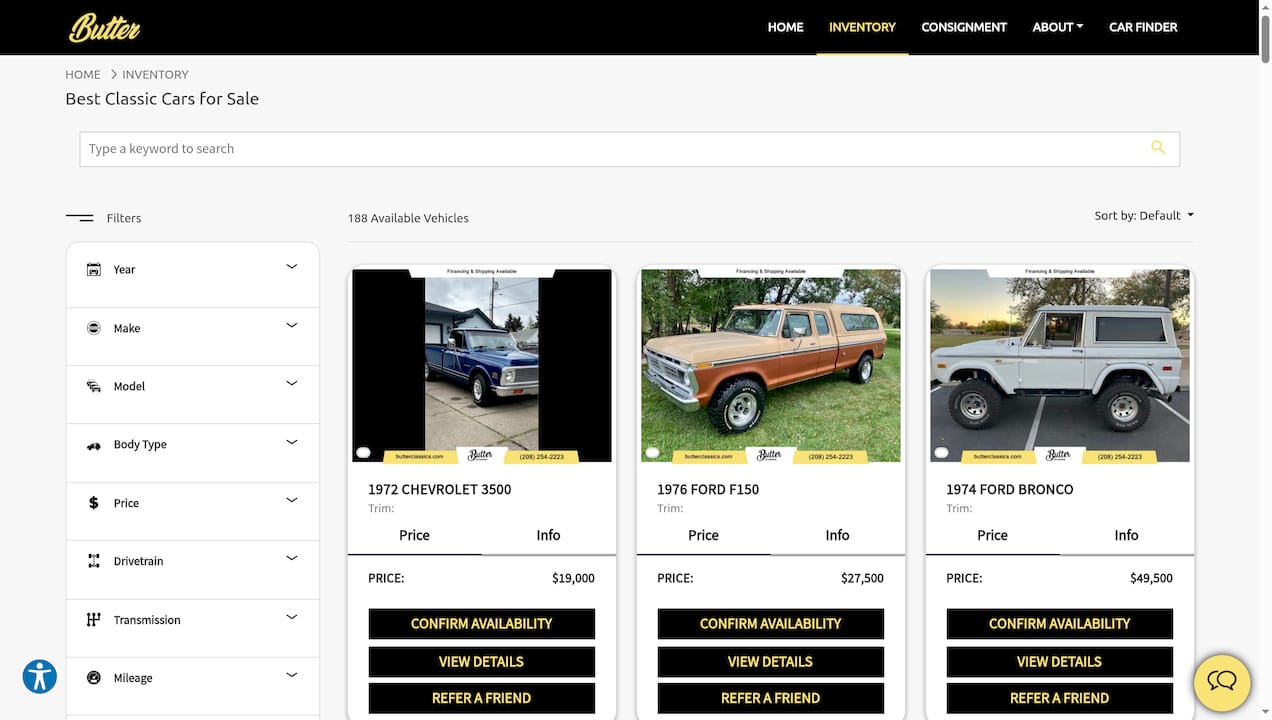
When a video makes your pulse jump, you should be able to move quickly and with confidence. We make that simple, and every step starts on our inventory page, where you can browse listings with detailed photos and specifications.
- Browse the inventory and compare cars side by side, from muscle cars to vintage trucks.
- Explore the listing for details about areas you want to see more closely, like the undercarriage, door jambs or a cold start.
- Schedule a test drive so you can feel the car for yourself on the test drive page.
- Get pre-qualified for financing before you commit, so you know your numbers when the right car shows up.
- Consign your own car with us if you are on the selling side. Our consignment page explains how we list a vehicle so buyers can learn more about it.
Our Butter Certified cars may come with a Worry Free Guarantee, so check the terms, and we can arrange delivery or pickup that fits your plans. Start with the video, trust your eye, and then let us help you take the next step. Head to our inventory, find the car that caught your attention and send us your list of shots.
FAQ
What is the best place to watch classic car walkaround videos?
Video hosting platforms offer a wide selection, and museum virtual tours can provide curated context. Combine both: use hosting sites for specific cars and museum tours for model history.
Can a walkaround video replace an in-person inspection?
No. Videos help you spot visual flaws and document history, but experts say they cannot replace a physical inspection by a knowledgeable mechanic. Use video to screen cars, then verify in person.
What should a good classic car walkaround show?
It should start with a full view of the car, then move to close-ups of panels, jambs, interior, engine bay and underside. A cold start is a big plus, since it can reveal issues a warm engine hides.
What do walkaround videos usually miss?
They often miss structural rust, suspension play and hidden collision repair. On unibody cars, areas like shock towers and cowl vents are easy to overlook on camera.
How do you ask a seller for better video?
Name the exact area and the timestamp where you saw something unclear. Ask for a cold start, a close pass over the flagged panel in daylight, and a clean shot of the undercarriage.
Sources
- Collector Vehicle Inspection Basics
- Your definitive 1968–70 Dodge Charger buyer’s guide - Hagerty Media
- Your handy 1965–66 Ford Mustang buyer's guide - Hagerty Media
- Nissan Heritage | Nissan Motor Corporation Global Website