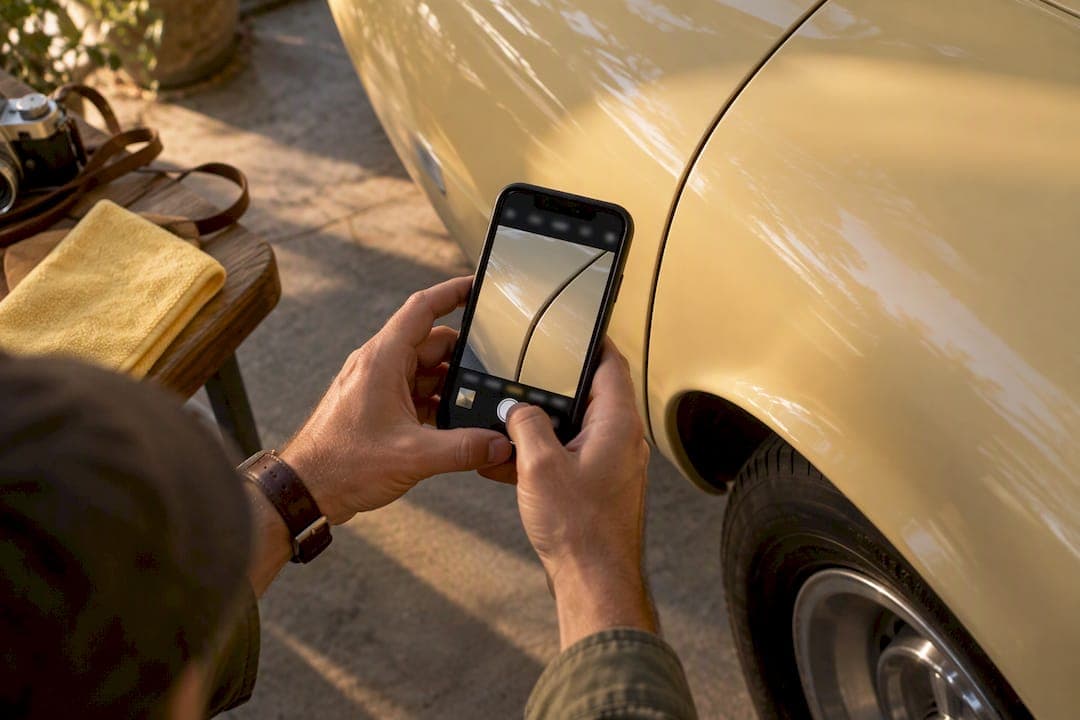
A virtual inspection is a solid screening tool for classic cars, but it is not a substitute for an on-site pre-purchase inspection when originality, frame integrity, or deep mechanical health are on the line. Use remote checks to confirm a car exists, looks the way the listing says, and runs. Save the in-person specialist for anything involving structure, hidden rust, or matching numbers that could make or break the deal.
TL;DR:
- Virtual inspections are useful for confirming a car's exterior, VIN, and operational condition but cannot verify structural integrity or hidden rust.
- Proper photo capture with timestamps, geotags, and signed manifests is essential for a trustworthy remote review; compressed video footage is often insufficient.
- Pricing for remote inspections varies from about $150 to over $600, depending on the level of detail, with deeper verifications like matching numbers and rust surveys costing more.
- Buyers should require detailed, timestamped, geotagged photos of key areas and a written inspector’s report before proceeding with high-value purchases.
- Remote checks are recommended only for cars under approximately $15,000 or when originality is not critical; higher-value or historically significant vehicles demand an in-person inspection.
Table of Contents
- What a virtual inspection actually looks like
- What virtual inspections can reliably verify
- What virtual inspections cannot replace
- How a trustworthy virtual inspection is actually built
- Buyer checklist for a live walkthrough or remote report
- What a quality remote report should contain
- Timing and pricing you should expect
- Turning inspection findings into a decision
- How Butter Classics helps you make sense of it all
- A collector's rule of thumb for virtual inspections
- Ready to move from screening to a real listing?
- Sources
- FAQ
What a virtual inspection actually looks like
Virtual inspections come in two flavors. A live-guided call puts an inspector on video with the seller, directing the camera to specific panels, VIN tags, or trouble spots in real time. A self-guided inspection has the seller or a local photographer follow a prompted shot list on their own schedule.
- Live-guided calls work best when the subject matter is unfamiliar or the car has quirks only a trained eye would catch.
- Self-guided capture scales better for straightforward checks or when scheduling a live call is hard.
- Standard video calls compress footage, so a proper workflow always pairs the live stream with native full-resolution stills captured separately, according to guidance on remote inspection platforms.
What virtual inspections can reliably verify
Remote checks are genuinely useful for a defined set of value factors, especially when the seller cooperates and the photos are sharp.
- Exterior condition: panel fit, paint texture, bubbling, and visible rust show up clearly in high-resolution stills.
- VIN and trim-tag photos: close-ups let you cross-check the number against the title and confirm the car is what it claims to be, a step covered in more detail in avoiding title scams on long-distance purchases.
- Matching-numbers documentation: photos of engine and transmission stampings give you a starting point, even though full verification often needs a specialist.
- Operational demos: a cold start, idle sound, working lights, and any visible fluid leaks are easy to confirm on camera.
- Paper trail: service records, prior appraisals, and registration documents can all be reviewed on a screen share.
What virtual inspections cannot replace
Some parts of a classic-car evaluation simply require hands and tools, not a camera.
- Frame integrity, hidden rust, and moisture intrusion need physical probing and lift access that no video call can substitute for.
- Compression tests, leak-down tests, transmission diagnosis, and many wiring-harness problems require an inspector physically working on the car.
- Paint-thickness mapping and magnet checks, the classic tools for spotting filler and prior bodywork, cannot be done through a screen, as outlined in this classic car inspection checklist.
These gaps matter because they affect both originality and the size of your future repair bill, according to analysis comparing virtual and physical inspections.
How a trustworthy virtual inspection is actually built
The difference between useful evidence and a pretty slideshow comes down to how the photos were captured. A reliable workflow pulls native full-resolution stills out of a separate capture path, not screenshots pulled from a compressed video call, since standard streaming video is typically downscaled and loses the fine detail needed to read a VIN or spot hairline rust, per remote inspection software guidance.
- Every image should carry a timestamp, a geotag, and device provenance information so you know when and where it was taken.
- Cryptographically signed manifests, the kind built on the C2PA standard, add a layer of proof that the image was not altered after capture.
- Live-guided steering fits unfamiliar cars or tricky spots; self-guided capture works fine for routine, well-documented checks.
- Ask upfront how the platform stores footage and who has access, since chain-of-custody matters if the inspection later supports a dispute.
Pro Tip: Ask the inspector to narrate out loud while photographing the VIN, engine stamp, and trim tag in one continuous sequence, so there is no gap where a substitution could happen.
Buyer checklist for a live walkthrough or remote report
Handing an inspector a clear shot list turns a vague video call into usable evidence.
- VIN stamp, engine number, transmission number, and trim tag, each photographed close enough to read every character.
- Rocker panels, floor pans, frame rails, trunk pan, wheel wells, and suspension mounts, all shot in good light.
- A cold start, a few minutes of idle, and a short drive clip if the seller allows it.
- Captions on every image explaining what it shows and where on the car it was taken.
- A written statement from the inspector noting anything that was inaccessible, whether due to a locked garage, a lift not being available, or the seller declining a request.
Timestamped, geotagged photos aren't optional extras. Remote pre-purchase inspection reports commonly include 80 to 150 such images delivered within 24 to 48 hours, which gives you a real record to negotiate from rather than a handful of flattering snapshots.
What a quality remote report should contain
A report worth paying for looks noticeably different from a rushed one. Classic-specific inspections often run 40 or more photos with matching-numbers checks and a dedicated rust survey, according to specialty classic PPI pricing details, while broader remote inspections can deliver 80 to 150 images plus HD video narration.
- Check that timestamps, geotags, and capture method are all documented, not just implied.
- Expect delivery within 24 to 48 hours once the inspection is complete, per out-of-state remote inspection standards.
- Favor inspectors with era or marque-specific experience, since they know where a particular model tends to hide rust or wear.
- Treat missing VIN close-ups, blurry screenshots, or captions like "front" and "side" as warning signs the report was rushed or incomplete.
Timing and pricing you should expect
Pricing scales with how deep the inspection goes. A visual-only remote review sits at the low end, a road-test-and-diagnostics package costs more, and a full matching-numbers verification with a rust survey sits at the top, sometimes starting around $449 for specialty classic work according to classic PPI pricing. Our own breakdown of what drives classic car inspection costs covers the $150 to $600 range most buyers should plan for.
- Booking windows vary by region, with metro areas generally offering faster scheduling than rural ones.
- Report turnaround is typically 24 to 48 hours once the inspector finishes on-site or remote work.
- Spending more for a road test, diagnostics, or matching-numbers verification pays off fastest on higher-value purchases where originality drives the price.
Turning inspection findings into a decision
Once the report lands, the real work is deciding what to do with it.
- Use documented defects to build estimate-backed negotiation points rather than vague complaints, a tactic covered in inspection-backed negotiation moves.
- Require an independent on-site inspection before releasing funds whenever the purchase price is high or the remote findings raise questions about structure or originality.
- Write specific contingencies into any offer, such as a compression test, a lift-access underbody check, or a paint-thickness probe, and hold funds in escrow until those checks clear.
Buyers who act on solid PPI findings often recover far more in price adjustments than the inspection itself cost, according to remote inspection data for out-of-state buyers, which makes the extra step worth the wait.
How Butter Classics helps you make sense of it all
Every listing on the site comes with detailed photos and specifications so you are working from good information before you ever request a virtual walkthrough. If you are selling, our consignment service can help you prepare a car for exactly this kind of scrutiny. Buyers weighing a report can also check our guide to evaluating vintage car condition for context on what actually moves value.

A collector's rule of thumb for virtual inspections
My rule: virtual screening is fine for anything under roughly $15,000 or when originality barely factors in. Above that, or when a car's history matters as much as its paint, get someone's hands on it before you wire a dime.
— Tony
Ready to move from screening to a real listing?
Once you know what a virtual inspection can and cannot tell you, browsing with confidence gets a lot easier. Butter Classics lists classic cars, vintage trucks, muscle cars, and 4x4s with detailed photos and specs up front, and our inventory is a good place to start comparing what is actually available. If you are considering consignment or want help lining up next steps after a remote review, our consignment page walks through how that process works.
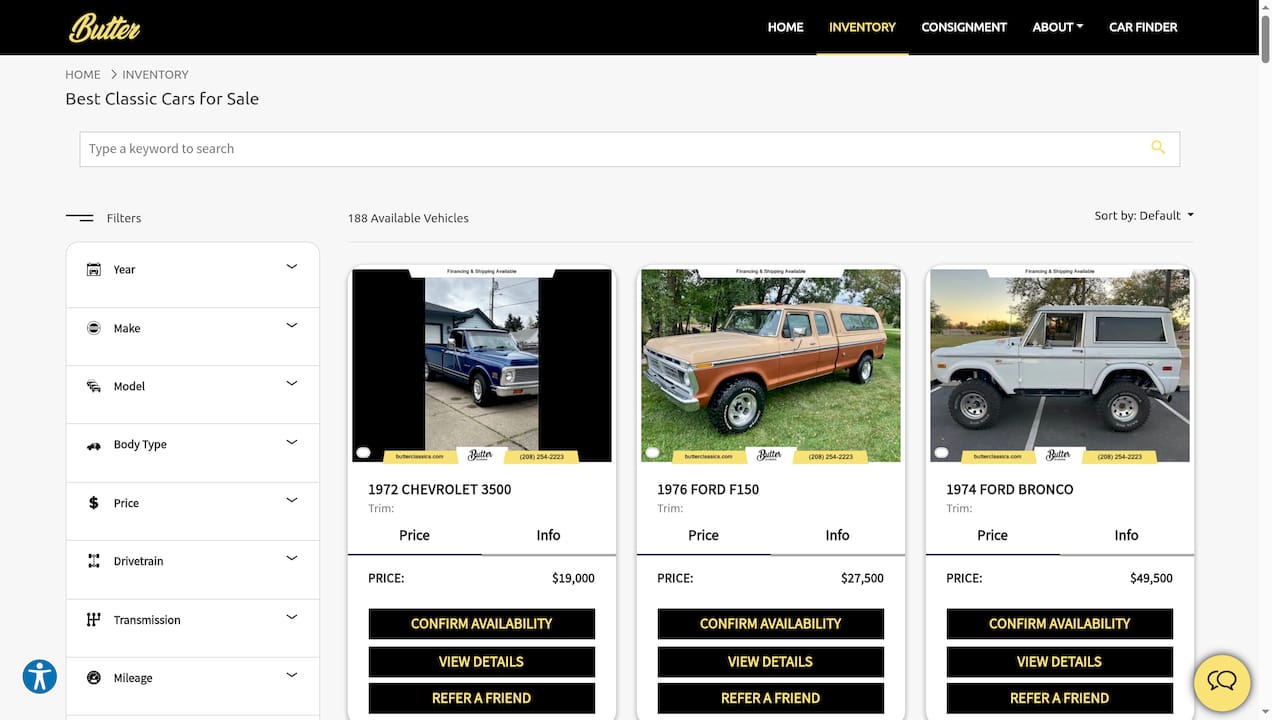
Browse the current inventory to see listings backed by detailed photos and specs, or reach out about consignment if you are on the selling side.
Sources
- Out-of-State Vehicle Inspections: How Remote PPI Works | Vehicle Inspectors
- Virtual Vehicle Inspection vs. Physical: Which One Should You Trust? | DriveReady
- Virtual Inspection Software: Build vs Buy Guide | Forasoft
FAQ
What is a virtual car inspection?
A virtual car inspection is a remote review of a vehicle's condition, done through a live video call, a self-guided photo and video shot list, or both. It typically covers exterior condition, VIN verification, basic operation, and documentation review, delivered as a report with timestamped photos within a day or two.
Does a 25-year-old car need an inspection to register it?
Inspection and registration rules for older vehicles vary by state and are set by each state's motor vehicle agency, so check your local DMV before assuming an exemption applies. This is separate from the pre-purchase inspection covered in this guide, which is about condition, not legal compliance.
Can I get pulled over for an expired inspection sticker?
Yes, driving with an expired or missing inspection sticker can result in a traffic stop and citation in states that require one, since it is a visible compliance issue for law enforcement. Requirements and enforcement differ by state, so confirm the rule where the car is registered.
Are some states removing vehicle inspection requirements?
Some states have changed or eliminated periodic vehicle inspection programs in recent years, but these decisions are made state by state and can change again. Check your state's official transportation or motor vehicle agency for the current rule rather than relying on a general answer.