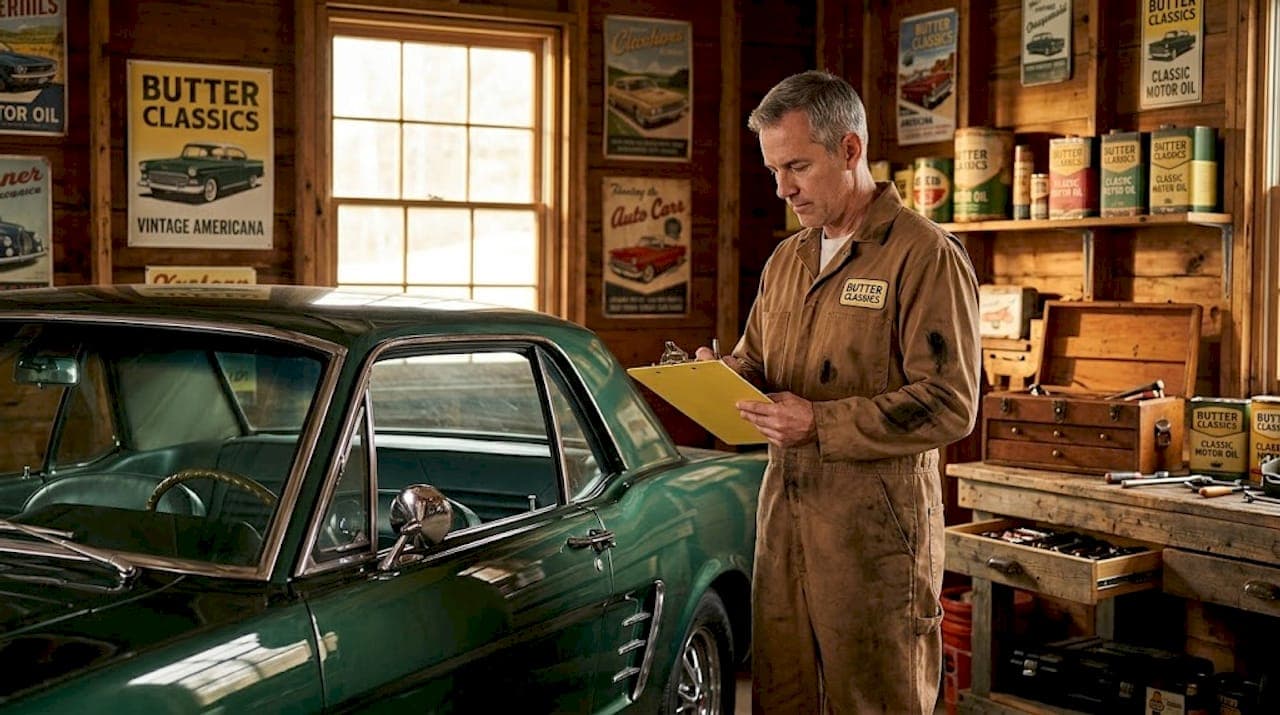
Walking up to a classic car and falling in love with the chrome, the stance, and the rumble of the engine is the easy part. Knowing whether that car is actually worth your money is where the dealer inspection checklist classics explained becomes your best friend. A quick walk-around or a dealer's verbal summary won't cut it with vintage vehicles. Hidden rust, ghost electrical faults, undisclosed bodywork, and worn drivetrain components can turn a dream purchase into an expensive lesson fast. This guide breaks down exactly what a thorough dealer inspection covers, how modern tools change the game, and how you can use that knowledge to buy with confidence.
Table of Contents
- Key takeaways
- Dealer inspection checklist classics explained
- Key technical areas every inspector checks
- How modern digital tools change classic car inspections
- Inspection exemptions and state-specific rules
- Practical tips for using inspection checklists effectively
- My take on the inspection process
- Find your next classic at Butterclassics
- FAQ
Key takeaways
| Point | Details |
|---|---|
| Checklists go beyond visual checks | Classic car inspections cover mechanical, electrical, structural, and documentation areas that a walk-around will never reveal. |
| Cold engine inspections matter | Inspecting the engine while cold exposes leaks that disappear once the motor warms up, catching hidden issues early. |
| Digital tools close the gap | Paint thickness gauges and OBD2 scanners detect repaint work and electrical faults invisible to the naked eye. |
| Registration type affects requirements | Antique plates (25+ years) often come with inspection exemptions, while classic plates (15 to 24 years) typically require annual safety checks. |
| Dealer inspections are a starting point | CPO and dealer checklists are minimum standards. Pairing them with an independent mechanic gives you the full picture. |
Dealer inspection checklist classics explained
A dealer inspection checklist for a classic car is not the same document you'd see at a franchise dealership processing a three-year-old sedan. Classic vehicles have unique aging patterns, non-standard replacement parts, and restoration histories that demand a more specialized approach.
A standard checklist for classic vehicles typically covers four major categories:
- Exterior and body: Panel gaps, paint consistency, rust spots, evidence of prior bodywork or repaints
- Mechanical and drivetrain: Engine condition, transmission performance, cooling system, brakes, and suspension
- Interior: Upholstery condition, gauge functionality, switches, and any custom or replaced components
- Documentation: Title history, service records, registration type, insurance documents, and any bank clearance paperwork
Where classic car inspections differ most from standard used car checks is the depth required in each category. A 1969 Camaro may have had three owners, two resprays, and an engine swap. None of that shows up on a casual test drive. Certified pre-delivery inspections include documentation audits that verify service history, registration, and financial encumbrances, and that layer of paper-trail verification is just as important as the physical inspection.
Dealers also use tools that go well beyond a flashlight and a magnet. Paint thickness gauges, OBD2 diagnostic scanners, and lift inspections are now part of a professional classic car dealer's standard toolkit. These tools separate a thorough dealer inspection process from a superficial once-over.
Pro Tip: Ask the dealer specifically whether the inspection was performed with the engine cold. Inspecting the engine cold reveals leaks that disappear once the motor warms up, and that detail alone can expose problems a warmed-up test drive will hide.
Key technical areas every inspector checks
Understanding what inspectors actually look for in each category helps you read a report intelligently and ask the right questions. Here is how the major inspection areas break down for classic vehicles.
Exterior and body panels
Uneven panel gaps and inconsistent paint thickness are two of the clearest signals that a car has been in an accident or received undisclosed bodywork repairs. On a classic car, this is especially important because restoration work varies wildly in quality. A paint gauge reading that spikes from 4 mils to 12 mils across adjacent panels tells you filler or a respray happened there, even if the car looks perfect from ten feet away.
Mechanical and drivetrain
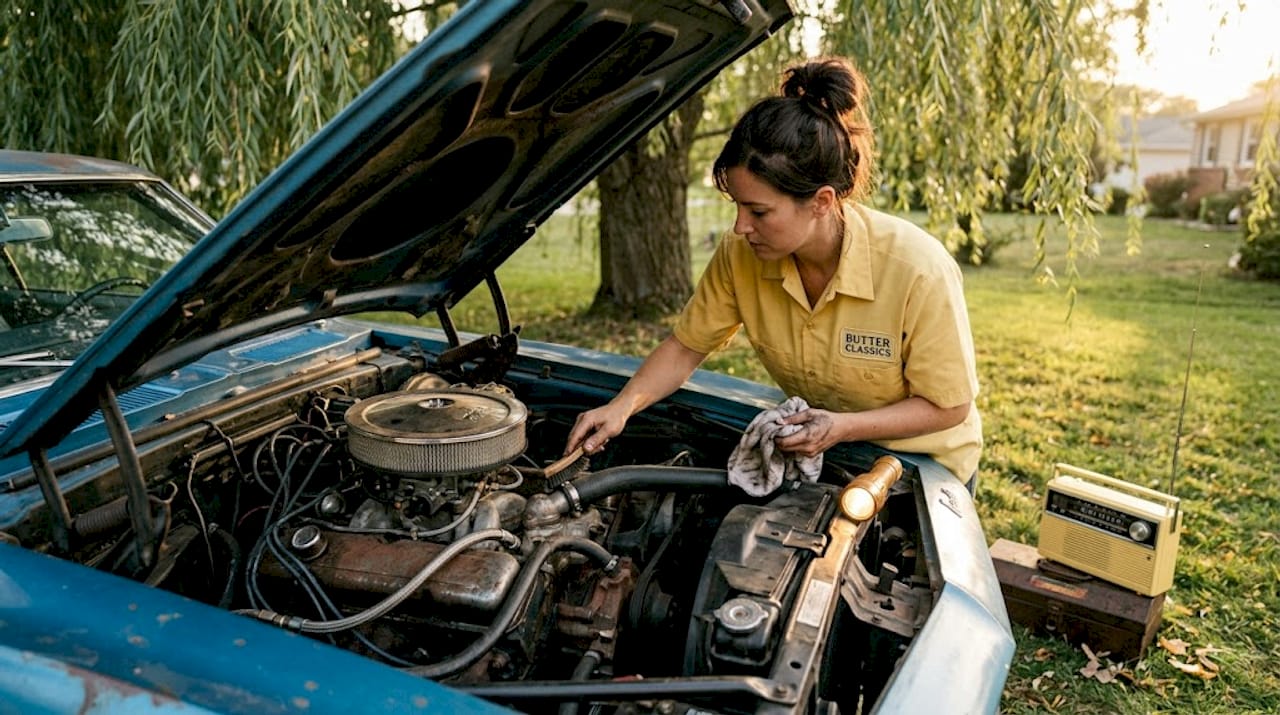
The engine, transmission, and cooling system are the heart of any vintage vehicle checklist. Inspectors check for oil leaks at the valve covers and pan, coolant leaks at hose connections, and transmission fluid condition. Overheating is a chronic issue in many older vehicles with original cooling systems, so the radiator, thermostat, and water pump all get scrutiny.
Electrical systems
This is where classic car inspections get genuinely tricky. Many restored or modified classics have a mix of original wiring and newer components. Ghost faults detected by OBD2 scanners can reveal underlying electrical errors that never trigger a warning light, which is critical for modernized classics running updated electronics. Even vehicles without factory OBD2 ports can have adapters installed for partial diagnostics.
Brakes, suspension, and steering
These are the safety-critical components that age poorly when a car sits for years. Inspectors check brake pad thickness, rotor condition, caliper function, and whether the vehicle pulls during braking. Suspension bushings, ball joints, and tie rod ends are common failure points in classic vehicles, and worn steering components create handling problems that feel minor on a test drive but become serious at highway speeds.
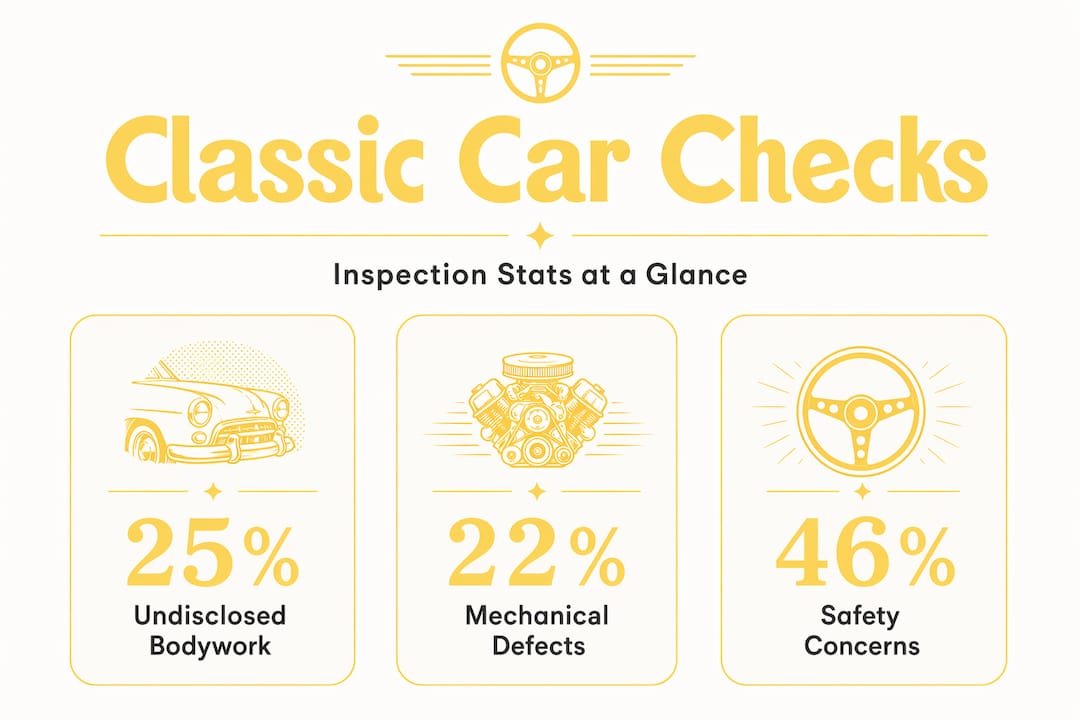
The table below shows what 300-point inspection data reveals about how often vehicles fail each major category:
| Inspection category | Typical failure rate |
|---|---|
| Undisclosed bodywork | 25% of vehicles |
| Mechanical defects | 25% of vehicles |
| Safety concerns (tires, brakes) | 45% of vehicles |
Those numbers are sobering. Nearly half of all inspected vehicles carry safety concerns, and one in four has hidden mechanical issues or body repairs the seller never disclosed.
Pro Tip: Always request the full written inspection report with photos, not just a summary. Detailed inspection reports with photos give you documented leverage during price negotiations and protect you if issues surface after purchase.
How modern digital tools change classic car inspections
The 300-point inspection standard now used by professional dealerships represents a meaningful shift from the clipboard-and-flashlight era. For classic cars specifically, these tools close the gap between what looks good and what actually is good.
A digital paint thickness gauge works by measuring the depth of the paint layer above the metal or filler beneath. Factory paint on a classic typically reads between 3 and 6 mils. Readings above 8 mils almost always indicate body filler or a respray over repaired damage. This single tool can change your entire read on a car's history in under five minutes.
OBD2 diagnostic scanners are equally powerful, even for vintage vehicles. Many restored classics have been updated with modern fuel injection, ignition systems, or climate controls that carry their own diagnostic modules. Scanning those modules can surface fault codes the seller may not even know exist.
The benefits of digital inspection tools for classic car buyers:
- Objective data that removes guesswork from paint and body assessments
- Fault code history that reveals intermittent electrical problems
- Documented readings that support price negotiations or auction bids
- A paper trail that adds credibility to the vehicle's condition story
Digital inspection data also reduces the risk discount buyers apply at auction due to uncertainty, which means better pricing outcomes for sellers with clean inspection records. If you are selling a classic, a thorough digital inspection is not just protection. It is a marketing asset.
Inspection exemptions and state-specific rules
Not every classic car faces the same inspection requirements, and understanding the rules in your state can significantly affect your buying strategy.
The most important distinction is between antique and classic registration. In Pennsylvania, for example, vehicles with Antique plates (25 years or older) are exempt from annual safety inspections, while vehicles with Classic plates (15 to 24 years old) require annual safety inspections but are exempt from emissions testing. This distinction matters because a car with Antique plates may have deferred maintenance that no inspection ever caught.
Key points collectors and dealers should know about inspection exemptions:
- Antique registration often restricts how the vehicle can be used (limited to shows, parades, and pleasure driving)
- Classic registration typically allows broader use but comes with annual inspection requirements
- Emissions exemptions for older vehicles vary by state and can affect registration eligibility
- Some states require brake system upgrades for vehicles originally manufactured without dual-circuit brakes before they can pass safety inspections
- Buying a car with Antique plates does not mean the car is mechanically sound. It means it was never required to prove it.
For dealers, knowing a vehicle's registration type before listing it is part of responsible disclosure. For collectors, it is a signal to look harder at safety systems when a car has been running on Antique plates for years. The vehicle inspection checklist process you apply should scale up in rigor when exemptions have been in play.
Practical tips for using inspection checklists effectively
Knowing what a checklist covers is one thing. Knowing how to use it to make a smarter purchase decision is another. Here is a step-by-step approach that works whether you are a first-time collector or an experienced dealer.
-
Request the inspection report before the test drive. Read it cold, without the emotional pull of sitting in the car. Red flags read differently when you are not already in love with the vehicle.
-
Cross-reference paint gauge readings with the body panel photos. Look for patterns. A single high reading might be a sensor anomaly. Three high readings along one side of the car tells a story.
-
Flag every safety-related finding for immediate attention. Collector car buying frameworks recommend prioritizing safety and drivetrain integrity above cosmetic condition. A car with perfect chrome and questionable brakes is not a good deal at any price.
-
Get an independent pre-purchase inspection even after reviewing the dealer's report. Dealer CPO inspections are a minimum standard and frequently miss wear items approaching end of service life. A layered inspection approach combining dealer, digital, and independent assessments gives you the most complete picture. An independent mechanic inspection typically costs $100 to $150 and takes one to two hours. That is cheap insurance on a five-figure purchase.
-
Use the inspection findings as a negotiation tool, not just a pass/fail gate. A car with documented minor issues is not automatically a bad buy. It is a car where you have real data to justify a lower offer.
Pro Tip: Bring a trusted independent mechanic who specializes in the make or era you are buying. A generalist can catch major mechanical issues, but a specialist will recognize period-correct components, spot incorrect restorations, and flag parts that are hard to source.
My take on the inspection process
I've seen buyers walk away from beautiful classics because they got a dealer report, felt reassured, and skipped the independent check. Then the problems showed up three months later.
Here is what I've learned after working with collectors and dealers for years: dealer inspection checklists are genuinely useful, but they are a starting point, not a finish line. The dealers running thorough 300-point digital inspections are doing real work. But even the best checklist is only as good as the person interpreting it, and a dealer has a financial interest in the sale that an independent mechanic does not.
What actually works is the layered approach. Dealer inspection plus digital tools plus an independent specialist. Each layer catches what the others miss. The dealer's report tells you what the seller knows and is willing to disclose. The digital tools tell you what the metal and the computer modules know. The independent mechanic tells you what experience recognizes that checklists can't always quantify.
My honest advice: focus your energy on safety, drivetrain, and condition truth. You don't need to become a master mechanic to buy a great classic. You need to ask the right questions, read the reports carefully, and never skip the independent check just because the dealer's paperwork looks clean.
— Tony
Find your next classic at Butterclassics
At Butterclassics, every vehicle in the inventory goes through a rigorous inspection process before it ever reaches a listing. You get the kind of transparency that makes buying a classic car feel smooth as butter, not stressful. The Butter Certified program aligns directly with the inspection principles covered in this guide, covering mechanical condition, body integrity, documentation, and more so you know exactly what you are getting. Whether you are adding to your collection or finding your first vintage ride, Butterclassics gives you the confidence to buy without second-guessing. Browse the inventory today and find the classic that's been waiting for you.
FAQ
What does a dealer inspection checklist for classic cars include?
A dealer inspection checklist for classic cars covers exterior body condition, mechanical and drivetrain components, electrical systems, brakes and suspension, and documentation verification including title history and service records.
Do antique cars need to pass a safety inspection?
In many states, vehicles registered with Antique plates (typically 25 years or older) are exempt from annual safety inspections, though requirements vary by state. Classic-registered vehicles (15 to 24 years) often require annual safety checks.
How much does an independent pre-purchase inspection cost?
An independent pre-purchase inspection typically costs $100 to $150 and takes one to two hours, covering mechanical, structural, and cosmetic assessments with a detailed report.
Can OBD2 scanners be used on classic cars?
Yes. Many restored or modernized classics have updated electronics that support OBD2 diagnostics. Scanners can detect ghost faults and stored error codes that never trigger a visible warning light.
Should I rely only on the dealer's inspection report?
No. Dealer inspections are a useful baseline, but they are not a substitute for an independent pre-purchase inspection. Pairing both gives you the most complete and unbiased picture of the vehicle's true condition.