Run the free checks first: NMVTIS for title brands and NICB VINCheck for theft or salvage flags. If your car predates 1981, feed the number into a classic-VIN-aware decoder, not a modern 17-digit tool. Then chase down provenance paperwork and book a physical inspection before money changes hands. Free lookups take minutes; a full provenance workup can take a week or more and, for higher-value cars, is worth every hour.
TL;DR:
- Free VIN checks like NICB VINCheck and NMVTIS are quick but limited; paid services are necessary for decoding nonstandard or short serial numbers of pre-1981 cars.
- Confirm all vehicle numbers match across different locations, and always transcribe them by hand to avoid misreading faint or damaged stamps.
- Provenance documents such as build sheets, titles, and service records significantly influence a classic car's value and insurability, making thorough documentation essential.
- Watch for red flags like mismatched numbers, unexplained title gaps, or inconsistent stories, and consider expert inspections for high-value or rare vehicles.
- Cross-verify history data with official sources, manufacturer archives, and heritage certificates to ensure authentic provenance before purchasing.
Table of Contents
- How Do You Locate and Read a Classic Car VIN or Serial Number?
- What Does a Classic Car History Report Actually Show?
- Free Public Checks vs. Paid Classic-VIN Services: What Each One Actually Finds
- How Do You Build a Provenance File That Actually Adds Value?
- Verification Steps: Inspections, Matching Numbers, and When to Call in an Expert
- What Red Flags Mean You Should Slow Down or Walk Away
- How Butter Classics Supports Your Due Diligence
- Ready to Put This Into Practice?
- Where to Verify a Classic Car's History
- Sources
How Do You Locate and Read a Classic Car VIN or Serial Number?
Older cars hide their identifiers in different spots depending on the make, model year, and body style. Before you run a single search, find and photograph every number the car carries.
- Check the dashboard, visible through the windshield on the driver's side on most postwar American cars.
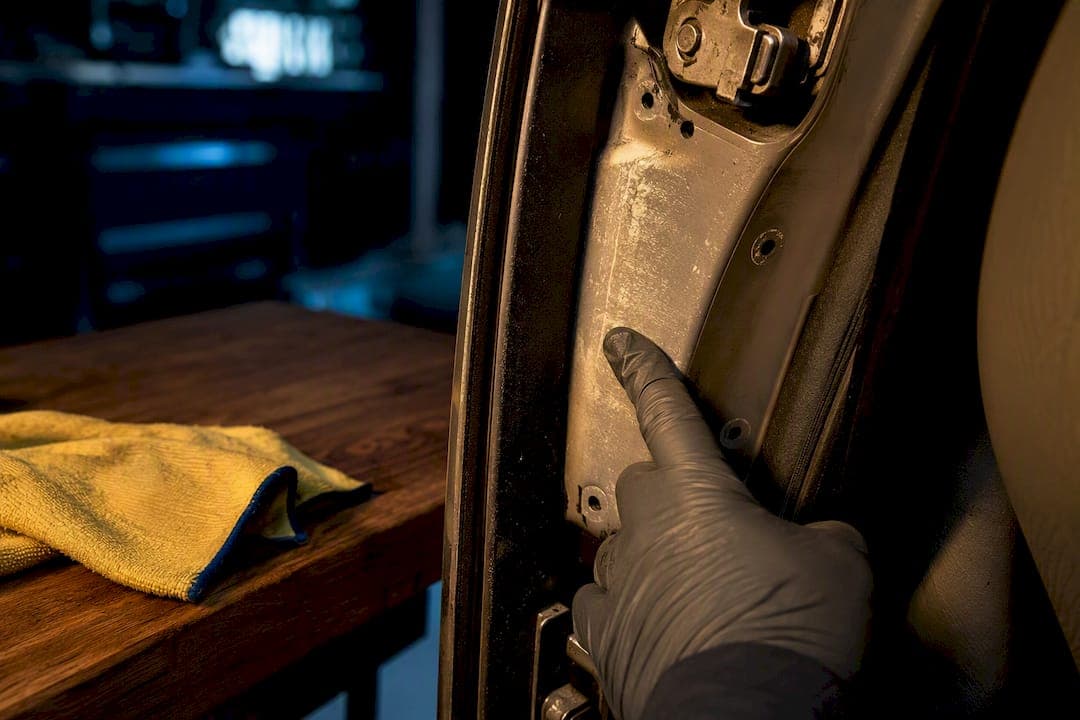
- Look at the driver's door jamb or door pillar, where many manufacturers stamped a data plate.
- Search the engine block and, on separate-frame vehicles, the frame rail itself.
- Pull the title, prior registration, and any factory build sheet for a paper-trail number to cross-check.
- Compare every number you find. They should match.
Here's the part most first-time classic buyers miss: VIN standardization in the United States didn't happen until 1981. Cars built before that year often carry nonstandard, variable-length serial numbers running anywhere from 5 to 14 characters, not the familiar 17-digit format. Drop one of these into a modern decoder built for post-1981 cars and you'll get an error or, worse, a false read. Use a classic-VIN decoding workflow built for pre-1981 formats instead, and always transcribe numbers by hand in addition to photographing them. Stamped digits on a 60-year-old frame rail can be faint enough that a phone camera misreads a 3 as an 8.
What Does a Classic Car History Report Actually Show?
A solid vehicle history check pulls from several distinct records, and each one tells you something different about risk.
- Title history: how many owners, which states, and whether the title was ever branded (salvage, flood, rebuilt, junk).
- Odometer trail: mileage readings logged at each title transfer, useful for spotting rollback fraud on cars with paper titles going back decades.
- Theft and salvage flags: whether an insurer or law enforcement agency ever reported the car stolen or totaled.
- Registration and state title records: confirms the car was legally registered where the seller claims.
- Recall history: relevant mostly for later classics (1970s trucks and muscle cars) still covered by open manufacturer recalls.
Title-brand data mostly comes from state DMVs, consolidated through NMVTIS, while theft and salvage flags come from participating insurance companies. Auction and sales databases add another layer, often filling in ownership gaps that DMV records miss.
Reading a title brand takes judgment, not just a glance. A "salvage" brand from a hailstorm forty years ago means something very different than one tied to a frame-bending collision. A rebuilt or reconstructed brand on a numbers-matching muscle car deserves especially careful review compared to the same brand on a common daily driver from the same era., because rarity raises the financial stakes of getting the history wrong.
Free Public Checks vs. Paid Classic-VIN Services: What Each One Actually Finds
Free tools are a smart starting point, but they weren't built with 1965 Mustangs or 1958 Corvettes in mind. Know their limits going in.
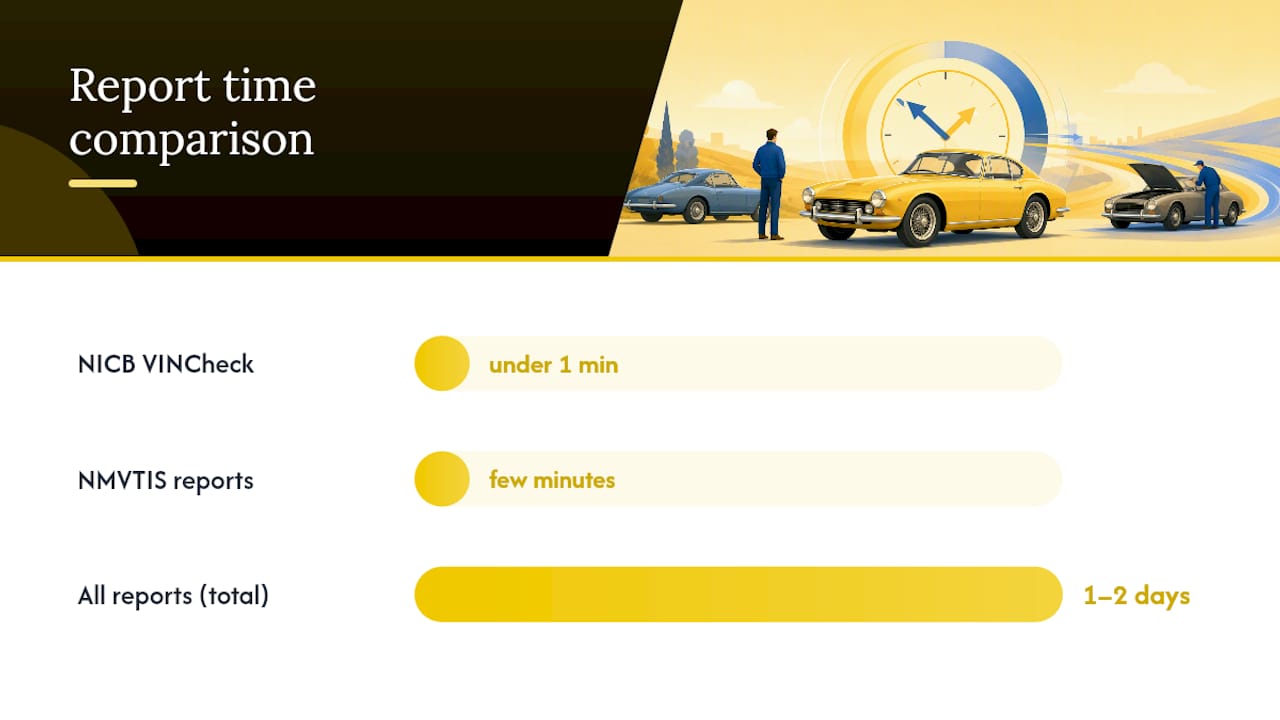
- NICB VINCheck cross-references participating insurers' theft and salvage records at no cost, in under a minute.
- NICB itself recommends additional due diligence beyond its own results, since not every insurer or law enforcement agency participates.
- NMVTIS-based reports pull consolidated state title-brand data and cost a modest fee through licensed providers, typically a few minutes to generate.
- Classic-aware paid services can decode shorter or nonstandard serial numbers and sometimes surface auction, salvage, or historical registration entries that generic 17-digit tools miss entirely.
Pro Tip: Run both free checks first, in the same sitting. If either one flags a problem, you've saved yourself the cost of a paid report on a car you probably shouldn't buy anyway.
The sensible order of operations: free screening first, paid classic-VIN report second if the car clears initial screening, then a physical inspection before you commit funds. Budget a day or two total for reports; the inspection is where the real time investment happens.
How Do You Build a Provenance File That Actually Adds Value?
Provenance is the paperwork trail that proves a car is exactly what it claims to be, and it separates a well-documented investment from a guess. Prioritize gathering documents in this order:
- Identity provenance: factory build sheet, original invoice, and matching-numbers confirmation on the engine, chassis, and transmission.
- Ownership provenance: titles, bills of sale, and registration history showing a continuous chain from new.
- Condition provenance: service records, restoration invoices, and before-and-after photos from any body or mechanical work.
Factory build records, restoration invoices, and continuous ownership documentation materially affect what a classic car is worth, often more than a fresh paint job does. That same paper trail also matters for insurability. Insurers writing agreed-value policies on collector cars want to see the file, not just photos of shiny paint.
Pro Tip: Ask the seller for high-resolution scans of every document before you travel to see the car in person. A seller who stalls on paperwork requests is telling you something.
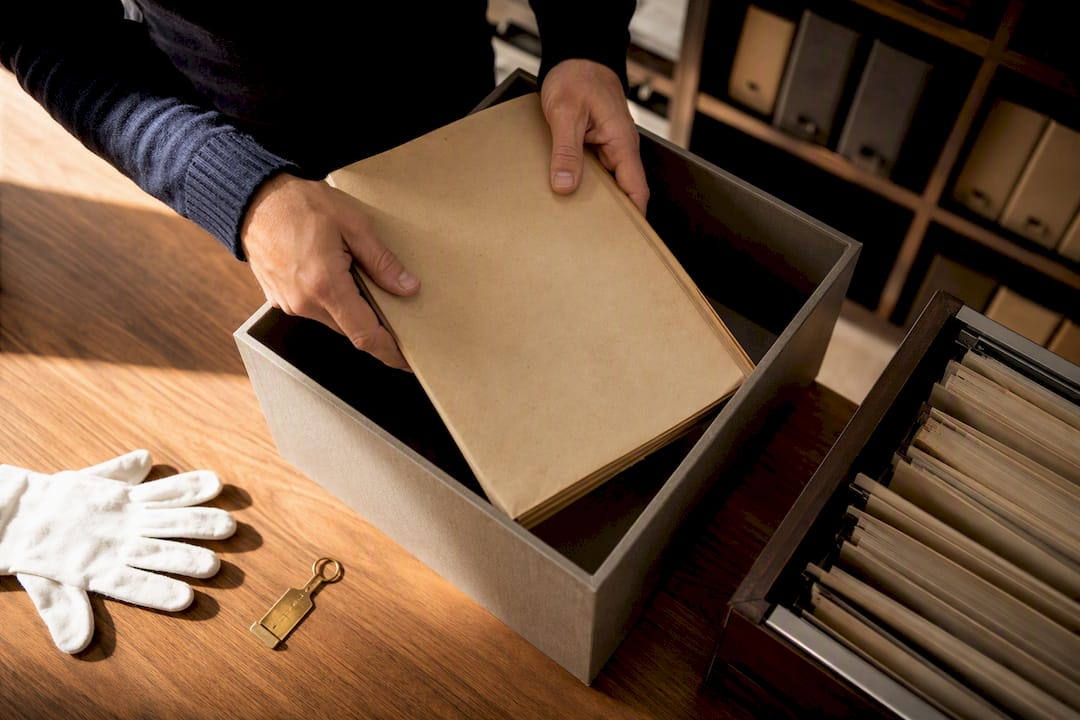
Requesting documents is simple: ask the current owner, then contact the marque's owners' club or archive if gaps exist. Store everything digitally and in a physical folder that travels with the title.
Verification Steps: Inspections, Matching Numbers, and When to Call in an Expert
Paperwork gets you most of the way there, but nothing replaces eyes on the actual metal.
- Compare stamped numbers on the engine, chassis, and gearbox against the build sheet, checking stamping style and plate fixings, which are model-specific and hard to fake convincingly.
- Photograph every stamped number, panel gap, and undercarriage weld as your own inspection record.
- Treat matching numbers as sufficient confirmation for most mid-value classics, but insist on factory or heritage certificate verification for anything approaching six figures.
- Bring in a marque specialist when a car's rarity or price justifies it. Expect a few hundred dollars for a thorough pre-purchase inspection from someone who knows the model inside out.
- Use a structured test-drive checklist to catch mechanical issues paperwork can't reveal.
Electrical retrofits and later wiring conversions can complicate originality checks on some later-era classics; a resource on aftermarket wiring components is worth a skim if you're evaluating a car with non-stock electronics.
What Red Flags Mean You Should Slow Down or Walk Away
Some warning signs are minor. Others should stop the deal cold.
- Unexplained title gaps: years with no registered owner, especially on cars claimed to be "always garaged."
- Mismatched numbers: engine, chassis, or transmission stamps that don't match the paperwork.
- Inconsistent seller stories: mileage or history that shifts between the listing, the phone call, and the in-person visit.
- Missing restoration records on a car advertised as "fully restored."
Gaps in old paperwork happen and aren't automatically disqualifying, but a seller who can't explain them, or whose story changes, is a different problem entirely. If red flags appear, request the missing documents in writing, order an independent inspection, and consider an escrow service for the transaction. If the seller resists any of these, that's your answer. Review common classic car scam patterns before you negotiate further.
How Butter Classics Supports Your Due Diligence
Listings on Butter Classics include vehicle specifications and available documentation upfront, so you're not chasing a seller for basics. Buyers can use the car-finder tool to request a specific model and provenance profile, then schedule a hands-on look before committing. For deeper checklists on authentication and condition assessment, Tony's guides walk through the same verification steps this article covers, in more detail.
— Tony
Ready to Put This Into Practice?
Some online marketplaces give you a shortcut past scattered forums and one-off private sellers where provenance paperwork is often thin or missing entirely; ideally, listings are built around real specifications and documentation from the start, so your history check has something solid to verify against. Browse the current inventory to see what's available right now, or use the car finder if you have a specific model and provenance level in mind. Once you've narrowed your options, schedule a test drive to combine your paperwork review with the hands-on inspection this article recommends. It's the most direct path from research to a purchase you can actually trust.
Where to Verify a Classic Car's History
- NMVTIS: consolidated state title-brand data for title history checks.
- NICB VINCheck: free theft and salvage flag screening.
- NHTSA VIN guidance: standards reference for pre and post-1981 VIN formats.
- Marque archives and heritage certificates: factory build verification for high-value cars.
Sources
- VINCheck | National Insurance Crime Bureau (NICB)
- NMVTIS overview | Bureau of Justice Assistance
- Classic car provenance: what documents add value | Logbook