
Classic car investment due diligence is the comprehensive process of verifying a vehicle's authenticity, condition, provenance, and financial viability before purchase. Done right, it separates profitable collector car acquisitions from costly mistakes. The process covers four distinct layers: document verification, physical inspection, market analysis, and financial planning. Skipping any one layer exposes you to risks that can wipe out returns before you ever turn a key. This guide walks you through each layer with the specificity that serious investors need in 2026.
What documents and provenance checks authenticate a classic car?
Provenance is the paper trail that proves a car is exactly what the seller claims. Chassis, engine, and gearbox numbers must align with original factory documentation and production records. A mismatch on any one of those three numbers is a red flag that demands explanation before you proceed.
The strongest provenance packages include service records from recognized marque specialists, restoration receipts with itemized parts lists, and an unbroken ownership chain. Service invoices from marque specialists add measurable reassurance because they corroborate both maintenance history and originality claims. Heritage certificates issued by manufacturer registries, such as those offered by Ferrari Classiche or Porsche Classic, carry significant weight for high-value vehicles.
Forgery is a real risk in this market. Reproduction VIN plates and transplanted engines from donor cars are more common than most buyers expect. Missing or incomplete documentation can reduce a classic car's market value by 10% to 30% compared to fully verified examples. That gap represents real money, and it is the single most preventable loss in classic car investing.
Key documents to request before any purchase:
- Original title and all subsequent titles in the ownership chain
- Factory build sheet or order confirmation
- Heritage or authenticity certificate from the manufacturer registry
- Service records from recognized marque specialists
- Restoration receipts with part numbers and supplier details
- Any auction house or dealer provenance reports from previous sales
Pro Tip: Request a vehicle history report from a specialist registry before you spend a dollar on inspection. If the numbers do not match at the registry level, no amount of physical inspection will fix the problem.
How to conduct a thorough pre-purchase inspection for classic cars
A pre-purchase inspection, commonly called a PPI, is the physical counterpart to provenance research. The goal of a PPI is not to find a single defect. The goal is to reduce uncertainty through multiple independent layers of consistent evidence: technical, material, and historical. When all three layers agree, you have a credible picture of the car's true condition.
A thorough PPI follows this sequence:
- Visual and structural assessment. Check panel gaps, paint depth readings, and body seams for signs of accident repair or replacement panels. Inconsistent paint thickness is the most common indicator of hidden bodywork.
- Mechanical inspection. A qualified marque specialist evaluates the engine, transmission, suspension, and brakes. This goes beyond a test drive. The car goes on a lift.
- Non-destructive testing. Techniques like ultrasound thickness measurement, infrared thermography, and paint spectroscopy reveal filler, rust, and non-original panels without damaging the car. These methods are standard practice for investment-grade purchases.
- Originality verification. Date-coded peripheral components such as alternator housings, glass, and rubber seals must match the car's build date. Non-matching parts are a strong indicator of non-investment-grade status.
- Documentation cross-check. The inspector compares physical findings against the provenance documents. Discrepancies between the paper trail and the physical car require resolution before purchase.
Always hire an independent specialist, not one recommended by the seller. Marque clubs and registries maintain lists of approved inspectors for most collectible models. Budget $500 to $1,500 for a thorough PPI on a mid-range classic. For a six-figure vehicle, that cost is negligible relative to the risk it mitigates.
Pro Tip: Ask the inspector to photograph every date code and serial number during the PPI. Those images become part of your own provenance file and add value when you eventually sell.

What are the financial considerations for classic car investors?
Classic cars are wealth preservation assets, not growth vehicles. Net annual returns after costs typically range from 2% to 4%, and that figure requires a holding period of 5–7 years to materialize. Investors who expect stock-market-style returns will be disappointed.
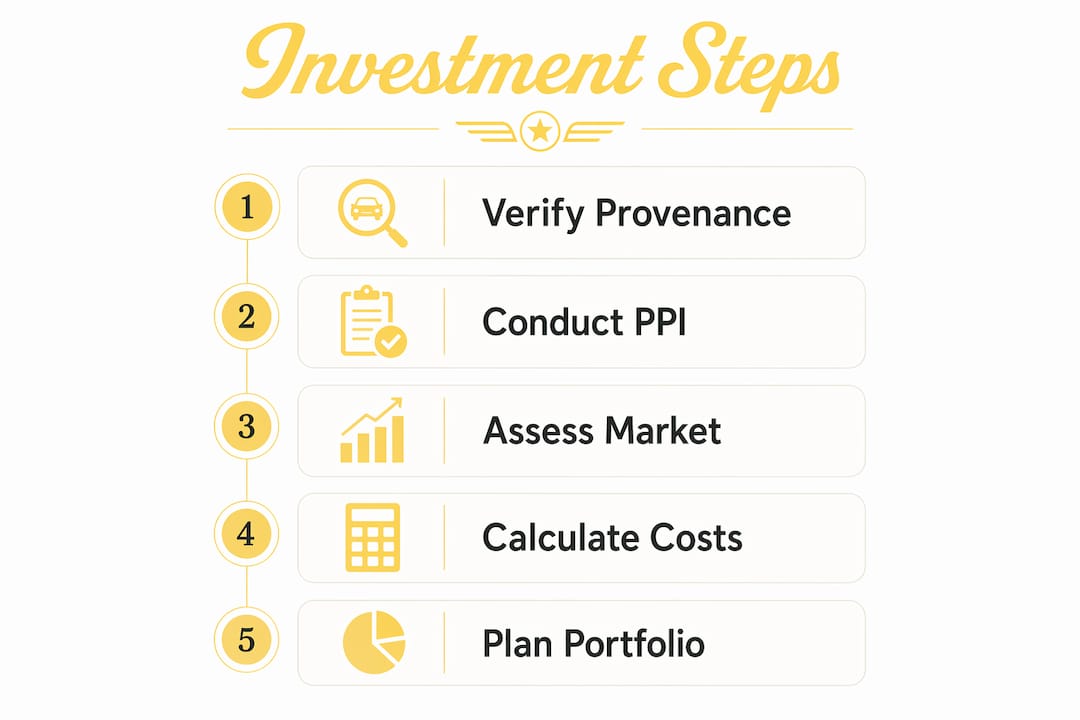
The current market does offer one genuine advantage. Private sale prices sit 15% to 25% below established price guide benchmarks in 2026. That gap gives patient buyers real negotiation leverage, particularly on cars that have been listed for 60 days or more.
Holding costs are the part of classic car investing that most buyers underestimate. Annual indirect costs including storage, insurance, maintenance, auction fees, and shipping consume between 4.4% and 13.7% of asset value each year. That range is wide because storage and insurance costs vary significantly by location and vehicle value.
| Cost Category | Typical Annual Range | Notes |
|---|---|---|
| Specialized storage | 1%–3% of vehicle value | Climate-controlled facility required |
| Agreed-value insurance | 1%–2% of vehicle value | Requires annual appraisal update |
| Maintenance and upkeep | 1%–4% of vehicle value | Higher for unrestored examples |
| Transaction fees | 0.4%–4.7% per transaction | Auction buyer's premiums vary widely |
Liquidity is the other financial risk that investors frequently overlook. Sale timelines for classic cars typically run 30 to 90 days, and urgent liquidation requires price discounts of 20% to 40%. Classic cars are not an asset you can exit quickly without paying a steep penalty.
Portfolio allocation matters too. Classic cars should represent no more than 2% to 5% of your total investment portfolio. Concentrating more than that in a single illiquid asset class creates unnecessary risk, regardless of how confident you feel about a specific vehicle.
Classic car insurance deserves special attention. Specialist policies use agreed-value coverage rather than actual cash value, which means you receive the insured amount in full if the car is totaled. These policies require annual inspections and regular reappraisals to keep coverage aligned with current market value.
What steps minimize risk in classic car investing?
Risk management in classic car investing comes down to discipline and process. The investors who lose money are almost always the ones who skipped a step because they fell in love with a car.
- Never buy without complete documentation. Incomplete provenance is not a negotiating chip. It is a structural defect in the investment.
- Budget for authentication costs upfront. Third-party authentication and legal verification typically cost 2% to 3% of the vehicle's purchase price. That expense protects against value losses that can reach 30% to 50% on non-authentic examples.
- Understand the tax treatment. In the United States, classic cars held as collectibles are subject to a maximum federal capital gains rate of 28%, higher than the standard long-term rate. Factor that into your return projections before you buy.
- Plan for the full holding period. Buying a classic car with a two-year exit plan is speculative, not investing. The 5–7 year holding requirement is a function of transaction costs and market cycles, not a suggestion.
- Diversify within the asset class. Owning two or three vehicles across different eras and marques reduces your exposure to single-model market corrections. A long-term collection strategy outperforms single-vehicle speculation in most market conditions.
- Work with reputable specialists. Independent marque experts, specialist lawyers, and established dealers with transparent provenance practices reduce the probability of costly surprises.
Pro Tip: Check the 2026 market trends checklist before finalizing any purchase. Current price benchmarks shift faster than most investors expect, and buying above the current market ceiling is the easiest way to lock in a loss.
Key Takeaways
Successful classic car investment due diligence requires verified provenance, a layered physical inspection, realistic financial modeling, and disciplined risk management before any purchase commitment.
| Point | Details |
|---|---|
| Provenance is non-negotiable | Missing documents reduce market value by 10%–30%; always verify chassis, engine, and gearbox numbers. |
| PPI must be layered | Technical, material, and historical evidence must all align; one layer alone is insufficient. |
| Holding costs are significant | Annual indirect costs run 4.4%–13.7% of vehicle value; model these before purchase. |
| Liquidity is limited | Plan for a 30–90 day sale timeline; urgent exits cost 20%–40% in price discounts. |
| Portfolio allocation matters | Cap classic car exposure at 2%–5% of total portfolio to avoid concentration risk. |
What I've learned about due diligence that most guides won't tell you
Most investors approach classic car due diligence as a checklist exercise. They get the PPI done, verify the numbers, and call it good. That approach works until it doesn't.
The part that actually separates profitable collectors from expensive hobbyists is the willingness to walk away from a car you love. I have seen investors talk themselves into overlooking a mismatched gearbox number because everything else looked right. It never ends well. Authenticity is binary in this market. A car is either numbers-matching or it is not, and the market prices that difference ruthlessly.
The other thing most guides skip is the emotional accounting. Classic cars carry real carrying costs, real illiquidity, and real tax drag. The investors who do well treat them exactly like any other alternative asset: with patience, process, and a clear exit thesis before they buy. Passion is a fine reason to own a classic car. It is a terrible reason to skip the authentication process.
My honest advice: spend as much time on the financial model as you do on the car itself. The vehicle inspection tells you what you are buying. The financial model tells you whether you should.
— Tony
Butterclassics makes the due diligence process easier
Butterclassics specializes in investment-grade classic vehicles with transparent provenance and verified documentation. Every car in the inventory has been evaluated for authenticity, condition, and market positioning, so you spend less time chasing paperwork and more time making confident decisions.
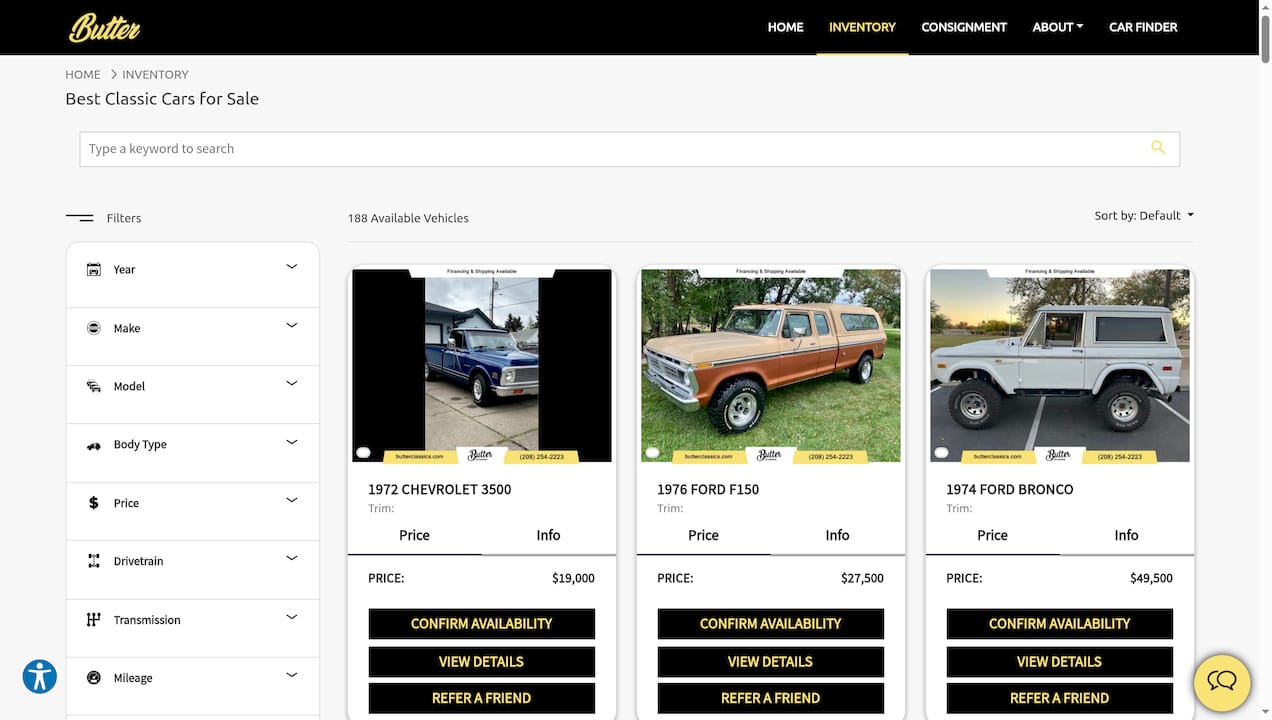
Whether you are buying your first collector car or adding to an existing portfolio, Butterclassics gives you access to certified classic vehicles with the documentation trail that serious investors require. The team is ready to walk you through inspection reports, provenance records, and current market pricing. Browse the full Butterclassics inventory and find investment-grade classics that are smooth as butter, backed by the transparency you need to buy with confidence.
FAQ
What is classic car investment due diligence?
Classic car investment due diligence is the process of verifying a vehicle's authenticity, provenance, physical condition, and financial viability before purchase. It covers document checks, pre-purchase inspections, market analysis, and total cost modeling.
How much does a pre-purchase inspection cost?
A thorough PPI for a classic car typically costs $500 to $1,500 depending on the vehicle's value and the depth of testing required. For six-figure vehicles, budget an additional 2%–3% of purchase price for third-party authentication and legal verification.
What documents should I request before buying a classic car?
Request the original title chain, factory build sheet, heritage certificate, marque specialist service records, and any restoration receipts with itemized parts. Missing documentation can reduce market value by 10%–30%.
How long does it take to sell a classic car?
Sale timelines typically run 30 to 90 days under normal market conditions. Urgent liquidation requires price discounts of 20%–40%, which is why classic cars are best held for 5–7 years minimum.
What percentage of my portfolio should be in classic cars?
Classic car exposure should be capped at 2%–5% of your total investment portfolio. Concentrating more than that in a single illiquid asset class creates excessive risk, regardless of the vehicle's quality.