A collectible car is defined by the intersection of rarity, condition, provenance, and market demand — not age alone. Insurers like State Farm and appraisal specialists like Hagerty use these exact criteria to assign value, and understanding them is what separates a smart collector from someone who just got lucky. Whether you're eyeing a first-generation Ford Bronco, a numbers-matching Chevrolet Corvette, or a low-production muscle car, knowing what makes a car collectible gives you a real edge. This guide breaks down every factor that matters, with 2026 market context included.
What makes a car collectible: the core factors
Collectible status combines age, rarity, condition, originality, provenance, and demand into one composite picture of value. No single factor is enough on its own. A 1970 Plymouth Hemi 'Cuda checks every box: low production numbers, strong brand pedigree, documented history, and fierce buyer demand. A car that's simply old and rare but forgotten by the market tells a very different story.
The industry term you'll hear most often is "collector car," which covers everything from pre-war classics to modern limited-edition sports cars. The phrase "collectible car" is used interchangeably in the hobby, but appraisers and insurers anchor their criteria to the same set of factors regardless of the label. American Collectors Insurance recognizes vehicles at least 25 years old as classics when they are well-maintained and used sparingly, but age is just the entry ticket. The real value conversation starts with the five factors below.
Originality and documentation are the two most underestimated drivers of collectibility among newer enthusiasts. A car with its factory-correct drivetrain, matching VIN-stamped components, and a paper trail going back to the dealer invoice commands a premium that a visually identical but undocumented car simply cannot match.
How rarity and production numbers impact collectibility
Rarity in the collector car world means two things: how few were built and how few survive. A car produced in small numbers that also has a low survival rate is genuinely scarce. But rarity needs to combine with desirability, historical significance, and brand pedigree to drive high values. Without demand, scarcity is just trivia.
The table below shows how rarity and demand interact across different vehicle types:
| Vehicle type | Rarity level | Demand level | Collector value outcome |
|---|---|---|---|
| 1969 Dodge Charger Daytona | Very low production | Very high | Premium prices, strong appreciation |
| 1970s economy compact (generic) | Low survival | Low | Undervalued despite scarcity |
| Ferrari 250 GTO | Extremely limited | Extremely high | Record auction results |
| Mid-tier 1980s Japanese sedan | Moderate survival | Growing (nostalgia) | Rising but still accessible |
Brand pedigree amplifies rarity significantly. A rare Ferrari or Shelby Cobra carries institutional prestige that a rare Chevrolet Chevette simply does not. Collectors pay for the story attached to a marque, not just the scarcity of the metal. You can explore how condition grading scales interact with rarity to shape final market value in more detail.
Pro Tip: Don't chase rarity blindly. Research production numbers using resources like the Marti Report for Ford vehicles or Pontiac Historic Services before assuming a car is scarce. Actual build data often surprises collectors in both directions.
Does condition and originality really affect value that much?
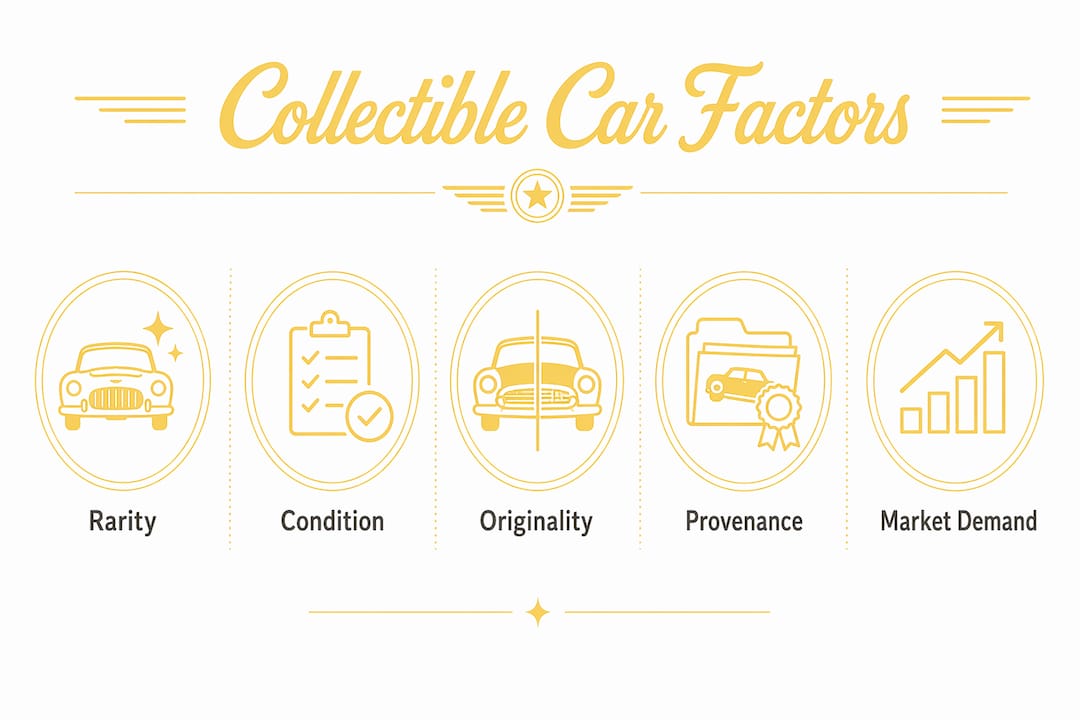
The short answer is yes, dramatically. Poor restoration lowers value while period-correct, professionally executed work enhances it. A car with a sloppy repaint, mismatched interior materials, or a replacement engine from a different model year loses collector credibility fast, even if it looks clean at first glance.
Matching numbers is the gold standard of originality. Matching numbers indicate factory-original major components verified against production records, and they significantly increase a car's authenticity value. The engine, transmission, and rear axle should all carry VIN-derivative or date-coded stamps that align with the car's build sheet. When those numbers check out, you have proof the car left the factory as advertised.
Here are the key restoration quality considerations every collector should evaluate before buying:
- Paint and bodywork — Look for consistent panel gaps, color-matched jambs, and original factory overspray in hidden areas. Fresh paint over rust is a red flag.
- Interior authenticity — Original upholstery, correct carpet material, and factory-spec gauges matter. Aftermarket steering wheels and custom consoles reduce originality scores.
- Engine compartment — Check for correct date-coded components, factory wiring harness condition, and correct finishes on the block and accessories.
- Drivetrain integrity — Confirm the transmission and rear axle codes match the build documentation. Swapped drivetrains require full disclosure and reduce value.
- Undercarriage condition — Frame rust, improper welds, and non-factory undercoating all signal deferred maintenance or hidden damage.
Survivor cars occupy a special category worth knowing. Survivor cars retain original paint and interiors with natural patina, and they are often prized differently than freshly restored examples depending on collector philosophy. Some buyers pay a premium for an unrestored survivor precisely because it has never been touched. For restomod vehicles, the valuation approach shifts entirely toward engineering quality and component pedigree rather than factory originality.
Pro Tip: Always request a pre-purchase inspection from an independent specialist, not the seller's preferred shop. A dealer inspection checklist covers paint, rust, interior, drivetrain, and documentation in a structured way that protects your investment.
Why provenance and documentation amplify a car's collectibility
Provenance is the documented story of a car's life from the factory to the present day. A documented chain of ownership with photos, service records, and event history is often the top intangible value factor in any serious appraisal. It answers the question every buyer wants answered: where has this car been, and can I trust what I'm being told?
Strong provenance typically includes several components working together:
- Original window sticker or Monroney label — Confirms factory options and original MSRP, which is especially valuable for high-option cars.
- Build sheet or tank sticker — Factory production documents that list every option coded at the plant. These are rare survivors and add real premium.
- Continuous service records — Oil changes, tune-ups, and repair receipts create an unbroken timeline that builds buyer confidence.
- Title history — A clean title chain with no gaps, salvage brands, or odometer discrepancies is non-negotiable for investment-grade cars.
- Photos and event participation records — Show car trophies, vintage rally documentation, or period photographs place the car in history and add personality to the provenance file.
Celebrity or notable ownership adds another layer of premium. A Porsche 911 once owned by Steve McQueen or a muscle car with documented race history at a famous track commands prices well above comparable examples without that story. Gaps in history, by contrast, create doubt. Collectors and appraisers discount cars with unclear ownership chains because they cannot rule out hidden damage, odometer fraud, or title washing. You can read more about classic car authentication and how documentation is verified before purchase.
How market demand and cultural trends shape collectibility
Demand is not static. What collectors want in 2026 reflects generational nostalgia, cultural moments, and economic conditions that shift over time. Cars associated with strong social or historical narratives tend to retain and grow in value because their appeal is tied to something larger than the machine itself. The Ford Mustang's connection to American freedom, the Chevrolet Camaro's muscle car era identity, and the Toyota Land Cruiser's overland culture following all demonstrate this principle.
The current market shows a clear split. Hagerty's 2026 Price Guide indicates median auction prices dipped slightly amid inflationary pressures, while modern collectibles outperformed older classics. This means a 1990s Honda NSX or a first-generation Acura Integra Type R may be appreciating faster right now than a comparable 1960s American muscle car. The collector car market is segmented with different dynamics across categories, and treating it as one monolithic market leads to poor buying decisions.
| Market segment | 2026 trend | Key demand driver |
|---|---|---|
| Pre-1970 American muscle | Flat to soft | Aging buyer base, high entry cost |
| 1980s-1990s Japanese sports cars | Rising | Millennial nostalgia, affordability |
| European GT cars (Ferrari, Porsche) | Strong | Global wealth, brand prestige |
| Modern limited editions (post-2000) | Rising | Low mileage, warranty history |
Timing matters when you enter a segment. Buying into a rising segment early, before mainstream media coverage drives prices up, is how serious collectors build value. Auction results from Barrett-Jackson, Mecum, and RM Sotheby's are public record and give you real transaction data rather than asking prices.
How to identify a collectible car before you buy
Identifying a genuine collectible requires more than a visual inspection. Here is a practical checklist to work through before committing to any purchase:
- Verify the VIN against the title, door jamb plate, and any available factory documentation to confirm the car is what it claims to be.
- Check production records using marque-specific decoding services. Ford, GM, and Chrysler all have registry resources that confirm option codes and build data.
- Order a vehicle history report through Carfax or AutoCheck to surface title issues, accident records, and odometer readings.
- Commission an independent professional appraisal that covers paint, rust, interior, drivetrain, and documentation before finalizing any deal.
- Compare the asking price against recent auction results and price guides like Hagerty's to confirm you are paying market rate, not a seller's wishful thinking.
- Review the classic car insurance value criteria that insurers apply, since agreed-value policies require documented appraisals that reflect real market conditions.
The goal is to build a complete picture of the car's physical condition, authenticity, and market position before money changes hands. Skipping any of these steps is where collectors get burned.
Key takeaways
A collectible car's value is determined by the combination of rarity, originality, provenance, and market demand working together, not by any single factor in isolation.
| Point | Details |
|---|---|
| Rarity requires demand | Low production numbers only drive value when paired with strong buyer interest and brand pedigree. |
| Matching numbers matter | Factory-original components verified against production records significantly increase authenticity and price. |
| Provenance is a premium factor | A documented ownership chain, service records, and build sheet can add substantial value above condition alone. |
| Market segments diverge | Modern collectibles are outperforming older classics in 2026; research your specific segment before buying. |
| Appraisals protect buyers | Independent professional appraisals covering condition, originality, and documentation are non-negotiable for investment-grade purchases. |
My honest take on collecting in 2026
I've watched collectors overpay for cars that looked great on the surface but had zero documentation, and I've seen patient buyers walk away with genuine gems because they did the homework. The biggest mistake I see is treating collectible cars purely as financial instruments. Buy for passion and enjoyment first; investment returns vary widely and the market can be humbling.
The restomod trend is real and growing, but it splits the collector community. A beautifully built restomod with a modern LS engine and Wilwood brakes can be a joy to drive and still command strong money, but it will never compete with a numbers-matching original in a traditional appraisal context. Know which world you want to play in before you spend.
My advice for 2026 specifically: get focused on a niche. Whether that's first-generation Ford Broncos, air-cooled Porsche 911s, or classic Chevrolet trucks, depth of knowledge in one segment beats shallow knowledge across ten. The collectors who consistently buy well are the ones who know their segment cold, including production numbers, option codes, common problem areas, and what the best examples actually sell for at auction. Patience and specificity are your two best tools. The right car at the right price is worth waiting for.
— Tony
Find your next collectible at Butterclassics
If you're ready to put these factors to work, Butterclassics makes it smooth as butter to find investment-grade classics that meet real collector standards.
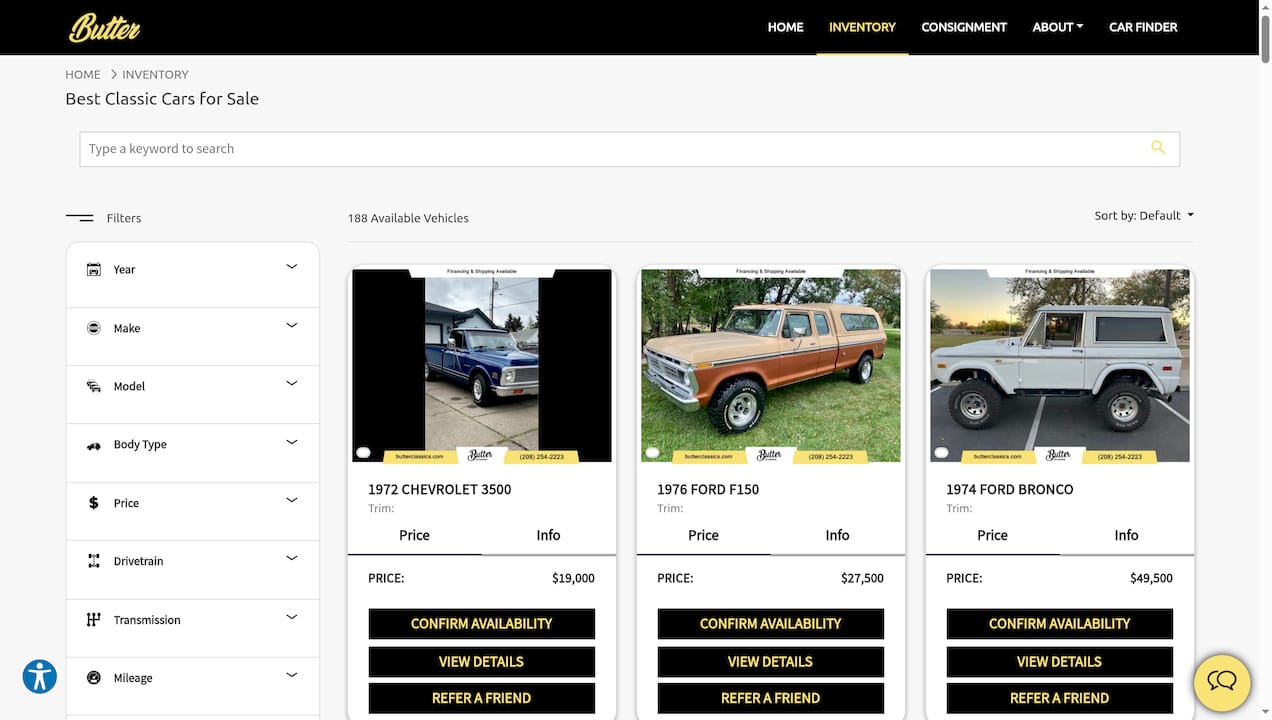
The Butterclassics inventory includes muscle cars, Corvettes, Broncos, and vintage trucks, each presented with detailed specifications and high-quality photos so you can evaluate condition and originality before you ever schedule a test drive. For buyers who want extra confidence, the Butter Certified program verifies provenance and condition on select vehicles, giving you the documentation and peace of mind that serious collecting demands. Browse the current inventory and call dibs on the one that speaks to you.
FAQ
What is the most important factor in a collectible car's value?
No single factor dominates, but provenance and originality consistently separate high-value cars from average examples. A documented ownership history combined with matching-number components places a car at the top of any appraisal range.
How old does a car need to be to be collectible?
Age alone does not define collectibility. American Collectors Insurance recognizes vehicles at least 25 years old as classics when well-maintained and used sparingly, but a 10-year-old limited-edition sports car with low mileage and full documentation can be equally collectible.
Does a restored car lose collectible value?
A professionally executed, period-correct restoration preserves or enhances value. Poor restoration work, incorrect parts, or incomplete projects reduce value significantly compared to an original unrestored survivor or a high-quality restoration.
How do I verify a car's matching numbers?
Cross-reference the VIN-derivative stamps on the engine block, transmission, and rear axle against the car's build sheet or factory documentation. Marque-specific registries and decoding services for Ford, GM, and Chrysler vehicles can confirm whether the numbers align with factory records.
Are modern cars worth collecting?
Yes. Hagerty's 2026 data shows modern collectibles outperforming many older classics in price appreciation. Limited-production vehicles from the 1990s and 2000s with low mileage, full service history, and strong cultural followings are among the fastest-rising segments in the current market.