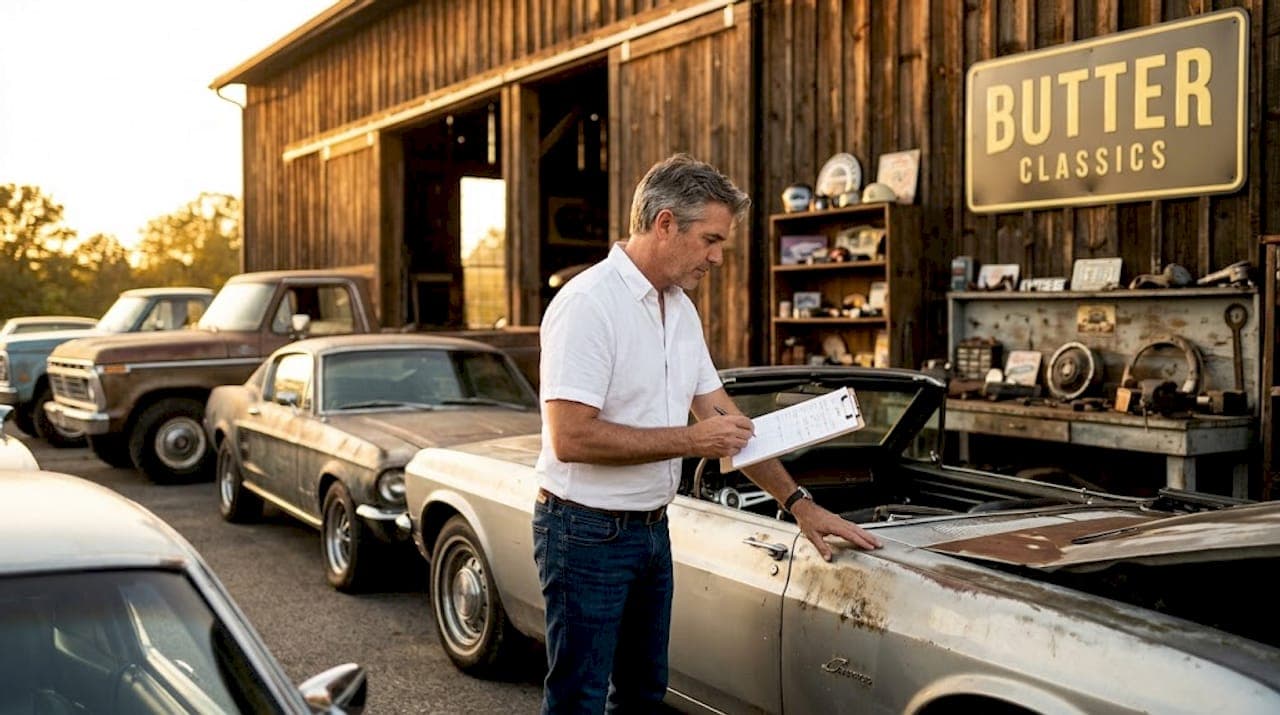
Passion is what pulls you toward classic cars. But passion alone is what gets collectors into trouble. Building a classic car collection, which is the practice of curating collector vehicles as a hobby or investment, requires the same discipline you would bring to any serious financial and lifestyle commitment. Without a clear plan, even enthusiastic buyers end up with redundant vehicles, maintenance overload, and serious regret within six months. This guide walks you through everything from setting collection goals and evaluating cars to budgeting, preservation, and reading the market so your collection grows in value and keeps you excited for years to come.
Table of Contents
- Key takeaways
- Building a classic car collection that works for you
- How to evaluate condition, authenticity, and value
- Budgeting, financing, and insurance basics
- Preservation and maintenance routines that protect value
- Monitoring the market and adjusting your strategy
- My honest take on building a collection that lasts
- Find your next classic at Butterclassics
- FAQ
Key takeaways
| Point | Details |
|---|---|
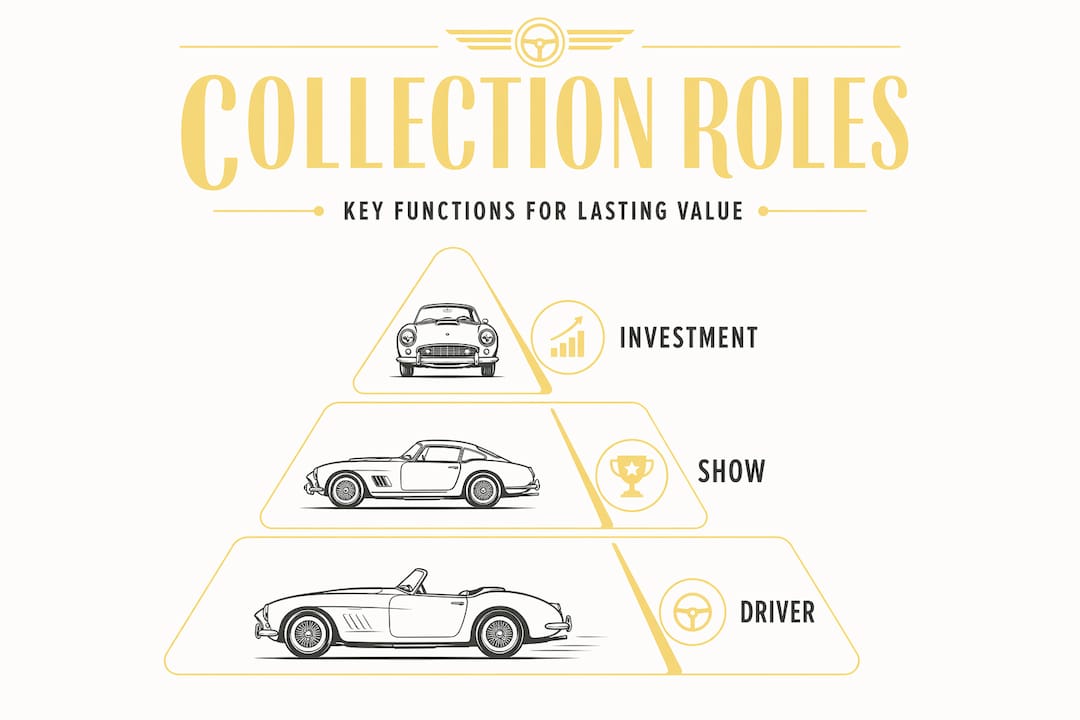
| Define roles before buying | Assign each vehicle a purpose (investment, show, driver) before you commit to avoid costly overlap. |
| Condition and provenance matter | Documentation and authenticity can raise a car's appraised value by 10 to 25 percent. |
| Budget beyond the purchase price | Factor in insurance, storage, restoration, and ongoing maintenance to avoid financial surprises. |
| Preservation protects your investment | Pre-storage fluid service and climate-controlled environments are non-negotiable for long-term value. |
| Watch the market, not just the cars | Generational shifts and economic cycles directly affect which models hold or gain value. |
Building a classic car collection that works for you
The first step most collectors skip is defining what their collection is actually for. Are you building a show-ready lineup for concours events? A rotation of weekend drivers? A portfolio of appreciating assets? Each goal demands a completely different approach to selection, storage, and spending.
Collecting vintage cars without a clear framework is one of the most common and costly mistakes new enthusiasts make. Think of your garage as a constrained system with finite space, time, and money. Every car you add draws from those resources. When you treat it that way, the decision to buy gets a lot more disciplined.
Start by building a simple buy-list before you ever set foot at an auction or scroll through listings. Your list should include:
- Must-haves: Specific makes, eras, or body styles that align with your theme
- Deal-breakers: Conditions, mileage thresholds, or missing documentation that disqualify a car immediately
- Role assignments: What each vehicle will do in your collection (daily, concours, investment, sentimental)
- Quantity limits: A hard cap on how many vehicles you can realistically store and maintain
Pro Tip: Assign every car on your wish list a role before you buy it. If you cannot answer "what does this car do in my collection," it does not belong in your collection yet.
Buying without a clear role leads to maintenance overload and regret. That is not a theory. It is one of the most documented patterns among new collectors.
How to evaluate condition, authenticity, and value
Once you know what you are looking for, you need to know how to assess what you are looking at. The collector car world uses a condition grading scale that typically runs from Grade 1 (concours perfect) down to Grade 6 (parts car only). Where a car falls on that scale determines its price ceiling, its restoration cost, and its resale potential.
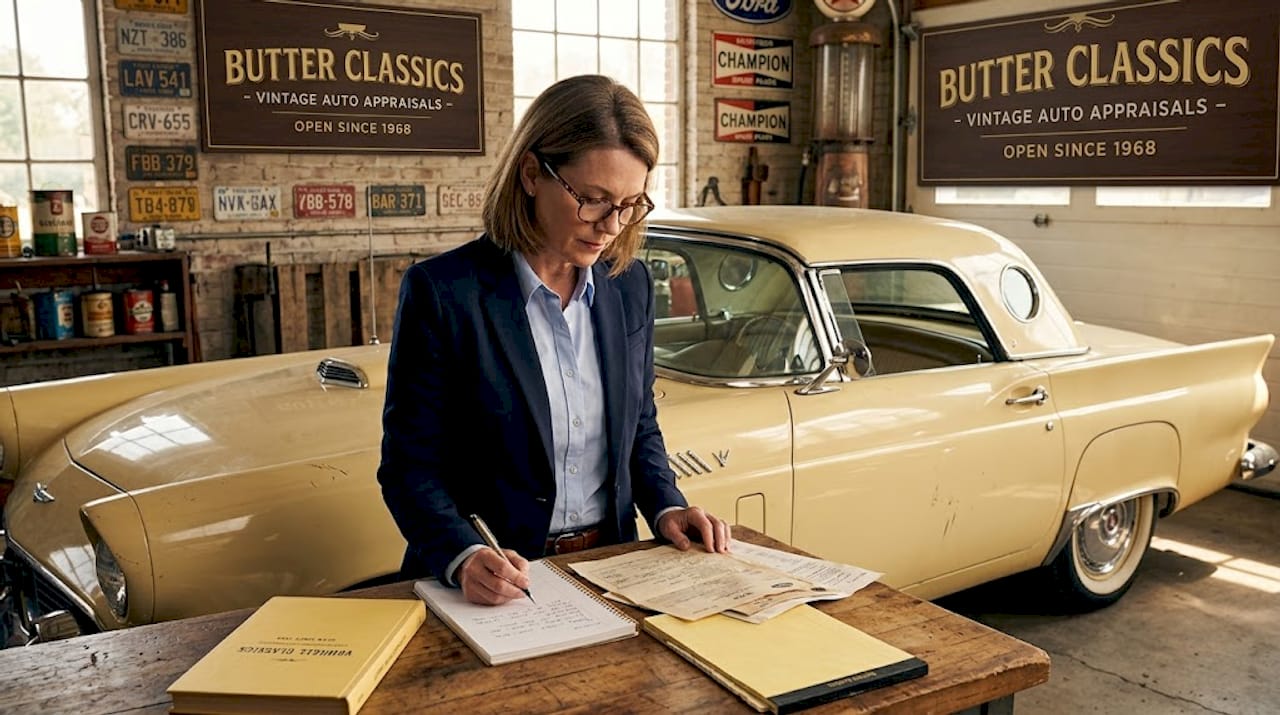
Authenticity is just as critical as condition. Provenance and documentation increase vehicle value by 10 to 25 percent. A car with its original build sheet, matching-numbers drivetrain, and a complete service history is worth meaningfully more than a cosmetically identical car without paperwork. Always ask for documentation before you get emotionally invested in a vehicle.
Here is a quick comparison of what to prioritize when evaluating cars at different price points:
| Evaluation Factor | Budget Finds (Under $25K) | Mid-Range ($25K to $75K) | Investment Grade ($75K+) |
|---|---|---|---|
| Condition grade | Grade 3 or better | Grade 2 or better | Grade 1 to 2 only |
| Numbers matching | Preferred, not required | Strongly preferred | Required |
| Documentation | Basic service records | Full history file | Complete provenance file |
| Restoration ROI | High risk without plan | Moderate with specialist | Low risk, buy right |
| Market liquidity | Slower resale | Moderate demand | Strong auction market |
For market valuation, use published price guides and recent auction results as your baseline. Restoration projects carry their own math. Profitable restorations typically require a Restoration Multiple of 1.3x to 1.7x, meaning the finished car must sell for at least 1.3 times the total cost of purchase plus restoration to break even after labor and parts. Most first-time restorers underestimate that number significantly.
Budgeting, financing, and insurance basics
The purchase price is just the beginning. Experienced collectors budget for the full cost of ownership, not just the sticker. Here is what that looks like in practice:
- Purchase price: Your starting point, but rarely your biggest expense over time
- Restoration and repair: Even "driver quality" cars often need immediate mechanical attention
- Storage: Climate-controlled facilities can run $200 to $600 per month per vehicle
- Insurance: Standard auto policies do not cover collector cars properly
- Ongoing maintenance: Fluids, tires, detailing, and specialist labor add up fast
On financing, cash purchases make the most sense for investment-grade vehicles where you want clean title and no carrying costs. Loans can work for driver-quality cars you plan to enjoy, but interest costs erode your return if you are buying for appreciation.
Insurance deserves special attention. Agreed value coverage protects collectors by setting a fixed payout for total loss claims, removing the depreciation-based underpayment you would get from a standard auto policy. If your 1969 Camaro is insured for $80,000 under an agreed value policy and it is totaled, you get $80,000. Under a standard policy, the insurer decides what it was "worth," which is almost never the collector market value.
Pro Tip: Get your vehicle appraised by a certified classic car appraiser before you finalize your insurance policy. The appraisal locks in a defensible value and gives your insurer a clear baseline for agreed value coverage.
Classic cars are generally defined as vehicles 20 to 25 years old, well-preserved, and used occasionally rather than daily. That definition matters for insurance eligibility and for how you structure your usage and storage plans.
Preservation and maintenance routines that protect value
This is where most collectors lose money quietly. A car sitting improperly in storage for six months can suffer more damage than one driven regularly. Preservation is not passive. It requires active preparation.
Before placing any vehicle in long-term storage, work through this shutdown sequence:
- Change engine oil and filter. Old oil contains acids that corrode engine internals during storage.
- Flush the cooling system and replace with fresh coolant to prevent corrosion and freezing.
- Replace brake fluid, which absorbs moisture over time and degrades braking performance.
- Add fuel stabilizer and either run it through the system or drain the tank completely for storage beyond 60 days.
- Disconnect or use a battery tender to maintain charge and prevent sulfation.
- Raise the vehicle on jack stands or tire cradles. Vehicles stored over 30 days develop flat spots on tires and stress suspension components when left sitting on their wheels.
The storage environment itself matters just as much as the shutdown procedure. Here is what to look for:
| Storage Factor | Minimum Standard | Optimal Standard |
|---|---|---|
| Temperature | 50 to 70°F, stable | 55 to 65°F, climate controlled |
| Humidity | Below 60% | 40 to 50% with active monitoring |
| Oxygen level | Standard atmosphere | Nitrogen-inerted environment at ~7% O2 |
| Lighting | No direct sunlight | UV-filtered or no windows |
| Flooring | Concrete, sealed | Epoxy or interlocking tiles |
Specialized facilities reduce oxygen to approximately 7 percent to prevent corrosion and mold, with continuous environmental monitoring. That level of protection is not cheap, but for six-figure vehicles, it pays for itself by preventing a single major restoration event.
Building relationships with specialist mechanics is equally critical. A generalist shop may lack the tooling or experience to work on a 1967 Ford Mustang fastback correctly. The wrong repair can reduce authenticity and drop resale value. Find marque-specific specialists and stick with them. Document every service visit with invoices and photos. That paper trail is money in the bank when you sell.
You can also find useful guidance on battery corrosion prevention as part of your regular pre-storage checklist, since battery terminals are one of the most overlooked failure points in stored vehicles.
Monitoring the market and adjusting your strategy
The classic car market is not static. Values shift with generational tastes, economic cycles, and cultural moments. The muscle cars that Baby Boomers drove in their youth have commanded premium prices for decades. As that generation ages, Gen X and Millennial collectors are pushing demand toward 1980s and 1990s models, including early Japanese sports cars and Fox-body Mustangs.
Staying current means tracking more than just your own cars. Watch these indicators regularly:
- Major auction results from Barrett-Jackson, Mecum, and RM Sotheby's to see what is actually selling and at what prices
- Price guide updates from recognized valuation sources, reviewed at least twice a year
- Community sentiment in marque-specific forums and clubs, where early demand shifts often surface before auction results catch up
- Economic signals like interest rates and consumer confidence, which directly affect discretionary spending on collector vehicles
One of the most common investment traps in this hobby is over-restoration. A car restored beyond its original factory specification often sells for less than a correct, original-condition example. Buyers at the top of the market want authenticity. They do not want someone else's interpretation of perfection.
Know when to pause acquisitions too. If you are at your storage or maintenance capacity, adding another car does not grow your collection. It strains it.
My honest take on building a collection that lasts
I have watched collectors make the same mistakes over and over, and the pattern is almost always the same. They fall in love with a car, buy it fast, and figure out the details later. Sometimes that works out. More often, it creates a money pit they did not plan for.
In my experience, the collectors who build truly rewarding collections share one trait: patience. They spend months researching a single car before they buy it. They already know the specialist they will use, the storage facility they will call, and the insurance policy they will write before the title transfers. That level of preparation feels excessive until the moment it saves you from a $30,000 mistake.
I also think preservation is dramatically underestimated by new collectors. The excitement is in the acquisition. The value is in the care. A well-documented, properly stored car in original condition will almost always outperform a heavily restored example at resale. That is not always intuitive, but it is consistently true.
My advice: treat your collection like a portfolio, not a wish list. Every car should have a reason to be there, a plan for its care, and an exit strategy if the market or your circumstances change. That mindset keeps the hobby enjoyable for decades instead of burning out in three years.
— Tony
Find your next classic at Butterclassics
Ready to put this plan into action? Butterclassics makes it smooth as butter to browse a hand-picked inventory of classic and vintage vehicles, from muscle cars and Corvettes to Broncos and beyond. Every listing comes with detailed specs and high-quality photos so you know exactly what you are getting before you call dibs.
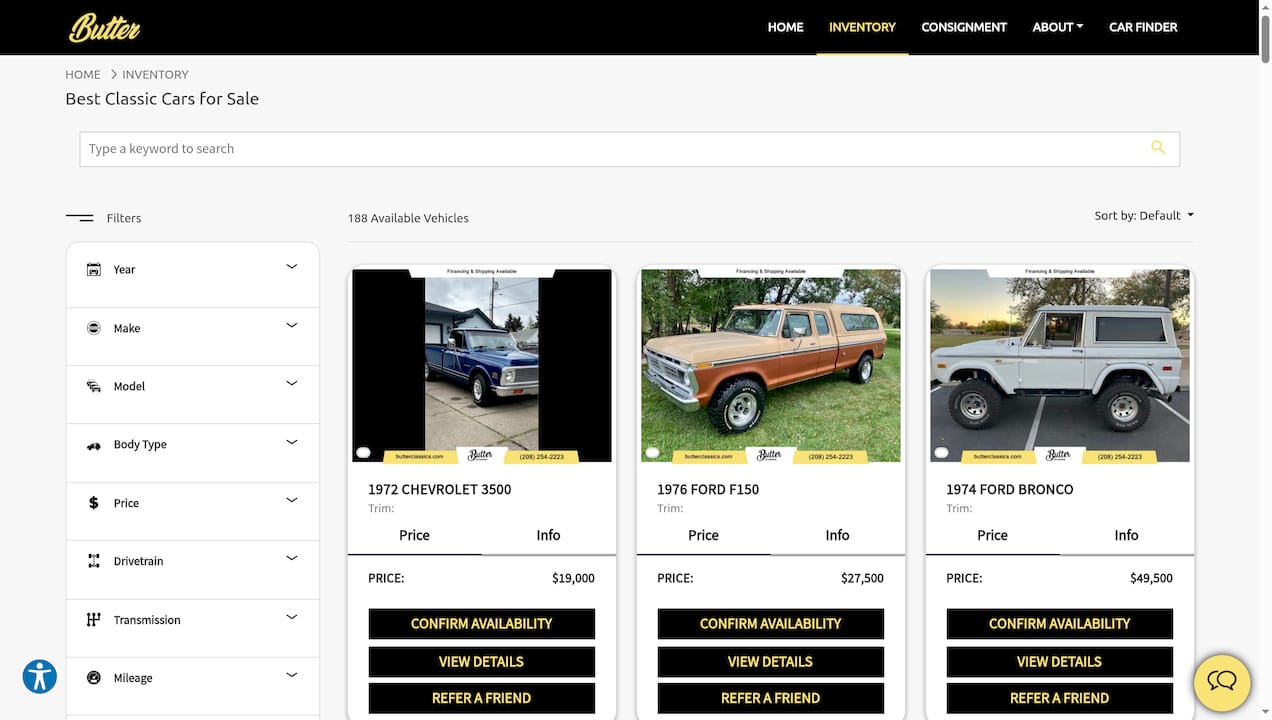
Whether you are just starting out or adding to an established collection, the Butterclassics inventory is a great place to find investment-grade vehicles with the documentation and condition you need. You can also explore Butter Certified vehicles for added confidence in your next purchase. Our team is ready to help you find the right car for the right role in your collection.
FAQ
What is the best way to start a car collection?
Start by defining your collection goals and assigning a role to each vehicle before you buy. Setting a realistic budget that includes storage, insurance, and maintenance costs is just as critical as choosing the right car.
How do classic car values hold up as investments?
Values depend heavily on condition, authenticity, and market demand. Vehicles with complete provenance documentation can be worth 10 to 25 percent more than comparable cars without records, and agreed value insurance protects that investment in case of a total loss.
What are the most popular classic car models for collectors?
Muscle cars like the Ford Mustang, Chevrolet Camaro, and Dodge Charger consistently rank among the most sought-after models. Early Corvettes, classic Broncos, and marque-specific European sports cars also hold strong collector interest.
How should I store a classic car long-term?
Perform a full fluid service, add fuel stabilizer, and raise the vehicle on jack stands or tire cradles to prevent flat-spotting. Climate-controlled storage with stable temperature and humidity between 40 and 50 percent is the standard for protecting value over time.
Do I need special insurance for a classic car?
Yes. Standard auto policies calculate payouts based on depreciated value, which almost never reflects the collector market price. Agreed value coverage pays the amount you and the insurer agree on upfront, giving you full protection for what your car is actually worth.