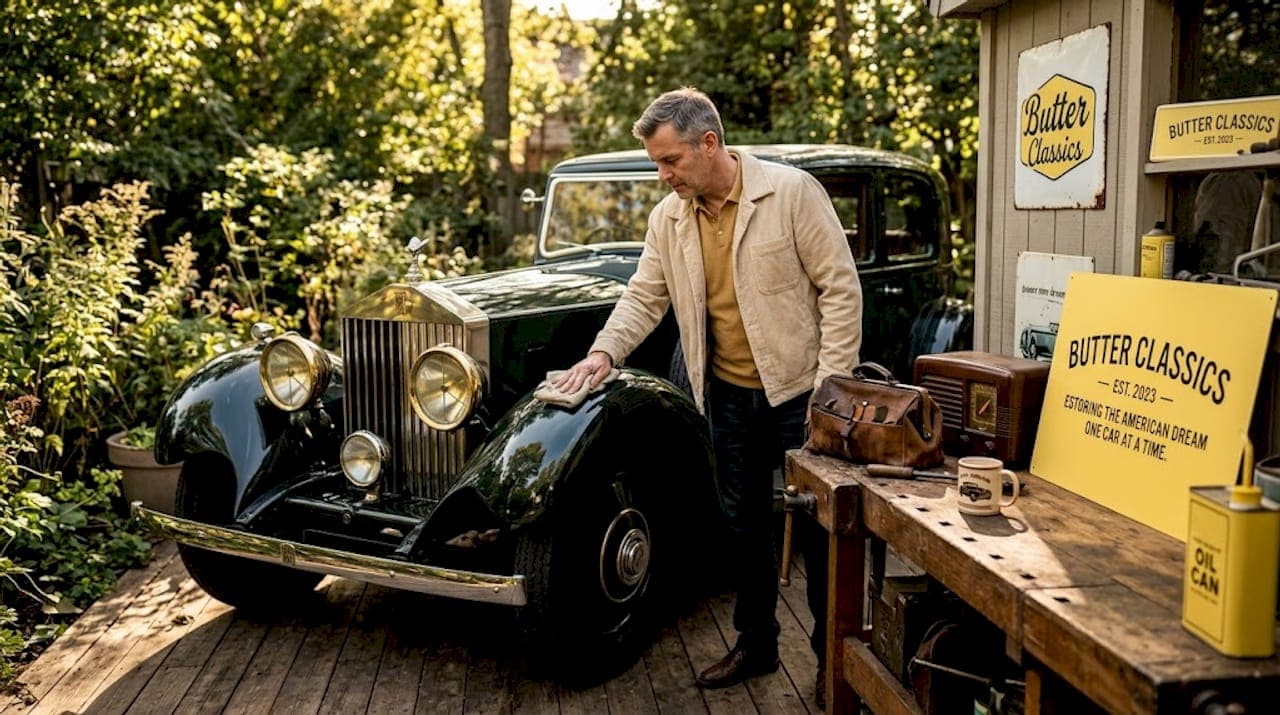
If you've ever stood in front of a gleaming 1928 Rolls-Royce Phantom and wondered exactly what makes it a vintage luxury car rather than simply a classic or antique, you're not alone. The definition of vintage cars trips up even seasoned enthusiasts. A vintage luxury car sits at a very specific intersection of era, craftsmanship, and prestige. Understanding where that intersection lies changes how you buy, value, restore, and insure these machines. This guide breaks it all down so you can collect with confidence.
Table of Contents
- Key takeaways
- What is a vintage luxury car, exactly
- Features that define vintage luxury cars
- Valuation and investment considerations
- Restoration and maintenance realities
- How to start identifying and collecting vintage luxury cars
- My honest take on vintage luxury car ownership
- Find your perfect vintage luxury car at Butterclassics
- FAQ
Key takeaways
| Point | Details |
|---|---|
| Vintage means 1919 to 1930 | Vintage cars fall within a precise date window, separate from classic and antique classifications. |
| Luxury adds a craftsmanship layer | High-end materials, handbuilt interiors, and advanced engineering for their era define luxury vintage cars. |
| Provenance drives value | Originality and documented history matter more than condition alone when assessing collectible worth. |
| Restoration costs are steep | Full restomod projects can exceed $350,000 and require thousands of labor hours. |
| Agreed value insurance is a must | Standard depreciation-based policies undervalue vintage luxury cars significantly. |
What is a vintage luxury car, exactly
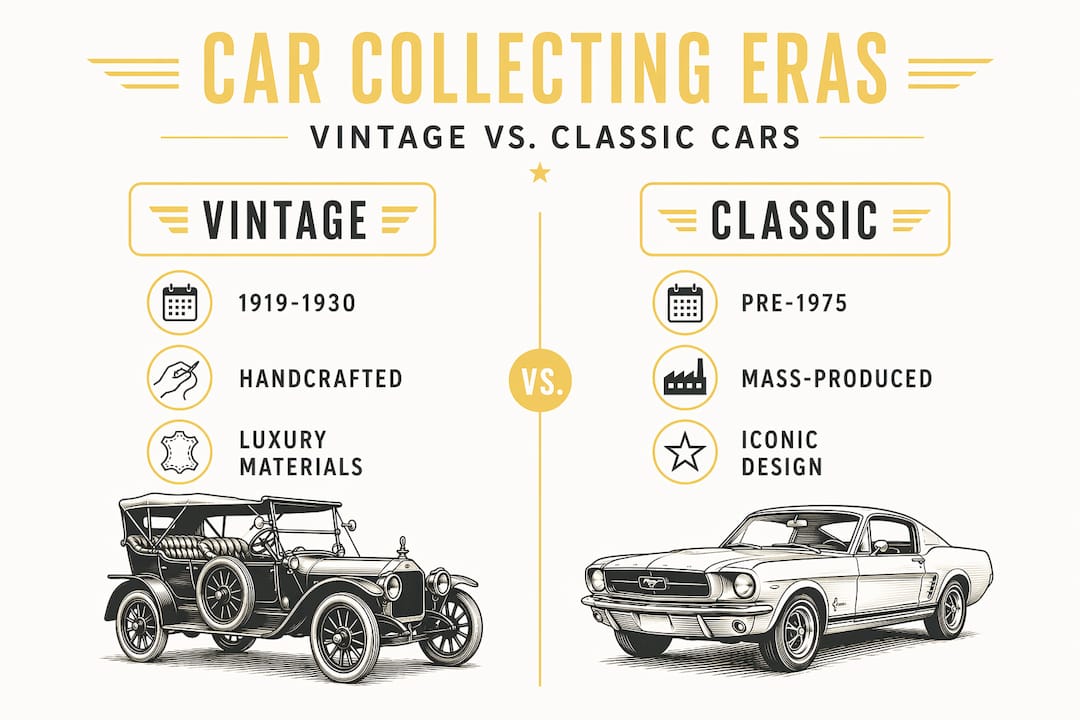
Most people use "vintage," "classic," and "antique" interchangeably. They mean very different things to collectors and industry professionals.
Vintage cars are specifically manufactured between 1919 and 1930, placing them in a narrow 11-year window. Classic cars are generally vehicles more than 20 to 25 years old. Antique cars are typically over 45 years old. A 1967 Ford Mustang is a classic. A 1923 Bentley 3 Litre is a vintage car. Both could be antiques depending on the definition used, but only one is truly vintage.
Layering "luxury" onto "vintage" narrows the field further. Luxury classic vehicles from this era were built with superior comfort, rare materials, and engineering that exceeded what ordinary cars offered. Think coachbuilt bodies, hand-stitched leather, and engines with displacement figures that would embarrass most modern trucks.
Here is a quick comparison to keep the terminology straight:
| Category | Typical age range | Key characteristics |
|---|---|---|
| Vintage | Built 1919 to 1930 | Handcrafted, pre-mass production era, rare |
| Classic | 20 to 25+ years old | Collectible, historically significant, broad category |
| Antique | 45+ years old | Legal classification in many states, broad age threshold |
| Vintage luxury | Built 1919 to 1930, high-end marque | Coachbuilt, premium materials, prestige brand origin |
Features that define vintage luxury cars
Knowing the date range is the starting point. Knowing what made these cars luxurious is what separates a knowledgeable collector from someone who just bought an old car.
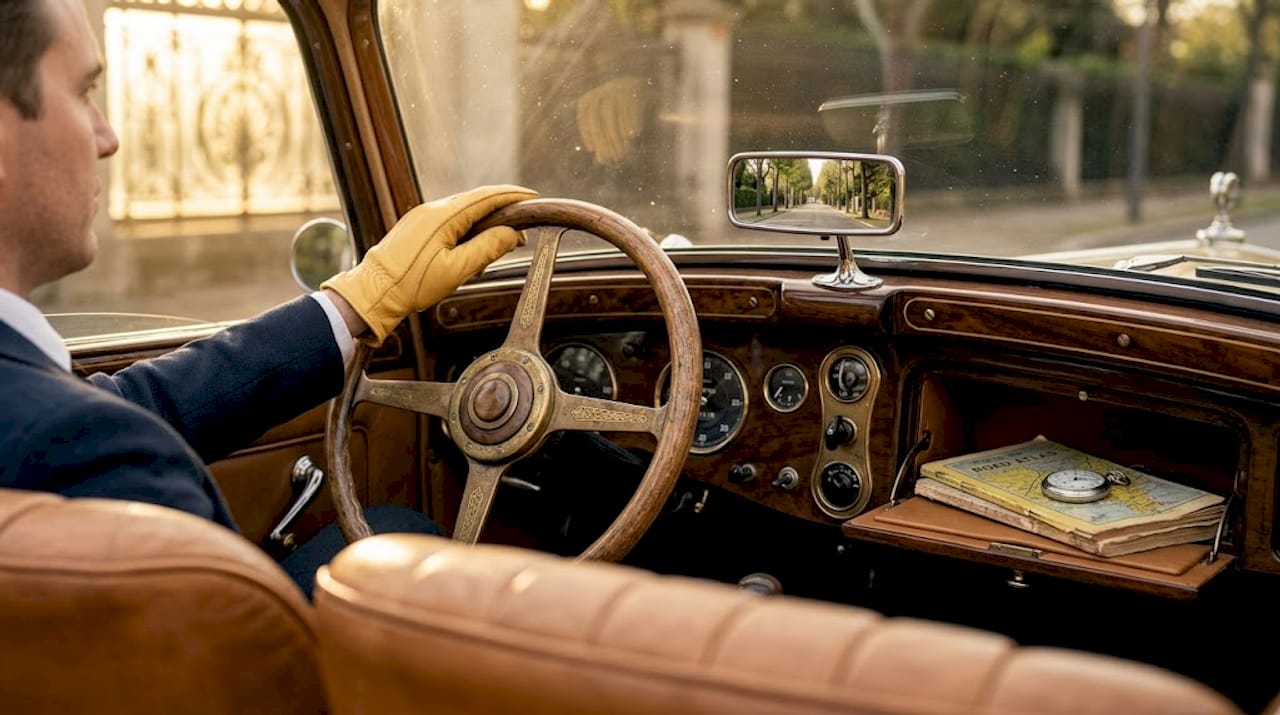
Luxury meant something different depending on the brand and era. Rolls-Royce prioritized silence and ride comfort. Bugatti chased aesthetic perfection and motorsport pedigree. Mercedes-Benz balanced engineering precision with refinement. None of them defined luxury the same way, which is exactly what makes collecting in this space so rewarding.
The features that consistently separated vintage luxury vehicles from standard cars of the period include:
- Coachbuilt bodywork: Bodies were often designed and built separately from the chassis by specialist coachbuilders, meaning no two cars were identical.
- Hand-stitched interiors: Leather, wool, and exotic wood veneers were fitted by craftsmen, not assembly lines.
- Large displacement engines: Engines in the 6 to 8 liter range were common, delivering smooth, low-rev torque rather than high-strung performance.
- Advanced suspension systems: Independent front suspension and sophisticated damping appeared in luxury cars years before they reached mainstream vehicles.
- Custom instrumentation: Gauges, switchgear, and fittings were often bespoke, adding to both cost and uniqueness.
Maintenance challenges come with the territory. Parts are scarce, specialist mechanics are rare, and the complexity of these machines means buying a classic luxury car often costs far more over time than the purchase price suggests.
Pro Tip: When viewing a potential purchase, focus on originality. Matching numbers, original paint under door jambs, and factory stampings on the engine block are the clearest signs that a car has not been altered. Modifications, even well-intentioned ones, can significantly reduce collector value.
Valuation and investment considerations
Vintage luxury car collecting is not a passive investment. Values move based on a complex mix of factors, and the market is shifting in ways that reward the well-informed.
The primary drivers of value are:
- Provenance: Documented ownership history, factory records, and competition history all add measurable worth.
- Originality: Matching numbers and unrestored examples with honest patina often fetch premiums over heavily restored cars.
- Rarity: Limited production runs and coachbuilt one-offs command the highest prices.
- Condition: Cosmetic and mechanical condition matter, but never more than provenance and originality in the top tier of the market.
Market dynamics are shifting toward a smaller, more discerning collector base that prioritizes provenance and originality over general vintage status. Traditional European marques face growing competition from Japanese performance cars and American muscle, which are attracting younger collectors. This does not diminish the value of true vintage luxury cars, but it does mean you need to buy the right car, not just any old car with a prestigious badge.
Holding periods tell an interesting story. Vintage cars are often held for over 26 years before being shown publicly or sold, which reflects how collectors view these vehicles as long-term stewardships rather than quick flips. Patience is genuinely part of the investment strategy.
On the insurance side, agreed value policies are the standard choice for serious collectors. Unlike actual cash value coverage, which applies depreciation and leaves you undercompensated after a loss, agreed value locks in a pre-determined payout that reflects the car's true collectible worth. Never insure a vintage luxury car with a standard auto policy.
Restoration and maintenance realities
Owning a vintage luxury car is one of the most rewarding experiences in the automotive world. It is also one of the most demanding. Going in with clear expectations makes all the difference.
Parts availability is the first wall you hit. Owners often need to harvest components from multiple donor cars to source a single working part, particularly for Rolls-Royce and other low-volume marques. This is not a sign of a bad purchase. It is simply the reality of maintaining machines that were built in small numbers nearly a century ago.
The restoration path you choose shapes everything that follows. Your three main options are:
- Full concours restoration: Return the car to factory-original specification. Maximizes show value and collector appeal, but costs are extreme and the car becomes too precious to drive.
- Restomod: Retain the original body and styling while upgrading mechanicals, brakes, and sometimes electrics for modern reliability. Restomodding offers the classic aesthetic with modern usability, though at the cost of original collector value.
- Preservation: Stabilize what exists without altering the patina or originality. Growing in popularity among top-tier collectors who recognize that honest, unrestored examples are becoming rare.
The cost of a serious restomod is not for the faint of heart. Specialist firms produce as few as 12 remastered units per year at prices starting around $350,000 to $570,000, not counting the donor vehicle. Full restoration projects can require upward of 5,000 labor hours, which explains why quality shops have multi-year waiting lists.
Pro Tip: Before committing to any restoration path, get a full mechanical and body assessment from an independent specialist who has no financial stake in the outcome. A car preservation workflow developed with a trusted expert will save you from expensive surprises and help you preserve the provenance that drives long-term value.
How to start identifying and collecting vintage luxury cars
If you are ready to move from admiring these cars to actually owning one, a structured approach protects your investment and your enthusiasm.
-
Set a realistic total budget. The purchase price is only the beginning. Factor in insurance, storage, annual maintenance, and a restoration reserve of at least 20 to 30 percent of the purchase price before you make an offer.
-
Define your purpose. Are you collecting for shows, occasional driving, long-term appreciation, or all three? Your answer determines which cars and which restoration states make sense for you.
-
Research the marque thoroughly. Each brand has known weak points, common fraud patterns, and specific documentation to verify. A 1927 Hispano-Suiza has completely different ownership considerations than a 1929 Cadillac.
-
Hire an independent appraiser. Never rely solely on the seller's documentation. A certified appraiser with marque-specific experience will spot irregularities in chassis numbers, body stampings, and provenance records that are invisible to an untrained eye.
-
Verify documentation. Factory build records, original title history, period photographs, and service records all contribute to provenance. Gaps in documentation are not automatic deal-breakers, but they should be reflected in the price.
-
Work with trusted sellers. The vintage luxury car market rewards relationships. Sellers with established reputations and transparent inventory records give you far more confidence than anonymous private listings.
Poorly maintained vintage cars deteriorate quickly from surface patina into structural rust, and the difference between a car that needs cosmetic attention and one that needs a full body-off restoration can be tens of thousands of dollars. Learn to read the difference before you fall in love with a car.
My honest take on vintage luxury car ownership
I've spent years around these cars, and the one thing I keep telling first-time collectors is this: the romance is real, but it can absolutely blind you to what you're actually buying.
People walk into a viewing and see a 1928 Bentley with original coachwork, and their brain stops processing information. I've watched buyers skip the independent inspection, ignore rust behind the firewall, and pay full price for a car that needed $80,000 in work before it could be safely driven. The beauty of these machines is genuinely intoxicating. That's exactly why you need a process.
My experience has also taught me to evaluate vintage luxury cars by how well they fulfilled their purpose in their era, not by modern standards. A 1925 Rolls-Royce Silver Ghost with drum brakes and no power steering is not a flawed car. It is a perfect expression of what luxury meant in 1925. Judging it against a modern sedan misses the point entirely.
The restoration dilemma is real too. I lean toward preservation when the car has honest, unaltered history. A restomod makes sense when the car is too far gone to restore affordably, or when the owner genuinely wants to drive it regularly. What I'd caution against is a halfway restoration that destroys originality without delivering modern reliability. That outcome pleases nobody and sells to nobody.
The market is getting more selective. That is actually good news for buyers who do their homework. The days of any old vintage car appreciating simply because it's old are fading. What's left is a market that rewards knowledge, patience, and genuine passion.
— Tony
Find your perfect vintage luxury car at Butterclassics
At Butterclassics, we know how much work goes into finding the right vintage luxury car. That's why our inventory is curated with serious collectors in mind. Every vehicle we showcase comes with detailed specifications, high-quality photography, and transparent history so you can evaluate with confidence before you ever schedule a test drive. We also offer Butter Certified vehicles that have been assessed to a high standard, giving you the peace of mind that comes with knowing exactly what you're getting. Whether you're searching for your first vintage luxury acquisition or adding to an established collection, our team is here to make the process smooth as butter.
FAQ
What years qualify as vintage for a car?
Vintage cars are manufactured between 1919 and 1930, which distinguishes them from classic cars (20 to 25+ years old) and antique cars (45+ years old).
What makes a car a luxury vintage vehicle?
A vintage luxury car combines the 1919 to 1930 production window with high-end features like coachbuilt bodywork, handcrafted interiors, large displacement engines, and prestige marque origins such as Rolls-Royce, Bugatti, or Hispano-Suiza.
How do I know if a vintage luxury car is original?
Check for matching chassis and engine numbers, factory stampings, original paint under door jambs and trunk floors, and documented ownership history. An independent appraiser with marque-specific experience is the most reliable verification tool.
Is investing in vintage luxury cars a good idea?
Vintage luxury cars can appreciate significantly over long holding periods, but the vintage luxury vehicle market increasingly rewards provenance and originality over general age or brand prestige. Treat it as a passion investment with financial upside, not a guaranteed return.
What insurance do I need for a vintage luxury car?
Agreed value insurance is the right choice. It locks in a pre-agreed payout amount rather than applying depreciation, which means you are compensated for the car's true collectible value in the event of a total loss.