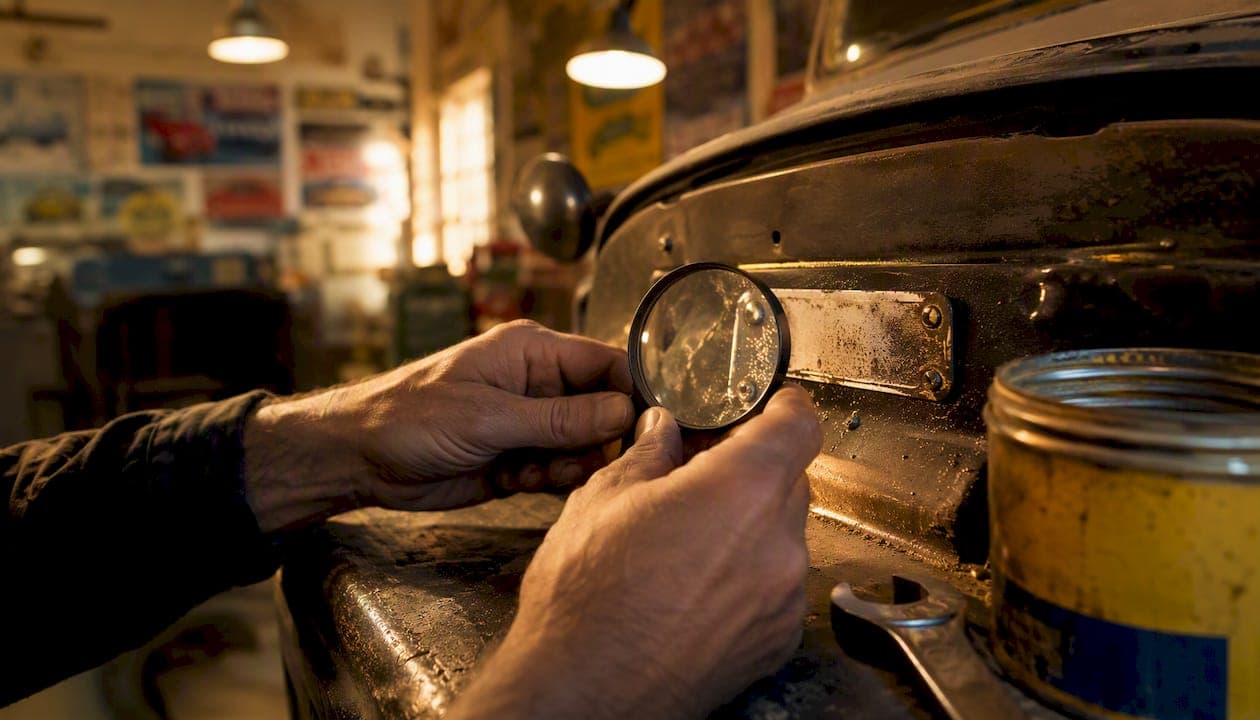
Yes, you can decode a pre-1981 classic car VIN, but it takes more than pasting numbers into a modern lookup tool. Vintage VINs weren't standardized until 1981, so decoding is a make-and-year-specific exercise that reveals engine code, body style, assembly plant, model year, and production sequence, once you apply the right key.
Here's your first move:
- Photograph the VIN plate and the trim or cowl tag before you do anything else.
- Enter the VIN into a classic-focused decoder built for pre-1981 formats.
- Cross-check whatever comes back against a marque registry if the results look thin.
That's the whole game in one paragraph. Everything below shows you how to do it right.
Key Takeaways
Decoding a pre-1981 classic car VIN requires matching the exact make and model year to the correct manufacturer key, then verifying the result against physical casting and stamping numbers.
| Point | Details |
|---|---|
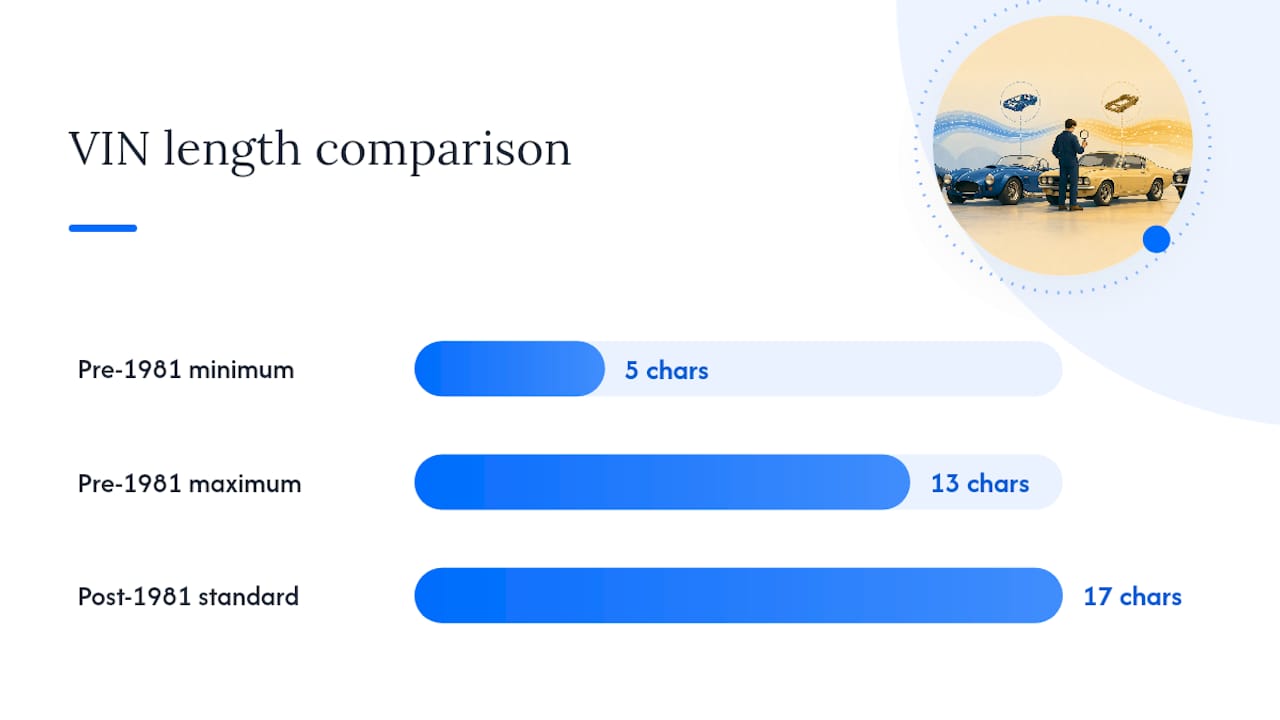
| Pre-1981 VINs vary by make | Lengths run 5 to 13 characters with no shared structure across brands, unlike the 17-character standard that started in 1981. |
| Prep before decoding | Photograph the VIN plate and trim/cowl tag separately, and transcribe characters carefully to avoid common mix-ups. |
| Use a classic-focused decoder | Tools like CarCheckerVIN, DecodeThis, VINwiz, and Classic Decoder handle pre-1981 formats that modern decoders reject. |
| Verify with numbers-matching | Compare VIN-decoded engine codes against block castings, transmission tags, and rear-axle stamps before trusting the result. |
| Escalate for high-value cars | Contact a marque registry or appraiser when the decode is thin or the purchase price justifies deeper verification. |
Ready to see verified classic cars in person? Browse Butterclassics' current inventory of collector vehicles with detailed specs and documented histories, or schedule a test drive once you've found one worth chasing.
Table of Contents
- How to Decode a Classic Car VIN the Right Way
- Why Pre-1981 VINs Don't Work Like Modern Ones
- Step-by-Step: Decoding a Classic VIN
- Three Quick Examples: GM, Ford, and Mopar Codes
- Which Tools Actually Handle Classic VINs Well?
- Common VIN Transcription Errors to Avoid
- What a VIN Decode Can't Tell You
- Your Post-Decode Verification Checklist
- Frequently Asked Questions
- Sources
How to Decode a Classic Car VIN the Right Way
Before you touch a decoder tool, spend three minutes doing this prep work. It saves hours of chasing bad data later.
- Find the VIN plate: dash-mounted (visible through the windshield), driver-door jamb, or firewall, depending on the make and year.
- Locate the trim or cowl tag separately. It's often riveted to the firewall or radiator support and carries paint, interior, and build-plant codes the VIN alone won't give you.
- Transcribe character by character, out loud, checking each letter against the physical stamp twice.
- Gather your title, any factory paperwork, and clear close-up photos before opening a decoder tool.
Pro Tip: Zoom in and photograph the VIN and trim tag separately, in good light, before you type a single character. Half of all bad decodes trace back to a smudged 8 read as a B or a stamped S mistaken for a 5.
Why Pre-1981 VINs Don't Work Like Modern Ones
The 17-character VIN format everyone recognizes today didn't exist until 1981. Before that, VIN lengths ran anywhere from 5 to 13 characters depending on the manufacturer and model year, with no shared structure across brands.
That variability explains a few things collectors run into constantly:
- A 1969 Camaro VIN and a 1969 Mustang VIN follow completely different logic, even though they're the same model year.
- Some pre-1970 VINs skip a model-year digit entirely, relying instead on plant and sequence codes.
- Modern 17-digit decoders often reject short classic VINs outright or return "invalid format," because they're built around a standard that postdates your car by a decade or more.
This is why a generic VIN checker built for a 2015 sedan is the wrong tool for a 1967 GTO. You need something built for the era.
Step-by-Step: Decoding a Classic VIN
Work through this in order. Skipping steps is how misidentified engines and mismatched trim end up in a for-sale listing.
- Confirm the make and approximate year. Body style, badges, and paperwork usually narrow this down before you even look at the VIN.
- Locate every VIN stamp on the car, not just the dash plate. Many pre-1981 vehicles carry a secondary VIN on the frame, firewall, or door jamb, plus the separate trim/cowl tag.
- Run the VIN through a classic-focused decoder or a manufacturer-specific reference table matched to that exact model year. CarCheckerVIN's classic decoder reads pre-1981 manufacturer formats and cross-references NMVTIS and build-sheet data to return engine code, body style, and plant.
- Break down the decoded result into engine family, body style, assembly plant, model year, and production sequence, using a key matched to that specific year, since position meanings shift from year to year.
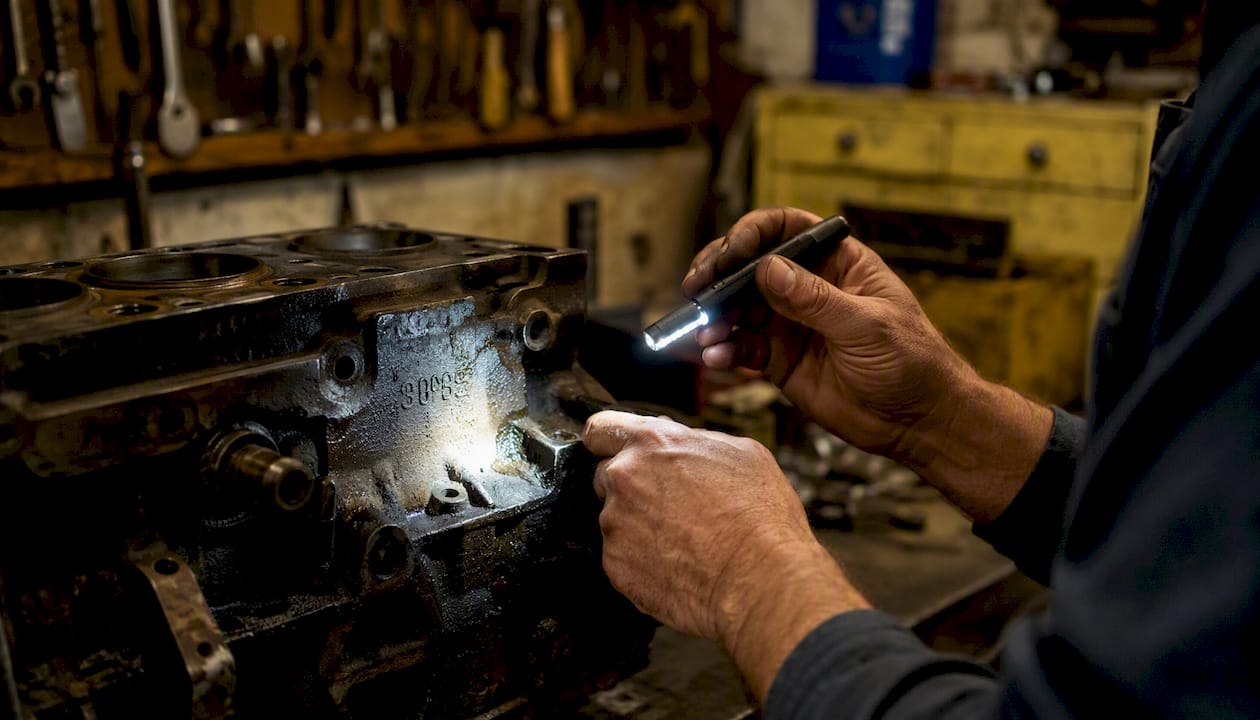
- Start your numbers-matching check. Compare the VIN-encoded engine code against the physical casting numbers on the block and the stamped pad numbers near the distributor.
A quick example of how this plays out: if your decode says the VIN encodes a 396ci engine, the block casting number should correspond to a known 396 casting, and the stamp pad should show a code consistent with that engine family and assembly date. If the block casting points to a 350 instead, you've likely got a replaced engine, not a numbers-matching original.
Your numbers-matching checklist should cover:
- Engine block casting number and stamp pad
- Transmission case casting and tag
- Rear axle housing stamp
- Cross-reference against the VIN-decoded engine and driveline codes
Three Quick Examples: GM, Ford, and Mopar Codes
Classic-era GM VINs typically run 13 characters, with one specific position most often encoding the engine rather than the trim level. A 1970 Chevelle and a 1970 Camaro place that engine digit differently, so you can't borrow one year's key for another.
Ford's pre-1981 VINs ran 11 to 13 characters and typically packed model year, assembly plant, and engine code into adjacent early positions. A 1969 Mustang VIN reads differently at those positions than a 1965 model, even on the same production line.
Mopar's 13-character format encoded body style and engine together in a way that's genuinely useful for spotting clones: a VIN claiming a 440 in a body style that factory records show never got one is a red flag worth chasing before you buy.
The one rule that applies across all three brands: position and meaning shift by year, so always match your key to the exact model year, not just the make.
Which Tools Actually Handle Classic VINs Well?
Not every tool does the same job, and knowing which one to reach for saves you money and false confidence.
- Hagerty Valuation Tools are strongest for market value context once you've confirmed specs, less so for raw VIN decoding.
- DecodeThis and VINwiz offer general classic-era decode support across multiple makes.
- Classic Decoder focuses on muscle-car-era GM, Ford, and Mopar formats specifically.
- CarCheckerVIN combines pre-1981 format reading with NMVTIS cross-referencing for a fuller picture.
- NMVTIS and NICB are built for title, brand, and theft records tied to the modern 17-character standard, so pre-1981 vehicles often return incomplete results there.
When a decoder comes up thin, that's your cue to go further. Marque registries hold authoritative production data that no automated tool can replicate. For high-value cars, a reproduction build sheet or an independent appraiser earns its cost fast, especially before a five- or six-figure purchase.
Common VIN Transcription Errors to Avoid
Bad decodes usually trace back to bad transcription, not bad tools. Watch for these mix-ups: S vs. 5, O vs. 0, A vs. 4, 8 vs. B, and T vs. 7, all of which are easy to confuse on a worn or dirty stamp.
- Photograph every stamping location separately and crop tight for clarity.
- Re-check your transcription against the physical plate at least twice.
- Compare the sequence number against known production ranges for that model year.
Pro Tip: If a marque registry lists a production run significantly lower than your sequence number, there may be a transcription error or mismatch, you've either misread a digit or you're looking at a different model entirely.
What a VIN Decode Can't Tell You
A decode is a starting point, not a verdict. Here's the honest split.
What it can reveal: factory engine family, body style, assembly plant, model year, and production sequence, assuming the manufacturer encoded that data in the first place.
What it can't reveal: complete ownership history, full accident history, or guaranteed numbers-matching status. Only physical inspection of casting and stamping numbers proves that.
For a five-figure or six-figure purchase, treat the decode as step one. Escalate to a marque registry or a trusted appraiser before you commit real money, and read up on full authentication practices if you're buying at the higher end of the market.
Your Post-Decode Verification Checklist
Once you've got a decoded VIN in hand, gather these before you call anyone:
- Clear photo of the trim/cowl tag
- Engine casting number and stamp pad photos
- Transmission and rear-axle stamp photos
- Build sheet or Protect-O-Plate, if the car still has one
Then contact the relevant marque registry, a build-sheet vendor like Marti Auto Works for Ford products, a trusted appraiser for high-value cars, or NICB/NMVTIS for a title and brand check.
Why a Hands-On Decode Still Matters
A VIN decode only means something once it's checked against the metal in front of you. Registries and stamping checks turn a computer readout into real provenance, and that's the part that actually protects your money.
Frequently Asked Questions
Can I decode a classic car VIN online for free? Yes. Tools like CarCheckerVIN, DecodeThis, and VINwiz offer free lookups for pre-1981 formats, though results depend on how well-documented your specific make and year are.
Why does my classic car's VIN look shorter than a modern VIN? Because it predates the 17-character standard adopted in 1981. Pre-1981 VINs ran anywhere from 5 to 13 characters, varying by manufacturer.
Does a VIN decode prove numbers-matching status? No. A decode tells you what the VIN says the car should have. Numbers-matching requires physically comparing that data against engine, transmission, and rear-axle casting and stamping numbers.
What if NMVTIS or NICB returns no data for my classic VIN? That's common for pre-1981 vehicles, since both systems are built around the modern VIN standard. A marque registry or reproduction build sheet usually fills the gap.
Where do I find the trim or cowl tag on a classic car? Locations vary by make, but firewalls and radiator supports are the most common spots. It's separate from the main VIN plate and carries paint, interior, and plant codes.
Sources
- Classic Car VIN Decoder — Pre-1981 Vehicle Lookup (Free)
- Bureau of Justice Assistance — NMVTIS overview
- NICB — VINCheck
- Decode a Classic Car VIN—Even Without 17 Digits | VinCheckPro Blog
- Classic Car VIN Decoder - Pre-1981 Vehicles Explained | VinDecoderPlus