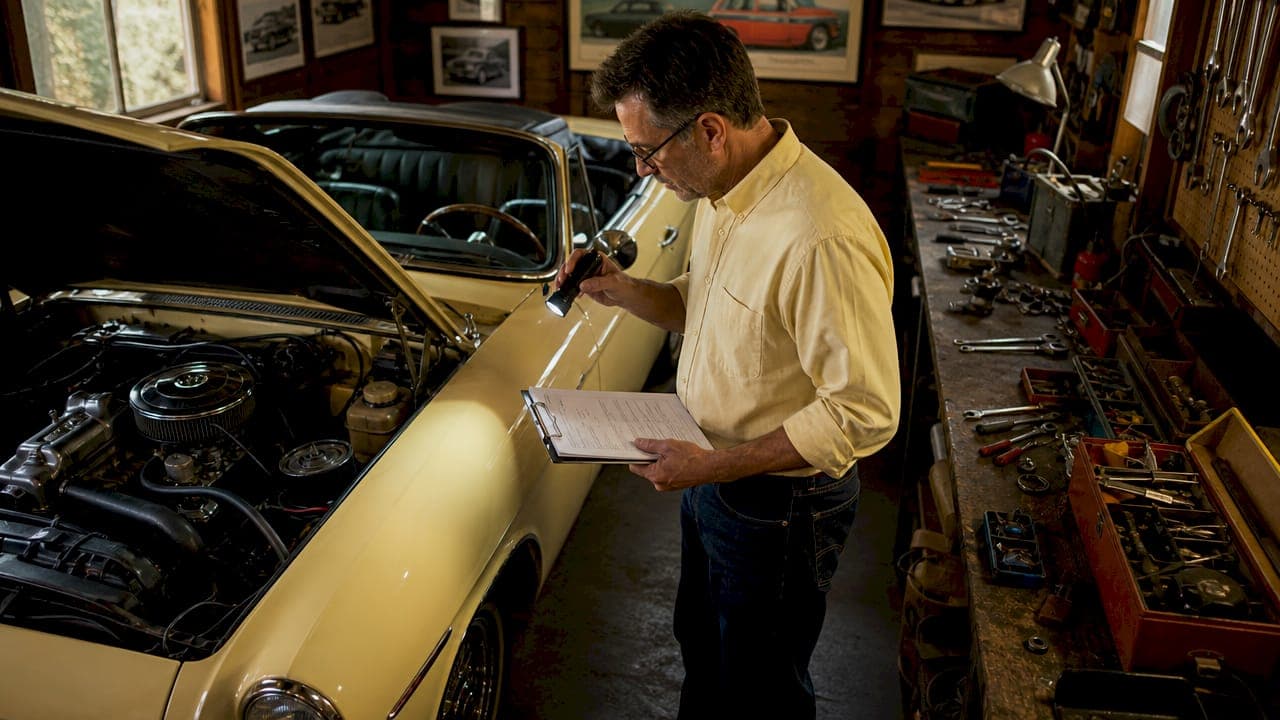
A classic car trade-in evaluation checklist is a structured tool that helps owners maximize their vehicle's trade-in value by systematically addressing provenance, mechanical condition, documentation, and market pricing. The industry term for this process is a pre-appraisal assessment, and it covers everything from VIN verification to condition grading and comparable sales research. Skipping any step costs you money. Classic car valuation is part art, part science, and the owners who prepare thoroughly are the ones who walk away with the strongest offers.
1. Classic car trade-in evaluation checklist: start with provenance
Provenance is the single most powerful lever in a classic car trade-in evaluation. Documentation like title, restoration invoices, and maintenance records can increase trade-in value by 10–20%. That premium reflects the trust a complete paper trail creates with any serious buyer or appraiser.
Start by gathering these core documents:
- Title: Clean, lien-free, and matching the VIN on the car
- Build sheet or window sticker: Confirms factory options and trim package
- Restoration invoices: Dated receipts from shops, with parts and labor itemized
- Service records: Oil changes, tune-ups, and repairs in chronological order
- Ownership history: Prior registrations or bill-of-sale documents showing chain of custody
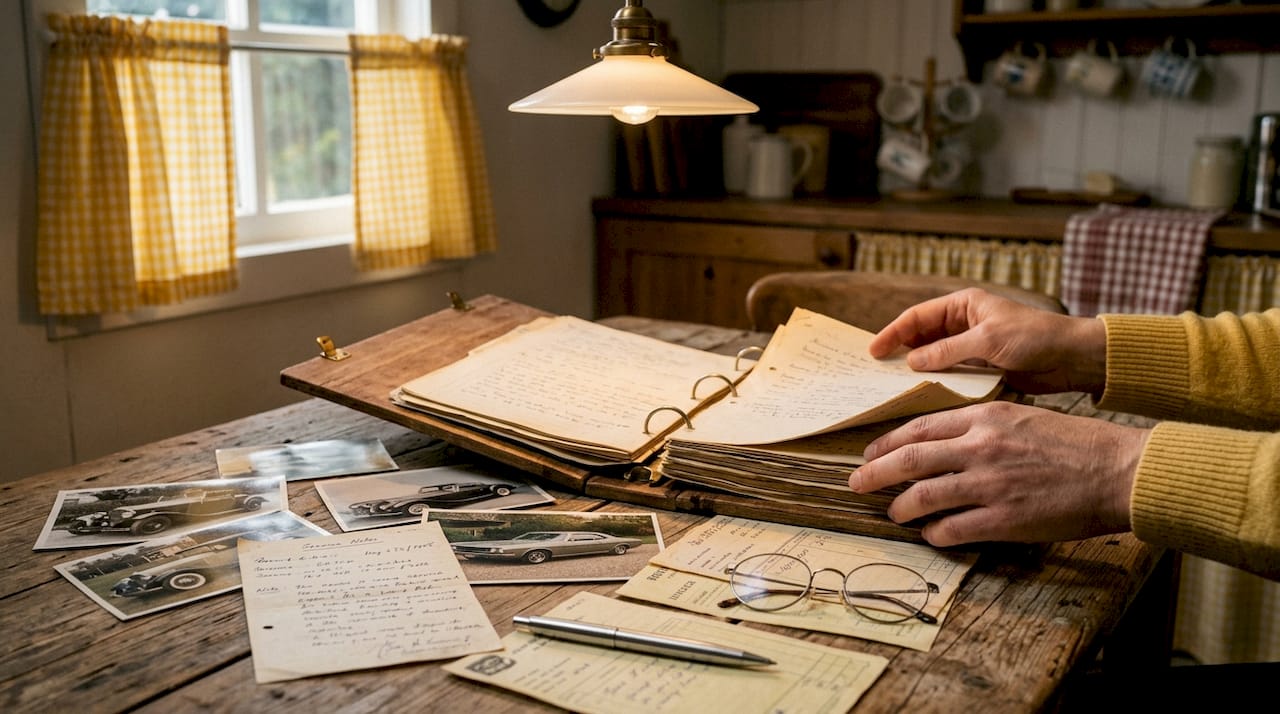
Organize everything into a physical binder or a digital folder with scanned copies. Service history verification requires cross-checking paper records with digital databases, and discrepancies signal fabricated or misleading information. Appraisers notice gaps immediately.
Pro Tip: Number your documents chronologically and add a one-page summary sheet at the front. It saves appraisers time and signals that you are a serious, organized seller.
2. Verify matching numbers and VIN accuracy
Matching numbers are non-negotiable for top-tier classic car valuations. A numbers-matching car means the engine, transmission, and major components carry the original factory-stamped codes that correspond to the VIN. Replacing any of these with non-original parts drops the car into a lower value tier, regardless of how well it runs.
Pull the VIN from the dashboard, door jamb, and frame. Cross-reference each location. Then check the engine block stamp and transmission tag against the original build documentation. For authentication guidance, classic car provenance verification covers exactly what appraisers look for during this step.
If your car is not numbers-matching, disclose it upfront. Hiding it and having an appraiser discover it mid-inspection destroys trust and tanks the offer.
3. Evaluate paint, body, and exterior condition honestly
Honest condition grading is the foundation of any credible classic vehicle evaluation. Appraisers grade paint on a scale that distinguishes original finishes, professional resprays, and amateur work. Each tier carries a different value. Original factory paint in good condition is worth more than a fresh respray, even if the respray looks better to the untrained eye.
Walk the car in direct sunlight and look for:
- Orange peel texture: Indicates a respray, not original paint
- Panel gaps: Uneven gaps suggest prior collision repair or panel replacement
- Rust bubbles: Check door bottoms, wheel arches, and rocker panels
- Color mismatch: Compare panels under natural light for shade differences
- Trim and chrome condition: Pitting, cracks, or missing pieces reduce value
Physical inspection of paint quality covers original versus respray finishes, frame integrity, and interior originality. Appraisers document all of it. Your job is to know what they will find before they do.
Pro Tip: A professional detail and paint correction on original paint can recover perceived value without misrepresenting the car's history. Skip repainting. Clean and protect what is there.
4. Assess interior and undercarriage condition
Interior originality carries real weight in a classic car appraisal. A factory-correct interior with original upholstery, dash pad, and carpet scores higher than a custom interior, even a high-quality one. Buyers pay for authenticity. Modifications, however tasteful, narrow your buyer pool.
Check the undercarriage with a flashlight and a creeper. Look for frame rust, weld repairs, and evidence of accident damage. Solid floors and clean frame rails are strong selling points. Document them with photos before the appraisal so you can point to them directly.
The undercarriage condition also reveals how the car was stored. A car kept in a dry garage for 20 years looks completely different underneath than one that sat outside. That storage history is part of your story, and it belongs in your documentation portfolio.
5. Conduct a mechanical inspection before the appraiser does
A cold-start test is one of the first things a professional appraiser performs. Mechanical inspection must-haves include engine cold-start behavior, idle quality, and test-drive cues like transmission shifts, brake feel, and steering response. If your car has a known mechanical issue, fix it or disclose it. Do not let an appraiser discover it.
Run through this mechanical checklist yourself first:
- Cold start: Does it start easily and idle smoothly?
- Oil and coolant: Check levels and look for milky residue indicating a head gasket issue
- Brakes: Test for pull, fade, or soft pedal feel
- Transmission: Shifts cleanly through all gears with no slipping
- Electrical: All lights, gauges, and accessories function correctly
Fixing a $200 carburetor issue before the appraisal can prevent a $1,500 deduction from your offer. Small repairs with clear receipts also add to your documentation portfolio.
6. Research comparable sold transactions to build your value range
Sold data is the only reliable benchmark for a classic car trade-in valuation. Verified sold transaction data from similar cars within the last 6–18 months gives you a realistic picture of what the market actually pays. Asking prices on listings are not sold prices. They reflect seller optimism, not buyer behavior.
Build a three-tier value band for your car:
- Lower bound: Condition-grade-matched cars with less documentation or deferred maintenance
- Mid-range: Cars matching your condition and documentation level
- Upper bound: Exceptional examples with full provenance, rare options, and documented restorations
Adjust your range for rare factory options, documented restorations, or known deferred maintenance. A car with a rare color combination or a factory performance package sits above the mid-range. A car with a leaking rear seal and no service records sits below it. 2026 market conditions affect where your specific model falls within that band.
Standard digital valuation tools are insufficient for classic car pricing. Expert, nuanced market knowledge is required because algorithms cannot account for provenance, trim packages, or regional demand. Use sold data from auction results and dealer transactions, not automated estimate tools.
7. Understand how dealers calculate trade-in offers
Dealers do not pay retail for trade-ins. Trade buyers deduct retail preparation costs including repairs, detailing, and marketing, then factor in profit margins of 15–30%. That math explains why trade-in offers feel low compared to private sale prices. It is not a lowball tactic. It is a business model.
A dealer's offer reflects:
- Cost of any mechanical repairs needed before retail sale
- Detailing and cosmetic preparation
- Photography, marketing, and carrying costs
- Expected profit margin on the retail transaction
Knowing this math helps you set realistic expectations. If your car needs $3,000 in work and the dealer targets a 20% margin on a $25,000 retail price, the offer will reflect both deductions. Clarifying trade-in intent early with the appraiser also shapes the report type and the offer structure.
8. Prepare your checklist and organize your trade-in presentation
A structured presentation signals professionalism and builds appraiser confidence. Owners who arrive with organized documentation, clean cars, and honest condition disclosures consistently receive stronger offers. Transparency about flaws builds buyer trust and improves trade-in offers rather than concealing issues.
Follow this preparation sequence:
- Gather all documents: title, build sheet, service records, restoration invoices, ownership history
- Photograph the car thoroughly: exterior panels, interior, engine bay, undercarriage, VIN plates
- Perform your own condition review using the grading criteria above
- Research comparable sold transactions and build your value band
- Make small, documented repairs that improve mechanical function
- Prepare a one-page vehicle summary: year, make, model, mileage, condition grade, and key features
- Schedule the appraisal and confirm whether it is remote or in-person
For in-person appraisals, bring the physical documentation binder. For remote appraisals, submit high-resolution photos alongside the digital document folder. Dealer inspection criteria follow a consistent sequence, and knowing that sequence lets you prepare each area in advance.
Pro Tip: Write down any known issues on a separate disclosure sheet and hand it to the appraiser at the start. It demonstrates honesty, prevents surprises, and often results in a more favorable final offer.
Key takeaways
A complete classic car trade-in evaluation requires verified provenance, honest condition grading, and sold-data-based pricing to achieve the strongest possible offer.
| Point | Details |
|---|---|
| Provenance adds real value | Documentation like title, build sheets, and restoration invoices can increase trade-in value by 10–20%. |
| Matching numbers matter | Numbers-matching cars command a higher value tier; always verify VIN, engine, and transmission codes. |
| Sold data beats asking prices | Use closed auction and dealer transactions from the last 6–18 months, not listing prices, to set your value range. |
| Dealers deduct preparation costs | Trade offers reflect repair, detailing, and profit margins of 15–30%; set expectations accordingly. |
| Transparency wins | Disclosing known issues upfront builds appraiser trust and produces stronger, more reliable offers. |
What I have learned from watching owners leave money on the table
The most common mistake I see classic car owners make is confusing emotional value with market value. You know every hour that went into that restoration. The appraiser does not, and they cannot price what they cannot verify. That is exactly why documentation is not optional. It is the only way to transfer your knowledge of the car into a number the buyer can defend.
The second mistake is researching value using listing prices. I have watched owners walk into negotiations convinced their car is worth $45,000 because they saw a similar one listed at that price online. Listings are not sales. The car that sold for $32,000 last month is the real data point. Basing your expectations on closed transactions changes the entire conversation.
One more thing: do not over-restore before a trade-in. A fresh, expensive respray rarely returns its cost in a trade-in offer. Clean, protect, and document what you have. The buyers who pay the most for classic cars pay for authenticity, not perfection.
— Tony
Butterclassics is here when you are ready to trade
Getting your classic car evaluated does not have to feel like a guessing game. At Butterclassics, we work with owners who want a fair, transparent process from start to finish. Whether you are ready to trade now or just starting to think about it, our team understands what makes a classic car valuable and how to present it correctly.
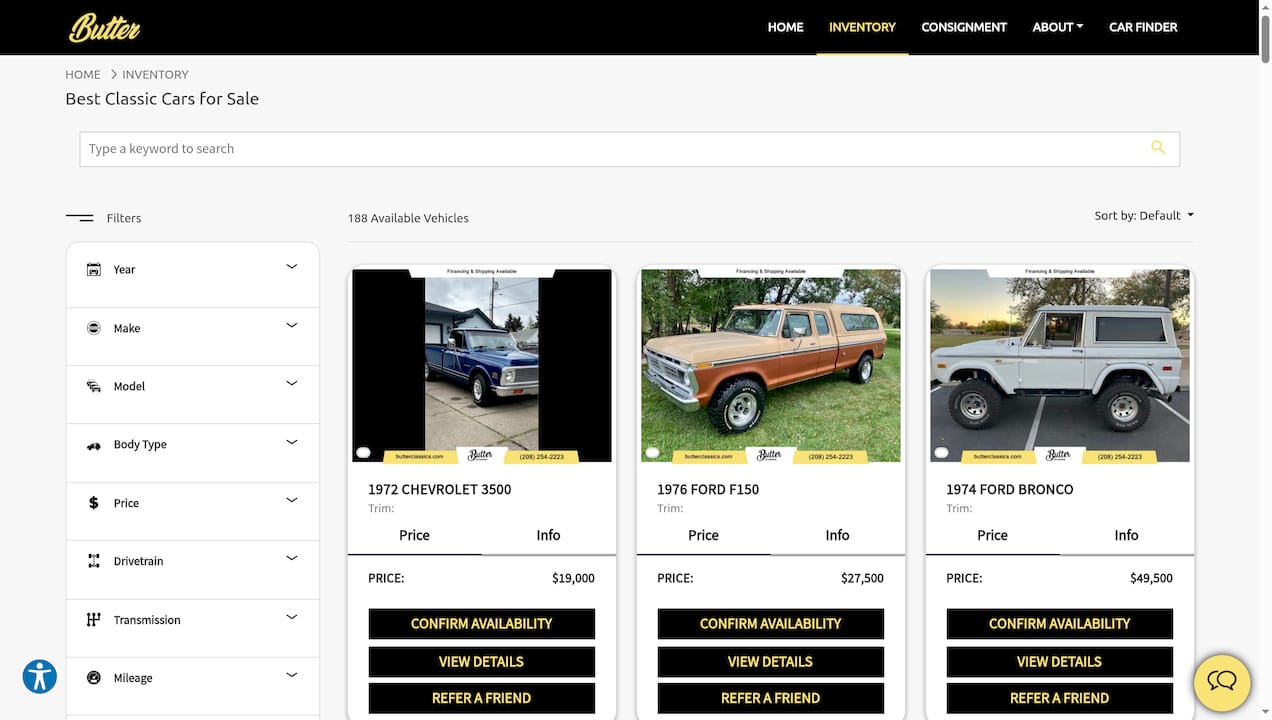
Browse our certified classic inventory to see the standard we hold every vehicle to, and get a sense of how a well-documented, properly evaluated classic is presented to buyers. When you are ready to talk trade-in, visit Butterclassics and connect with our team. We make the process smooth as butter.
FAQ
What documents do I need for a classic car trade-in?
A complete trade-in portfolio includes the title, build sheet, service records, restoration invoices, and ownership history. Documentation adds a 10–20% value premium by confirming authenticity and reducing appraiser risk.
How do dealers calculate classic car trade-in offers?
Dealers subtract retail preparation costs and apply a profit margin of 15–30% to their expected retail price. Trade offers reflect net profitability after repairs, detailing, and marketing expenses.
Should I fix my classic car before a trade-in appraisal?
Small mechanical repairs with documented receipts are worth making because they prevent larger deductions during the appraisal. Avoid expensive cosmetic work like full resprays, which rarely return their cost in a trade-in setting.
What is the best way to research my classic car's trade-in value?
Use verified sold transaction data from auctions and dealer sales within the last 6–18 months. Asking prices overestimate true market value and should not be used as a pricing benchmark.
Does a numbers-matching classic car really get a higher trade-in offer?
Yes. Numbers-matching cars confirm factory authenticity and command a higher value tier than cars with replaced components. Appraisers verify VIN, engine block stamps, and transmission codes as part of every standard classic vehicle evaluation.