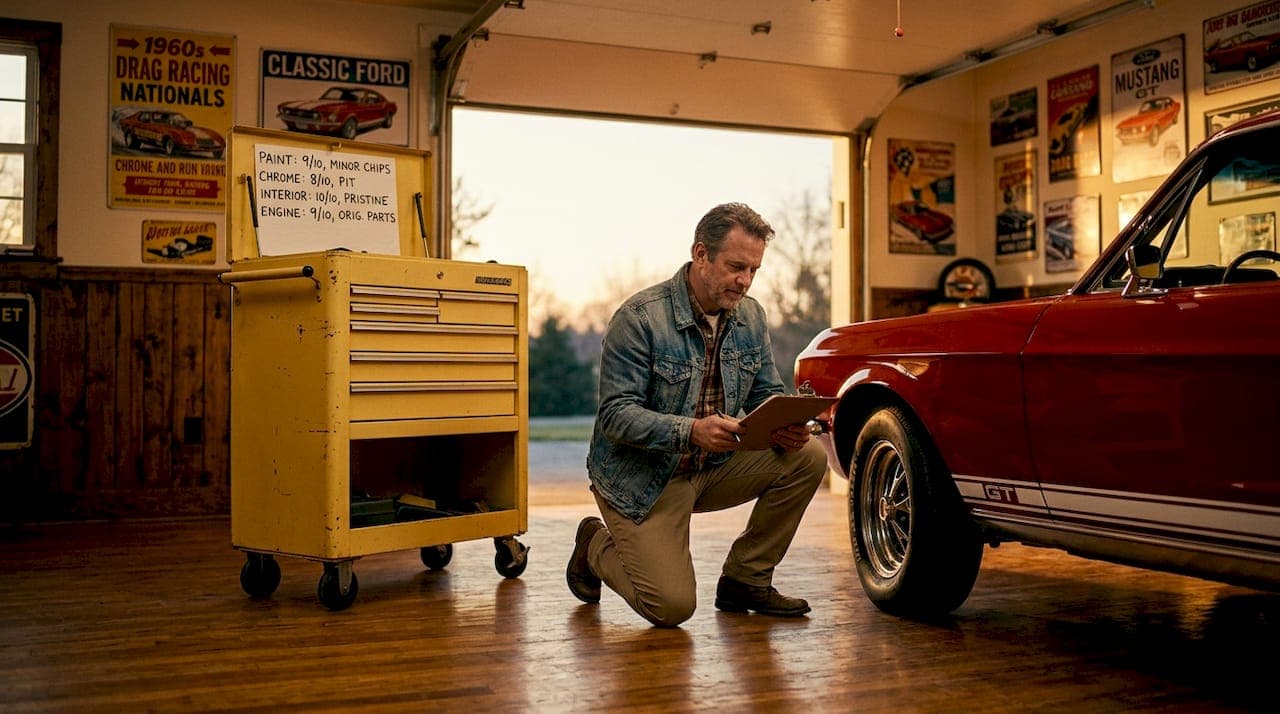
Classic car valuation methods are the systematic processes used to determine the accurate worth of a vintage vehicle by combining market data, condition grading, documentation review, and professional appraisal techniques. Unlike standard used-car pricing, classics can appreciate over time, which means tools like Kelley Blue Book simply do not apply. Valuing a classic car requires professional tools, real sales comparisons, and honest condition assessment working together. Whether you are preparing for a sale, securing insurance, or building an investment portfolio, getting the number right matters. Butterclassics has seen firsthand how the right approach protects both buyers and sellers from costly surprises.
What are the primary classic car valuation methods?
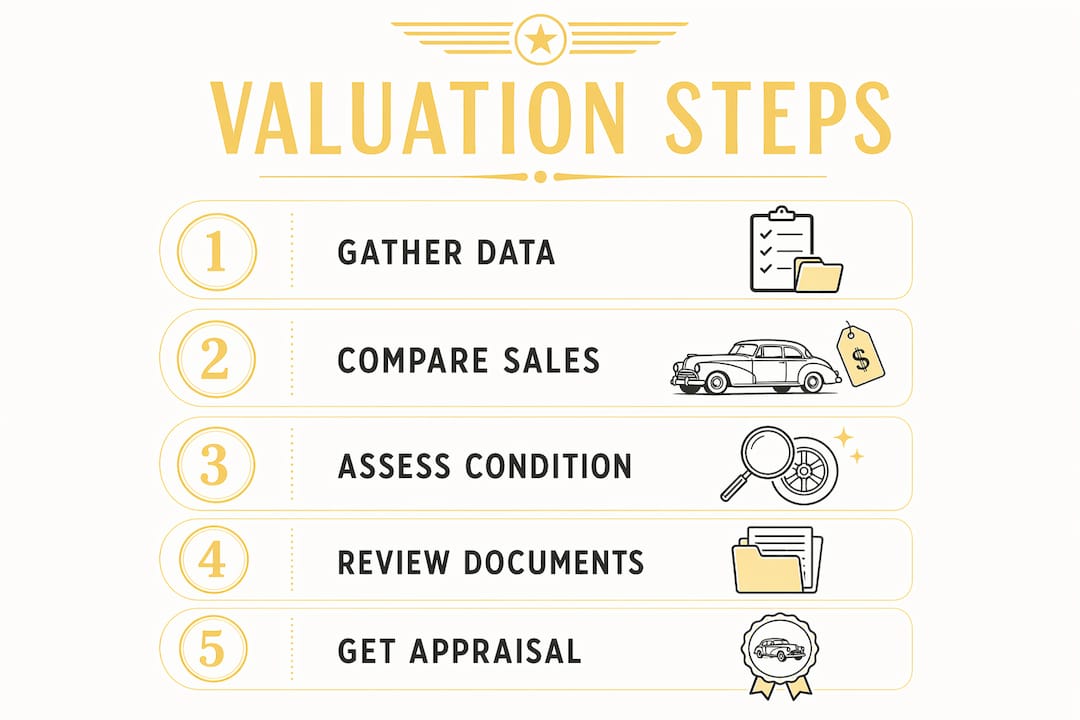
Classic car appraisal techniques fall into four core categories: market sales comparison, condition grading, documentation and provenance review, and professional appraisal. Each method answers a different question, and the most accurate valuations use all four together.
Market sales comparison is the foundation of any classic vehicle price assessment. The goal is to find what buyers actually paid for comparable vehicles, not what sellers are asking. Platforms like Hagerty's Valuation Tool pull auction prices and private sales to generate condition-graded estimates. Sold prices tell the truth. Asking prices tell you what someone hopes for.
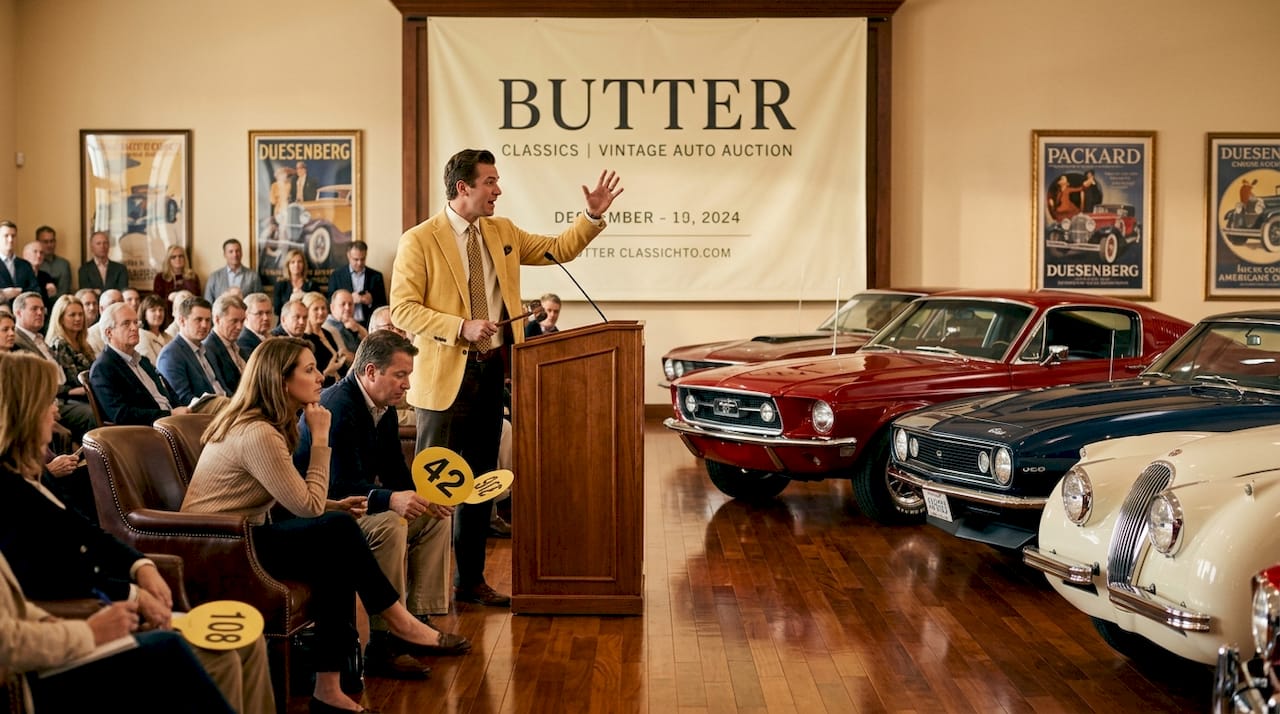
Condition grading assigns your car to a recognized tier that directly controls its value range. The standard tiers run from Concours (show-quality, essentially perfect) down through Excellent, Good, Fair, and Poor. Accurate valuation requires matching your car only to comparable cars in the same condition tier, not the tier you wish it occupied.
Documentation and provenance separate a credible valuation from a guess. A car with original build sheets, service records, and restoration receipts commands a premium over an identical model with no paper trail. Completeness of documentary evidence distinguishes fast, credible appraisals from slow or conservative ones.
Professional appraisal brings a certified expert into the process. This is the method that carries legal and financial weight for insurance policies, estate settlements, and IRS-related tax deductions. State Farm recommends using professional appraisals and real sales comparisons rather than relying on asking prices alone.
- Market sales comparison: focuses on completed transactions, not listings
- Condition grading: assigns a recognized tier that anchors the value range
- Documentation review: provenance and receipts support or increase value
- Professional appraisal: provides certified, legally defensible documentation
Pro Tip: Use Hagerty's Valuation Tool as your starting point, then cross-reference with recent auction results from Barrett-Jackson or Mecum to confirm the range before committing to any number.
How do you prepare your classic car for an accurate valuation?
Preparation is where most owners either strengthen or undermine their valuation before an appraiser ever shows up. Southwest Auto Appraisal recommends gathering detailed documentation and disclosing known issues upfront to support valuation precision. Here is the practical checklist to follow.
-
Gather your title and ownership history. A clean title with a traceable ownership chain adds confidence for buyers and insurers. Gaps in ownership history raise questions that reduce value.
-
Compile all restoration and repair receipts. Every receipt for bodywork, mechanical restoration, upholstery, or paint is evidence of investment. Appraisers treat documented restoration work as a value-supporting asset.
-
Collect original documentation. Factory window stickers, owner's manuals, and original build sheets are rare and meaningful. A numbers-matching muscle car with its original Monroney sticker is worth considerably more than one without it.
-
Photograph every angle and detail. Take high-resolution photos of the exterior, interior, engine bay, undercarriage, and any known imperfections. Honest photos protect you from disputes later and speed up the appraisal process.
-
Write an honest condition summary. Note any rust, non-original parts, mechanical issues, or incomplete restoration work. Appraisers find these things anyway. Disclosing them upfront builds credibility and prevents downward value adjustments made in surprise.
-
Research your car's specific options and rarity. A 1969 Camaro Z/28 with the correct DZ 302 engine and matching VIN-stamped components is a different car from a base Camaro with a Z/28 appearance package. Know exactly what you have before anyone else evaluates it.
Pro Tip: Store all documentation in a dedicated binder or digital folder organized by category. Appraisers and buyers who receive a well-organized package move faster and with more confidence, which works in your favor.
How to use market data and condition grading to assess value
This is where classic car market analysis gets practical. The methodology has two steps: find the right comparable sales, then apply honest condition grading to land on a defensible number.
Finding the right comparable sales
Focus exclusively on sold prices, not active listings. Completed auction results from Barrett-Jackson, Mecum, and RM Sotheby's are the gold standard because they reflect what a real buyer paid on a specific date. Hagerty's Valuation Tool aggregates these results alongside private and dealer sales. Completed sales within 6 to 18 months give the most relevant market signal. Sales older than 18 months may reflect a different market environment entirely.
Match your comps strictly by make, model, year, engine, and body style. A 1967 Ford Mustang fastback with a 390 GT is not comparable to a 1967 Mustang coupe with a 289. The difference in value can be tens of thousands of dollars. Configuration specificity is not optional.
Applying condition grading honestly
The table below shows how condition tiers affect value relative to a baseline Good (Grade 3) car. These are general directional ranges, not fixed multipliers, and actual spreads vary by make and model.
| Condition tier | Description | Typical value relative to Grade 3 |
|---|---|---|
| Concours (Grade 1) | Show-quality, essentially perfect | 150% to 200%+ |
| Excellent (Grade 2) | Near-perfect, minor flaws only | 120% to 150% |
| Good (Grade 3) | Solid driver, presentable condition | Baseline |
| Fair (Grade 4) | Functional but needs work | 50% to 75% |
| Poor (Grade 5) | Project car, significant issues | 25% to 50% |
Most owners overestimate their car's condition tier by at least one grade. A car you call Excellent is often Good to an appraiser. That one-grade difference can represent a 20% to 30% swing in value, which is significant on a $60,000 vehicle.
Market timing also matters. Hagerty reports market softness with declines in median sale prices and only about 35% of cars currently selling above insured values. That data means your valuation should reflect current conditions, not peak prices from two or three years ago.
- Use sold prices from Barrett-Jackson, Mecum, RM Sotheby's, or Hagerty's tool
- Limit comps to the past 6 to 18 months
- Match by make, model, year, engine, and body style
- Grade condition honestly, then verify against a second opinion
- Adjust for rarity, originality, and documented restoration quality
When and why should you get a professional classic car appraisal?
A professional appraisal is not just for sellers. There are specific situations where a certified appraisal report is the only document that carries real weight.
For insurance: Agreed value insurance policies require you and your insurer to agree on a set value upfront using comparable market research and condition assessment. Hagerty notes that insurers conduct detailed underwriting checks beyond what any online tool provides. Submitting a certified appraisal report alongside your documentation speeds up the underwriting process and locks in a fair payout figure if you ever need to make a claim.
For sales: A third-party appraisal report gives buyers confidence that the asking price reflects real market data. It removes the negotiating leverage that "I think it's worth more" arguments create. Sellers who present a certified appraisal close deals faster and with fewer price concessions.
For tax and estate purposes: IRS-qualified appraisals for charitable donations or estate valuations must comply with Treasury Reg. §1.170A-17 content requirements, including method disclosure, appraiser credentials, and specific property information. A casual online estimate does not satisfy these requirements.
A formal appraisal report typically includes the appraiser's credentials, the valuation methodology used, a condition description, comparable sales data, and a final value conclusion. Expect the process to take one to three hours of inspection time, plus report preparation.
Common mistakes in classic car valuation and how to avoid them
Even experienced collectors make these errors. Knowing them in advance saves you money and frustration.
-
Treating asking prices as market value. A seller listing a 1970 Plymouth 'Cuda at $150,000 does not mean the market supports that price. Only completed sales confirm what buyers will actually pay.
-
Overgrading your own car's condition. Emotional attachment is real, and it distorts judgment. Have a trusted third party assess condition before you commit to a number. One honest grade adjustment can save you from an embarrassing price reduction later.
-
Ignoring provenance and documentation gaps. A car with incomplete history is worth less, period. Buyers and insurers discount vehicles with missing titles, undocumented engine swaps, or unverifiable restoration claims.
-
Failing to account for market shifts. Classic car markets move. A valuation from 2022 may not reflect 2026 conditions. Market declines impact valuation accuracy and insurance increments in ways that catch owners off guard. Update your valuation every 12 to 24 months.
-
Using a single method in isolation. Relying only on Hagerty's tool, or only on one appraiser's opinion, creates a one-dimensional picture. The most defensible valuations combine market data, condition grading, documentation review, and professional appraisal together.
Pro Tip: Set a calendar reminder to review your classic car's insured value every year. Markets shift, and an outdated agreed value can leave you underinsured or paying premiums on an inflated figure.
Key takeaways
Accurate classic car valuation requires combining market sales data, honest condition grading, complete documentation, and professional appraisal rather than relying on any single method alone.
| Point | Details |
|---|---|
| Use sold prices, not listings | Completed auction results from Barrett-Jackson or Mecum reflect real buyer behavior. |
| Grade condition honestly | One tier difference can shift value by 20% to 30% on a mid-range classic. |
| Document everything | Provenance, receipts, and photos speed up appraisals and support higher values. |
| Get a certified appraisal for insurance | Agreed value policies require documented underwriting checks beyond online tools. |
| Update valuations regularly | Market conditions shift; review your car's value every 12 to 24 months. |
Why I think most collectors undervalue the paperwork
Here is something I have seen play out more times than I can count: two nearly identical 1968 Chevrolet Camaros sit side by side at an auction. Same color, same engine, same general condition. One sells for $58,000. The other sells for $74,000. The difference is not the car. It is the folder sitting on the passenger seat.
The $74,000 car had its original build sheet, every service record from the original dealer, and a binder of restoration receipts going back fifteen years. The $58,000 car had a clean title and a seller who swore it was "all original." Buyers did not believe him, and they were right not to.
I have also watched owners walk into appraisals convinced they have a Grade 2 Excellent car, only to leave with a Grade 3 Good rating and a value that came in $15,000 lower than expected. The hardest part of this process is being honest with yourself about what you actually have. Condition grading is not personal. It is just math applied to metal.
My advice: treat your documentation like it is worth money, because it is. Combine at least two valuation methods before you commit to any number. And if you are dealing with insurance, a sale, or an estate, pay for a certified appraisal. The cost is small compared to the disputes it prevents.
— Tony
Ready to get your classic car valued the right way?
At Butterclassics, we know that getting an accurate number on your classic is the first step toward a smooth sale, the right insurance coverage, or a confident investment decision. Our Butter Certified program walks you through the inspection and documentation process so your car is appraisal-ready before it ever hits the market.
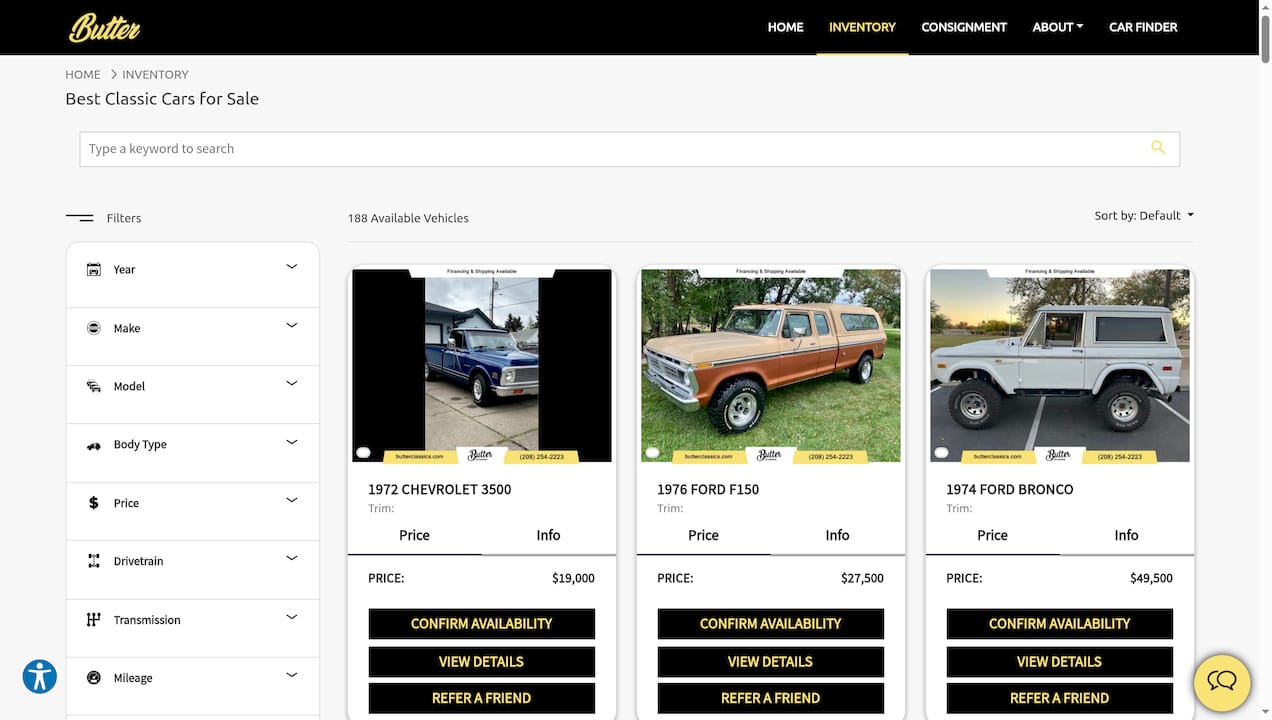
Browse our current classic car inventory to see how properly documented and certified vehicles are priced and presented. Whether you are buying, selling, or just getting your ducks in a row, Butterclassics is here to make the whole process smooth as butter.
FAQ
What are the main classic car valuation methods?
The four primary methods are market sales comparison, condition grading, documentation and provenance review, and professional appraisal. Accurate valuations combine all four rather than relying on a single approach.
How does condition grading affect classic car value?
Condition grading assigns your car to a recognized tier from Concours down to Poor, and each tier carries a distinct value range. A one-tier difference can represent a 20% to 30% swing in price on a mid-range classic.
When do I need a professional classic car appraisal?
A certified appraisal is required for agreed value insurance policies, IRS-qualified tax deductions, estate settlements, and high-value private sales. Online tools like Hagerty's Valuation Tool are useful starting points but do not satisfy formal documentation requirements.
Why should I use sold prices instead of asking prices?
Asking prices reflect seller expectations, not buyer behavior. Completed auction results from platforms like Barrett-Jackson and Mecum show what buyers actually paid, which is the only number that matters for an accurate classic vehicle price assessment.
How often should I update my classic car's valuation?
Update your valuation every 12 to 24 months. Hagerty data shows that market conditions shift significantly over time, and an outdated insured value can leave you underinsured or paying premiums that no longer reflect reality.