
Trim tags are factory-issued data plates that definitively identify a classic vehicle's original trim, paint, and build specifications. Every collector and restorer who skips reading these small metal or cardboard plates risks ordering wrong parts, painting the wrong color, and ultimately building a car that never matches its factory record. The role of trim tags in classic vehicles goes far beyond a simple label. These tags carry the full "recipe" of how your car left the assembly line, and that recipe directly affects authenticity, restoration accuracy, and market value.
What does a trim tag tell you about your classic car?
A trim tag is a factory data plate attached to the vehicle during production, separate from the Vehicle Identification Number (VIN). The VIN tells you the year, series, and assembly plant. The trim tag tells you what the factory actually built. Think of the VIN as the "who and where" and the trim tag as the "what" of the build.
The two documents work together, but neither replaces the other. A VIN alone cannot confirm which interior color was installed, which paint code was sprayed, or which optional equipment was fitted at the plant. The trim tag fills every one of those gaps.
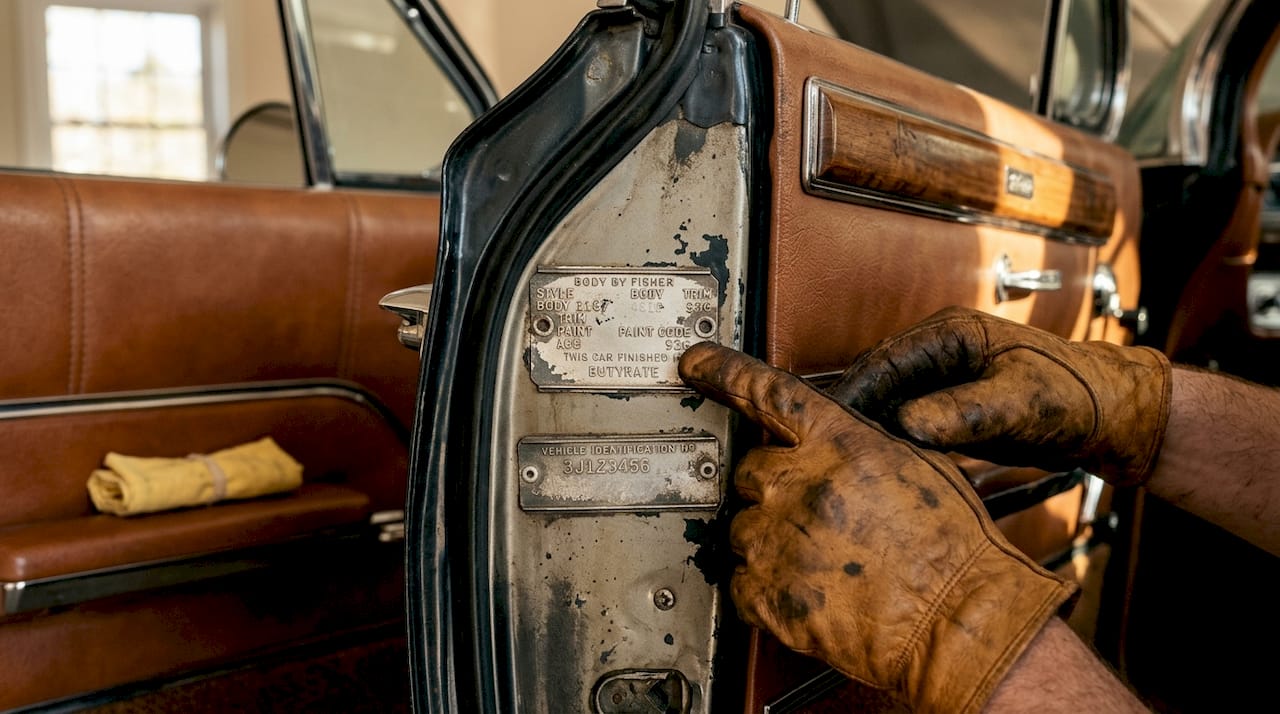
What information appears on a typical trim tag
Most trim tags from American manufacturers include the following data points:
- Build date: The month and year the body was assembled, which often differs from the model year
- Body style code: Identifies the body configuration (coupe, convertible, sedan, etc.)
- Assembly plant code: Confirms where the body was built, which matters for Fisher Body documentation
- Trim code: Specifies the interior color and material combination
- Paint code: Identifies the factory exterior color, including any two-tone combinations
- Top color code: Applies to convertibles and vinyl-top models
- Accessory or option codes: Lists factory-installed equipment that varies by trim level
For 1955–1964 Chevrolet vehicles, the cowl tag details internal and external finish specifications applied during production, including Fisher Body codes and top color information. That level of detail is simply not available anywhere else on the car.
Pro Tip: Cross-reference your trim tag paint code with a factory color chart specific to your model year. The same paint name sometimes carried different codes across model years, and using the wrong code produces a visibly different shade.
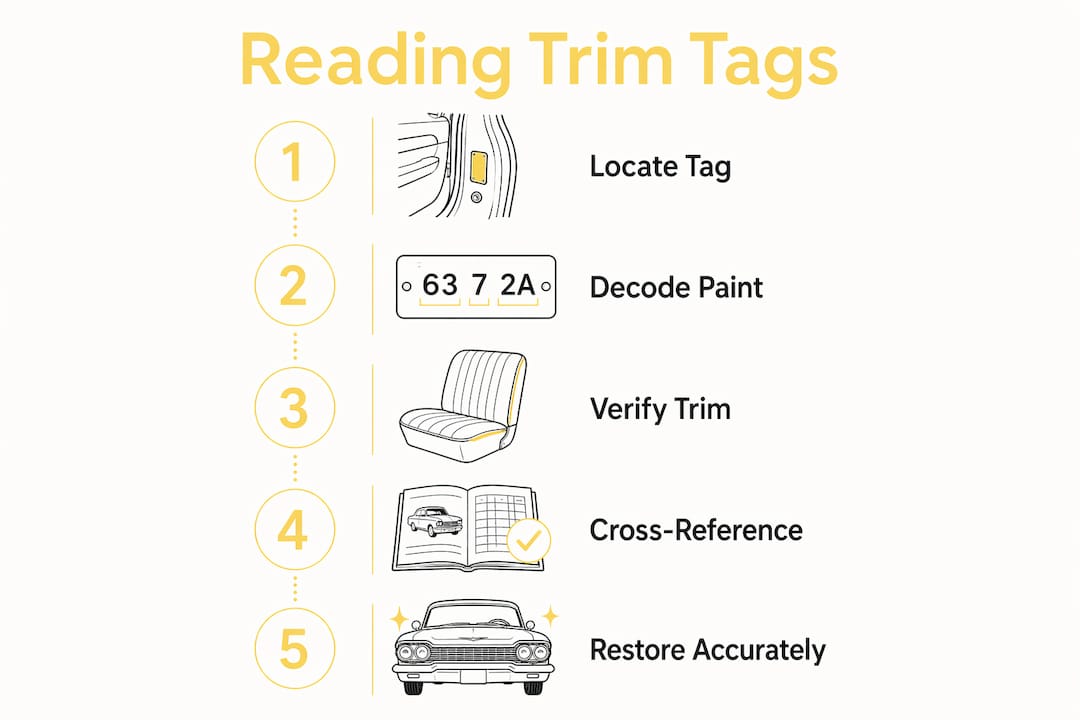
Learning how to read color codes from your trim tag is one of the fastest ways to confirm you are sourcing the right paint for a restoration.
Why trim tags matter for restoration accuracy and value
Trim tags dictate the exact factory trim package and assembly details for your specific car. Two cars from the same model year and body style can have completely different technical requirements based on their trim tags alone. Restorers rely on trim tags to confirm specific mounting points and molding requirements that vary by trim level. Getting those details wrong is not a cosmetic issue. It is a structural one.
The financial stakes are real. Correct identification of the original engine and trim package via the trim tag can significantly affect collector vehicle value. A numbers-matching muscle car with a verified trim tag commands a premium that a visually identical but undocumented example simply cannot match.
Here is what collectors and restorers risk when they ignore trim tag data:
- Ordering moldings that do not fit because they belong to a different trim level
- Painting the car a color that was never offered on that body style in that model year
- Installing emblems in incorrect positions because emblem placement varies by trim
- Purchasing reproduction panels that do not align with original mounting points
- Losing authenticity points during appraisal or judged shows
Trim-level differences affect sheet metal stamping, mounting points, and emblem placement in ways that are not visible from the outside. A base-trim car and a top-trim car can look nearly identical until you start bolting parts on.
The level of factory originality revealed by the trim tag directly influences investment value. Less modification typically correlates with higher market valuation. That single fact makes the trim tag one of the most financially important documents attached to any collector car.
Pro Tip: Before you buy any reproduction part, write down every code from your trim tag. Give that list to your parts supplier and ask them to confirm compatibility. A five-minute conversation upfront saves hours of rework later.
How to verify trim tag authenticity and work with replacement tags
Trim tag verification starts with comparison. Classic car authentication involves comparing the tag against build sheets, original factory documentation, and verified examples from the same model year and plant. Build sheets and factory manuals provide critical confirmation that the tag data is consistent with what the plant actually produced.
Damaged or altered cars present real challenges. A tag that has been repainted, restamped, or replaced without documentation raises immediate red flags for appraisers and buyers. The presence of a tag alone does not confirm authenticity. The data on the tag must be consistent with the VIN, the build sheet, and the physical evidence on the car.
When a tag is genuinely lost or destroyed, replacement tags are available from specialty suppliers. The process works like this:
- Gather original documentation. Photos, rubbings, or records of the original tag are required before any reputable supplier will produce a replacement.
- Submit proof to the supplier. Replacement tags require documentation such as photos or rubbings of the original, and suppliers reproduce them to exact historic specifications.
- Confirm the purpose is preservation, not fabrication. Reputable suppliers produce replacement tags to preserve accurate history, not to create false originality.
- Cross-check the finished tag. Once received, verify every code against your VIN, build sheet, and any factory records you have.
Pro Tip: If you are buying a classic car and the seller cannot produce the original trim tag or credible documentation for a replacement, treat that as a negotiating point. A missing tag does not kill a deal, but it should lower your offer and raise your scrutiny.
Replacement tags are carefully reproduced only with accurate supporting documentation. They are not intended for fabricating false authenticity. That ethical standard preserves trust across the entire collector market.
Practical tips for using trim tag data in your restoration
Decoding your trim tag before you touch a single bolt is the single best habit you can build as a restorer. The tag tells you what the car was. Everything else on the car tells you what happened to it afterward. Starting with the tag keeps your restoration grounded in factory fact rather than assumption.
Follow these steps to get the most from your trim tag data:
- Photograph and document the tag immediately. Tags can fade, corrode, or fall off during disassembly. A clear photo taken before work begins is your insurance policy.
- Decode every code before ordering parts. Cross-checking trim tags against build sheets and factory manuals prevents ordering incompatible parts.
- Do not assume based on appearance. A car that looks like a top-trim model may have been optioned differently at the factory. The tag confirms what was actually installed.
- Build a reference file. Collect factory assembly manuals, trim guides, and verified photos of original examples at the same trim level. Your tag data becomes far more useful with that context around it.
- Use trim tag data when evaluating a purchase. Evaluating a vintage car's condition includes confirming that the tag data matches the physical car. Mismatches signal past modifications or potential fraud.
The most common pitfall is trusting the car's appearance over the tag. A previous owner may have upgraded trim, changed colors, or swapped components. The tag records what the factory built. The car records what every owner did after that. Your job as a restorer is to reconcile the two.
Pro Tip: Join a marque-specific club or registry for your vehicle. These organizations often maintain databases of verified trim tag examples, which makes decoding unusual codes far easier and gives you a community to cross-check your findings.
Key Takeaways
Trim tags are the definitive factory record of a classic vehicle's original build, and verifying them before restoration or purchase protects both authenticity and investment value.
| Point | Details |
|---|---|
| Trim tags vs. VIN | The VIN identifies year and plant; the trim tag specifies paint, interior, and build options. |
| Restoration accuracy | Trim level differences affect mounting points, moldings, and emblems that vary between otherwise identical cars. |
| Market value impact | Factory originality confirmed by a trim tag directly raises collector and investment value. |
| Replacement tag ethics | Reputable suppliers require original documentation and produce replacements for preservation, not fabrication. |
| First step in any restoration | Photograph and decode the trim tag before ordering any parts or starting disassembly. |
Why I never start a restoration without reading the trim tag first
I have seen collectors spend thousands of dollars on a restoration only to discover at a judged show that the moldings were wrong for their trim level. The car looked perfect. The paint was flawless. But the trim tag told a different story, and the judges knew it. That is a painful and expensive lesson.
The trim tag is not paperwork. It is the car's birth certificate. Every code on it represents a decision made at the factory on the day that specific car was built. When you restore a car without reading the tag, you are essentially guessing at history. Sometimes you guess right. More often, you do not.
What I find most satisfying about trim tag work is the detective element. Decoding a tag on a 1962 Chevrolet Impala or a 1969 Camaro connects you directly to the assembly line. You are reading the same data a Fisher Body worker stamped decades ago. That connection to original factory intent is what separates a true restoration from a good-looking replica.
My honest advice: treat the trim tag as your primary source document. Cross-check it against everything else. And if a car you are considering buying is missing its tag with no documentation to explain why, walk carefully. The tag's absence is itself a piece of information.
— Tony
Classic vehicles with verified trim tags at Butterclassics
Finding a classic car with a confirmed, readable trim tag is harder than most collectors expect. That is exactly why Butterclassics focuses on vehicles where the documentation tells the full story.
At Butterclassics, every listing is built around transparency. Whether you are hunting for a numbers-matching muscle car, a factory-correct Corvette, or a vintage truck with its original build specs intact, the Butterclassics inventory gives you the detail you need to buy with confidence. For collectors who want the highest level of authenticity assurance, the Butter Certified program verifies provenance and factory originality so you know exactly what you are getting. Browse the inventory and find your next classic, smooth as butter.
FAQ
What is a trim tag on a classic car?
A trim tag is a factory-issued data plate attached to a classic vehicle during production. It records the original paint code, interior trim, build date, body style, and optional equipment that the VIN alone does not provide.
Where is the trim tag located on most classic cars?
On most American classics, the trim tag is mounted on the firewall or the driver-side door jamb. For Chevrolet models from the late 1950s through the mid-1960s, it is typically found on the cowl area near the firewall.
How does a trim tag affect classic car value?
The level of factory originality confirmed by a trim tag directly influences collector and investment value. Cars with matching, verifiable trim tags consistently command higher prices than undocumented examples.
Can a missing trim tag be replaced?
Yes, specialty suppliers reproduce trim tags to exact historic specifications. Replacement tags require documentation such as photos or rubbings of the original, and reputable suppliers produce them for preservation purposes only.
What is the difference between a trim tag and a VIN tag?
The VIN identifies the vehicle's year, series, and assembly plant. The trim tag records the specific factory build details including paint codes, interior trim codes, and accessory information that the VIN does not contain.