Classic car price negotiation works best when you combine three moves: pull real comparable sale prices, get a pre-purchase inspection, and walk in with three set numbers instead of one gut feeling. As American Collectors Insurance points out, buyers should know what they want to pay, what they can pay, and their absolute max before the conversation starts. This framework works regularly in classic car buying, whether through private sellers or online marketplaces.
TL;DR:
- Buyers should base their negotiations on recent, honest transaction data from auction houses, classifieds, and owner clubs rather than wishful listing prices.
- A thorough pre-purchase inspection focusing on rust, drivetrain, electrical, originality, and paperwork can reveal hidden issues that justify lower offers or repair credits.
- Setting three pre-negotiation numbers—target, likely offer, and walk-away—based on market range and inspection costs helps maintain discipline and avoid emotional decisions.
- Structuring offers with clear, documented evidence and tiered contingencies encourages constructive dialogue and keeps options open during negotiations.
- Recognizing seller motivation, such as upcoming moves or health issues, can provide leverage; however, issues like title mismatches, extensive rust, or refusal of independent inspection are clear reasons to walk away.
Table of Contents
- How Do You Research Comparable Classic Car Sales?
- What Should a Pre-Purchase Inspection Cover?
- What Are the Three Numbers You Need Before Negotiating?
- How Do You Structure a Classic Car Offer?
- Why Does Understanding the Seller Matter in Negotiation?
- When Should You Walk Away From a Classic Car Deal?
- How Butterclassics Helps You Negotiate With Confidence
- What Happens After You Agree on a Price?
- Author perspective: what actually moves the needle
- Ready to Skip the Haggling? Browse or Consign With Butterclassics
- Sources
- FAQ
How Do You Research Comparable Classic Car Sales?
Asking prices tell you what a seller hopes for. Completed sales tell you what a car actually sold for, and that gap can run 15% to 20% or more on classics with soft demand. Build your negotiation position from real transaction data, not wishful listings.
Start with auction archives from established houses, since these publish hammer prices with buyer's premiums broken out. Cross-check completed classified sales, which sometimes get overlooked because platforms hide sold listings faster than they hide active ones. Marque registries and owner's club sales records add another layer, especially for cars where only a few hundred examples still exist.
Comparable data only helps if the comparison is honest. A numbers-matching 1969 Camaro SS with factory documentation is not the same car as a clone with a replacement engine, even if both look identical in photos. Match on these factors before you trust a comp:
- Trim level and factory options, since a base model and a loaded performance package can differ by tens of thousands of dollars
- Mileage and whether it's original or a rebuilt odometer
- Documented condition (concours, driver-quality, or project) using consistent grading language
- Provenance, including ownership history, matching numbers, and restoration paperwork
Once you have five or six tight comps, throw out the outliers and build a range. That range, backed by dates and sources, becomes your evidence when the Classic Car Market Trends Checklist comes into play during actual negotiation.
What Should a Pre-Purchase Inspection Cover?
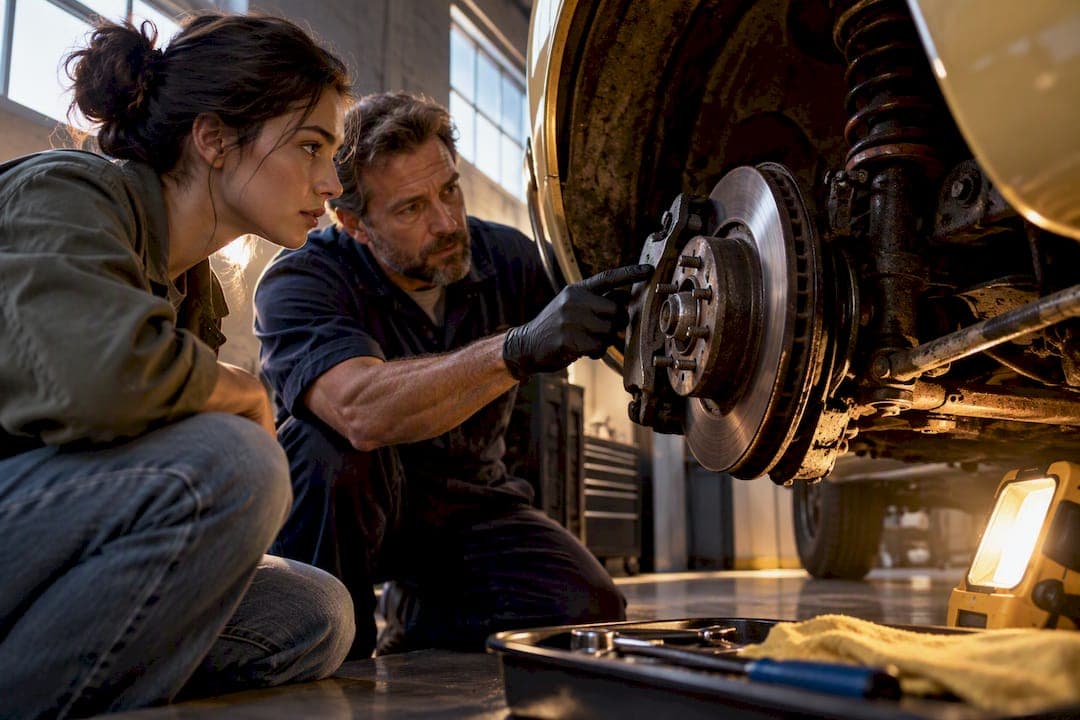
An inspection turns a negotiation from a guessing game into a paper trail. It also tells you, plainly, whether a car is a bargain or a liability wearing fresh wax.
A thorough inspection checklist should walk through these areas in order:
- Rust and structural integrity, especially frame rails, floor pans, and trunk seams where moisture collects
- Drivetrain condition, including compression and leak down tests on the engine and a check for fluid contamination
- Electrical systems, since old wiring and aftermarket splices cause more post-sale headaches than most buyers expect
- Originality markers, meaning VIN tags, engine and transmission stampings, and whether they match the title
- Upholstery, headliner, and interior trim condition versus what the listing claims
- Sheetmetal and panel gaps, which reveal prior accident repair even under good paint
- Paperwork, including title history, build sheets, and any restoration invoices the seller can produce
Hire a marque specialist rather than a general mechanic whenever the budget allows. A shop that knows Corvettes or early Broncos will catch a mismatched casting number a generalist walks right past. Expect to budget $150 to $600 for a classic car inspection depending on depth and whether a borescope or leak-down test is included. Our own dealer inspection checklist breaks down what a professional inspector actually looks for line by line.
Once findings come back, get written repair estimates from local specialist shops for anything beyond cosmetic wear. Car-nection notes that these line-item estimates convert into concrete negotiation tools: a price cut, a repair credit at closing, or a conditional holdback until the seller fixes a specific item.
Pro Tip: Ask the shop to itemize labor and parts separately on the estimate. Sellers push back harder on a vague "$4,000 to fix" number than on a receipt showing $1,200 in parts and $2,800 in labor from a named shop.
What Are the Three Numbers You Need Before Negotiating?
Set your target, your likely offer, and your walk-away number before you ever call the seller. Skip this step and emotion sets your ceiling for you.
Say your comps put the car's market range at $28,000 to $34,000, and the inspection turned up $2,500 in needed brake and suspension work.
- Target: $27,000, which is below the market range and accounts for the repair bill
- Likely offer: $29,500, a number close enough to the low end of market value that the seller takes it seriously instead of dismissing it as insulting
- Walk-away/max: $32,500, the ceiling you'll pay only if this specific car has rare options or documentation that justifies going above your likely offer
Sellers should work the same math in reverse. An asking price of $35,000 on a $28,000 to $34,000 car leaves room to negotiate while staying inside a credible range. Price it at $40,000 and most serious buyers won't bother calling.
Build contingencies into all three numbers, not just the final agreed price. Transport costs, a pending title verification, or an inspection holdback for a repair the seller agrees to complete can each shift your real out-of-pocket cost by hundreds or thousands of dollars.
How Do You Structure a Classic Car Offer?
Open with evidence, not a number pulled from thin air. Show the seller one or two comps and the specific inspection line items driving your offer. A number with no explanation invites a flat rejection; a number backed by a $2,500 brake estimate from a named shop invites a conversation.
Structure your ask in tiers so you have room to move without looking indecisive:
- Preferred outcome: "Based on these three comps and the $2,500 suspension estimate, I'd like to offer $29,500."
- Fallback: "I understand $29,500 might be tight. I could do $31,000 if you're willing to include the spare parts inventory in the trunk."
- Walk-away: "I can't go past $32,500 on this car given what's needed on the brakes and suspension."
Silence works harder than most buyers realize. State your offer, then stop talking. Sellers often fill that silence with a counteroffer lower than what they'd planned to open with. Put significant offers in writing, even a simple text or email, since it signals seriousness and creates a record if terms shift later.
Hold off on mentioning cash-in-hand or pre-approved financing until after your opening offer lands. Revealing it too early removes a card you might need later in the conversation.
When inspection findings justify a change, decide whether you want a price reduction, a repair credit at closing, or the seller completing the repair before sale. Car-nection's guidance on this is worth following closely: pick the option that gives you the most control over repair quality, since a credit you manage yourself often beats trusting a seller's shop of choice.
Pro Tip: If you ask for a seller-performed repair, name the shop, request the invoice, and set a reinspection date before closing. A vague promise to "get it fixed" rarely survives contact with a moving sale timeline.

Why Does Understanding the Seller Matter in Negotiation?
Most classic car sellers aren't moving units off a lot. They're often parting with a car they restored, inherited, or drove for decades, and that emotional weight shows up in the asking price whether the seller realizes it or not.
Treating the negotiation as teamwork rather than a contest changes outcomes. American Collectors Insurance found that sellers concede more readily when they feel respected instead of pressured, and informed questions do more work than aggressive lowballing ever will.
Ask questions that reveal motivation and give you real leverage:
- "What's prompting the sale now?" often surfaces timeline pressure you can factor into your offer
- "Can you walk me through the restoration history?" shows genuine interest and often loosens details about known issues
- "Are the spare parts and documentation included?" clarifies scope before you're mid-negotiation
A seller mentioning an upcoming move, a health issue, or a garage needed for a new project is telling you they have a deadline. Use that information to time your offer, not to squeeze harder than the situation calls for.
When Should You Walk Away From a Classic Car Deal?
Some issues aren't negotiation points. They're exit signs.
- Title and VIN mismatches. Hagerty is blunt about this: a mismatched VIN on the title is a clear reason to walk, full stop, regardless of how good the price looks.
- Structural rust or evidence of a prior catastrophic repair. Surface rust is a negotiating point. Frame rust or signs of a flood or fire repair hidden under new paint is a different category of risk entirely.
- A seller who refuses an independent inspection. That refusal alone tells you something the seller isn't saying out loud.
Sight-unseen listings deserve extra scrutiny. A price sitting well below your researched market range often means local buyers already inspected the car and passed, per Hagerty's reporting. Verify title and VIN details thoroughly before you send a deposit on anything you haven't seen in person.
When you do walk, leave the door cracked: "I appreciate the time, but this doesn't work for me at this price given what the inspection found. If your position changes, I'd still be interested."
How Butterclassics Helps You Negotiate With Confidence
A marketplace route sidesteps a lot of the friction private negotiation creates. Some online marketplaces list nationwide inventory rather than a single lot's worth of cars, which means more comps and more selection when you're comparing trims and condition grades.
Here's what that looks like in practice:
- Listings with photos and specifications help buyers negotiate from documented facts instead of guesswork over blurry pictures
- Financing pre-qualification can clarify your real budget before you make an offer
- Consignment options exist for sellers who prefer professional listing and buyer vetting to handle the process
- Test drive scheduling options can get buyers behind the wheel before serious numbers get discussed
If you've read this far and the private-negotiation dance sounds like more friction than you want, a marketplace or consignment path might fit better than another round of back-and-forth texts with a stranger.
What Happens After You Agree on a Price?
Reaching a number is the midpoint, not the finish line. What happens next protects the deal you just negotiated.
Get the agreement in writing, even for a private sale between two individuals. A simple bill of sale should list the agreed price, vehicle identification number, odometer reading, and any conditions tied to the sale, such as a repair credit or a pending title transfer. If your negotiation included a seller-performed repair, attach the shop invoice and a reinspection date directly to the written agreement rather than trusting a verbal promise.
Payment terms deserve the same specificity as the price itself. Cashier's checks and verified wire transfers remain the standard for classic car transactions of any real value, since personal checks can bounce and cash carries obvious risks for amounts in the tens of thousands. If you negotiated a deposit to hold the car during inspection, put the deposit amount, the refund conditions, and the deadline in writing before any money changes hands.
Title transfer rules vary by state, so confirm what your state requires before the handshake, not after. Some states require notarized signatures or odometer disclosure statements that, if missed, delay registration for weeks. If transport is part of the deal, decide in writing who arranges and pays for it, since this is one of the most common post-agreement disputes between buyers and sellers who assumed the other side would handle it.

Author perspective: what actually moves the needle
Most negotiation advice focuses on charm and confidence. What actually works is quieter: verify every claim, quantify every flaw in dollars, and keep more than one option open until paperwork is signed. Emotion sets bad prices in both directions. Discipline sets fair ones.
— Tony
Ready to Skip the Haggling? Browse or Consign With Butterclassics
Private negotiation eats time, and it puts the entire inspection and paperwork burden on you. Some marketplaces give buyers and sellers an alternative route through professionally documented listings that reduce back-and-forth disputes before they start.
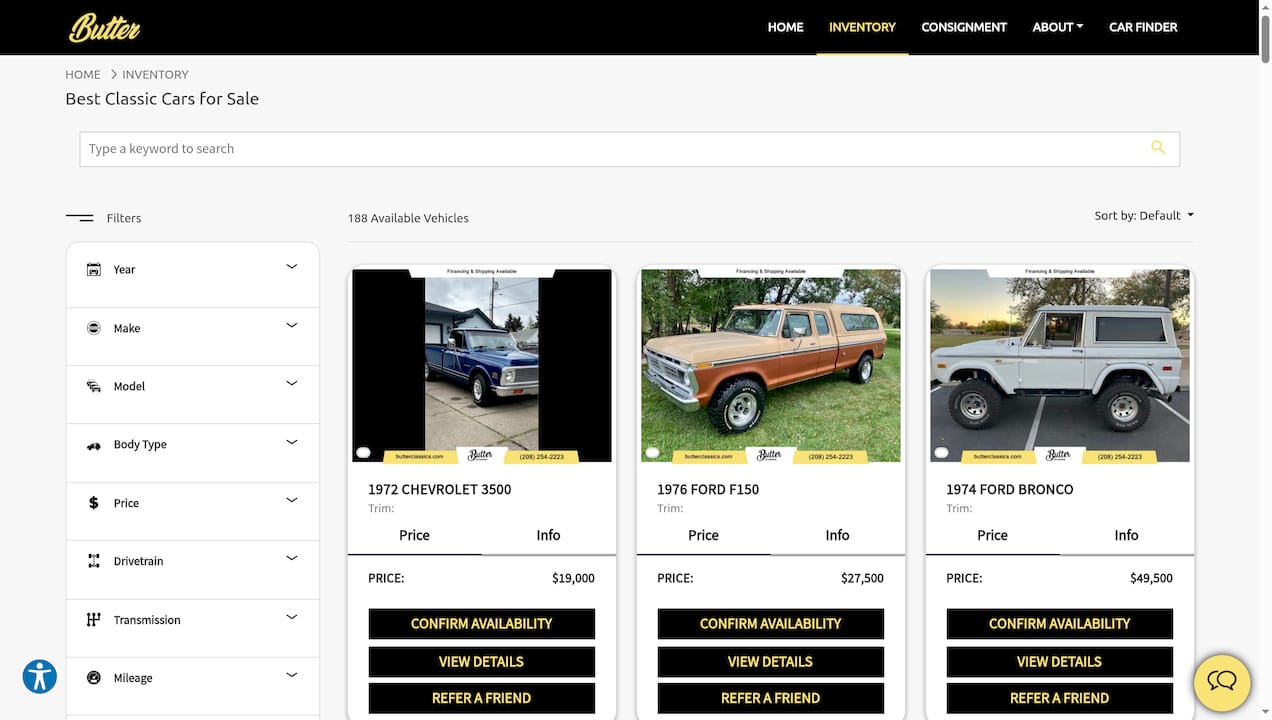
If you're buying, browse current inventory to see detailed specs and photos that make the comparable-sales work in this article much easier. Can't find the exact trim or model year you want? The Car Finder service sources hard-to-find classics so you're not stuck negotiating against a seller who knows you have no other options. If you're on the selling side and would rather hand off buyer vetting and offer negotiation entirely, consign your vehicle and let a professional listing do the heavy lifting your driveway sign never could.
Sources
- FAQ about classic and collector car insurance | American Collectors Insurance
- How to use inspection results in negotiation | Car-nection
- Tips for buying an old car sight-unseen without getting torched | Hagerty
FAQ
What Is the $3,000 Rule for Cars?
The $3,000 rule refers to a general used-car buying guideline that repairs costing more than a few thousand dollars on a low-value vehicle often aren't worth pursuing compared to buying a better car outright. For classic cars, the more useful comparison is your itemized repair estimate against the gap between your offer and the seller's asking price, since a rare or well-documented classic can justify repair costs a common used car wouldn't.
Are Classic Cars Dropping in Value?
Values vary widely by model, rarity, and current demand rather than moving as one market. Research your specific make and model's recent sale trends instead of assuming the whole category is rising or falling together.
How Much Does a Car Salesman Make on a $10,000 Car?
Dealer margins vary by dealership, vehicle type, and negotiation outcome, and there's no fixed public figure that applies across the industry. This is one more reason to anchor your offer to documented comps and inspection findings rather than assuming a fixed markup you can simply negotiate away.
How Do You Beat a Car Salesman at His Own Game?
Come prepared with comparable sale data, a written inspection report, and three set numbers so the conversation runs on your terms instead of theirs. Marketplaces like Butterclassics remove much of this dynamic entirely, since listings come with documented specs and financing pre-qualification instead of a sales floor negotiation.
How Much Room Is There to Negotiate on a Classic Car?
Negotiating room depends heavily on the car's rarity, condition, and how recent comparable sales have trended, so there's no single percentage that applies to every classic. A common project car with several similar listings active tends to have more room than a numbers-matching rarity with few recent comps to compare against.