To verify a classic car listing, decode and confirm every VIN or serial number, run authoritative history checks, and confirm the title chain and provenance paperwork. Collect all identification numbers first, then check them against NMVTIS and NICB records, review build sheets and photos for tampering, and inspect physical stampings in person. For pre-1981 cars, lean on marque clubs for decoding. If the car costs real money or something feels off, bring in a specialist before you sign anything.
TL;DR:
- Verifying a classic car requires checking all VIN and identification stamps across the car and confirming them against official records to catch mismatches early.
- Historical reports should include title brands, odometer history, theft records, and recall status, but gaps in older records necessitate manual verification.
- Joining marque clubs and consulting factory-specific decoders provide more accurate decoding of pre-1981 VINs, which vary widely by manufacturer.
- Using multiple databases like NMVTIS, NICB, and NHTSA is essential, as each provides different crucial information and has limitations.
- Confirm seller legitimacy through consistent paperwork, physical VIN checks, and thorough inspection; remote deals require extra precautions like photos with current dates.
Table of Contents
- What Does a Classic Car VIN or History Report Actually Show?
- Where Do You Find the VIN and Serial Numbers on a Classic Car?
- How Do You Decode a Pre-1981 VIN or Serial Number?
- Which Official Databases Should You Check: NMVTIS, NICB, or NHTSA?
- How Do You Confirm Seller Legitimacy and Document Authenticity?
- How Does Condition Grading Affect a Classic Car's Value?
- When Should You Hire an Expert to Authenticate a Classic Car?
- Marketplace Perspective: What Buyers Get Wrong
- Ready to Skip the Guesswork? Browse Verified Listings
- Sources
- FAQ
What Does a Classic Car VIN or History Report Actually Show?
A vehicle history report pulls together title records, but knowing what to do with that data is where most buyers stumble. The most important field is the title brand: salvage, rebuilt, flood, or junk. A salvage title means an insurer once declared the car a total loss, which affects both safety and your ability to register it in some states. Rebuilt titles mean the car passed inspection after that total loss, but not every state's inspection standard is equally strict; understanding the hidden engineering behind rebuilt parts can reveal key authenticity insights from specialists like Rebuild Masters.
Beyond the brand, a solid report should include:
- Odometer history and any rollback flags
- Open liens that could follow the car to a new owner
- Recovered-theft records
- Registration history across states
- Safety recall status
- Prior auction or dealer sale records
Older classics often carry incomplete electronic records simply because they predate digital title tracking. A gap in the paper trail from 1975 to 1988 doesn't automatically mean fraud. It means you need to verify the rest by hand, through documents and physical inspection, rather than assuming the report tells the whole story.
Where Do You Find the VIN and Serial Numbers on a Classic Car?
Every classic has more than one place its identity is stamped, and checking all of them is how you catch a mismatch before it catches you.
- Start with the dash tag, visible through the windshield on most American cars from the 1960s onward.
- Check the driver's door jamb sticker or plate, standard on most post-1968 vehicles.
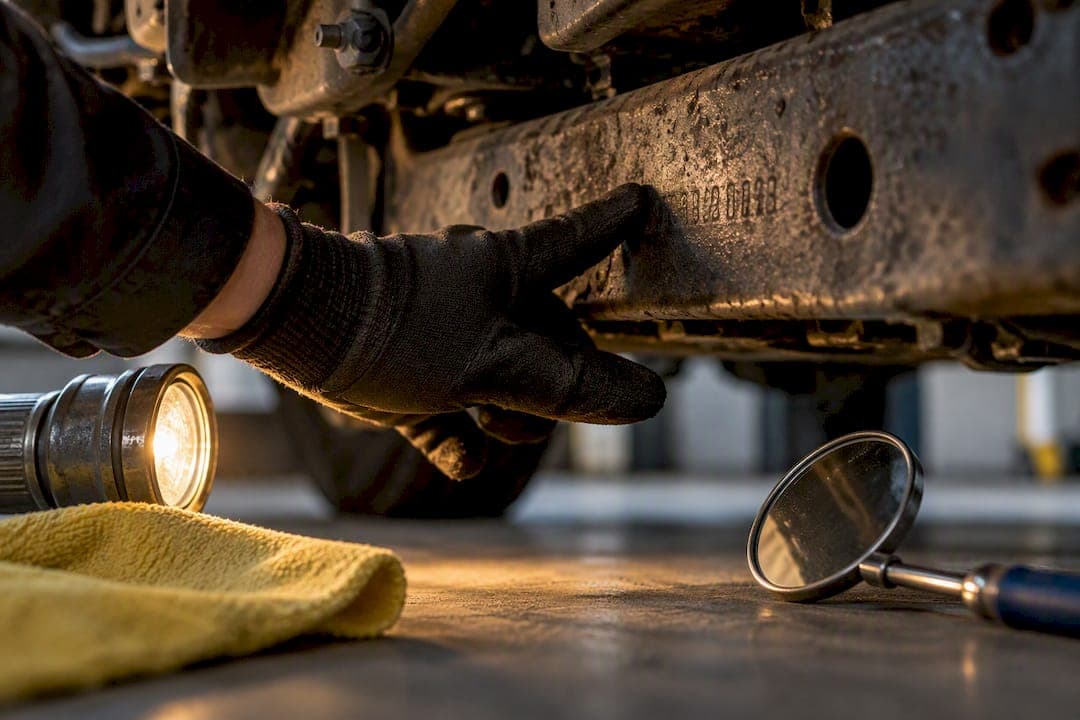
- Look for a secondary stamp on the frame rail, often near the front suspension mount.
- Check the engine pad for a partial VIN or engine code, which should match the block casting date.
- Inspect the transmission case and rear axle housing for factory-stamped codes.
On paper, pull the title, current registration, any bill of sale, old insurance cards, and if you're lucky, the factory broadcast sheet or original window sticker. A Protect-O-Plate, if the seller still has one, is a nice bonus. If any of these numbers don't match across the car, or you spot grinding marks, uneven metal texture, or fresh paint over a stamped area, treat it as a serious red flag and walk away from anything the seller can't explain.
How Do You Decode a Pre-1981 VIN or Serial Number?
The 17-character standardized VIN didn't exist until 1981, when NHTSA mandated the current format across the industry. Before that, every manufacturer used its own numbering scheme, and sometimes changed it year to year. A 1969 Camaro serial tells you a completely different story than a 1969 Mustang serial, even though both are 6-digit era cars.
Your best resources aren't generic VIN sites. They're the people who've spent decades studying one marque:
- Marque clubs and registries that maintain production databases
- Factory-record services like Marti Reports for Fords, which pull directly from original broadcast data
- Marque-specific decoders published by clubs such as the Mustang Club of America
Work through this in order: collect every identifier on the car and in the paperwork, consult the relevant club or registry, then match what you find against known factory option codes or a build sheet. Doing it out of order wastes time and money.
Pro Tip: Join the marque club before you buy, not after. Many registries will cross-reference a VIN against known production records for members, and that single check can confirm or kill a deal in a day.
Which Official Databases Should You Check: NMVTIS, NICB, or NHTSA?
No single database gives you the whole picture, which is exactly why using more than one matters. Each one answers a different question.
- NMVTIS, run through participating state DMVs, is the authoritative source for title-brand and salvage or junk history, pulling from records many commercial history reports rely on.
- NICB's VINCheck is free and can reveal reported thefts and certain branding flags in seconds.
- NHTSA's recall lookup matters mainly for cars built after 1981, when standardized VINs make recall matching reliable.
Here's the catch: NMVTIS doesn't contain every state's records, and there's often a reporting lag between an event and when it shows up in the system. If NICB flags a theft record but NMVTIS shows nothing, don't assume one source is wrong. Assume you need a third data point, whether that's a state DMV directly or the marque registry, before you draw a conclusion.
How Do You Confirm Seller Legitimacy and Document Authenticity?
A car can have a clean VIN history and still be sold by someone who has no real right to sell it, so the paperwork and the person need separate scrutiny.
- Match the name on the title exactly against the seller's ID, and look closely for recent title transfers or an out-of-state title that jumped hands right before listing.
- Evaluate any build sheet or period document for physical wear. Genuine factory broadcast sheets are usually found tucked behind seats or under carpet, and they show brittle paper, yellowing, or oil traces from decades in the car. A pristine, clean copy handed over too easily is worth questioning.
- Run a reverse-image search on the listing photos, since recycled images are one of the most common signs of a listing scam, and ask for new, dated photos of the VIN plate and any hidden stampings.
If the seller resists a video call or won't produce a close-up of the physical VIN on request, that hesitation tells you something. Legitimate sellers, including verified marketplace listings, are used to these requests and rarely push back.
Pro Tip: Ask for a photo of the VIN plate next to today's newspaper or a phone showing the current date. It's a low-effort way to confirm the photos aren't recycled from an old ad.
For remote deals, our guide on avoiding title scams when buying sight unseen walks through additional precautions worth reading before you wire a deposit.
How Does Condition Grading Affect a Classic Car's Value?
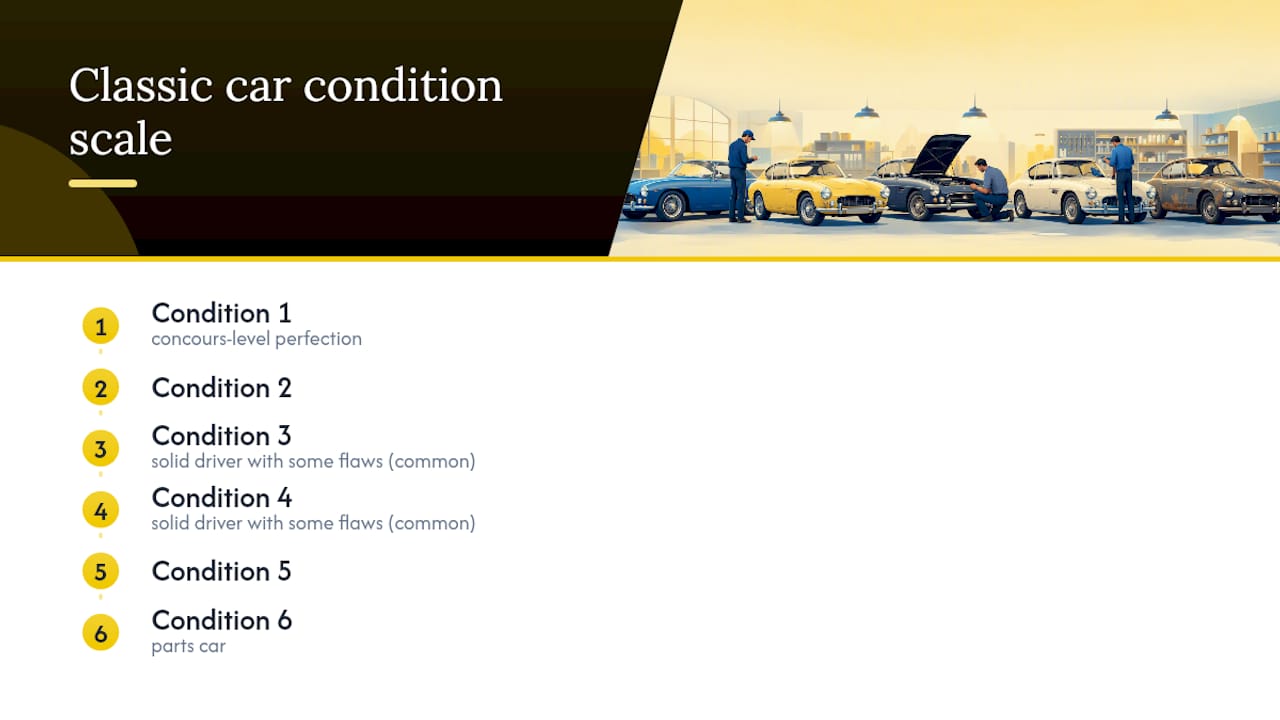
Collectors generally grade cars on a 1 to 6 scale, where Condition 1 is concours-level perfection and Condition 6 is a parts car. Most listings you'll actually cross-shop land in Condition 3 or 4, meaning a solid driver with some flaws, not a trailer queen.
"Numbers-matching" refers to a car whose engine, transmission, and sometimes rear axle carry the original factory-assigned codes. It's a real value driver, but documentation and an unbroken title chain often carry just as much weight as matching stampings, since a numbers-matching car with a murky ownership history is still a risky buy.
Online valuation tools are a fine starting point for a ballpark figure. For anything with real money on the line, a certified appraisal accounts for condition, rarity, and provenance in ways a pricing algorithm can't.
When Should You Hire an Expert to Authenticate a Classic Car?
Bring in a professional when the price tag is high enough that a mistake would actually hurt, or when something in your own checks doesn't add up. Three types of experts cover most situations:
- Marque specialists who know a specific model's factory quirks cold
- Certified appraisers who document condition and value for insurance or resale
- Forensic authentication labs for the highest-value or most disputed cars
Common methods include matching build sheets against the physical car, analyzing stampings and metal composition for signs of restamping, and in some cases 3D chassis scanning. Costs and timelines vary widely by scope, but for a six-figure purchase, a few hundred dollars and a week's wait is cheap insurance against buying a fraud.
Marketplace Perspective: What Buyers Get Wrong
The listing mistakes we see most often aren't exotic. It's a missing VIN photo, a vague "all original" claim with nothing to back it, or a title chain that skips a decade. Ask for notarized title copies on remote deals, insist on fresh dated photos of the VIN plate, and schedule an independent pre-purchase inspection even when the seller seems trustworthy. A marketplace that verifies documentation before listing removes a lot of that guesswork for you.
— Tony
Ready to Skip the Guesswork? Browse Verified Listings
Listings on this site include VIN and photo documentation upfront, reducing the need for buyers to chase down these checks later. Our vetted inventory includes detailed specs and images upfront, and our how it works page walks through the verification and transaction process before you commit a dollar.
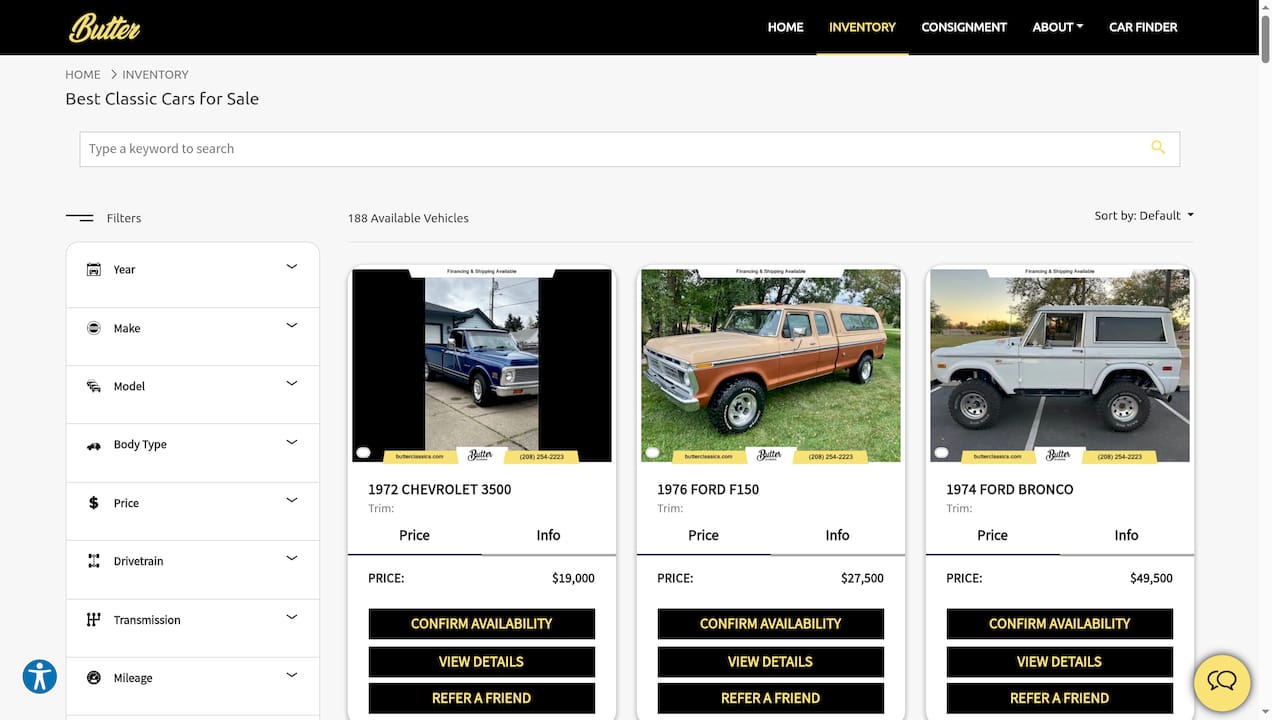
If you're selling rather than buying, our consignment program puts your car through the same documentation standard, which tends to earn serious buyer trust faster than a solo listing on a classifieds site. For remote purchases, always insist on an escrow or secure payment service rather than a direct wire to an unverified account. Ready to see what's available? Browse our current inventory or use our car finder tool to get matched with vetted listings that fit what you're after.
Sources
- National Motor Vehicle Title Information System (NMVTIS) — BJA
- VINCheck — NICB
- Forensic approaches to historic vehicle verification — PMC
- Impalas
FAQ
Can I get a free VIN lookup for a classic car?
Yes. NICB's VINCheck is free and shows reported theft and certain branding flags, and NMVTIS-based lookups through participating state systems can show title-brand history at low or no cost. Free tools are a good starting point, but they don't replace a full paid history report or physical inspection for anything you're serious about buying.
Is a 25-year-old car considered classic or antique?
Definitions vary by state and by insurer, so there's no single legal cutoff that applies everywhere. Many collector insurers and clubs treat a certain age threshold as a common classic-car standard, while "antique" status in some states requires the car to be considerably older, so check your specific state's registration rules before assuming either label applies.
How do you check a classic car's full history?
Start by decoding the VIN, then run it through NMVTIS and NICB VINCheck for title and theft records. Cross-check the physical stampings on the car against paperwork like the title and any build sheet, and for pre-1981 cars, consult a marque club or registry since standardized VINs didn't exist yet.
What is the best resource to determine a classic car's value?
Online valuation guides, like Certified Auto Appraisers' classic car value guide, work well as a starting estimate based on condition and rarity. For a purchase involving real money, a certified in-person appraisal is worth the cost since it accounts for provenance and originality that an online tool can't see. Butterclassics lists detailed specs and documentation on every vehicle in its inventory to help you compare condition and value before you commit.