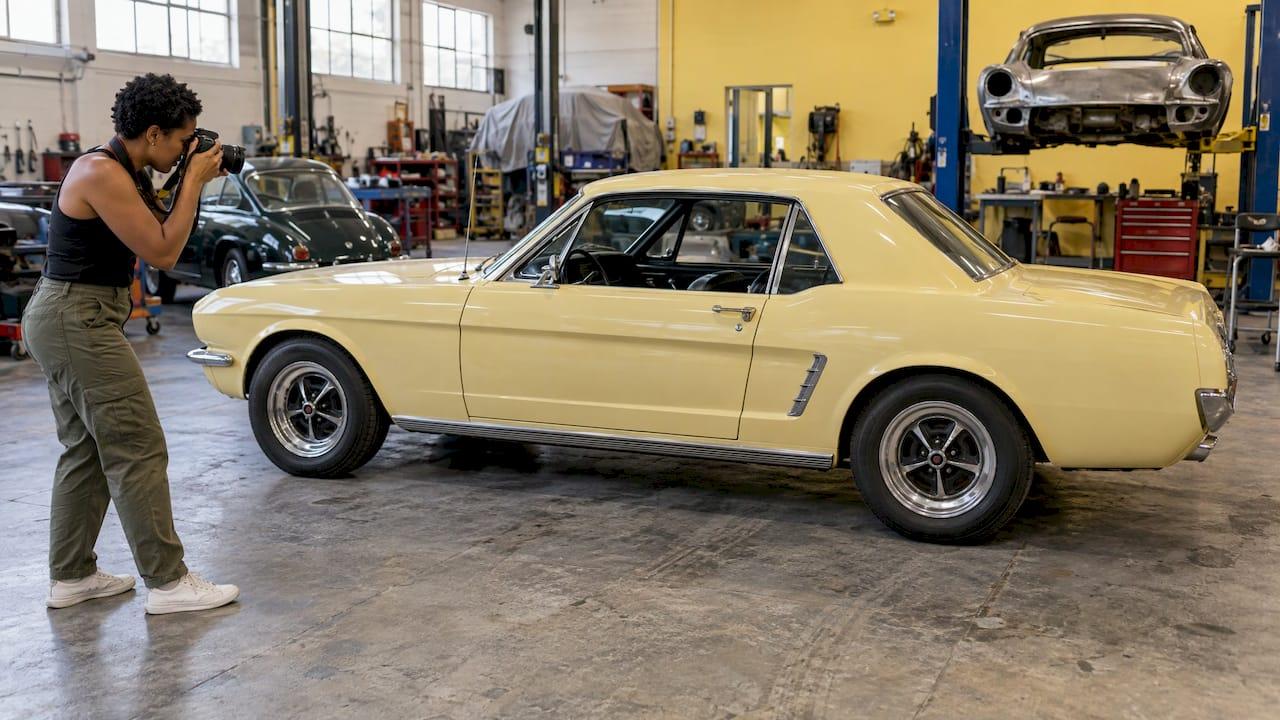
Consignment marketing means a specialist puts your classic in front of qualified buyers, handles the inquiries, showings and paperwork, and gets paid when the car sells. You keep ownership until then. If you want your car seen by more serious buyers than your own network can reach, and you don't want to spend your weekends answering "is it still available?", consignment is the route built for that. We run a consignment program for exactly this kind of owner, and this guide covers what the process looks like, what it costs, what to check in the agreement and how buyers and financing fit in.
TL;DR
- Consignment hands the marketing, buyer screening and transaction to a specialist, while you keep title to the car until it sells.
- Dealers are usually paid by commission on the final price or by keeping the spread over an agreed minimum, and some charge an up-front fee.
- Before you sign, read the contract for storage, insurance, test-drive rules and payment timing.
- Good consignment starts with a realistic price, clean paperwork and strong photos.
- Buyers on consignment cars can line up financing early, which keeps deals moving.
Table of Contents
- What consignment marketing actually is
- Why classics need specialist marketing
- How consigning a classic car works, step by step
- What consignment costs
- What to check in the consignment agreement
- When consignment suits you
- What buyers should know about consignment cars
- Financing a consigned classic
- Ready to consign?
- FAQ
- Sources
What consignment marketing actually is
A consignment is an agreement where you own the car and a dealer sells it for you. Marketing is the heart of it. The dealer photographs the car, writes the listing, puts it in front of its buyer list and online audience, answers questions, schedules test drives and negotiates. You are not the one fielding calls from strangers.
Compare that with selling it yourself. A private sale costs little or nothing per listing, but it is the longest and least predictable route, according to a 2026 comparison of where to sell a classic car. You write the ad, vet the buyers, meet them, and verify the payment. With a consignment, the same comparison puts the out-of-pocket cost at $0 and says it suits hands-off sellers, estates and cars that need some work before sale.
If you want the money side in more detail, our guide to consignment versus private sale walks through what each route nets you.

Why classics need specialist marketing
A classic is not a commodity. Two cars of the same year and model can sit far apart in value because of originality, restoration quality, documentation and history. A generic classified ad can't carry that story. A specialist listing can: many photos, clear specs, honest condition notes and the paper trail that backs them up.
Reach matters too. The point of consigning is exposure to more buyers than you could find alone. A dealer with a national audience is showing your car to people who are already hunting for a muscle car, a vintage truck or an early Bronco, not to whoever happens to scroll past a local post.
How consigning a classic car works, step by step
Every shop runs its own process, but the shape is familiar.
1. Agree on the price
Start with real market value, not the number you hope for. Recent sales of comparable cars, condition, originality and options all count. Overpricing helps nobody: it keeps the car on the floor longer, and that is the opposite of what you want. Be careful with unusual features too. Rare paint or custom trim makes a car unique, but unique does not always mean more valuable.
2. Get the car and the paperwork ready
Gather the title, service records, restoration receipts, build sheets and any history you have. Fix the small things. Buyers don't want to pay top dollar for a car with a dead radio, wipers that don't work or gauges that don't read. Our documentation checklist covers the papers worth having in the folder.

3. Sign the consignment agreement
This is where the terms are set: how the dealer is paid, how long the agreement runs, where the car is kept, who insures it and when you get your money. More on this in the next section.
4. Photos, listing and promotion
The car gets photographed, specs are written up and the listing goes live. Quality here drives everything that follows. Detailed photos and a complete spec sheet answer questions before buyers ask them, so the people who call are serious.
5. Inquiries, showings and offers
The dealer takes the calls, schedules test drives and negotiates. In a shop sale the dealer handles the transaction end to end. You are not dealing with an unknown buyer, drafting a bill of sale on your own, or trying to verify a check or wire.
6. Sale, payment and transfer
When a buyer is found, the dealer completes the paperwork and you are paid under the terms of the agreement. In the shop model described by Fueled News, the seller hands over the title and receives a check from the dealer rather than from the buyer.
For a realistic picture of how long each stage takes, see our consignment timeline.
What consignment costs
The question people ask most is what a typical consignment charge is. There isn't one number, because dealers are paid in different ways. Fueled News reports two common methods:
| Payment method | How it works |
|---|---|
| Commission | The dealer takes a percentage of the final sale price. |
| Reserve price | You set a minimum, for example $40,000, and the dealer keeps whatever the car sells for above it. |
| Up-front fee | Some dealers also charge a fee to enter the vehicle in their system. |
A worked example makes the reserve model clear. Say you set a $40,000 minimum and the car sells for $46,000. You receive $40,000 and the dealer keeps the $6,000 spread. With a percentage commission, you would instead see the commission deducted from the $46,000. Either way, compare offers on what lands in your account, not on the headline rate.
The 2026 comparison mentioned above describes the dealer's cut as the spread between the agreed net and the sale price, and says sales take from a few weeks to a few months. Time is a real cost, so ask any dealer how they market a car that hasn't sold after the first month.
For how consignment stacks up against other routes, including the 10 to 20 percent fees some selling channels carry, read where to sell classic cars and our comparison of consignment and auction.
What to check in the consignment agreement
Read the whole contract before you sign. Fueled News points sellers to these items, and we'd add a couple more:
- Compensation: commission percentage, reserve spread or flat fee, in writing, with an example.
- Storage: is the car kept indoors, and is there any charge?
- Test drives: who may drive it, and under what rules?
- Insurance: who covers damage or theft while the car is on the lot?
- Payment timing: how soon after the sale are you paid?
- Term and exit: how long the agreement runs and how you can end it.
- Pricing changes: who decides when the asking price moves.
One warning from the same article is worth repeating. Hand over the car and the title together and you've given up a lot of control, so make sure the agreement spells out what happens to both. Our best practices for consignment sellers goes deeper on getting these terms right, and the insurance guide explains agreed value coverage.
When consignment suits you
Consignment fits best when:
- You don't have the time or appetite to handle buyers yourself.
- You're selling for an estate or on behalf of family.
- The car needs small repairs or detailing before it's ready.
- You want the car shown to a wider, more qualified audience.
- You'd rather not verify payments or manage a transfer alone.
If you're a restorer finishing a project or a collector rotating a car out of the garage, the same logic applies. A finished car deserves a proper presentation, and that is the work you hand off.
What buyers should know about consignment cars
Sellers aren't the only ones with a stake here. If you're buying, you'll often see consignment cars described as better vetted, since dealers screen them before accepting them. Premier Financial Services' May 2025 guide makes that point, and also notes that asking prices can include the dealer's commission. Fair enough: that is how the sale gets marketed and handled for the owner.
Buyers should get commission, fees and terms in writing, look at the title and the paperwork, and make sure the dealer is a specialist with a track record. Our piece on protecting provenance with a dealer or private seller explains why history matters so much to value.
Financing a consigned classic
The related question is how buyers pay for a consigned car. Collector car loans don't work like ordinary auto loans, because lenders look past age and mileage to condition, originality, restoration quality and provenance. Lining up financing before you shop keeps you ready to move when the right car appears, and it helps the seller, since a pre-qualified buyer is a more certain buyer.
We offer financing pre-qualification on our site. To prepare, read our classic car loan requirements checklist and the overview of financing programs for collectors. Expect to need insurance in place, and expect the lender to want to understand the car's value.
The way we see it
A classic sells best when the whole story is told well. That means detailed photos, honest specs and a buyer who is ready to go. That's what we try to give every consignor.
Our marketplace isn't tied to one lot. Buyers can browse our inventory nationwide, and every car gets the same kind of detailed listing. We offer financing pre-qualification, test drive scheduling and quote requests, plus delivery or pickup arranged around the buyer. Cars we sell are Butter Certified and come with our Worry Free Guarantee.
Our advice to any owner: don't chase the highest number someone whispers. Chase the car sold, at a fair price, with the paperwork done right and you out of the middle. Smooth as butter is what we're going for.
Tony
Ready to consign?
If you'd like your classic marketed to enthusiasts and collectors by a team that lives in this niche, start with our Consign Your Vehicle page. Buyers who want to see what's available can browse our inventory, and anyone planning a purchase can look at financing from our home page.
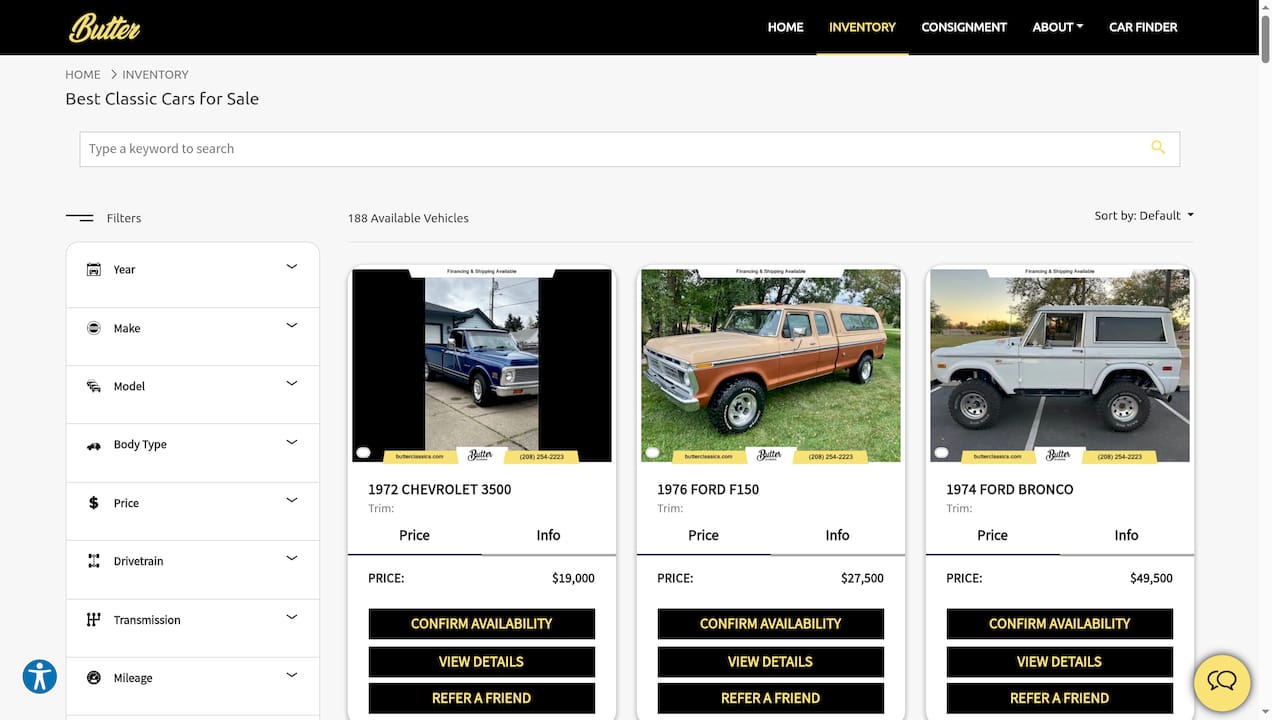
We offer consignment for classic cars, vintage trucks, muscle cars, 4x4s and other collector vehicles, and we're happy to talk through your car and your goals.
FAQ
What is a typical consignment fee for a classic car?
It varies by dealer. Common structures are a percentage commission on the final price, a reserve where the dealer keeps the amount above your minimum, or an up-front fee, as Fueled News reports. Ask for the structure in writing and compare what you'd net on the same sale price.
How long does a consignment take to sell?
A 2026 seller comparison puts consignment at weeks to a few months. Price, condition, paperwork and photos all affect that. Our timeline guide shows the stages.
Do I keep the title while the car is consigned?
That depends on the agreement, so read it closely. Surrendering both car and title is a red flag to some buyers and experts, so make sure the contract states who holds what and when it changes hands.
Can buyers finance a car on consignment?
Yes. Collector financing looks at the car's condition, originality and provenance, and insurance is usually required. Lining up pre-qualification early helps a purchase move quickly.
Sources
- Tips on Selling and Buying Through A Consignment Shop (Fueled News)
- How to Sell a Classic Car in 2026: Best Places and Fees
- Guide to Buying Collector and Exotic Cars on Consignment