A private sale usually puts more cash in your pocket. Consignment buys you convenience, professional marketing, and a lot less risk. That's the trade-off in one sentence, and everything else in this guide just fills in the details.
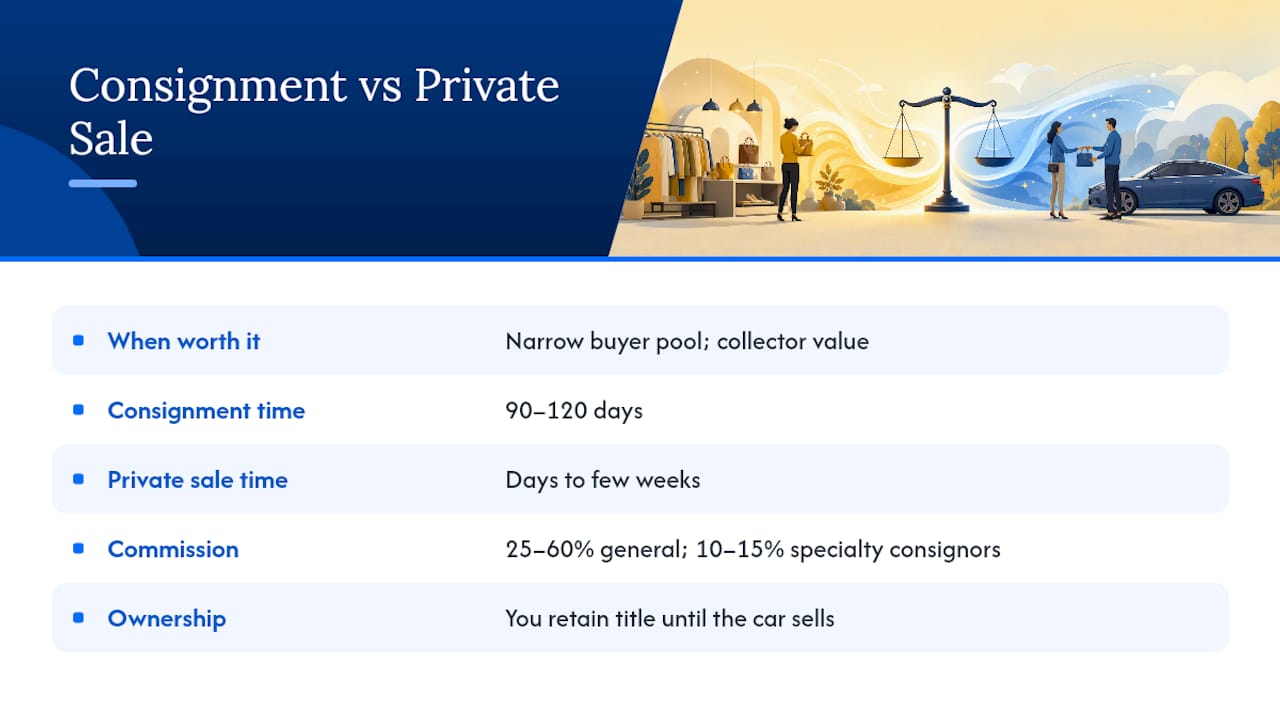
- Consignment fees: typically 25% to 60% of the sale price, though real-world classic and specialty vehicle consignors often run 10% to 15%.
- Timeline: private sales often close in days to a few weeks; consignment on higher-value vehicles often runs 90 to 120 days.
- Legal note: under the Uniform Commercial Code, the consignor keeps ownership until the car actually sells.
Key Takeaways
Private sale typically nets more cash, while consignment trades commission for professional marketing, buyer screening, and a lower-risk closing process.
| Point | Details |
|---|---|
| Private sale nets more | Skipping commission usually means more money in your pocket, if you have the time to manage it. |
| Consignment costs 10% to 60% | Specialty consignors often run 10% to 15%; general consignment shops can reach 60%. |
| Timelines differ sharply | Private sales often close in weeks; consignment on high-value vehicles runs 90 to 120 days. |
| Screening reduces risk | Consignors pre-screen buyers and manage secure transfer, cutting deal-collapse risk. |
| Butterclassics handles the heavy lifting | Its consignment service manages marketing, screened test drives, and closing paperwork for sellers of classic and collector vehicles. |
Table of Contents
- What Is Consignment and How Does It Work for Cars?
- What Does a Private Sale Actually Involve?
- Consignment vs Private Sale: Side-by-Side Comparison
- What Do Consignment Fees and Private Sale Costs Actually Cost You?
- Weighing the Pros and Cons of Each Selling Method
- How Do You Choose Between Consignment and Private Sale?
- What Paperwork and Safety Steps Protect You?
- Frequently Asked Questions
- Sources
What Is Consignment and How Does It Work for Cars?
Consignment means you hand your car over to a dealer or specialist, but you keep the title until it sells. The Shopify definition of consignment puts it simply: the consignor owns the goods, the consignee markets and sells them, and everybody splits the proceeds according to a contract. For cars, that consignee is usually a dealership or a marketplace like Butterclassics.
Here's the typical flow:
- Drop off the car for inspection, detailing, and photography.
- The consignor lists it, markets it, and handles buyer inquiries.
- Screened buyers get showings or test drives, often on the consignor's lot.
- Once a deal closes, the consignor manages paperwork and payout, minus commission.
Contracts vary. Some are exclusive for a set term, others let you pull the listing anytime. Ownership stays with you the whole time, which under the Wex legal definition of consignment affects who's on the hook for sales tax. Some states even shift that reporting duty to the consignee, according to California's Publication 114 on consignment sales, though rules vary by jurisdiction.
Pro Tip: Ask upfront whether your state requires a seller's permit while your car sits on consignment. It's usually the consignee's job, but confirm it in writing.
For collector cars specifically, consignment timelines often stretch 90 to 120 days, since finding the right buyer for a rare Bronco or a numbers-matching Corvette takes patience.
What Does a Private Sale Actually Involve?
A private sale means you're the dealership. You list the car, take the calls, run the showings, and negotiate the price yourself. No middleman, no commission, but also no safety net.
The typical private-sale process looks like this:
- Photograph and list the vehicle across multiple platforms.
- Field inquiries and schedule showings, often over several weekends.
- Negotiate price and handle any financing contingencies from the buyer's side.
- Verify payment, transfer title, and hand over the keys.
Selling privately usually eats 15 to 25 hours of your time, spread across a few weeks rather than compressed into a single afternoon. Most of the money sellers lose in a private sale doesn't come from a bad negotiation. It comes from skipping steps: no professional photos, no pre-screening, accepting a shaky payment method under pressure to close.
Pro Tip: Insist on a verified cashier's check or an escrow service for anything over a few thousand dollars, and meet buyers at your bank rather than your driveway.
Consignment vs Private Sale: Side-by-Side Comparison
| Dimension | Consignment | Private Sale |
|---|---|---|
| Control vs convenience | Consignor handles marketing and showings; you have less day-to-day control. | You control every decision, but you also do every task. |
| Expected net proceeds | Lower, after commission is deducted. | Typically higher since there's no commission to pay. |
| Fees / commission structure | 10% to 60% depending on vehicle value and consignor, per Investopedia. | Minimal: listing fees, minor prep, occasional escrow charges. |
| Time to sell | Often 90 to 120 days for high-value vehicles. | Usually days to a few weeks if priced right. |
| Marketing & exposure | Professional photography, dealer network, curated buyer pool. | Whatever platforms and effort you put in yourself. |
| Buyer screening & risk | Consignor pre-screens buyers and manages secure transfer, per Bankrate. | You screen buyers and verify payment yourself. |
| Paperwork & closing | Consignor typically manages title transfer and payout. | You handle every document and the bill of sale. |
For a six-figure classic, the consignor's buyer network and screening often matter more than the commission you're giving up.
What Do Consignment Fees and Private Sale Costs Actually Cost You?
Commission rates for consignment swing between 25% and 60% of the sale price at general consignment shops, but specialty and classic car consignors, including higher-volume dealer programs, often land closer to 10% to 15%. That gap is worth negotiating, especially on a car worth six figures.
| Cost type | Typical range |
|---|---|
| Consignment commission (specialty/classic vehicles) | 10% to 15% of sale price |
| Consignment commission (general consignment shops) | 25% to 60% of sale price |
| Private sale costs (listing, prep, escrow) | Usually a few hundred dollars or less |
Run the math on a $100,000 vehicle. At a 12% consignment fee, you net $88,000 before any other costs. Sell it privately and you might net $8,000 to $12,000 more, based on published RV consignment case data, even after accounting for your own time and minor prep expenses.
Weighing the Pros and Cons of Each Selling Method
Consignment pros: wider buyer exposure, professional pricing guidance, buyer screening, secure payment handling, and far less of your own time on the phone.
Consignment cons: commission eats into proceeds, some contracts lock you in exclusively, sale timelines run longer, and your car depreciates while it sits.
Private sale pros: higher net proceeds, full control over pricing and timing, the freedom to pull the listing anytime, and a fast close if you price it correctly.
Private sale cons: it's your time and effort start to finish, you carry more transaction risk, and you're the one verifying payment and vetting strangers who want to test drive your car.
How Do You Choose Between Consignment and Private Sale?
Run through this quick decision flow before you commit:
- Check demand. A car with a big enthusiast following (Broncos, muscle cars, Corvettes) often moves fast privately. Niche or high-value cars often benefit more from a consignor's buyer network.
- Weigh your timeline. Need cash in two weeks? Lean private. Willing to wait 90 to 120 days for the right buyer? Consignment can work in your favor.
- Be honest about your comfort level. Screening strangers, negotiating price, and verifying payment isn't for everyone.
- Consider a hybrid. Try a private sale for 30 days, then hand it to a consignor if it hasn't moved.
If you go the consignment route, ask every consignor these questions:
- What's the commission, and is it negotiable for a car at my price point?
- Is the contract exclusive, and for how long?
- Who covers storage, insurance, and pickup costs while the car is listed?
- What's the payout schedule once a buyer closes?
What Paperwork and Safety Steps Protect You?
Have your title, maintenance records, and a bill of sale ready before you start, whichever route you choose. In consignment, the consignor typically handles title transfer and closing paperwork. In a private sale, that's on you.
Pro Tip: Never accept a personal check for a vehicle sale. Insist on a verified cashier's check, wire transfer, or escrow service, and meet at a bank or dealer lot rather than your home.
- Watch for financing contingencies and inspection windows that stall a private deal.
- Confirm who carries insurance while the car sits on a consignor's lot; your personal policy may not cover it.
- Review common classic car scams before meeting any private buyer.
Why Sellers Choose Butter Classics for Consignment
Selling a classic car well takes more than a listing. It takes the right buyers looking at the right time.
- Curated inventory of trucks, muscle cars, Corvettes, and Broncos that draws serious collectors.
- Professional photography and consignment best practices built specifically for high-value vehicles.
- Scheduled, screened test drives instead of strangers showing up unannounced.
- A dedicated consignment team handling the paperwork end to end.
Dealer-managed consignment gives collector car sellers professional marketing, secured on-lot showings, and handled title transfer, the exact pieces that protect resale value on a rare or investment-grade vehicle.
A Collector's Take on When Consignment Earns Its Fee
For an ordinary daily driver, I'd lean toward a private sale almost every time. But for a numbers-matching classic or a six-figure investment car, the buyer pool is smaller and the stakes are higher. That's where a consignor's screening and marketing genuinely pay for themselves.
Ready to Consign Your Classic With Butter Classics?
If you've read this far, you already know the trade-off: private sale for maximum cash, consignment for maximum ease. If you're leaning toward letting someone else handle the showings, the screening, and the paperwork, Butterclassics built its consignment service around exactly that.
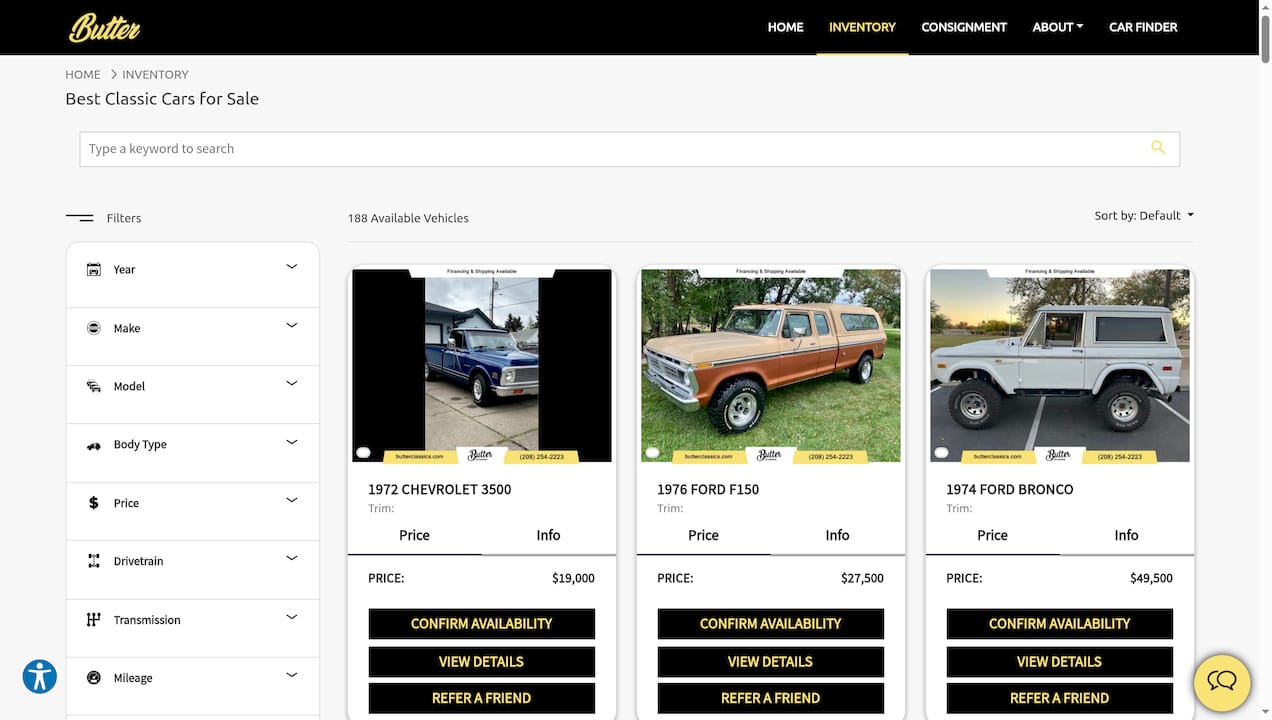
We market your car to a curated pool of collectors already looking for cars like yours, schedule qualified test drives on your behalf, and manage secure payment and closing so you're not verifying a stranger's cashier's check in a parking lot. Browse our current inventory to see the caliber of vehicle we work with, then reach out to start your consignment conversation. Smooth as butter, start to sold.
Frequently Asked Questions
Is consignment worth it for a classic car? It often is if your car appeals to a narrow buyer pool or carries real collector value. The commission pays for marketing and screening that most private sellers can't replicate on their own.
How long does consignment take compared to a private sale? Consignment on higher-value vehicles often runs 90 to 120 days, while a well-priced private sale can close in days to a few weeks.
What's a typical consignment commission? General consignment shops often charge 25% to 60%, but specialty classic car consignors frequently negotiate down to 10% to 15%.
Do I still own my car during consignment? Yes. Under the Uniform Commercial Code, you retain title until the car actually sells, and the consignee sells on your behalf.
Which is safer, consignment or private sale? Consignment generally carries less transaction risk since the consignor screens buyers and manages secure payment and title transfer, while private sellers handle that verification themselves.
Sources
- How to sell property by owner — Bankrate
- What is consignment: How it works — Shopify
- consignment | Wex | US Law | LII / Legal Information Institute
- Consignment Sales (Publication 114) — California Department of Tax and Fee Administration