
Consignment is the right move when your classic is rare, valuable, or simply too time-consuming to sell privately. The three highest-impact actions to take first: get your car in front of collector-focused buyers (not general marketplaces), nail an objective appraisal before you set a price, and invest in professional photography with complete documentation. Listings on enthusiast platforms return an average premium of 27% more than identical cars posted to mainstream sites.
Pull a VIN history report before you do anything else. It costs under $10, surfaces branded titles or accident history instantly, and builds buyer confidence from the first inquiry.
Butterclassics offers commission-based consignment with nationwide marketplace exposure, high-quality listings, and defined payout terms. If you want a partner who already reaches collector buyers, that's a strong place to start.
Pro Tip: List convertibles and open-top classics in late winter or early spring. Buyer activity peaks in spring and early summer for those categories, and timing your listing to that window can meaningfully shorten your sale timeline.
Table of Contents
- What are the classic car consignment best practices, step by step?
- How do consignment fees and commissions actually work?
- What paperwork do you need before consigning a classic car?
- How do you value a classic car and set the right reserve?
- What photography and marketing actually move classic cars?
- How are buyers screened and payments handled safely?
- Who handles storage, transport, and insurance during consignment?
- What are the U.S. legal and tax considerations for consignment sales?
- How long does classic car consignment typically take?
- How do you choose the right consignment partner?
- How Butterclassics handles your consignment
- Key Takeaways
- When consignment makes sense and when it doesn't
- Butterclassics: a seller-focused consignment option worth knowing
- Useful sources and tools for classic car sellers
What are the classic car consignment best practices, step by step?
A clean consignment sale moves through seven stages. Knowing what happens at each one keeps you from being caught off guard.
- Intake and inspection. The consignor photographs, inspects, and documents the vehicle's condition. You hand over the title, registration, service records, and any provenance materials. Expect this to take 1–3 days.
- Valuation and pricing. You and the consignor agree on a listing price and a reserve (the minimum you'll accept). This is the stage where a certified appraisal pays for itself.
- Listing preparation. Professional photos, a video walk-around, and the listing write-up are produced. Budget 3–7 days for quality work.
- Marketing and listing live. The car goes live on collector marketplaces and is promoted to the consignor's buyer network. This stage can last anywhere from two weeks to several months.
- Buyer interactions. Inquiries, test drive requests, and offers come in. Your consignor screens buyers and brings qualified offers to you for approval.
- Sale acceptance and escrow. Once you accept an offer, funds go into escrow or are verified before the title moves. Wire transfers and escrow services are standard for high-value vehicles.
- Payment and title transfer. After funds clear, the consignor releases payment to you (minus commission and agreed fees) and the title transfers to the buyer. Post-sale, confirm the odometer disclosure and any state-required paperwork is complete.
Your responsibilities vs. the consignor's responsibilities:
- You provide: clear title, all documents, vehicle access for inspection, and written approval before any price reduction.
- Consignor provides: marketing, buyer screening, offer management, secure payment handling, and storage if the vehicle is at their facility.
Two factors speed things up considerably: setting a realistic reserve from day one and presenting a turnkey, fully documented vehicle. High reserves with deferred maintenance are the most common reason consignment drags past 90 days. Rotating inventory every 60–90 days is a best practice among top consignment operations, so if your car hasn't moved, expect a conversation about pricing.
How do consignment fees and commissions actually work?
Commission structures for classic vehicles vary, but three models cover most of what you'll encounter.
| Fee Type | Typical Range | Notes |
|---|---|---|
| Percentage commission | 15% | Most common for classic car consignment |
| Flat fee | $300 | More common for lower-value vehicles |
| Hybrid (flat + %) | Flat intake + 8–15% | Covers listing costs regardless of outcome |
| Storage fee | $150/month | Charged if vehicle is stored at consignor's facility |
| Transportation fee | Varies by distance | Confirm who arranges and pays in the contract |
Worked example — mid-range classic ($45,000 sale price):
- Gross sale price: $45,000
- Commission at 15%: $6,750
- Storage (2 months at $150/month): $300
- Seller net: $37,950
Worked example — high-value classic ($120,000 sale price):
- Gross sale price: $120,000
- Commission at 12% (negotiated cap): $14,400
- No storage (seller retained vehicle): $0
- Seller net: $105,600
Commission rates for high-touch collectible categories can run higher when the consignor provides photography, authentication, and managed sale work. Online consignors commonly publish bands of 30–50% for full-service vintage categories, though dedicated classic car consignors typically charge less because the per-vehicle economics are different.
Contract terms worth negotiating:
- A commission cap (maximum dollar amount regardless of sale price)
- Written approval required before any price reduction
- Payout timing spelled out (e.g., within 5 business days of funds clearing)
- Cancellation terms if the car doesn't sell within an agreed period
What paperwork do you need before consigning a classic car?
Get these documents together before intake. Missing even one can delay closing by days or weeks.
- Clear title in your name, free of liens. If there's an outstanding loan, get a lien release letter from the lender before handing the car over.
- Current registration (or proof of last registration if the car is unregistered/stored).
- Valid government-issued ID matching the name on the title.
- Maintenance and restoration receipts organized chronologically. Collectors reward documented history.
- Provenance materials: prior ownership records, original window sticker, build sheet, or any competition/show history.
- Owner's manual and original documentation if available. These add tangible value to collector buyers.
- Odometer disclosure statement (required for vehicles under federal mileage disclosure rules; check your state's DMV for exemptions on older vehicles).
- Bill of sale from your purchase, if you have it.
Title transfer rules differ by state. Some states require notarized signatures; others require a separate transfer form. Check with your state's DMV before intake, especially if the title is from a different state than where the sale will occur. Sales tax liability on the transaction also varies by state and is typically the buyer's responsibility, but confirm this with your consignor and a tax advisor for your specific situation.
Pro Tip: Scan every document and build a single digital history file (PDF folder or shared drive link). Send it to your consignor before intake and attach it to the listing. Detailed history files increase buyer confidence and reduce back-and-forth during escrow.
How do you value a classic car and set the right reserve?
Start with recent comparable sales, not asking prices. What similar cars actually sold for in the last 6–12 months is your anchor. The Hagerty Price Guide and collector market indices are the most widely trusted references for U.S. classic car values. Cross-reference those with recent auction results and current market trends to triangulate a realistic range.
Primary valuation inputs:
- Recent comparable sales (same make, model, year, and condition grade)
- Hagerty Price Guide or similar collector indices
- Professional certified appraisal (especially for vehicles over $25,000)
- Documented provenance and restoration receipts (these add a measurable premium)
- Condition grade using a recognized scale (e.g., Hagerty's 1–6 scale or AACA standards)
A certified appraisal is worth the cost for any vehicle above $25,000. It gives you a defensible number for pricing, insurance, and buyer negotiations. It also signals to serious buyers that you've done the work. For detailed appraisal methodology, Butterclassics has a full owner's guide that walks through each approach.
Three pricing strategies:
- Market-aligned pricing: List at or just below the top of the comparable range. Attracts serious buyers quickly without leaving money on the table.
- Aggressive pricing: List below market to generate multiple offers fast. Works well when speed matters more than maximum return.
- Reserve-focused: List at a higher aspirational price with a firm reserve. Best for rare or highly documented vehicles where the right buyer will pay a premium.
Pro Tip: Set your reserve at the minimum you'd genuinely accept, not at your dream price. A reserve set too high kills momentum and can make a listing go stale. Buyers notice when a car has been sitting for months, and it invites lowball offers.
What photography and marketing actually move classic cars?
Professional photography is the single biggest driver of premium bids. Blurry phone shots in a dim garage tell a buyer you're not serious. Crisp, well-lit images of every angle tell them the car is worth their attention. Detailed images also reduce unqualified inquiries and filter serious buyers before they ever pick up the phone.
Photo checklist (8–12 exterior shots minimum):
- All four corners (front-left, front-right, rear-left, rear-right)
- Both profiles (driver side, passenger side)
- Front and rear straight-on
- Roof and convertible top (if applicable)
- Engine bay (clean, well-lit)
- Undercarriage
- Interior: driver's seat, passenger seat, rear seat, dashboard, gauges, shifter
- Close-ups of any flaws, repairs, or wear (transparency builds trust)
- VIN plate and data tag
- Any provenance items (window sticker, build sheet, trophies)
Shoot in natural light, ideally on an overcast day to avoid harsh shadows. A clean, neutral background (empty parking lot, open field) keeps the focus on the car. For a full step-by-step photography walkthrough, Butterclassics' classic car listing photography guide covers lighting, angles, and equipment in detail.
Short video checklist:
- Cold engine start (shows no smoke, no hard starts)
- Walk-around at walking pace
- Interior function test (gauges, windows, wipers, A/C if equipped)
- Exhaust note clip
Channel selection: Collector-focused marketplaces outperform general platforms for rare and investment-grade vehicles. Match the channel to the car. A numbers-matching muscle car belongs on a specialty collector platform. A well-used driver-quality classic might move faster on a broader automotive marketplace. For presentation tips that translate directly to show-quality prep, the Butterclassics classic car show preparation guide is a useful companion.
Pro Tip: Write a short provenance paragraph for the listing: where the car was built, who owned it, what was done to it, and why it matters. A two-paragraph story with specific details (original owner's name, state, documented mileage) increases buyer confidence more than any spec sheet.

Before listing, professional detailing is one of the highest-return preparation steps you can take. Engine bay and undercarriage cleaning make a measurable difference in buyer perception, and the cost is almost always recovered in the final sale price.
How are buyers screened and payments handled safely?
Insist on secure, verified payment before the title leaves your hands. That's the non-negotiable rule. Everything else is process.
Buyer screening checklist:
- Confirm full legal name and government-issued ID
- Ask source-of-funds questions for high-value transactions (wire from personal account vs. business account vs. financing)
- For international buyers, require a U.S.-based escrow service and confirm import/export compliance
- Ask your consignor for their standard buyer qualification process in writing before you sign the consignment agreement
Payment methods and their tradeoffs:
- Bank wire transfer: Fast and verifiable. Confirm the wire has settled (not just initiated) before releasing the title. Call the bank to verify, don't rely on a screenshot.
- Cashier's check: Acceptable, but verify directly with the issuing bank before accepting. Counterfeit cashier's checks are a real fraud vector.
- Escrow service: Recommended for any sale over $10,000 or for long-distance buyers. The escrow service holds funds until both parties confirm the vehicle matches the listing. Reputable U.S. escrow services include Escrow.com and similar licensed providers.
- Dealer-facilitated payment: When your consignor is a licensed dealer, they typically handle payment collection and title transfer as part of the service.
Red flags that should pause a sale:
- Buyer offers to overpay and asks you to wire back the difference
- Pressure to release the title before funds have cleared
- Reluctance to use escrow for a long-distance transaction
- Requests to use payment apps (Venmo, Zelle, PayPal Friends & Family) for a five-figure vehicle
Who handles storage, transport, and insurance during consignment?
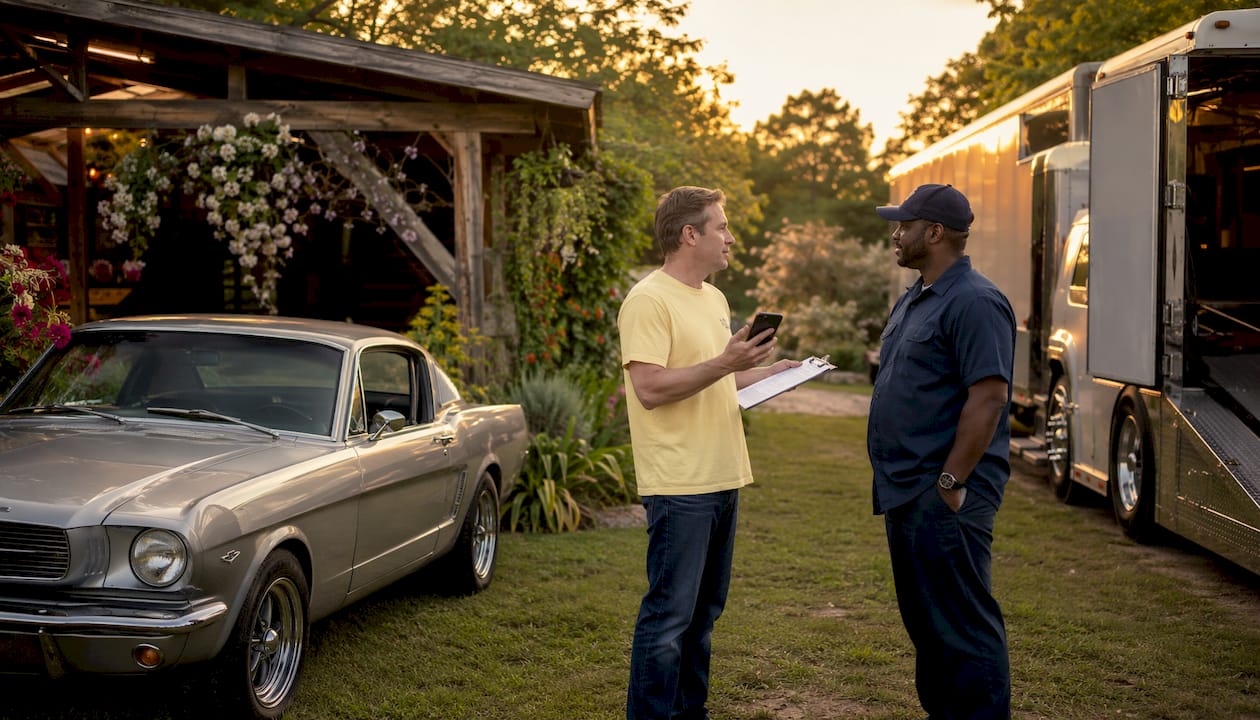
The answer depends entirely on what your consignment agreement says. Confirm every one of these points in writing before you hand over the keys.
| Responsibility | Consignor-Included | Consignor-Arranged (Seller Pays) | Seller Handles |
|---|---|---|---|
| Storage at facility | Common for full-service | Less common | Seller keeps vehicle |
| Transport to consignor | Rarely included | Often arranged by consignor | Seller delivers |
| Transport to buyer | Often included | Sometimes | Negotiated |
| Condition inspection at pickup | Standard | Standard | Seller documents |
| Insurance during storage | Consignor's garage-keeper policy | Confirm in writing | Seller's policy |
| Insurance during transit | Carrier's policy | Confirm coverage limits | Seller's policy |
Insurance checklist before handoff:
- Ask the consignor for proof of garage-keeper's liability insurance if the vehicle will be stored at their facility.
- Confirm your own classic car insurance policy covers the vehicle during transit and while in a third party's possession.
- Get a written condition report (photos + written notes) at pickup and again at delivery. This is your protection if damage occurs in transit.
For transport quotes, use enclosed carrier services for high-value vehicles. Open transport is cheaper but exposes the car to road debris and weather. The condition report at pickup is your baseline for any damage claim.
What are the U.S. legal and tax considerations for consignment sales?
Consignment sales are taxable events in most states. The proceeds you receive are generally treated as income or capital gain depending on how long you've owned the vehicle and your cost basis. For high-value sales, consult a tax advisor before you close.
Key legal items:
- Clear title: You must have unencumbered title to legally consign. Any lien must be released before or at closing.
- Accurate odometer disclosure: Federal law (the Truth in Mileage Act) requires odometer disclosure on most vehicles. Many states exempt vehicles over 10 model years old, but confirm your state's rules.
- Seller representations: Your consignment agreement will likely include representations that the car is as described. Misrepresenting condition or history creates post-sale liability.
- Lien releases: If the vehicle was ever used as collateral, get a written lien release from the lender and attach it to the title.
Tax reporting notes:
- If your consignor is a dealer or marketplace operator, proceeds above IRS thresholds may be reported on a 1099-K or 1099-MISC. Keep records of your original purchase price and any documented restoration costs to establish your cost basis.
- Capital gains treatment may apply if the vehicle was held as an investment. Short-term vs. long-term holding periods affect the rate.
Legal red flags in consignment contracts:
- Broad indemnity clauses that hold you liable for buyer disputes after the sale
- Vague payout timing ("within a reasonable time" is not acceptable)
- Auto-markdown clauses that reduce your price without written approval
- No defined consignment period or termination rights
This article is general information, not legal or tax advice. Confirm your specific obligations with a qualified attorney or tax professional before closing a high-value sale.
How long does classic car consignment typically take?
Typical consignment sales take between 30 and 180 days from intake to payment. The range is wide because vehicle rarity, reserve strategy, and market timing all play significant roles.
| Stage | Typical Duration |
|---|---|
| Intake and inspection | 1–3 days |
| Listing preparation (photos, write-up) | 3–7 days |
| Listing live to first serious offer | 2–8 weeks |
| Offer acceptance to escrow open | 1–3 days |
| Escrow and payment clearing | 3–7 business days |
| Title transfer and post-sale paperwork | 1–5 days |
| Total (typical range) | 30–90 days (common); up to 180 days for rare/high-reserve vehicles |
Factors that shorten the timeline:
- Aggressive, market-aligned pricing from day one
- Turnkey condition with complete documentation
- Listing during peak buyer season (spring and early summer for most classics)
- Flexible reserve or willingness to negotiate
Factors that extend it:
- Reserve set above market comps
- Deferred maintenance that buyers flag during inspection
- Off-season listing (late fall and winter for outdoor-market classics)
- Limited buyer pool for highly specialized vehicles
How do you choose the right consignment partner?
Pick a partner who reaches your buyer type, publishes transparent fees, and can show you verifiable sales results. That's the short version. Here's how to evaluate in practice.
Evaluation checklist:
- What buyer audience do they reach? (Collector-focused vs. general automotive)
- Can they show you sample listings for comparable vehicles?
- Is their commission structure in writing before you sign?
- Do they carry garage-keeper's insurance for stored vehicles?
- What is their payout timeline after a sale closes?
- Do they require written seller approval before reducing the listing price?
- Can they provide references from recent consignors?
Questions to ask during intake:
- "What's your average days-to-sale for vehicles in this price range?"
- "Walk me through exactly what happens between offer acceptance and my payment."
- "What platforms and channels will you use to market this car?"
- "What does your consignment agreement say about markdowns and cancellation?"
- "Who handles buyer disputes after the sale closes?"
Clear, written consignment agreements that define markdown rules, payout timing, and transportation responsibilities are the single best way to prevent post-sale disputes. If a potential partner is evasive about any of these, that's your answer.
Red flags:
- No written consignment agreement offered
- Vague or verbal-only answers on fees and payout timing
- Pressure to accept the first offer quickly
- No verifiable sales history or references
- Marketing plan described only in general terms ("we'll post it online")
Modern consignment operations offer seller portals, documented contract terms, and transparent payout tracking. If a partner can't show you those basics, keep looking.
How Butterclassics handles your consignment
Butterclassics offers commission-based consignment built specifically for classic and vintage vehicles. The service combines nationwide marketplace exposure with high-quality listings, buyer financing pre-qualification, and defined payout terms.
What you get as a Butterclassics consignor:
- Professional listing with high-resolution photography guidance (or in-house support)
- Exposure to a nationwide audience of collector buyers and enthusiasts
- Buyer financing pre-qualification, which expands your buyer pool to qualified buyers who need financing
- Inspection and documentation support during intake
- Test drive scheduling and buyer interaction management
- Secure payment handling with clear payout terms
What to expect, step by step:
- Intake: Submit your vehicle details and documents. Butterclassics reviews and confirms acceptance criteria.
- Listing approval: Photos and write-up are reviewed and approved before going live.
- Marketing: Your car is promoted across the Butterclassics marketplace and collector channels.
- Offers and negotiation: Butterclassics brings qualified offers to you. No price changes without your written approval.
- Payout: After funds clear, payment is released on the agreed timeline.
Listings on specialty collector platforms return an average premium of 27% more than general marketplaces. Butterclassics is built for exactly that audience. Gather your title, service records, and provenance materials before intake. It speeds up the process considerably. Visit the Butterclassics consignment page to start your intake.
Key Takeaways
Successful classic car consignment comes down to three things done well: reaching the right collector audience, pricing accurately from a real appraisal, and presenting the vehicle with professional photography and complete documentation.
| Point | Details |
|---|---|
| Use collector platforms | Listings on enthusiast platforms return an average premium of 27% more than identical cars posted to mainstream sites. |
| Get a certified appraisal | For vehicles over $25,000, a professional appraisal anchors your reserve and builds buyer confidence. |
| Prepare your documents early | Clear title, lien releases, service records, and a digital history file prevent closing delays. |
| Negotiate your contract terms | Require written approval before any price reduction and confirm payout timing in writing before signing. |
| Butterclassics consignment | Offers nationwide collector exposure, buyer financing pre-qualification, and defined payout terms for classic vehicle sellers. |
When consignment makes sense and when it doesn't
Consignment is genuinely the best path for owners who have a valuable, well-documented classic and limited time or connections to reach serious collector buyers. If your car is rare, numbers-matching, or carries strong provenance, a specialty consignor earns their commission by putting it in front of people who will pay for those qualities.
Where consignment underperforms: very low-value project cars (where the commission eats a disproportionate share of the sale price), barn-find vehicles that local restorers would prefer to inspect in person, and situations where the seller needs cash fast and can't afford to wait out a 90-day listing period. For those cases, a private sale to a local enthusiast or a regional auction with no reserve often produces a faster, cleaner result.
The real question isn't "consignment or not" — it's "does this partner reach the buyer who will pay what this car is worth?" If the answer is yes, sign the agreement, hand over the keys, and let the process work. If you're not sure, ask for references and sample listings before you commit.
Butterclassics: a seller-focused consignment option worth knowing
If you've spent time reading through this guide, you already know what a good consignment experience looks like. Butterclassics delivers exactly that for classic and vintage vehicle sellers across the United States. The concrete advantage: your car reaches a curated audience of collector buyers who are already browsing, pre-qualifying for financing, and ready to act. No chasing down tire-kickers on general platforms.
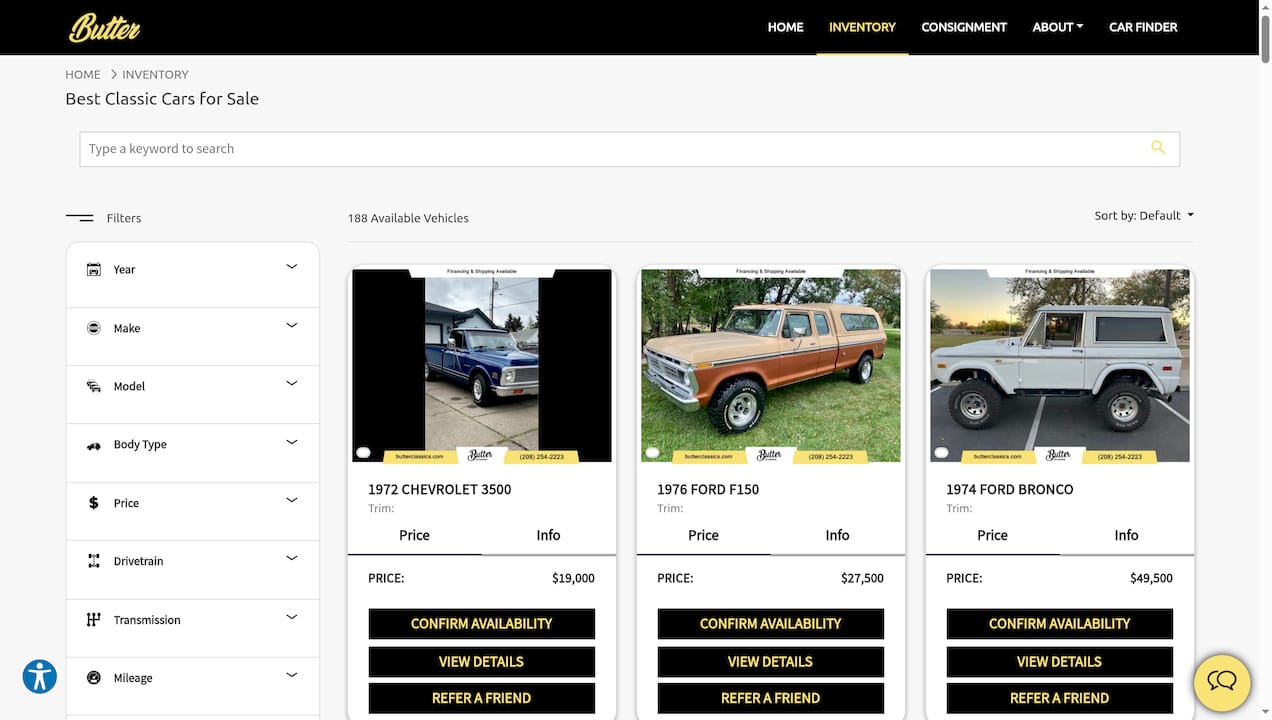
The intake process is straightforward. You bring the documentation, Butterclassics handles the listing quality, buyer screening, and payment security. Commission terms are transparent, payout timing is defined, and you approve any price changes before they happen. Browse the current inventory to see the quality of listings your car would sit alongside. When you're ready to move forward, visit butterclassics.com to start your consignment intake today.
Useful sources and tools for classic car sellers
Use these resources to act on the steps covered in this guide.
- VIN history report: Pull a report before listing to confirm ownership history, branded titles, and accident records. CarCheckerVIN's selling guide explains what to look for and where to pull reports.
- Professional appraisal: The AutoAppraisal.com selling guide covers how to find a certified appraiser and what documentation to bring.
- Photography best practices: Butterclassics' listing photography guide is the most practical step-by-step resource for sellers preparing their own shots.
- Valuation methodology: The Butterclassics classic car valuation guide walks through comparable sales, condition grading, and appraisal approaches.
- Vehicle preparation and detailing: AMB Pro Detailing's blog covers pre-sale detailing steps that increase perceived value, including engine bay and undercarriage cleaning.
- Consignment intake: Visit the Butterclassics consignment page to submit your vehicle details and start the intake process. Have your title, service records, and photos ready before you reach out.