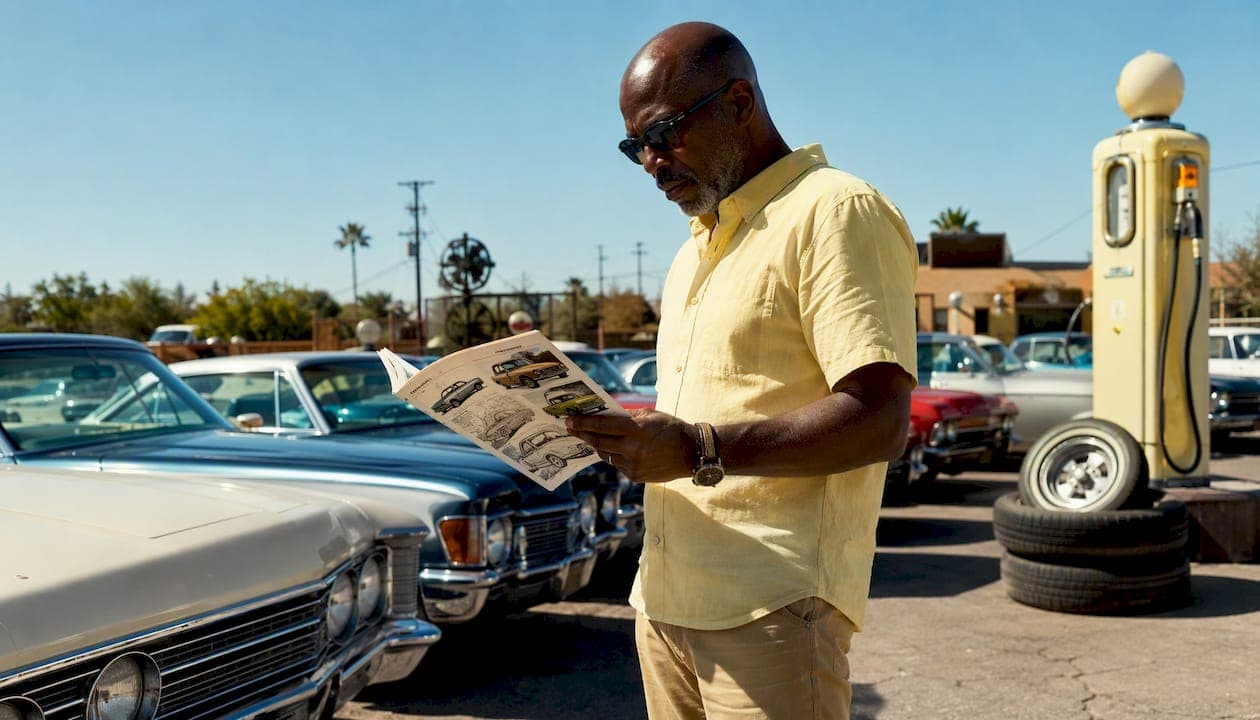
Butterclassics is the specialist marketplace collectors turn to first for curated inventory, financing pre-qualification, and hands-on consignment support. When you want to compare your options, here is the honest shortlist:
- Bring a Trailer — timed online auctions; best for maximizing price on desirable, well-documented cars through competitive bidding
- Hemmings — fixed-price classifieds and dealer listings; best for broad selection and private-party browsing
- ClassicCars.com — large classified marketplace; best for buyers who want volume and price-range filtering
- eBay Motors — general online marketplace with auction and buy-it-now formats; best for wide reach and quick listings
- Mecum Auctions — live auction events; best for high-value muscle cars and investment-grade vehicles where floor energy drives prices
- Barrett-Jackson — premium live auction; best for rare, show-quality cars where provenance and presentation command top dollar
- Cars & Bids — timed online auctions focused on enthusiast vehicles; best for post-1980s collectibles and a younger buyer pool
Three trust signals should anchor every decision: insist on an independent pre-purchase inspection, confirm escrow or third-party payment handling, and check published sale results before you commit to any channel.
Table of Contents
- How do these classic car channels compare side by side?
- How do you pick the right channel for your goal?
- When should you choose auctions, marketplaces, or consignment?
- Practical checklist: steps to buy or consign a classic safely
- Why Butterclassics stands out as your primary option
- Regional and niche-specific alternatives for classic collectors
- How do platforms handle customer support and disputes?
- What do real buyers and sellers say about these platforms?
- Legal and tax considerations when buying or selling
- Key Takeaways
- The channel choice matters less than most sellers think
- Butterclassics: the specialist marketplace built for collectors like you
- Sources and further reading
How do these classic car channels compare side by side?
| Channel type | Best for | Listing format | Seller fees | Buyer premium | Audience | Inspection | Escrow/payment | Shipping support | Financing | Timeline |
|---|---|---|---|---|---|---|---|---|---|---|
| Timed online auction | Max price discovery | Auction | Varies by platform | Typically 5% | Enthusiast buyers nationwide | Limited window; buyer arranges | Platform-managed | Seller/buyer arranges | Rare | Several days to two weeks |
| Live auction event | Rare/investment-grade cars | Live auction | Commission-based | 10% typical | Collectors, investors, dealers | On-site, limited | Auction house handles | Auction house coordinates | Occasionally | Days to weeks |
| Large online marketplace | Broad reach, quick listing | Auction + buy-it-now | Low or free listing | None or minimal | General + enthusiast buyers | Buyer arranges independently | Buyer-seller direct or escrow | Buyer arranges | Third-party lenders | 1–30 days |
| Specialty classic marketplace | Curated collector cars | Fixed-price + consignment | Commission on sale | None | Vetted collector buyers | Facilitated by platform | Platform-supported | Platform coordinates | Pre-qualification available | 2–4 weeks |
| Consignment broker | Hands-off selling | Brokered sale | Commission 10% | None | Targeted collector network | Broker facilitates | Broker manages | Broker arranges | Varies | 4 weeks |
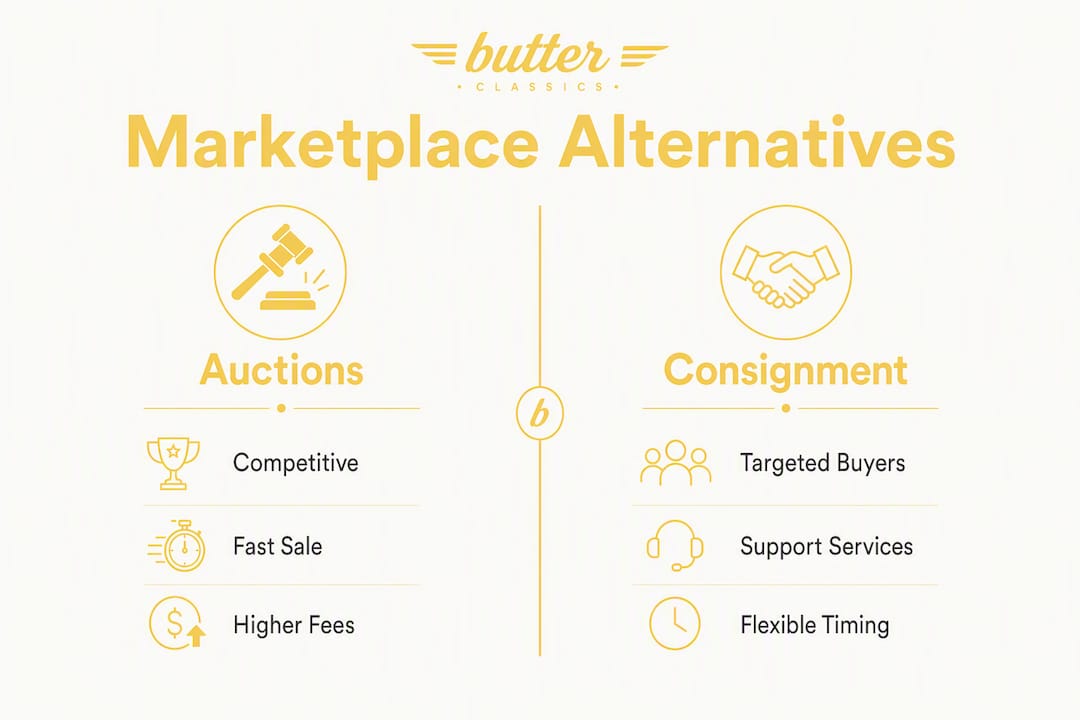
Pro Tip: Before you sign any consignment agreement, read the full seller contract. Look specifically for an explicit escrow or third-party payment clause, a clear fee schedule with no hidden charges, and a defined contract period with exit terms. If those three items are not in writing, keep looking.
How do you pick the right channel for your goal?
Match your goal to the channel type before you spend a single hour on listings.
If you need fast price discovery and your car has documented provenance, a timed auction puts it in front of motivated buyers within days. If you want a hands-off experience where someone else handles photography, paperwork, and buyer inquiries, a consignment specialist is worth the higher commission. Buyers who want the widest selection and the most time to evaluate should start with a large classified marketplace, then narrow down.
Critical criteria to weigh:
- Sale speed vs. price optimization (auctions are fast; consignment takes longer but often nets more on rare cars)
- Tolerance for buyer contingencies such as inspection periods and financing approvals
- Whether the platform facilitates independent inspections or leaves that entirely to you
- Fee sensitivity: total cost includes listing fees, commissions, buyer premiums, and shipping
- Documentation and provenance handling, especially for matching-numbers cars
- Financing options for buyers, which directly affects your pool of qualified bidders
Questions to ask every platform or representative:
- What is your inspection policy, and do you facilitate third-party inspections?
- How is payment handled, and is escrow or a third-party processor used?
- What is the typical timeline from listing to funded sale?
- What is the full fee structure, including any buyer premium?
- What are the consignment contract terms and the exit clause?
Red flags to walk away from: any seller who refuses an independent inspection is a serious warning sign. Add opaque fees, no escrow process, and zero published sale history to that list.
When should you choose auctions, marketplaces, or consignment?
Maximize price: Live or timed auctions create competitive bidding that can push a desirable car well above a fixed asking price. The trade-off is that auction formats give buyers limited inspection time and carry buyer premiums that can reduce your net proceeds. Budget for the premium on the buy side.
Secure a quick sale: Large online marketplaces with buy-it-now pricing move cars faster than auction cycles. You sacrifice some price discovery, but you control the timeline.
Hands-off consignment: A consignment broker or specialty marketplace handles photography, listing, buyer communication, and paperwork. Commissions run higher, but your time investment is minimal.
- Auctions: fast, competitive, but limited inspection windows and buyer premiums apply
- Online marketplaces: broad reach, flexible format, but buyer quality varies and payment protection depends on the platform
- Consignment specialists: full-service, higher commission, best for sellers who value time over squeezing the last dollar
Pro Tip: For investment-grade cars, provenance documentation (build sheets, window stickers, service records) can move the needle on final price more than the channel you choose. Get your paperwork in order before you list anywhere.
Practical checklist: steps to buy or consign a classic safely
For sellers:
- Gather all provenance documents: title, build sheet, service records, prior inspection reports
- Commission a third-party pre-purchase inspection before listing
- Set realistic price expectations — classic car value is what a buyer pays at a given time, not what a book says
- Choose your shipping terms and get enclosed-carrier quotes upfront
- Sign a clear consignment contract with defined fees, timeline, and exit terms
- Confirm escrow or third-party payment handling before accepting any offer
For buyers:
- Request full inspection reports and verify the VIN on the dash matches the title and structural panel stamps
- Confirm the car's title is clean and the numbers match
- Verify escrow and dispute resolution procedures with the platform before sending funds
- Arrange financing pre-approval or agreed-value collector car insurance before the deal closes
- Schedule enclosed transport with a bill of lading for long-distance purchases
Budget rule of thumb: Reserve at least 20% of your total funds for immediate post-purchase sorting: belts, hoses, fluids, and worn rubber that make an older car road-ready.
Pro Tip: Rust is almost always more expensive to fix than mechanical issues. Bring a flashlight and a magnet to check floor pans, trunk areas, and frame rails for filler and hidden repairs. VIN verification should include matching the dash VIN to the title, trim tag, and partial stamps on structural panels — a mismatch signals a parts-car assembly.
Why Butterclassics stands out as your primary option
Butterclassics is a leading specialist marketplace for collectible vehicles, built specifically for collectors, restorers, and investors who want more than a generic listing page.
Every listing on Butterclassics includes:
- High-resolution photography that shows condition accurately
- Full vehicle specifications and available history documentation
- Consignment agreements with transparent fee structures
- Financing pre-qualification so buyers know their budget before they inquire
- Test-drive scheduling for buyers who want to see the car in person
Specialist marketplaces like Butterclassics also provide title and paperwork support that general platforms leave entirely to the buyer and seller, which matters most on first-time purchases and out-of-state transactions.
Pro Tip: Start with the Butterclassics inventory to browse by price or vehicle type, or use the car finder if you have a specific model in mind. Always compare the full fee schedule and inspection policy of any platform before you commit.
Regional and niche-specific alternatives for classic collectors
Beyond the national platforms, several niche channels serve specific collector segments well. Specialty truck and SUV collectors will find dedicated truck-focused marketplaces that filter by body style and era. Regional auction houses hold events tied to specific markets, often drawing local buyers who pay a premium for proximity and the ability to inspect in person.
Car clubs and marque-specific registries are underused sourcing channels. A Corvette club, a Bronco registry, or a regional muscle car association often surfaces off-market cars before they hit any public listing. These networks also provide informal provenance verification from owners who know the car's history firsthand.

For collectors focused on niche classic car marketplaces, the audience is smaller but far more targeted, which can mean faster transactions and buyers who understand value without needing education.
How do platforms handle customer support and disputes?
Support quality separates good platforms from frustrating ones when a deal goes sideways. Live auction houses assign a dedicated representative to each consignment, giving sellers a direct contact for every step. Timed online auction platforms typically offer email and community-based support, with dispute resolution handled through a formal review process.
Large general marketplaces vary widely. Some offer buyer protection programs with defined refund windows; others leave disputes entirely between buyer and seller. Before you list or bid, check whether the platform publishes a written dispute resolution policy and whether it includes a defined escalation path.
Consignment specialists and specialty marketplaces tend to offer the most hands-on support because their business model depends on completed transactions, not just listing volume.
What do real buyers and sellers say about these platforms?
Reputation in the collector car world travels fast. Bring a Trailer has built a strong community reputation for transparent bidding history and detailed comment sections where past owners and knowledgeable enthusiasts weigh in on every listing. That community layer adds informal verification that no fee schedule can replicate.
Mecum and Barrett-Jackson carry decades of live-event credibility, and their published sale results are a reliable benchmark for valuation. Hemmings has a loyal readership that trusts its classifieds precisely because the audience is self-selecting: people who read Hemmings are already serious about collector cars.
Negative reviews across platforms most often cite undisclosed condition issues and slow dispute resolution. Both problems trace back to the same root: insufficient inspection documentation at the time of listing.
Legal and tax considerations when buying or selling
Selling a classic car in the U.S. may generate a taxable capital gain if the sale price exceeds your cost basis. The IRS treats collectible vehicles as capital assets; long-term gains on assets held more than one year are taxed at the applicable capital gains rate for your income bracket. Short-term gains are taxed as ordinary income. State sales tax rules vary: some states collect tax at the point of registration, others at the point of sale, and a few have exemptions for private-party transactions.
Title transfer requirements differ by state. Most states require a notarized title, a bill of sale, and an odometer disclosure statement. Out-of-state purchases add complexity: confirm the seller's state title is lien-free and that the title is in the seller's name before funds change hands.
Auction houses typically handle sales tax collection and title paperwork as part of their service. Private-party and marketplace transactions place that responsibility on the buyer and seller directly.
This is general information, not tax or legal advice. Confirm current rules with your state's DMV and a qualified tax professional before completing a transaction.
Key Takeaways
The right channel for buying or selling a classic car depends on your goal: auctions deliver fast price discovery, specialty marketplaces offer curated inventory and support, and consignment brokers handle the process end to end.
| Point | Details |
|---|---|
| Match channel to goal | Auctions maximize price discovery; consignment handles the process; marketplaces offer the widest selection. |
| Insist on inspection | Any seller who refuses an independent third-party inspection is a red flag — walk away. |
| Budget 20% for sorting | Reserve at least 20% of total funds for post-purchase belts, hoses, fluids, and immediate repairs. |
| Verify VIN and title | Confirm the dash VIN matches the title, trim tag, and structural panel stamps before any money moves. |
| Butterclassics | A specialist marketplace with curated listings, financing pre-qualification, consignment support, and inspection facilitation. |
The channel choice matters less than most sellers think
Most collectors spend weeks debating auction versus marketplace when the real variable is documentation. A car with a clean title, matching numbers, a full service history, and sharp photography will sell well on almost any platform. A car without those things will struggle everywhere, regardless of how much traffic the platform gets.
What I see sellers underestimate most is how much a refused inspection costs them. Buyers at every price point are more cautious than they were five years ago. Demand for original-condition, numbers-matching cars has stayed strong, but buyers want proof, not promises. The platforms that facilitate inspection and publish sale results consistently attract better buyers and close faster.
For collectors balancing investment value against the enjoyment of driving, my honest recommendation is this: buy the car you actually want to own, document everything from day one, and choose the channel that gives your specific car the audience it deserves. A rare Bronco belongs in front of truck enthusiasts; a show-quality Corvette belongs where provenance commands a premium. Butterclassics is built for exactly that kind of match.
Butterclassics: the specialist marketplace built for collectors like you
If you want a marketplace where every listing is built for serious collectors, not casual browsers, Butterclassics delivers. You get curated inventory across muscle cars, Corvettes, Broncos, vintage trucks, and more, with high-resolution photography, full spec documentation, financing pre-qualification, and real consignment support from people who know these cars.
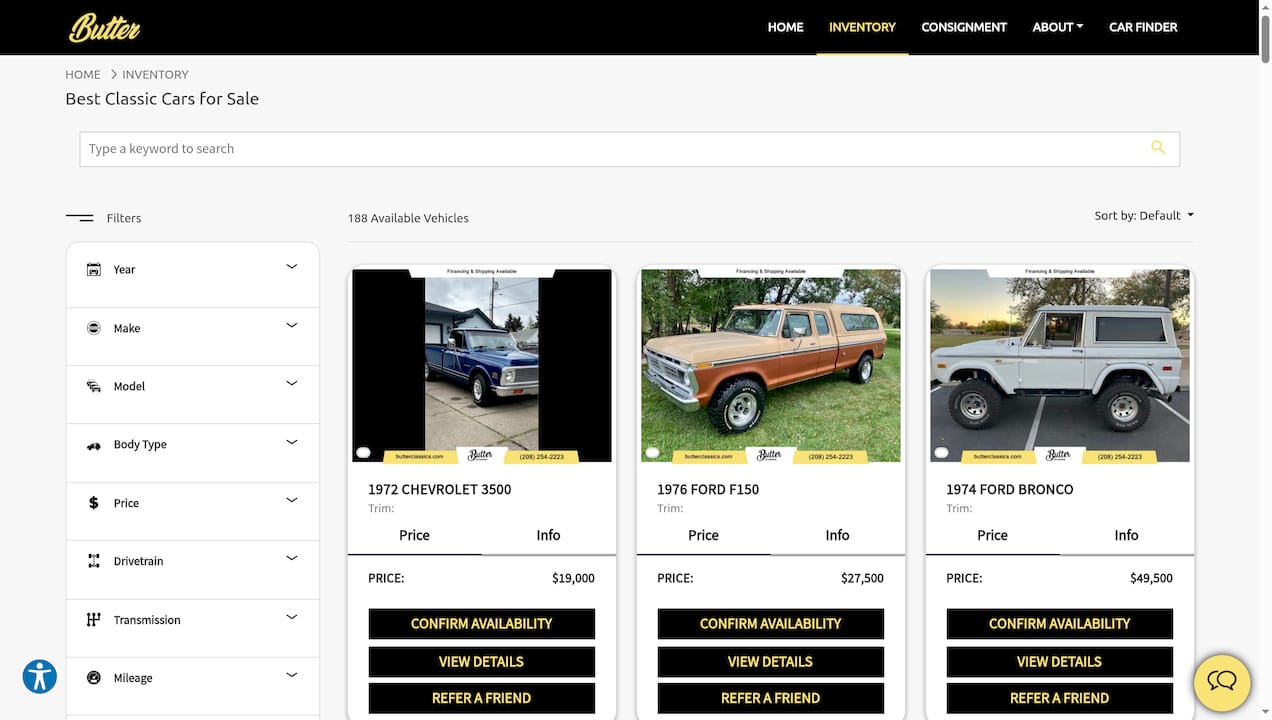
The difference is simple: Butterclassics is focused entirely on collectible vehicles, so the buyers browsing your listing already know what they are looking at. Browse the current classic car inventory or use the car finder to tell us exactly what you are looking for, and we will get to work.
Sources and further reading
Inspection and buying guides
Market and valuation advice
- Classic Car Buyer's Guide — State Farm
- Classic Car Market Trends Checklist for 2026 Buyers — Butterclassics Blog
Butterclassics resources
- Browse Classic Cars For Sale — Butterclassics Inventory
- What Is a Collector Car? Definition, Value, and More — Butterclassics Blog
- Dealer Inspection Checklist for Classics Explained — Butterclassics Blog