
Classic car financing programs are specialized loan and lease structures designed to match the unique valuation, usage, and risk profile of collector vehicles. Unlike standard auto loans, these programs account for the fact that a well-maintained 1969 Chevrolet Camaro or a restored Ford Bronco may hold or increase its value over time rather than depreciate. That fundamental difference changes everything about how lenders structure payments, set terms, and require insurance. If you want to know how to finance a classic car without overpaying or leaving yourself exposed, this guide breaks down every program type, insurance requirement, and practical consideration you need.
What types of classic car financing programs are available?
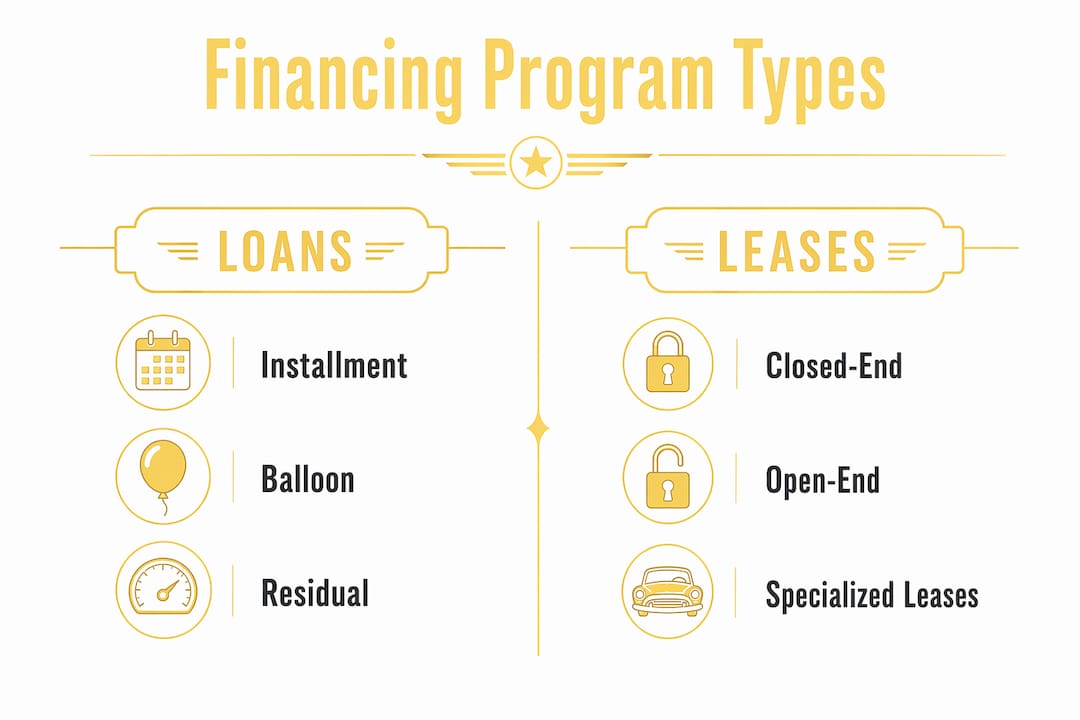
Classic car financing program types fall into two broad categories: traditional installment loans and specialized lease structures. Each works differently, and the right choice depends on your budget, how you plan to use the vehicle, and what you want to do with it at the end of the term.
Traditional classic car loans work similarly to a standard auto loan. You borrow a fixed amount, pay it back over a set term with interest, and own the vehicle outright at the end. Lenders like Advancial Federal Credit Union offer flexible financing terms ranging from 5 to 7 years, often with discounts for policies that meet collector standards. This structure is straightforward and suits buyers who want clear ownership from day one.

Leasing and open-end lease structures are where classic car financing gets genuinely interesting. An open-end lease sets a residual value (sometimes called a balloon) at the start of the term. Your monthly payments only amortize the difference between the purchase price and that residual. The result is a noticeably lower monthly payment compared to a full amortization loan. According to 2026 industry interviews, specialized leasing reduces payments and, in many cases, does not appear on your personal credit report. That last point matters a lot if you are managing multiple assets or want to keep your credit profile clean.
Here is a quick breakdown of the most common financing options for vintage cars:
- Traditional installment loan: Fixed monthly payments, full ownership at term end, straightforward qualification process.
- Open-end lease with residual: Lower monthly payments, balloon due at term end, options to buy out, refinance, or return the vehicle.
- Credit union collector loans: Residual-based financing that amortizes to a guaranteed future value rather than zero, protecting both the lender's portfolio and your monthly cash flow.
- Private lender or specialty finance programs: Often used for high-value vehicles above $100,000 where standard lenders lack the appetite or expertise.
Pro Tip: If you are financing a vehicle you plan to show or sell within a few years, an open-end lease structure may give you the lowest monthly cost and the most flexibility at term end. Just make sure you have a clear plan for the balloon before you sign.
How do agreed value insurance and gap insurance support classic car financing?
Insurance is not a side topic in classic car financing. It is a core component of the loan structure itself, and getting it wrong can cost you tens of thousands of dollars.
Agreed value insurance sets a predetermined payout amount for a total loss before the policy is written. If your 1967 Shelby GT500 is insured for $150,000 under an agreed value policy and it is totaled, you receive $150,000. No depreciation, no negotiation. Collector policies with agreed value cover restoration costs and market worth far better than standard depreciation-based policies, which is why lenders financing classic vehicles often require them. You can learn more about how this works in practice in this guide to classic car insurance value.
Actual cash value (ACV) insurance, by contrast, pays what the insurer determines the car is worth at the moment of loss, factoring in depreciation. For a modern daily driver, ACV is usually fine. For a collector car that has appreciated over decades, ACV can leave you with a payout that is thousands below your loan balance.
| Insurance type | How payout is calculated | Best for |
|---|---|---|
| Agreed value | Fixed amount set at policy start | Collector and classic vehicles |
| Actual cash value | Market value minus depreciation at time of loss | Modern, depreciating vehicles |
| Gap insurance | Covers loan balance minus ACV payout | Any financed vehicle with a loan balance |
Gap insurance fills the space between what your insurer pays and what you still owe the lender. Mercury Insurance illustrates it clearly: if your insurer pays $20,000 in ACV but your loan balance is $25,000, gap insurance covers the $5,000 difference directly to the lender. Without it, that $5,000 comes out of your pocket on a car you no longer own.
Aligned valuation between lenders and insurers reduces risk on both sides and simplifies the financing process. When your agreed value policy matches your loan amount, you are protected from the moment you drive off the lot.
Pro Tip: Before finalizing any classic auto loan, ask your lender exactly what insurance type they require. If they accept ACV policies on a vehicle you expect to appreciate, push back and request an agreed value requirement. It protects you as much as it protects them.
What are the advantages and risks of residual and balloon financing structures?
Residual and balloon financing structures are the most powerful tool in classic car financing, and also the one that catches the most buyers off guard. Understanding both sides is non-negotiable before you commit.
The core advantage is simple: lower monthly payments. Because you are only financing the difference between the vehicle's price and its projected residual value, your monthly obligation shrinks considerably. A $80,000 classic car with a $40,000 residual means you are amortizing $40,000, not $80,000. That can cut your monthly payment nearly in half compared to a traditional loan at the same rate and term.
Here is how the end-of-term process typically works:
- Buy out the balloon. You pay the residual amount in a lump sum and take full ownership. This works well if the car has appreciated and you want to hold it long-term.
- Refinance the balloon. You roll the residual into a new loan. This extends your financing but avoids a large cash outlay. Interest costs increase over time with this approach.
- Trade or sell the vehicle. If the car's market value exceeds the residual, you may walk away with equity. This is one of the reasons collector cars with strong appreciation histories are well-suited to residual structures.
- Return the vehicle. In a true lease structure, you hand the car back to the lender or dealer. This option is less common with high-value collector cars but exists in some programs.
The risk is real. Without a plan for buyout or refinance, the balloon payment can become a serious financial burden at term end. Collectors who enter these structures without a clear exit strategy sometimes find themselves forced to sell a vehicle they wanted to keep, or scrambling to refinance under unfavorable conditions. Residual structures provide liquidity benefits but require a clear plan for the vehicle at lease maturity. Treat the balloon as a known obligation from day one, not a problem to solve later.
How to choose the right classic car financing program for your needs
Choosing the right financing option for vintage cars comes down to four factors: your credit profile, the vehicle's value and condition, how you plan to use it, and your long-term goals for the car.
Here is what to evaluate before you apply:
- Credit profile: Classic car loans generally require good to excellent credit. A stronger credit score unlocks better rates and more program options. Pull your credit report before approaching lenders so you know exactly where you stand.
- Vehicle value and condition: Lenders want a professional appraisal or inspection before approving financing. A dealer inspection checklist covers the condition factors lenders and insurers consider critical. Vehicles with documentation, matching numbers, and clean titles qualify more easily.
- Intended use: Classic car insurance policies typically exclude daily commuting and business use. If you plan to drive the car regularly, you may not qualify for collector-specific coverage, which can affect your loan terms. Most programs require garage storage and limit annual mileage.
- Long-term plans: If you see the car as an investment you will hold for a decade, a traditional loan with full ownership makes sense. If you want flexibility to upgrade or sell within five years, a residual structure gives you more options at term end.
- Lender expertise: Work with lenders who specialize in collector vehicles. A general bank loan officer who has never financed a 1970 Plymouth Barracuda will not understand agreed value insurance requirements or residual structures. Specialty lenders and credit unions with collector programs speak your language and structure deals that actually fit.
The steps to secure financing follow a logical order: get the vehicle appraised, set up agreed value insurance, confirm storage arrangements, then approach lenders with that documentation in hand. Arriving prepared signals to lenders that you are a serious collector, not a casual buyer, and that typically translates to better terms.
Key takeaways
Classic car financing programs work best when loan structure, insurance type, and end-of-term planning are aligned from the start.
| Point | Details |
|---|---|
| Agreed value insurance is required | It sets a fixed payout that protects both collector and lender from depreciation gaps. |
| Residual structures lower monthly costs | They amortize only part of the vehicle price, but require a clear plan for the balloon payment. |
| Gap insurance fills critical shortfalls | It covers the difference between ACV payouts and outstanding loan balances after a total loss. |
| Lender expertise matters | Specialty lenders understand collector car valuation and structure programs that general banks cannot. |
| Usage restrictions affect eligibility | Classic car financing programs require garage storage and exclude daily commuting to qualify. |
My take on financing a classic car the right way
I have seen collectors get burned in two very predictable ways. The first is choosing a standard auto loan because it feels familiar, then watching an ACV insurance payout fall $30,000 short of their loan balance after a garage fire. The second is entering a balloon structure with no exit plan, then scrambling to sell a car they loved because the lump sum came due and the cash was not there.
The fix for both problems is the same: treat insurance and financing as one integrated decision, not two separate ones. Before you sign any loan documents, confirm that your insurance type matches your loan structure. Agreed value policies and residual loans are natural partners. ACV policies and balloon structures are a recipe for a shortfall.
The other thing I would tell any collector is to be honest about usage. Classic car policies exclude daily use for good reason. If you are planning to drive the car to work three days a week, a collector financing program is the wrong fit. Get that sorted before you fall in love with a payment structure that your actual usage pattern disqualifies.
Working with a lender who genuinely understands collector cars is not a luxury. It is the difference between a financing structure that fits your life and one that creates stress every time the term end approaches. If you want to dig deeper into how classic car valuation methods affect your loan collateral and insurance alignment, that is a great place to start.
— Tony
Find your next classic at Butterclassics
Ready to put this knowledge to work? Butterclassics makes it smooth as butter to browse a hand-picked inventory of investment-grade classics, from muscle cars and Corvettes to vintage trucks and Broncos.
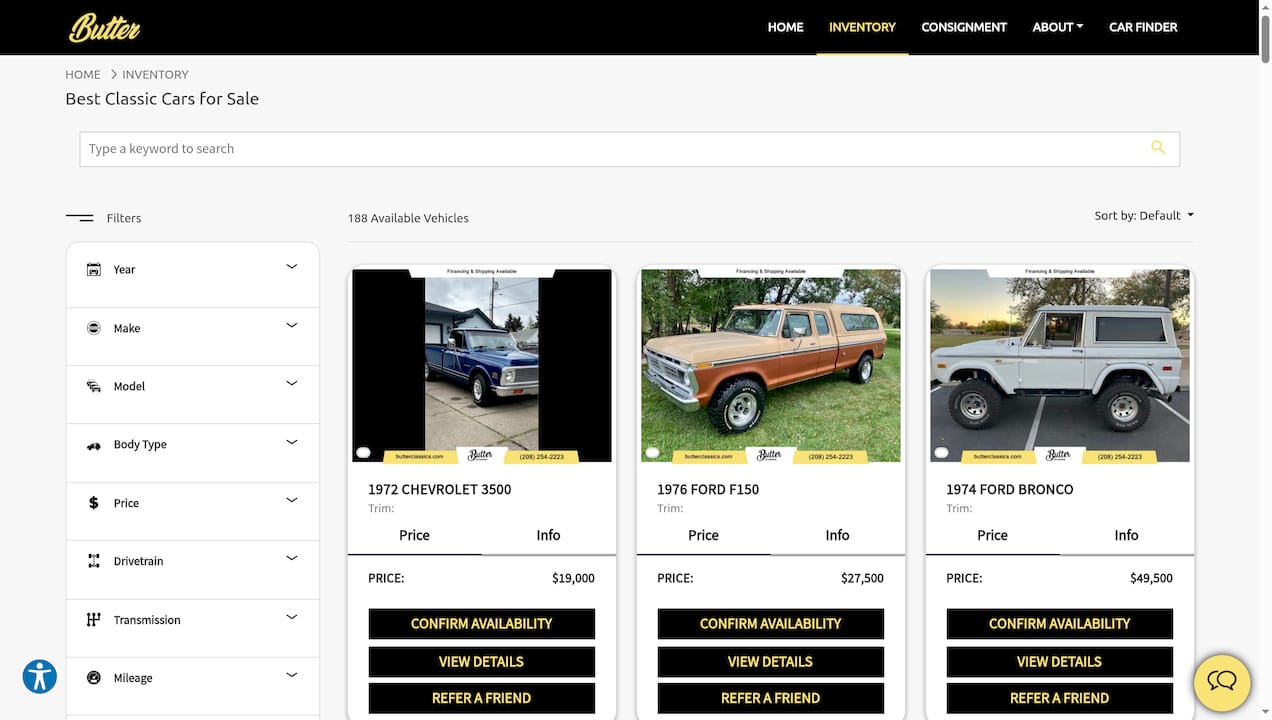
Every vehicle in the Butterclassics inventory comes with detailed specs, high-quality photos, and transparent pricing so you can walk into a financing conversation fully prepared. If you want extra peace of mind, explore the Butter Certified collection for vehicles that have cleared a rigorous quality standard. Whether you are a first-time collector or adding to an established garage, Butterclassics is the trusted starting point for finding a classic worth financing.
FAQ
What makes classic car loans different from regular auto loans?
Classic car loans account for vehicle appreciation, agreed value insurance requirements, and collector-specific usage restrictions that standard auto loans ignore. Terms, insurance requirements, and payment structures are all tailored to the collector market.
How does a balloon payment work in classic car financing?
A balloon payment is a lump sum due at the end of a residual-based loan or lease. It represents the portion of the vehicle's value that was not amortized during the term, and you can pay it off, refinance it, or sell the vehicle to cover it.
Do I need gap insurance for a classic car loan?
Gap insurance is strongly recommended for any financed classic car. If a total loss occurs and your insurer pays actual cash value rather than agreed value, gap insurance covers the difference between that payout and your remaining loan balance.
Can classic car financing affect my credit score?
Not always. Specialized leasing structures for classic cars may not appear on personal credit reports, which is a meaningful advantage for collectors managing multiple financed assets.
What credit score do I need to finance a classic car?
Most classic auto loan programs require good to excellent credit, typically a score of 680 or higher, though specialty lenders may evaluate the vehicle's value and your overall financial profile alongside your score.