For maximum value, list your car through a specialist auction or a consignment service. For speed, sell to a dealer or a serious local buyer. For control over the process, run your own classified listing. Whichever route you pick, your first move is the same: gather your title and records, then get professional photos before you write a single word of the ad.
TL;DR:
- Specialist auctions typically take one to three months and charge a double-digit percentage fee, but often yield the highest sale prices.
- Managed consignment services charge higher fees, around 10% to 20%, but handle marketing, negotiations, inspections, and payment support to reduce seller effort.
- Well-prepared online classified listings with clear VIN, detailed condition notes, complete records, and professional photos are crucial for attracting serious buyers.
- Regional car shows and enthusiast clubs can facilitate quicker sales for popular models, but timelines are unpredictable, and in-person setup is essential.
- The quality of listing presentation and documentation significantly impacts sale speed and final price, making professional photos and verified paperwork non-negotiable.
Table of Contents
- Where to Sell Classic Cars: A Quick Channel Comparison
- How Do Online Auctions and Specialist Auction Houses Work?
- What Is Consignment, and How Does It Differ From an Auction?
- Are Classifieds and Online Marketplaces Worth Using?
- Should You Sell at a Car Show or Through Enthusiast Clubs?
- How to Prepare and Price Your Classic Car for Sale
- How Do You Choose the Right Selling Channel?
- Do Selling Platforms Vary by Region?
- Author's Note: Why Listing Quality Matters
- Ready to List? How Butter Classics Makes Selling Easier
- Sources
Where to Sell Classic Cars: A Quick Channel Comparison
Every selling channel trades something for something. Auctions chase top dollar but take a cut and a few weeks. Classifieds keep more cash in your pocket but put the legwork on you. Here's the tradeoff, channel by channel:
- Specialist auctions: Highest price ceiling, competitive bidding, fees typically range from a low to mid double-digit percentage, and timelines often span from about one to three months.
- Consignment/dealer: Hands-off process, dealer handles marketing and buyer vetting, fees often range in the mid to high teens percentage, with timelines ranging from about one to four months.
- Classifieds/marketplaces: No consignment fee, full negotiation control, timeline unpredictable (days to months), buyer pool can be thin for rare models.
- Private sale/car shows: Fast for popular, well-known models, low cost, limited to whoever shows up.
- Dealer cash offer: Fastest close, lowest price, no marketing effort required.
If your car is rare or investment-grade, test an auction or consignment first. If it's a common muscle car or truck with strong regional demand, a classified listing or a local show often closes faster.
How Do Online Auctions and Specialist Auction Houses Work?
Auctions put your car in front of a national pool of collectors who are already primed to bid, and that competition is what pushes hammer prices above what a single local buyer would offer. The catch is that you need a listing worth bidding on.
Presentation carries real weight here. Sotheby's Motorsport notes that provenance, documentation, and photo quality materially affect how a car performs at auction, sometimes more than the badge on the hood. A car with a thin paper trail and phone-camera photos will underperform an identical car with a clean history file and a proper photo set, even in the same sale.
You'll also decide between reserve and no-reserve formats:
- Reserve auctions protect your minimum price but can dampen bidder enthusiasm since buyers know there's a floor.
- No-reserve auctions tend to draw more aggressive bidding and broader participation, though you carry the risk of a lower final number if interest is soft.
Auction reality check: the strongest auction results consistently go to cars with complete records, original parts documented, and a photo set that reads like a magazine spread, not a driveway snapshot.
What Is Consignment, and How Does It Differ From an Auction?
Consignment hands the entire selling process to someone else in exchange for a percentage of the final sale. You're not managing inquiries, vetting buyers, or negotiating. A consignor or dealer typically handles the marketing, inspects and lists the car, fields offers, negotiates on your behalf, and often assists with escrow or payment coordination.
Fees usually run higher than a self-serve auction platform, commonly landing between 10% and 20%, but that percentage buys real work: PrivateAuto's breakdown of self-serve versus managed sales shows the core tradeoff clearly. Self-serve keeps more money in your pocket but asks more of your time. Managed consignment costs more but removes nearly all the friction.
- Marketing across established buyer networks
- Vehicle inspection and accurate listing copy
- Buyer qualification and negotiation
- Escrow or payment coordination support
Consignment tends to make the most sense for rare or high-value cars, sellers who don't want to field a hundred lowball texts, or vehicles that need a buyer with verified financing before anyone talks numbers.
Pro Tip: Before signing a consignment agreement, check the dealer's complaint history through a source like the Better Business Bureau. A clean record is a small check that can save you a messy transaction.
Are Classifieds and Online Marketplaces Worth Using?
Classifieds put you in the driver's seat. You set the price, field every message yourself, and pay no consignment fee, which is the main appeal for sellers who don't mind doing their own legwork. The tradeoff is reach. A well-known muscle car will find plenty of eyes; a rare, low-production model might sit for months waiting for the right buyer to stumble across it.
A strong classified listing needs a few non-negotiables:
- VIN clearly stated, with a close-up photo of the plate itself.
- Honest condition notes, including flaws, not just highlights.
- Full service and restoration records, scanned or photographed.
- A complete photo and video set: exterior angles, interior, engine bay, and a running video.
Safety matters just as much as presentation once a buyer bites. Verify funds before handing over keys, whether through a bank-verified cashier's check or an escrow service, and meet in a secure, public location for cash exchanges. Kamocars' buyer verification guide lays out the same core principle every private seller should follow: confirm identity and funds before the car ever leaves your driveway.
Should You Sell at a Car Show or Through Enthusiast Clubs?
Local shows and enthusiast forums put your car in front of people who already know what it's worth, which is rare in general classifieds. A well-restored Bronco parked at a regional show can generate more serious inquiries in one afternoon than a month of online listings.
- Register for shows that match your car's era and marque; a generic cars-and-coffee draws a different buyer than a marque-specific meet.
- Budget for transport, show entry fees, and a clean display setup with your documentation visible.
- Pair the in-person exposure with an online listing so interested browsers can follow up after the event.
Timelines here are unpredictable. You might sell on the spot or wait several show seasons for the right collector to walk by.
How to Prepare and Price Your Classic Car for Sale
Buyers pay for confidence, and confidence comes from what they can see and verify before they ever call you. Start with photos: exterior three-quarter shots from all four corners, full interior, engine bay, a VIN close-up, and a short running video. Butter Classics' guide to photographing classic cars walks through the exact setup that makes a listing look showroom-ready instead of driveway-casual.
Documentation matters just as much as the photos. Pull together:
- The title, free of liens or with lien release documented
- Full service history and restoration receipts
- Provenance letters or ownership history, if available
- Original build sheets or window stickers, when they exist
Pricing is where sellers most often guess instead of research. Compare realized auction results for your exact model and year, scan current classified asking prices (not just what people hope to get), and consider a professional appraisal for anything six figures or up. Butter Classics' pricing guide for classic car resale breaks down how to weigh those three data points against each other, and the trade-in evaluation checklist is a fast way to sanity-check condition-based pricing before you set a number.
How Do You Choose the Right Selling Channel?
Match the channel to your car and your goals, not the other way around. Ask yourself these questions before you commit to one path:
- How rare or valuable is the car? Rare and high-value points toward auction or consignment.
- How fast do you need to sell? Speed favors a dealer offer or local sale over an auction calendar.
- How much fee are you willing to absorb for less hassle?
- Can you handle shipping or transport logistics, or do you need a channel that manages that for you?
- Are you comfortable vetting remote buyers yourself, or would you rather that be someone else's job?
Before signing with any auction house, consignor, or broker, ask for a full fee breakdown in writing, their typical buyer profile, expected settlement timeline, and how they handle insurance during transport.
Pro Tip: Walk away from anyone who won't put fees in writing or who guarantees a specific sale price upfront. No legitimate auction house or consignor can promise a hammer price before bidders show up.
Do Selling Platforms Vary by Region?
Where you list a classic car often matters as much as how you list it. Coastal markets, especially in California and Florida, tend to draw larger crowds for imports and European sports cars, since collector density there skews toward that segment. The Midwest and parts of the South lean harder toward American muscle, trucks, and Broncos, with regional car shows doubling as informal selling networks that outperform national classifieds for those specific models.
Auction houses also cluster geographically. Major in-person sales tend to concentrate around a handful of collector hubs, while online-only auction platforms have flattened some of that geographic advantage by letting a bidder in Texas compete for a car sitting in Ohio. Still, local reputation counts. A dealer or consignor well known in a specific region often has a warmer buyer list for that region's popular models than a national platform pulling from a broader, less targeted audience.
If you're selling a niche or regional favorite, a local show or a regionally focused dealer network can outperform a generic national listing simply because the right buyers are already looking there. If your car has broad national appeal, like a well-documented Corvette or a first-gen Bronco, national auction platforms and marketplaces widen your buyer pool without sacrificing much in local relevance.
Author's Note: Why Listing Quality Matters
The cars that sell fast and for real money almost always share one trait: complete paperwork paired with photos that actually show the car. I've watched identical models land wildly different outcomes based on presentation alone. Butter Classics builds its whole seller workflow, from professional imagery to consignment support to test-drive scheduling, around closing that gap for sellers.
— Tony
Ready to List? How Butter Classics Makes Selling Easier
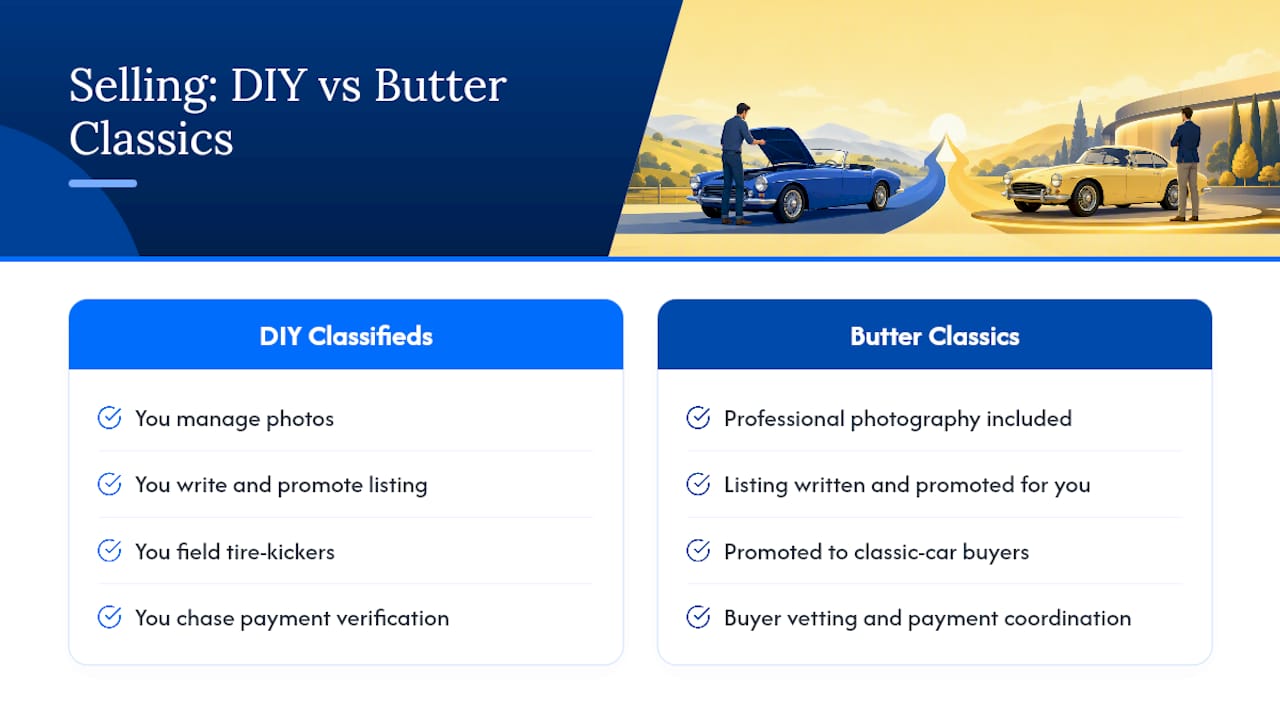
Butter Classics gives you a faster path to a qualified buyer than posting your own classifieds ad and hoping the right collector scrolls by. Instead of managing photos, fielding tire kickers, and chasing down payment verification yourself, you get a marketplace built specifically for classic and vintage vehicles, with buyers who already know what they're looking for.
Consign your vehicle and Butter Classics handles the professional photography, writes the listing, and promotes your car to a buyer base already shopping for trucks, muscle cars, Corvettes, and Broncos. Fees are laid out clearly before you sign anything, and consignment includes buyer vetting and payment coordination so you're not left verifying a stranger's funds on your own. You still get test-drive scheduling handled on your behalf, which keeps curious lookers separate from serious buyers.
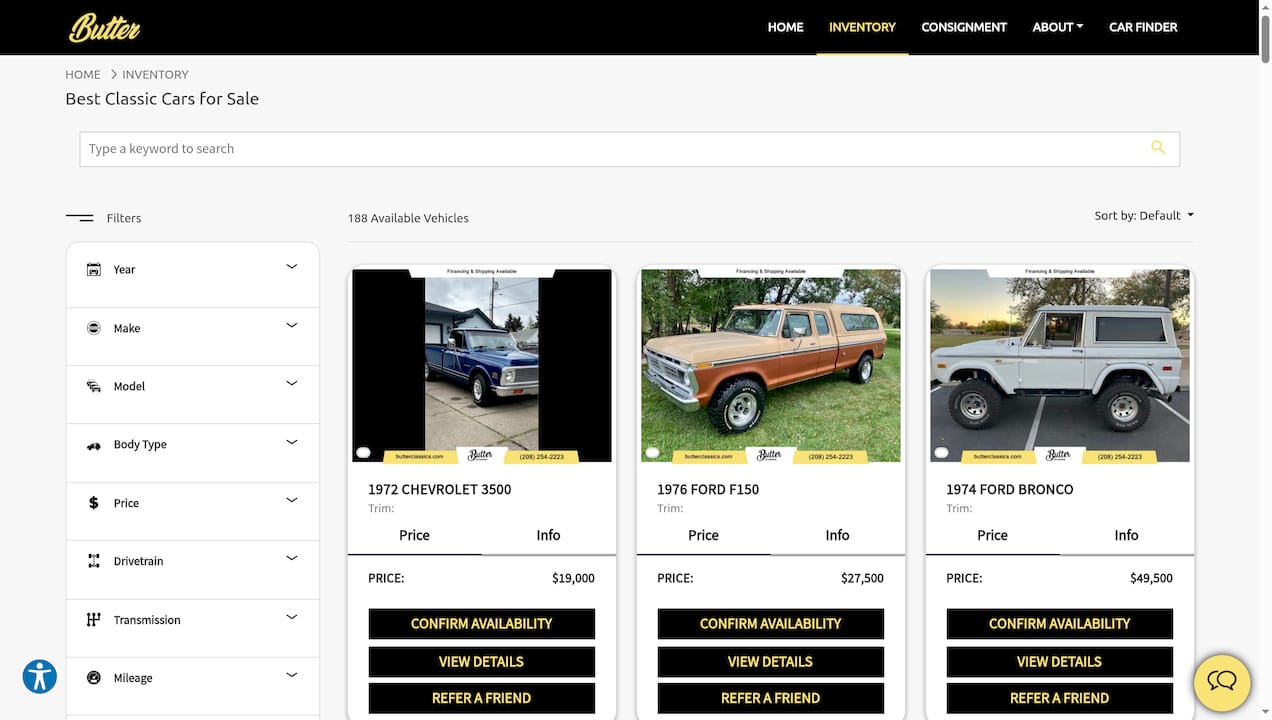
If you're ready to see what your car could bring, start with the consignment page or browse current inventory to see how similar vehicles are presented and priced.
Sources
For deeper reading on listing strategy and safe transactions, see Sotheby's Motorsport's selling guide, Hagerty's classic car selling tips, and Butter Classics' guides on photography and pricing.
- How to Sell Classic Cars Online: Step-by-Step Guide for Sellers | Sotheby's Motorsport
- Sell Your Classic Car for Top Dollar - PrivateAuto