
Pricing classic cars for resale means combining market research, condition evaluation, and professional appraisal to set a number that buyers will actually pay. The industry term for this process is classic car valuation, and it draws on authenticated sold prices, condition grading standards, and current auction data. Get it right, and you protect your investment. Get it wrong, and your car sits unsold for months. This guide walks you through the tools, factors, and steps that serious collectors and small investors use to price vintage cars accurately in 2026.
What key market data and valuation tools are essential for pricing classic cars?
Reliable classic car valuation starts with authenticated sold prices, not asking prices. Serious investors rely on authenticated sold prices from the previous 6–18 months to determine accurate resale value. Asking prices reflect seller optimism, not market reality.
The best data comes from aggregated auction results across multiple sales events. A single headline sale at a major auction house can distort your expectations badly. Successful resellers monitor aggregated auction results instead of high-profile single sales to understand true market value. That approach gives you a realistic price band rather than a fantasy ceiling.
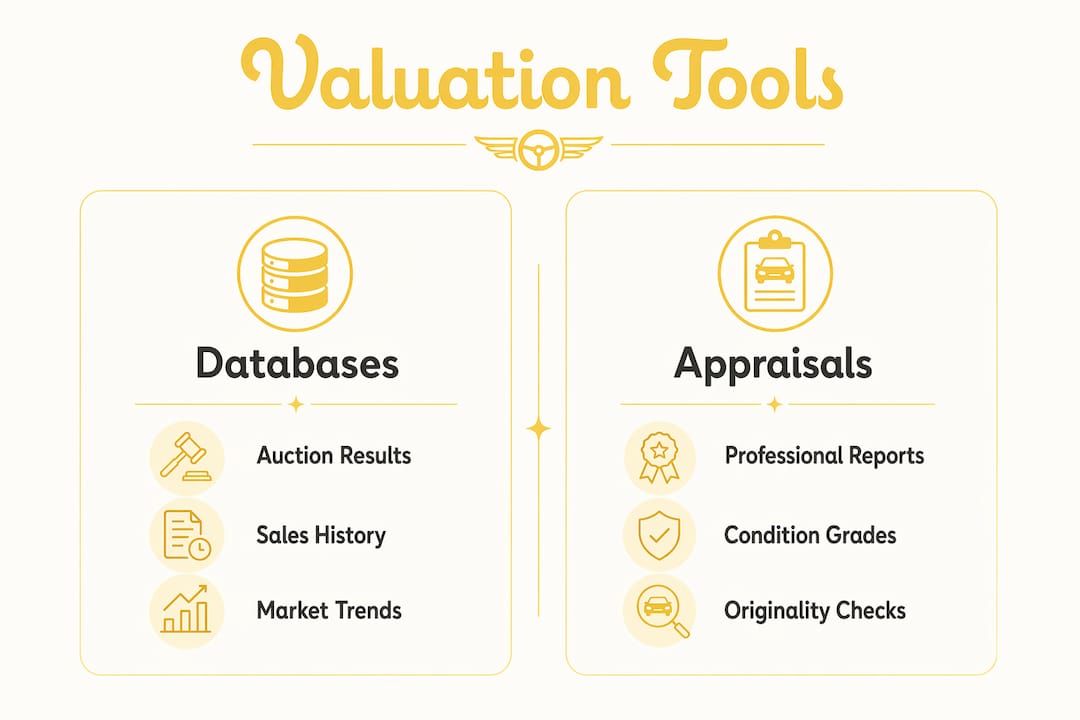
The table below shows the main types of valuation tools and what each one delivers.
| Valuation tool type | Data provided |
|---|---|
| Auction result databases | Authenticated sold prices across multiple events and years |
| Classic car price guides (e.g., NADA Guides) | Segment averages and condition-adjusted value ranges |
| Dealer transaction records | Real retail and wholesale prices from recent sales |
| Market index reports (e.g., Black Book) | Segment-level price trends and year-over-year changes |
| Professional appraisal reports | Condition-specific value with documentation for insurance and legal use |
The 2026 classic car market is not uniform. Collector car prices fell 6% globally in Q1 2026, with American Classics down 2.38% and Sports Cars down 6.29% year-over-year. That means a price guide from 2023 or 2024 will likely overvalue your car in softening segments. Always cross-reference at least two data sources before settling on a base price.
Pro Tip: Use NADA Guides as your starting benchmark, then adjust up or down based on actual auction results from the past 12 months in your specific segment.
Which factors most significantly affect classic car prices?
Condition is the single biggest variable in classic car pricing. A car graded "excellent" by a recognized standard like the Antique Automobile Club of America (AACA) scale can command two to three times the price of the same model in "fair" condition. Buyers pay a premium for cars that need nothing.
Matching numbers, provenance, and restoration quality significantly increase a classic car's valuation by demonstrating authenticity and condition. A numbers-matching 1969 Camaro Z/28 with its original drivetrain is worth far more than a visually identical car with a replacement engine. Provenance documentation, such as build sheets, window stickers, and ownership history, adds credibility that buyers and insurers both reward.
The following factors are the ones buyers weigh most heavily when evaluating a classic car's price:
- Condition grade: Concours, excellent, good, fair, or poor. Each step down reduces value significantly.
- Matching numbers: Original engine, transmission, and rear axle codes matching the VIN documentation.
- Provenance: Documented ownership history, factory build records, and competition history where applicable.
- Rarity: Limited production runs, special option packages, and factory special orders command higher prices.
- Restoration quality: A professional, period-correct restoration adds value. A poor or incorrect restoration can actually reduce it.
- Mileage: Low, documented mileage adds value, especially when supported by service records. Learn more about how mileage affects value before pricing your car.
- Color and options: Desirable factory colors and rare option combinations increase buyer interest and price.
Market segment also matters. Modern classics and 1980s–1990s cars show stronger buyer interest, shifting demand away from older 1950s–1960s classics in 2026. If you own a first-generation Acura NSX or a clean Fox-body Mustang, the market is working in your favor right now.
How to perform or commission a professional appraisal for pricing accuracy
A professional appraisal is a formal written assessment of a vehicle's market value, produced by a qualified appraiser after a physical inspection. It covers three core components: a condition inspection, a documentation review, and a market comparison using recent sold data. The result is a defensible number you can use for resale pricing, insurance, or legal purposes.
A certified appraisal typically takes 24–48 hours after the physical inspection is complete. That turnaround makes it practical to get one before listing your car, not after a buyer questions your price. For high-value cars, estate settlements, or agreed-value insurance policies, a professional appraisal is not optional.
Insurers require detailed condition analysis, originality assessment, and market data documentation to accept appraisals supporting agreed-value policies. That same documentation package also strengthens your position when negotiating a resale price with a serious buyer. Appraisals are not just for insurance. They are your pricing evidence.
Appraisals should be updated every 2–3 years or after a significant restoration or major market shift. A 2022 appraisal on a Sports Car segment vehicle is now materially out of date given the 6.29% year-over-year price decline in that segment. Outdated appraisals hurt both your insurance coverage and your resale credibility. For a deeper look at how appraisals connect to insurance value, the classic car insurance value guide from Butterclassics is worth reading.
Pro Tip: Choose an appraiser certified by the American Society of Appraisers (ASA) or the International Automotive Appraisers Association (IAAA). Avoid appraisers who charge a fee based on a percentage of the appraised value. That structure creates an incentive to inflate the number.
How do you set a competitive and realistic resale price step by step?
Setting the right resale price takes a structured approach. Skipping steps leads to either leaving money on the table or pricing yourself out of the market entirely.
Step 1: Gather your market data. Pull authenticated sold prices for your specific make, model, year, and condition grade from auction databases and dealer records. Use the past 6–18 months only. Older data reflects a different market.
Step 2: Assess your vehicle's condition honestly. Use a recognized grading scale and be objective. If you are unsure, hire an independent inspector before commissioning an appraisal. Overestimating condition is the most common seller mistake.
Step 3: Commission a professional appraisal. Use the appraisal to validate your data-based estimate. If the appraised value and your research diverge significantly, investigate why before setting a price. The classic car valuation methods guide from Butterclassics walks through this process in detail.
Step 4: Choose your pricing channel. Your target channel affects your price. The table below compares the three main options.
| Pricing channel | Typical price outcome | Best for |
|---|---|---|
| Retail (private sale or dealer) | Highest realized price | Condition-grade 1 or 2 cars with strong documentation |
| Auction (reserve set) | Market-determined, transparent | Cars with broad collector appeal and strong provenance |
| Wholesale (dealer trade) | Below retail, fast transaction | Cars needing work or sellers prioritizing speed over price |
Step 5: Adjust for current market conditions. Mid-market classic cars face softer demand in 2026, with sellers often holding onto outdated price expectations. If your car falls in the mid-market range, price it at or slightly below recent comparable sold prices to generate real buyer interest. Overpricing a soft-market car by 15–20% above recent comps typically results in zero offers, not a negotiated middle ground.
Auction sell-through rates sit around 78% globally in 2026, meaning roughly one in five cars at auction does not sell. That figure tells you the market rewards realistic pricing and punishes wishful thinking. Set your reserve or asking price based on where comparable cars actually sold, not where they were listed.
Key Takeaways
Accurate classic car valuation requires authenticated sold data, honest condition grading, and a current professional appraisal. Sellers who skip any one of these steps consistently misprice their cars.
| Point | Details |
|---|---|
| Use authenticated sold prices | Pull data from the past 6–18 months, not asking prices or outdated guides. |
| Condition grade drives value | A one-grade difference can double or halve your car's market price. |
| Get a current appraisal | Update appraisals every 2–3 years or after any major restoration or market shift. |
| Match your channel to your car | Retail, auction, and wholesale each produce different price outcomes for different car profiles. |
| Watch segment trends | Modern classics and 1980s–1990s cars are gaining strength while older segments soften in 2026. |
The pricing mistake I see sellers make most often
Most sellers I talk to anchor their price to the highest sale they can find online. They see a 1967 Shelby GT500 sell for a record number at a major auction and assume their similar car is worth the same. That logic fails almost every time.
Record sales represent the best example of a car in the best market conditions with the right buyers in the room on the right day. They are outliers, not benchmarks. The sellers who price well are the ones who look at 10 or 15 comparable sales and find the middle of that range, not the top.
The 2026 market makes this discipline even more critical. The collector car market is bifurcated, with high-end modern classics gaining value while mid-range older classics show real softness. A 1962 Corvette and a 1991 Acura NSX are both "classic cars," but they are in completely different market conditions right now. Treating them the same way is a pricing error.
Patience matters too. If your car is genuinely priced correctly and it is not selling, the problem is usually marketing or presentation, not price. But if you have had no serious inquiries after 60 days, the price is almost certainly the issue. Be willing to adjust based on market feedback, not ego.
— Tony
How Butterclassics can help you price and sell with confidence
Getting your classic car's price right is easier when you have expert support behind you. Butterclassics works with collectors and small investors who want to buy and sell with confidence, backed by real market data and thorough vehicle documentation.
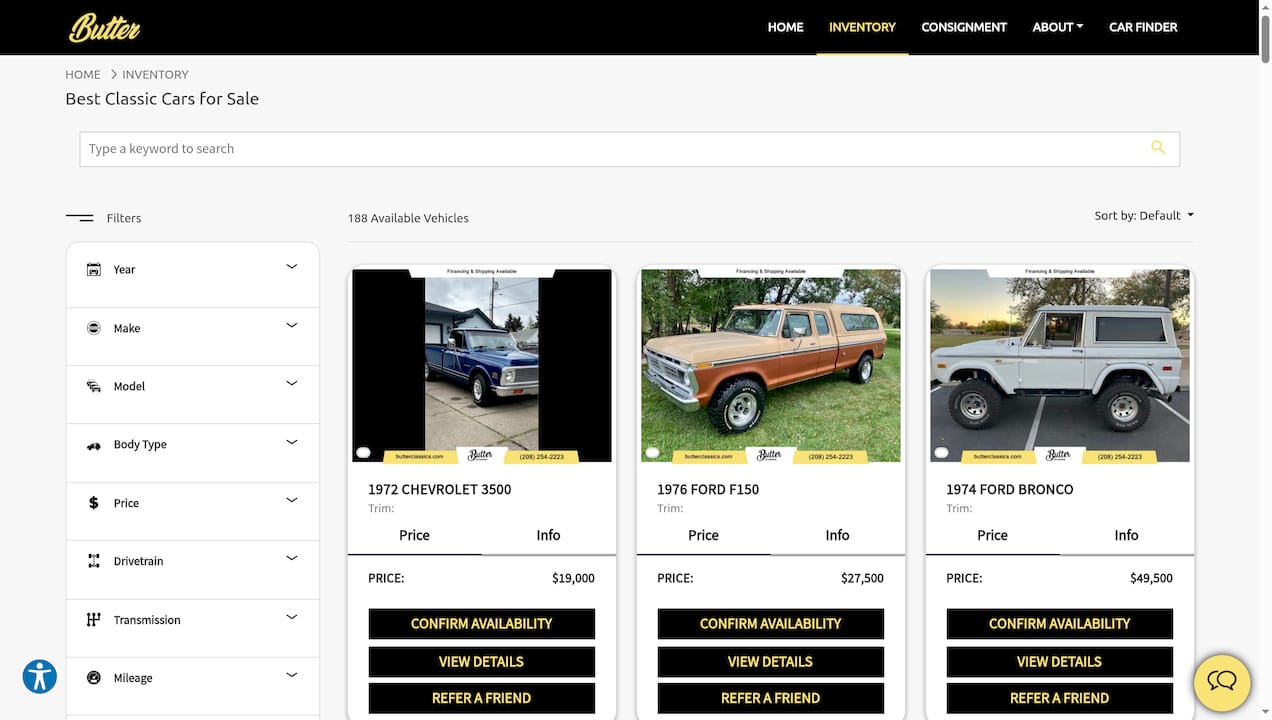
Every car in the Butterclassics inventory goes through a detailed inspection process, so you know exactly what you are looking at. Whether you are buying an investment-grade classic car or consigning one for sale, the team brings the same attention to condition, provenance, and current market value. Check out the Butterclassics certified program to see how appraisal-backed pricing works in practice, or browse the full classic car inventory to see what the market looks like right now.
FAQ
What does pricing classic cars for resale actually involve?
Pricing classic cars for resale combines authenticated sold data from the past 6–18 months, a condition grade assessment, and a professional appraisal to produce a defensible market value. The goal is a number grounded in what comparable cars actually sold for, not what sellers hoped to get.
How often should I update a classic car appraisal?
Professional appraisals should be updated every 2–3 years or after a significant restoration or major market shift. An outdated appraisal weakens both your insurance coverage and your negotiating position with buyers.
Does mileage really affect a classic car's resale value?
Low, documented mileage adds meaningful value to a classic car, particularly when supported by service records and a consistent ownership history. High mileage on a classic does not automatically destroy value, but it requires strong documentation to justify a premium price.
What is the difference between retail, auction, and wholesale pricing?
Retail pricing targets the highest possible return through a private sale or dealer listing. Auction pricing is market-determined and works best for cars with broad appeal and strong provenance. Wholesale pricing is the fastest channel but typically returns the lowest price.
Why are mid-market classic cars harder to sell in 2026?
Mid-market classic cars face softer demand because many sellers are holding onto price expectations set during the stronger market of 2021–2023. Buyers in this segment are well-informed and compare recent sold prices carefully, so overpriced cars simply do not move.