
The best autotrader.com alternatives depend on your goal: if you want a fast cash offer, instant-offer networks like Carvana and CarMax deliver same-day quotes; if you want maximum exposure for a standard used car, high-traffic classifieds like Cars.com, CarGurus, and eBay Motors reach millions of active shoppers; and if you're selling a classic or collector vehicle, a specialist marketplace like Butterclassics connects you with the buyers who actually care about provenance, condition, and history.
Here's a quick "best for" snapshot to match your situation at a glance:
- Buying a used car with pricing transparency: CarGurus, TrueCar
- Selling fast with a guaranteed offer: Carvana, CarMax, Vroom
- Private-sale exposure on a budget: Cars.com, Facebook Marketplace, eBay Motors
- Collector and classic car sales: Butterclassics, Bring a Trailer, Hemmings
- Dealer inventory browsing: Cars.com, CarGurus
- Auction-style bidding on collector vehicles: Bring a Trailer, eBay Motors
Table of Contents
- How do these car marketplace alternatives compare at a glance?
- What does each major platform actually offer you?
- How do you choose the right marketplace for your goal?
- What are your selling route options, and what do they cost?
- Key Takeaways
- The marketplace that actually fits your car matters more than you think
- Butterclassics is where classic car sellers find the right buyers
How do these car marketplace alternatives compare at a glance?
The table below maps the major marketplace categories across the dimensions that matter most when you're deciding where to list or shop. Audience-size indicators draw on traffic data from Semrush and market analysis from CB Insights.
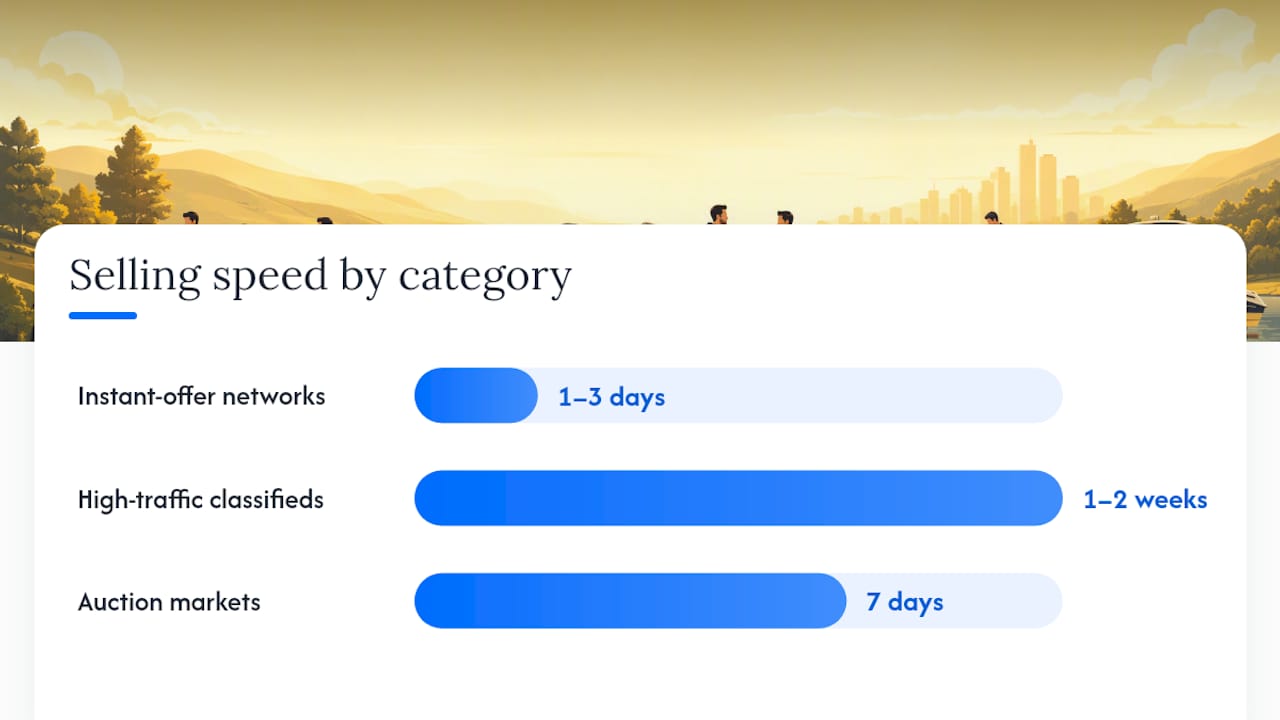
| Category | Best For | Seller Fees | Buyer Fees | Audience Size | Vehicle Types | Selling Speed | Pricing Transparency | Inspection / Guarantee | Vehicle History |
|---|---|---|---|---|---|---|---|---|---|
| Instant-offer networks (Carvana, CarMax, Vroom) | Sellers who want speed | No listing fee; offer is the price | Delivery / doc fees vary | High | General used | 1–3 days | High (firm offer) | Inspection at pickup; return windows vary | CARFAX / AutoCheck available |
| High-traffic classifieds (Cars.com, CarGurus) | Broad buyer exposure | Free to paid tiers | None | Very high | General used + dealer | 1–2 weeks | Medium (negotiable) | Buyer arranges independently | Seller-provided or paid add-on |
| Auction-style collector markets (Bring a Trailer, eBay Motors) | Enthusiast and collector buyers | Commission on sale (varies) | Buyer's premium (varies) | Medium | Collector, vintage, specialty | 7 days (auction cycle) | High (bid-driven) | Seller-disclosed; no guarantee | Seller-provided |
| Dealer-network trade-in platforms (TrueCar) | Buyers wanting no-haggle pricing | N/A (buyer-side tool) | None | High | New + used | N/A | High | Dealer warranty options | Available |
| Peer-to-peer classifieds (Facebook Marketplace) | Budget sellers and local buyers | Free | None | Very high | All types | Days to weeks | Low (negotiable) | None | Buyer arranges |
| Consignment specialist marketplaces (Butterclassics, Hemmings) | Classic and collector sellers | Consignment fee on sale | None | Niche / targeted | Classic, vintage, muscle | Weeks to months | High (curated pricing) | Inspection options; certified listings | CARFAX / AutoCheck supported |
Pro Tip: If you're selling a standard used car, run a parallel strategy: submit an instant offer through Carvana or CarMax while your listing is live on a high-traffic classified site. You'll have a floor price in hand and can accept whichever outcome arrives first, which often saves weeks of negotiation.
What does each major platform actually offer you?
Editorial roundups from Car and Driver and practical guides from Spyne.ai consistently separate these platforms into distinct categories. Here's what each one actually does and who gets the most out of it.
Instant-offer and retail buyer networks
Carvana, CarMax, and Vroom operate as direct buyers. You enter your VIN, answer a few condition questions, and receive a guaranteed offer, typically valid for 3–7 days, contingent on a physical inspection that confirms your description. There are no listing fees, no negotiating with strangers, and no waiting for a buyer to show up. The trade-off is price: offers from these networks often come in below private-sale value because the buyer is a business that needs margin.
- Best for: sellers who prioritize speed and certainty over maximum price
- Trust signals to check: Trustpilot reviews and BBB profiles reveal complaint patterns around offer adjustments at inspection
- Buyer protections: Carvana offers a 7-day return window; CarMax provides a 30-day return policy on retail purchases
High-traffic classified sites
Cars.com and CarGurus are where most private sellers and franchise dealers list simultaneously. CarGurus uses an algorithmic "deal rating" that flags overpriced listings, which helps buyers but puts pressure on sellers to price competitively from day one. Both platforms offer free basic listings with paid upgrades for more visibility.
- Best for: sellers who want broad exposure and are comfortable negotiating
- Fees: free to list at the base tier; premium placement costs vary
- Buyer protections: limited; buyers arrange their own CARFAX or AutoCheck report
Auction-style collector platforms
Bring a Trailer and eBay Motors run timed auctions that work well for vehicles with a story. Bring a Trailer has built a passionate community of enthusiast buyers who bid aggressively on well-documented cars. eBay Motors reaches a wider general audience and supports both auction and fixed-price formats. Both platforms charge a commission or listing fee on completed sales.
- Best for: sellers with a desirable, well-documented vehicle who can wait for the right buyer
- Key requirement: detailed photos, service records, and honest condition notes drive final prices up significantly
Peer-to-peer and social classifieds
Facebook Marketplace is free, fast to set up, and reaches local buyers immediately. It works well for commodity vehicles priced under $15,000 where the buyer wants to inspect in person before committing. The downside is zero buyer protection and a higher rate of low-ball offers and no-shows.
- Best for: sellers of common used cars who want zero fees and local reach
- Red flag: no built-in vehicle history report, no inspection partner, and no fraud protection
Dealer-network and no-haggle platforms
TrueCar connects buyers to participating dealers who agree to post upfront, no-haggle prices. It's primarily a buyer-side tool that removes price uncertainty. Sellers don't list directly; instead, TrueCar generates dealer offers when you enter your vehicle details.
Collector and consignment specialists
Butterclassics, Hemmings, and Bring a Trailer serve a fundamentally different audience: buyers who research provenance, matching numbers, and restoration quality before they ever pick up the phone. Butterclassics offers consignment services with high-quality listing photography, financing pre-qualification for buyers, and a curated network of collector-focused shoppers. Hemmings has decades of print and digital history in the hobby. For a classic or vintage vehicle, listing on a general classified site means your '69 Camaro sits next to a 2018 Civic, and the audience mismatch costs you money.

Pro Tip: Before listing a classic anywhere, pull a CARFAX or AutoCheck report on your own vehicle. Buyers will ask for one, and having it ready signals confidence and cuts negotiation friction significantly.
How do you choose the right marketplace for your goal?
The right answer starts with one question: what matters more to you, speed or price? Kelley Blue Book's seller guidance puts it plainly: there is no single correct way to sell a car, and the best path depends on whether you're optimizing for speed, convenience, or maximum sale price.
Work through these five questions before you pick a platform:
- How quickly do you need to sell? If you need cash within a week, instant-offer networks are your lane. If you can wait several weeks, a classified listing will almost always net more.
- Is your vehicle a commodity or a collectible? A 2019 Honda CR-V belongs on a high-traffic classified site. A 1967 Ford Bronco belongs on a collector-focused marketplace where buyers understand what they're looking at.
- Are you willing to pay listing fees? Free platforms (Facebook Marketplace, basic Cars.com) trade cost for protection. Paid or commission-based platforms (Bring a Trailer, Butterclassics consignment) trade fees for a targeted, qualified audience.
- Do you have documentation? Auction-style and collector platforms reward sellers with service records, clean titles, and vehicle history reports. Without documentation, your listing will underperform on those channels.
- Do you want to handle buyer inquiries yourself? Consignment services handle photography, listing, and buyer communication for you. Private listings on classifieds put all of that on your plate.
Red flags to watch for on any platform:
- No clear fee disclosure before you list
- No option to attach a CARFAX or AutoCheck report
- No inspection partner or return policy for buyers
- Trustpilot or BBB complaint patterns around offer adjustments or hidden fees at closing
Validating trust signals is straightforward: check the platform's Trustpilot page for recurring complaint themes, look up its BBB accreditation status, and confirm whether it integrates CARFAX or AutoCheck for vehicle history. A platform that makes those checks easy is one that has nothing to hide.
What are your selling route options, and what do they cost?
Every seller faces the same four routes. The right one depends on your priorities, and KBB's sell-my-car guidance is worth bookmarking as a reference while you decide.
| Selling Route | Best When... | Typical Timeline | Price Outcome | Typical Costs |
|---|---|---|---|---|
| Private sale (classifieds) | You want maximum net price and can handle inquiries | 2 weeks | Highest | Listing fees (free to moderate); your time |
| Dealer trade-in | You're buying another car at the same time | Same day | Below market | None direct; margin built into deal |
| Instant offer (Carvana, CarMax, Vroom) | You need speed and certainty | 1–3 days | Below private-sale market | No listing fee; offer is the price |
| Consignment (Butterclassics, Hemmings) | You have a collectible and want a specialist audience | 4 weeks | At or above market for the right buyer | Commission on sale (varies by platform) |
A note on trade-ins: research published in the Journal of Marketing suggests that bundling a trade-in with a new purchase can sometimes produce a more favorable total outcome than selling independently, because dealers have flexibility across multiple line items in the deal. That dynamic doesn't apply when you're selling a classic with no replacement purchase in mind.
Pro Tip: Instant offers from networks like Carvana and CarMax are typically valid for 3–7 days and are contingent on a physical inspection. If the car's condition at drop-off doesn't match your online description, the offer will be adjusted. Be precise when filling out the condition questionnaire to avoid a surprise at pickup.
How we evaluated these alternatives
We compared platforms across five criteria: audience reach, fee transparency, vehicle-type fit, trust signals (inspection options, vehicle history report availability, return policies), and buyer/seller protections. Sources included Car and Driver's editorial roundup of best car-selling sites, CB Insights' marketplace taxonomy, Semrush traffic data, Spyne.ai's alternatives guide, Trustpilot consumer reviews, and BBB company profiles. This article focuses on U.S. platforms; marketplace traffic and fee structures change, so verify current terms directly with each platform before listing.
Sources used:
- KBB sell-my-car guidance for selling-route trade-offs and instant-offer mechanics
- Car and Driver roundup for editorial platform profiles
- CB Insights Autotrader alternatives for marketplace taxonomy
- Semrush competitor traffic data for relative audience-size indicators
- Spyne.ai alternatives guide for use-case descriptions
- Trustpilot consumer reviews for trust-signal validation
- BBB company profiles for accreditation and complaint data
- Journal of Marketing / Wiley for trade-in bundling research
Key Takeaways
Matching your vehicle type and selling priority to the right marketplace category is the single most important decision in the car-selling process, and collector vehicles consistently perform better on specialist platforms than on general classifieds.
| Point | Details |
|---|---|
| Speed vs. price trade-off | Instant-offer networks deliver same-day certainty; private listings on classifieds typically net more but take 2 weeks. |
| Collector cars need a specialist audience | Listing a classic on a general classified site means competing with commodity used cars; a targeted platform reaches buyers who value provenance. |
| Trust signals matter before you commit | Check Trustpilot reviews, BBB accreditation, and CARFAX/AutoCheck availability on any platform before listing or buying. |
| Trade-ins work best alongside a purchase | Bundling a trade-in with a new-car deal can produce a better total outcome than selling independently, per industry research. |
| Butterclassics for collector sellers | Butterclassics offers consignment, certified listings, and a curated buyer network specifically built for classic and vintage vehicles. |
The marketplace that actually fits your car matters more than you think
Most sellers pick a platform based on name recognition, not fit. That's the mistake. A '72 Chevelle listed on a high-volume general classified site will attract tire-kickers and low-ball offers from buyers who don't understand what they're looking at. The same car on a collector-focused marketplace with detailed photos, a clean history report, and a well-written description reaches buyers who've already decided they want exactly that vehicle.
The platforms that serve collectors well share a few traits: they attract an audience that researches before they inquire, they support detailed documentation (service records, matching-numbers notes, restoration history), and they don't bury your listing under thousands of 2020 Camrys. That's why editorial sources consistently separate auction and consignment specialists from mass-market classifieds when recommending channels for vintage and collector vehicles.
For everyday used cars, the calculus is different. Speed and price transparency matter more than audience curation, and platforms like CarGurus and Cars.com deliver both. The point isn't that one category of platform is better; it's that using the wrong category for your vehicle type costs you time, money, or both.
If you're selling a classic, don't treat it like a commodity. The right buyer is out there, and they're looking in the right places.
Butterclassics is where classic car sellers find the right buyers
If you're selling a classic, muscle car, vintage truck, or collector vehicle, the general-purpose platforms covered in this article aren't built for what you have. Butterclassics is. It's a specialist online marketplace where the entire buyer network is made up of collectors, enthusiasts, and investment-grade buyers who understand provenance, condition grades, and what a numbers-matching drivetrain actually means.
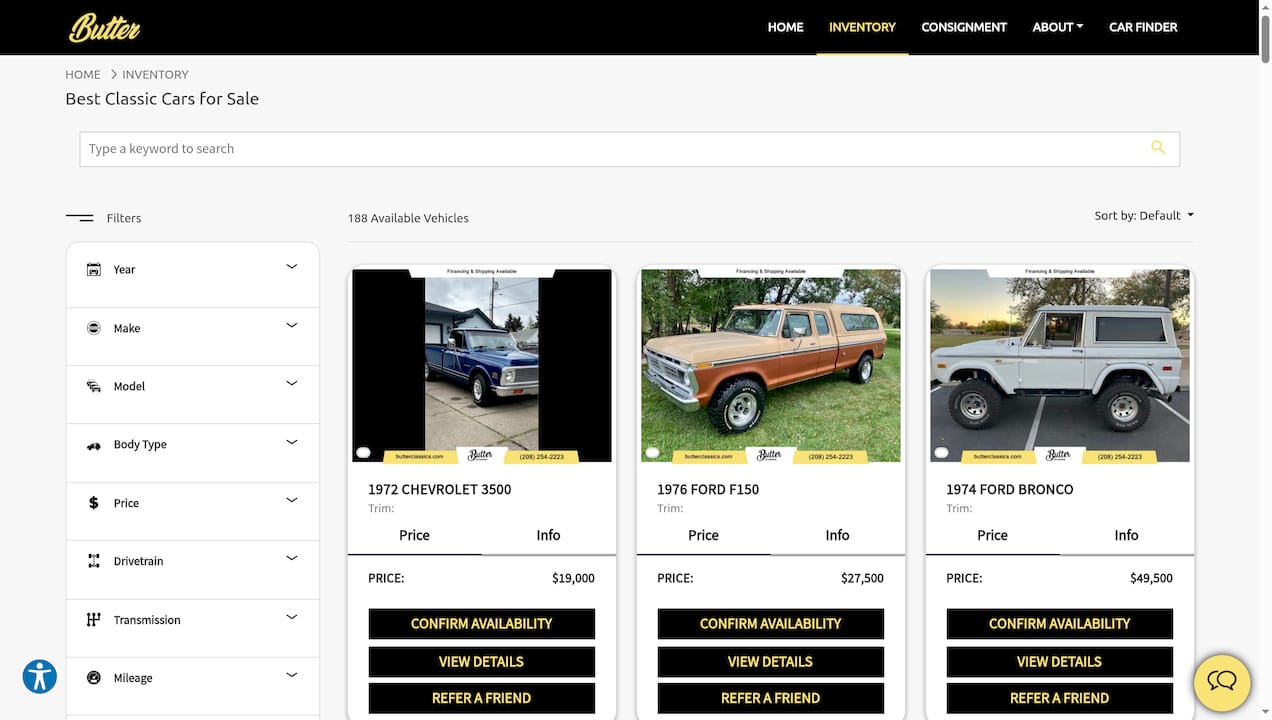
Here's what Butterclassics offers sellers that general classifieds don't:
- Consignment service: Butterclassics handles listing, photography, and buyer communication so you're not fielding calls from unqualified shoppers.
- Test drive scheduling: Buyers can schedule a test drive directly through the platform, keeping the process smooth for both sides.
Browse the current classic inventory to see how your vehicle would sit alongside comparable listings, or head straight to the consignment page to request an evaluation. Your classic deserves an audience that gets it.
Sources and further reading
| Source | What it covers |
|---|---|
| KBB: Sell My Car | Selling-route trade-offs, instant-offer mechanics, and inspection windows |
| Car and Driver: Best Sites to Sell a Car | Editorial roundup of platform categories and pros/cons |
| CB Insights: Autotrader Alternatives | Marketplace taxonomy and competitor landscape |
| Semrush: Autotrader Competitors | Relative audience-size and traffic indicators |
| Spyne.ai: Autotrader Alternatives | Use-case descriptions and platform quick profiles |
| Trustpilot: WeBuyAnyCar USA | Consumer review patterns for instant-buy services |
| BBB: WeBuyAnyCar.com | Accreditation status and complaint summaries |
| Wiley / Journal of Marketing | Academic research on trade-in bundling outcomes |