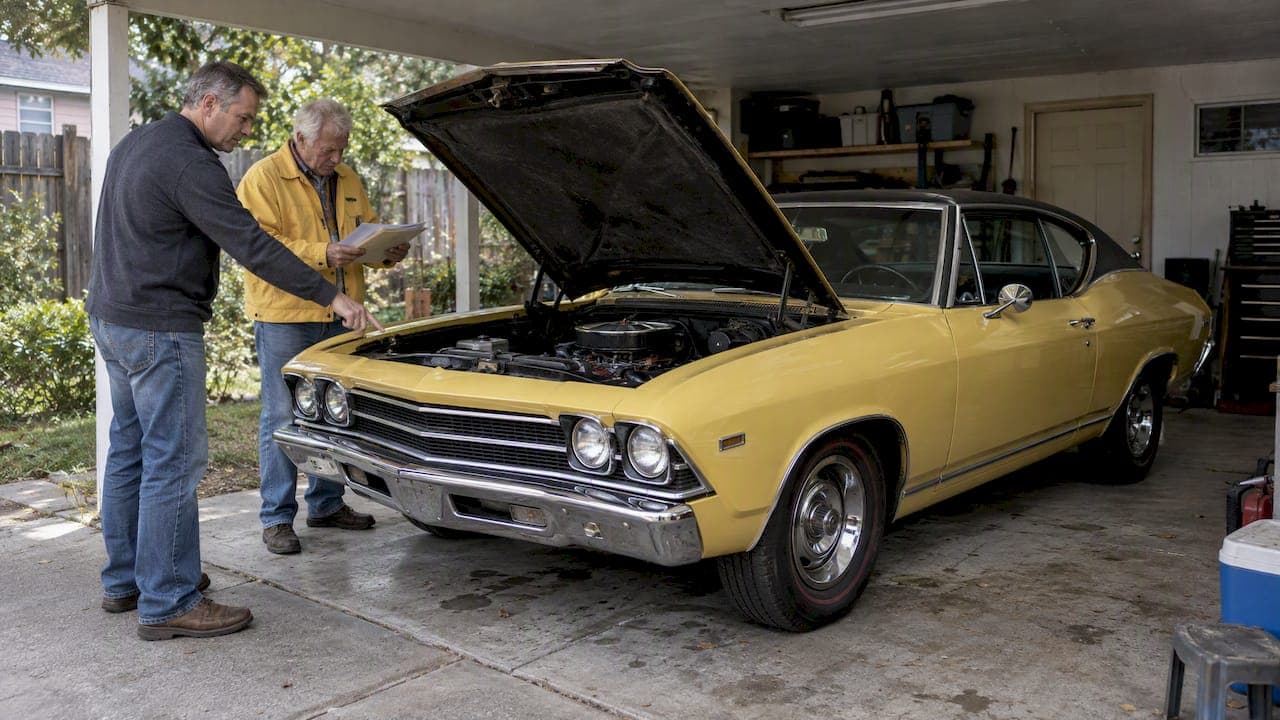
Buy from a dealer when you want a documented Buyers Guide, a short warranty, and someone accountable if things go wrong. Choose a private seller when price matters most and the seller can hand over strong maintenance records and real inspection access. Either route works, but each trades convenience for savings in a different way. Use the checklist below to match the purchase to what you actually care about.
TL;DR:
- Buyers should prioritize documented maintenance records and clear titles, especially for high-value or rare classics, over short-term warranties or lower prices.
- Dealer sales require checking the Buyers Guide for warranty coverage, limits, and exclusions, along with obtaining written inspection and reconditioning documentation.
- Private sellers generally offer lower prices and detailed provenance if the car has a long, documented ownership history, but legal protection is minimal once the sale is "as is."
- Verification steps such as VIN history reports, inspection checklists, and independent inspections are essential before committing to any classic purchase, regardless of the seller.
- Remote buying through curated marketplaces demands comprehensive documentation, including clear titles and detailed photos, to mitigate risks of fraud and misrepresentation.
Table of Contents
- Dealer vs private seller: pros and cons at a glance
- What dealers provide: Buyers Guides, warranties, and inspections
- What private sellers offer, and where the legal protection ends
- Verifying condition and history before you buy
- Price, fees, and how to negotiate each type of sale
- How to choose between a dealer and a private seller
- Buying sight unseen and what a curated marketplace changes
- Title and registration: dealer purchases vs private sales
- Legal recourse: what happens if something goes wrong
- Counterfeit and non-original parts: a private-sale risk worth naming
- What actually matters most when you're choosing
- How we make dealer-level confidence easier to find
- FAQ
- Sources
Dealer vs private seller: pros and cons at a glance
Every classic purchase comes down to a trade: protection and paperwork versus price and flexibility. Here's how the two routes typically stack up.
- Dealer pros: You get a Buyers Guide disclosure, often a short warranty, financing options, and a seller with a business reputation to protect.
- Dealer cons: Expect higher asking prices, documentation fees, and sometimes vehicles sourced from auctions with limited history.
- Private seller pros: Prices tend to run lower, and a long-term owner can hand you decades of maintenance records and firsthand history.
- Private seller cons: Sales are almost always "as is" with no legal recourse if something's wrong, and you're trusting a stranger's word on condition.
- Decision hint: For rare or high-value classics, documentation and provenance usually matter more than saving a few thousand dollars, which tilts many serious collectors toward dealers or curated marketplaces.
The right choice depends on how much risk you're willing to absorb for the sake of a better price. A $15,000 project car and a $150,000 numbers-matching Corvette call for very different levels of caution, even though the dealer-versus-private decision looks the same on paper.
What dealers provide: Buyers Guides, warranties, and inspections
Dealers operate under a specific federal rule that private sellers don't. The FTC's Used Car Rule requires dealers to post a Buyers Guide on every used vehicle, stating whether it's sold "as is" or with some form of warranty. Anyone selling fewer than six cars a year is generally exempt from this requirement, which is exactly why most private classic car sales skip it entirely.
The Buyers Guide isn't just a sticker. It becomes part of your sales contract, and it overrides any contrary language elsewhere in the paperwork, according to the FTC's plain-language summary. That means if the Guide says you have a warranty, a dealer can't quietly contradict it in the fine print.
Here's what to check on any dealer's Buyers Guide before you sign anything:
- Whether the box marked is "as is" or a specific warranty type, since this determines your recourse.
- What percentage of repair costs the dealer agrees to cover, if any warranty applies.
- Any systems specifically excluded from coverage, which matters a lot on a 50-year-old drivetrain.
- Space for handwritten promises, since verbal assurances mean nothing unless they're written on the Guide.
Dealers typically offer short limited warranties for powertrain coverage, though private sales rarely include any warranty at all. That window is short, but it's real protection you simply don't get buying from an individual.
Ask for the reconditioning and inspection paperwork in writing, not just a verbal rundown — a practical inspection checklist for used cars helps you cover general inspection points and spot red flags before making a purchase. A reputable dealer should be able to show you what was replaced, what was tested, and what the return policy looks like if a serious issue surfaces in the first week. Our dealer inspection checklist for classics walks through what a thorough pre-sale inspection should actually cover.
State law adds another layer here. Some states limit how aggressively a dealer can disclaim implied warranties, even on an "as is" sale. If something feels off, your state Attorney General's consumer protection office is the right place to check before you buy, not after.
What private sellers offer, and where the legal protection ends
Buying from an individual owner flips the entire dynamic. The federal Used Car Rule generally doesn't apply, so there's no mandated Buyers Guide, no disclosure requirement, and in most cases no warranty of any kind. "As is" in a private sale typically means exactly that: what you see is what you get, with essentially no legal recourse once the title transfers.
That's not necessarily a dealbreaker for a classic car buyer. Plenty of the best-documented, most original classics on the market have spent decades with one careful owner who kept every receipt. In those cases, a private sale can actually offer better provenance than a dealer lot, since you're buying directly from someone who knows the car's entire history rather than a vehicle that passed through an auction with a thin paper trail.
Before you hand over any money, demand these items without exception:
- A clear title in the seller's name, with no liens and no "lost title" excuses.
- Complete maintenance records, ideally going back to the original purchase.
- Service invoices from shops, which corroborate the maintenance story the seller is telling you.
- A written bill of sale listing the VIN, price, odometer reading, and both parties' signatures.
Watch for the common pitfalls that show up disproportionately in private deals: title problems (a spouse who never signed off, a lien that was never released), mileage that doesn't match the paper trail, and repairs that were clearly done but never mentioned. None of these are automatically disqualifying, but each one needs an explanation before you move forward.
A private sale works best when the seller has owned the car for years, can produce a continuous paper trail, and is transparent about every flaw. That combination is worth more than any sticker on a dealer's windshield.
Verifying condition and history before you buy
Whichever route you take, verification is where deals actually get won or lost. Start with the odometer. NHTSA's guidance on odometer fraud notes that tampering remains illegal and estimates hundreds of thousands of vehicles are sold each year with false mileage readings. Classic cars complicate this further: a separate NHTSA interpretation on odometer disclosure confirms that vehicles 25 years or older are exempt from standard mileage disclosure requirements, but that exemption does not give anyone license to tamper with a gauge.
Follow these steps in order before you commit to any classic:
- Pull a VIN history report to check for title issues, but treat it as a starting point rather than proof, since reports built for modern cars frequently miss gaps in older vehicle history.
- Compare the odometer reading against service invoices and inspection stickers. A gap between what the gauge shows and what old paperwork recorded is the clearest sign of a problem.
- Request every maintenance record available, including shop invoices, parts receipts, and any restoration documentation.
- Check the title chain for continuity. Multiple owners in a short span, or a title that was recently reissued, deserves a direct question to the seller.
- Schedule an independent pre-purchase inspection covering structural rust, frame integrity, drivetrain condition, and whether major components match factory specifications.
- Insist on a signed written inspection report, not just a verbal summary, before you finalize price or terms.
Our guide to checking classic car history and pre-1981 VIN issues covers the specific documentation gaps that show up on older titles.
Pro Tip: If a seller resists an independent inspection or gets vague about maintenance history, treat that reluctance as information. A confident seller with real records welcomes scrutiny.
If you suspect odometer fraud or a title problem after the fact, document everything, contact NHTSA and your state DMV, and talk to an attorney before signing anything further. Acting quickly preserves your options.
Price, fees, and how to negotiate each type of sale
Dealers and private sellers price classics differently, and the gap usually comes down to overhead. A MotorTrend comparison of dealer and private-seller buying found that dealers often charge more for the same vehicle but typically back that price with inspection, reconditioning, and a short warranty, while private sellers tend to price lower but shift all the risk onto the buyer.
Watch for dealer add-ons beyond the sticker price:
- Documentation fees, which vary widely and are often negotiable even when a dealer presents them as fixed.
- Reconditioning charges baked into the price, which you should ask to see itemized.
- Optional service contracts pitched at closing, which rarely make sense on a classic with a limited warranty window already in place.
Set your target price using recent comparable sales for the same model, year, and condition tier, then adjust for originality, mileage, and any deferred maintenance you've found during inspection.
Negotiation looks different depending on who's across the table. With a dealer, lean on warranty terms and get every verbal promise written into the contract or the Buyers Guide itself. With a private seller, use your inspection findings as leverage and keep a genuine willingness to walk away. A seller who knows you're ready to pass tends to get more reasonable on price.
Budget beyond the purchase price for inspection costs, transportation if the car isn't local, title and registration fees, and any repairs your inspection flagged as necessary before the car is road ready.
How to choose between a dealer and a private seller
Start by ranking your own priorities: budget ceiling, how much provenance matters to you, how much hassle you're willing to tolerate, whether you need financing, and how much risk you can stomach if something goes wrong.
Then work through this sequence before you commit:
- Verify the title and VIN match the vehicle in front of you.
- Request complete maintenance records from the seller or dealer.
- Order a vehicle history report to flag title or registration red flags.
- Schedule an independent pre-purchase inspection, ideally with a mechanic who knows classics.
- Negotiate final terms with an inspection contingency built in, so you can walk away if something surfaces.
Our classic car test drive checklist is a useful companion for this step, covering what to listen and feel for behind the wheel.
Stop the purchase entirely if you hit any of these red flags: no clear title, maintenance records that don't match the car's apparent age or condition, an odometer reading that doesn't line up with service stickers, or a seller who dodges direct questions about history.
Pro Tip: Write your walk-away conditions down before you see the car in person. It's much easier to stick to a limit on paper than to invent one on the spot.
Buying sight unseen and what a curated marketplace changes
A lot of the best classics never show up locally, which means sight-unseen buying is simply part of serious collecting. It can work well when you require the same documentation you'd demand in person: clear title, complete service history, high-resolution photos of every panel and underside, and a written pre-purchase inspection from someone with no stake in the sale.
That's the gap a curated marketplace is built to close. Every vehicle in our inventory comes with detailed specifications, extensive photography, and support connecting buyers with inspection resources before they commit, which blends a dealer's accountability with the kind of provenance detail you'd normally only get from a dedicated collector. Financing pre-qualification and consignment services on our platform offer additional paths to reach serious buyers, rather than relying on a single local lot.
Our guide on buying a classic car sight unseen covers the specific title and fraud risks to watch for when you can't physically inspect a vehicle before purchase. Treat remote buying with extra documentation discipline, not less.
Title and registration: dealer purchases vs private sales
Titling a car bought from a dealer is usually the simpler path. Most dealers handle the paperwork directly, submitting the title transfer and often collecting sales tax and registration fees as part of the transaction, so you walk away with far less legwork.
Private sales put that responsibility entirely on you. You'll need a signed title from the seller, a bill of sale documenting the price and odometer reading, and a trip to your local DMV to complete the transfer and registration yourself. Classic cars add a wrinkle here: older titles sometimes predate current VIN formatting standards, and a title that was reissued or shows multiple past owners deserves a second look before you hand over payment.
Sales tax treatment can also differ depending on whether you bought from a licensed dealer or an individual, and some states apply different rules to vehicles registered as historic or antique. Confirm the specific title and tax steps with your state's motor vehicle agency before finalizing a private purchase, since getting this wrong can delay registration for weeks. A dealer handling the paperwork for you removes most of this friction, which is part of what you're paying for in a higher sticker price.

Legal recourse: what happens if something goes wrong
If a dealer misrepresents a vehicle's condition or violates the terms stated on the Buyers Guide, you have a real path to recourse. State consumer protection laws, the FTC's Used Car Rule, and in many cases a dealer's own licensing requirements give you leverage that simply doesn't exist with a private seller.
Private sales operate under a much thinner legal net. Outside of outright fraud, such as a knowingly rolled-back odometer or a deliberately forged title, most "as is" private transactions leave you with little ground to stand on once the sale is complete. That's not a reason to avoid private sellers, but it's the clearest argument for doing your verification work before you buy rather than after.
If you do suspect fraud in a private sale, your options run through your state Attorney General's office, small claims court, or in serious odometer cases, a formal complaint through NHTSA. None of these routes are fast, which is exactly why the documentation and inspection steps covered earlier matter more in a private deal than in a dealer transaction.
Counterfeit and non-original parts: a private-sale risk worth naming
Classic cars attract a specific kind of fraud that newer vehicles rarely face: non-original parts dressed up as factory-correct components. A muscle car advertised as numbers-matching might be running a replacement engine block, or a Bronco might carry reproduction trim passed off as original. This risk shows up far more often in private sales, where there's no dealer reputation on the line and no formal inspection process standing between the seller's claims and your wallet.
Dealers and curated marketplaces have more incentive to verify originality, both because their reputation depends on accuracy and because misrepresenting a vehicle's authenticity can expose them to legal liability a private individual rarely faces.
Protect yourself by cross-referencing VIN decoding information against the components actually on the car, asking for any documentation tied to major part replacements, and bringing in an inspector who specializes in the specific model you're buying. Originality experts for a given marque can often spot a reproduction part at a glance that would fool a general mechanic. When a seller can't explain a part's origin or gets defensive about the question, treat that as a reason to dig deeper, not a reason to drop the subject.
What actually matters most when you're choosing
The conventional advice treats dealer versus private seller like a simple price-versus-protection trade-off, and that framing undersells the real variable: documentation quality. A private seller with thirty years of receipts is a safer bet than a dealer who can't produce a clean reconditioning record, regardless of which one technically offers a Buyers Guide.
Most buyers overrate the comfort of a short dealer warranty and underrate how much a continuous ownership history protects them long term. A 60-day powertrain warranty doesn't help much on a car you plan to keep for a decade. A complete paper trail does.
If there's one thing to prioritize above everything else, it's this: verify before you negotiate, not after. Buyers who inspect and document first consistently end up with better terms and fewer surprises than buyers who fall in love with a car and scramble to verify it once they're already emotionally committed.
— Tony
How we make dealer-level confidence easier to find
Whether you lean toward a dealer's paperwork or a private seller's story, the real goal is the same: buying a classic with your eyes open. That's what we built our marketplace to support. Every vehicle in our inventory comes with detailed specifications and extensive photography, so you're working from real information instead of a seller's description alone.
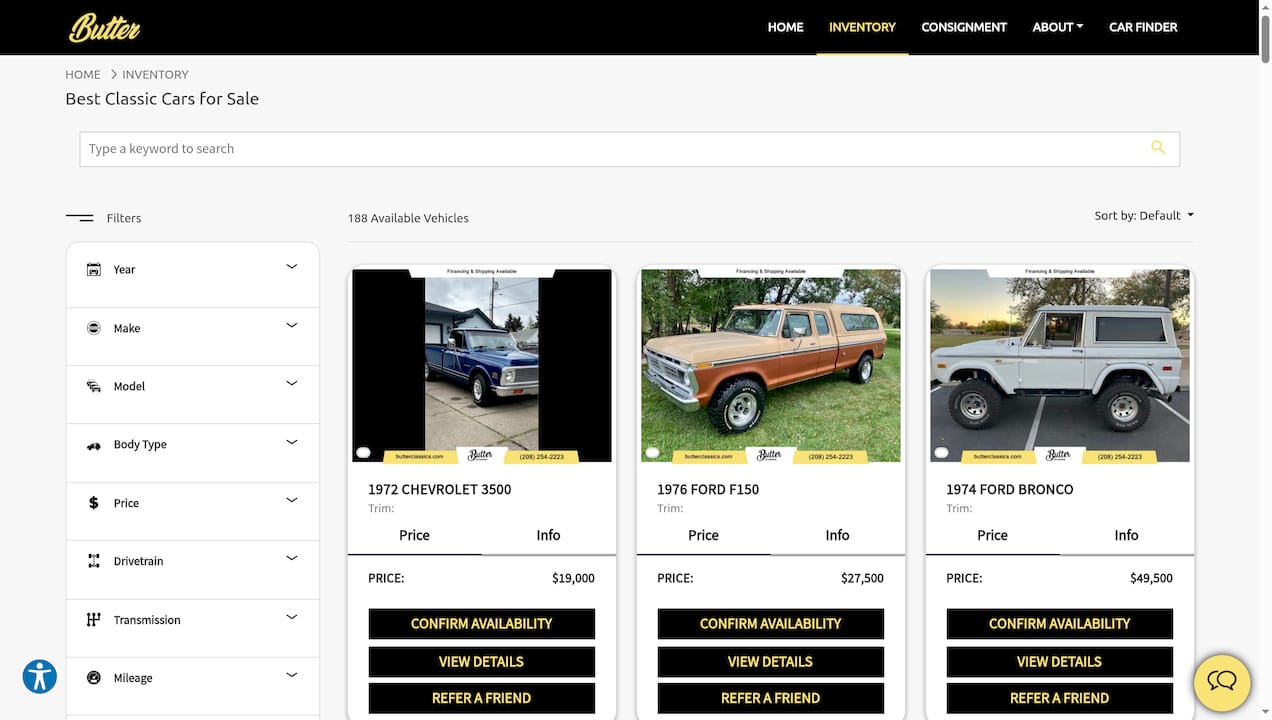
If you know roughly what you're after but haven't found it yet, our car finder tool can help narrow the search without you combing through listings on your own. Thinking about selling instead? Our consignment service connects well-documented classics with buyers who value exactly the kind of history we've been talking about here. Start by browsing current inventory or requesting financing pre-qualification to see where you stand before you make an offer.
FAQ
What is the $3,000 rule for buying cars?
This isn't a formal rule tied to any federal agency or classic car authority, and definitions vary depending on the source. Some buyers use it informally to describe a cash threshold for private deals, but it's not a standard you should rely on for a classic car purchase.
Is it better to buy a car privately or from a dealership?
Neither option is universally better. A dealer comparison from MotorTrend found dealers typically charge more but offer inspection, reconditioning, and short warranties, while private sellers tend to price lower with more risk shifted to the buyer.
Is a 25-year-old car a classic or antique?
Classification varies by state and by insurer, so there's no single universal cutoff that applies everywhere. NHTSA's odometer disclosure guidance does note that vehicles 25 years or older qualify for a federal odometer disclosure exemption, which is one practical marker many buyers use informally.
What should you never reveal to the dealer when negotiating?
Avoid volunteering your maximum budget, your financing status, or how emotionally attached you are to a specific car before negotiations start. Keeping that information to yourself preserves your leverage to walk away if the terms don't work.
Sources
- FTC — Dealers: A Guide to the Used Car Rule
- NHTSA — Odometer fraud
- MotorTrend — Dealer vs. private seller car buying guide