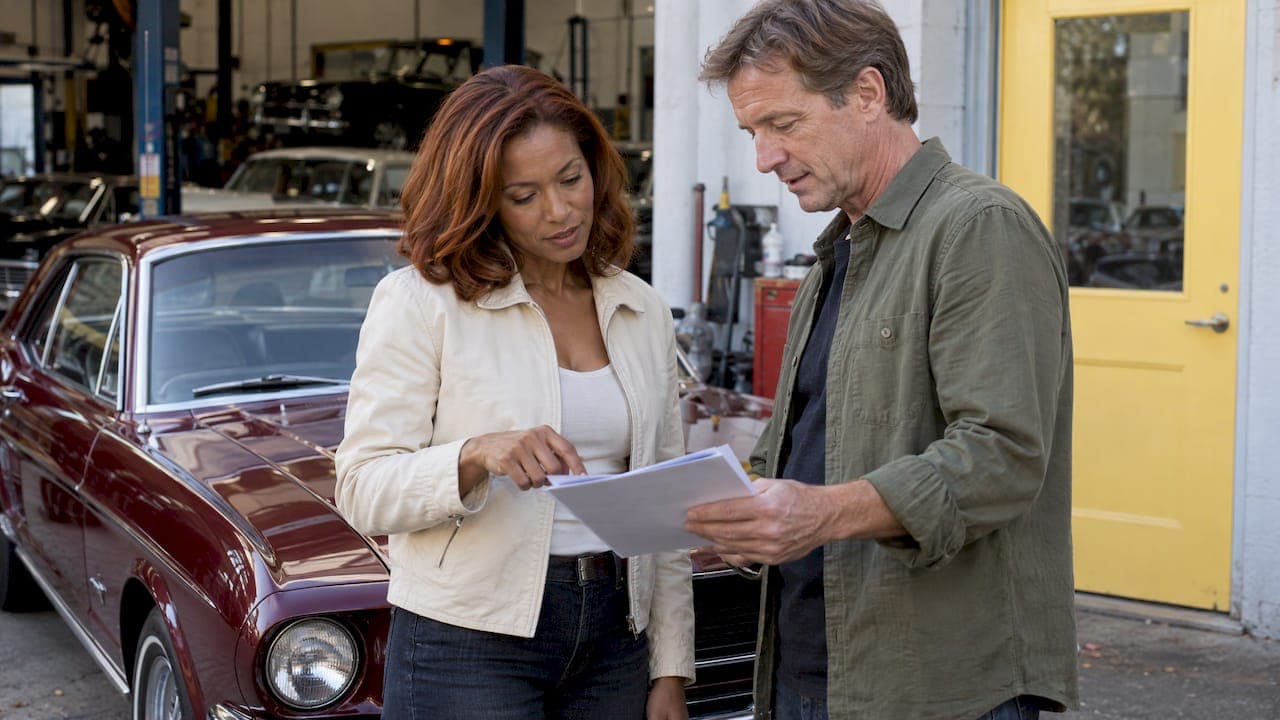
The out-the-door price on a classic car is the final amount you pay to drive (or ship) the car home. It's the sticker price plus sales tax, title and registration, dealer fees and any add-ons. For a collector car, you'll often add transport and an inspection on top. Ask for that number in writing, itemized, before you agree to anything.
We talk to classic buyers every day, and the sticker price is rarely the whole story. Here's how to build the real total, line by line, so there are no surprises at signing.
TL;DR
- Out-the-door (OTD) means the full amount due to complete the purchase: price, taxes, title and license fees, doc fees and add-ons, plus interest if you finance.
- Taxes and registration rules depend on your state. A car's age does not automatically erase sales tax.
- Collector cars add costs a daily driver rarely does: enclosed transport and a pre-purchase inspection.
- Compare OTD totals, never monthly payments, and ask for an itemized quote.
- Buying from a dealer usually means a doc fee. Buying privately means you handle all the DMV work yourself.
Table of Contents
- What "out the door" means on a classic
- The pieces of an OTD price
- Does a classic car's age exempt it from tax?
- Dealer vs. private seller: how the total changes
- The classic-only extras: transport and inspection
- A sample OTD worksheet
- How to get your OTD number, step by step
- Our take on out-the-door pricing
- Ready to shop? Start with the full picture
- FAQ
- Sources
What "out the door" means on a classic
An out-the-door price is the total amount a buyer pays to walk out with the car, including taxes, fees and extras. Think of it as the number that actually leaves your bank account.
It isn't the same as the cost of owning the car. Insurance and loan interest sit outside it, so budget for them separately.
On a classic, the idea is the same, but the pieces can be bigger. A $65,000 truck is a bigger tax base than a $6,000 sedan, and an out-of-state purchase adds paperwork and shipping. That's why we always tell buyers to compare the OTD figure, not the headline price.
The pieces of an OTD price
Here's what usually goes into the total.
| Line item | What it is | Who sets it |
|---|---|---|
| Negotiated vehicle price | What you and the seller agree on | You and the seller |
| Sales or use tax | State and sometimes local tax | Your state |
| Title, registration, plates | Government fees paid through the DMV | Your state |
| Documentation fee | Charge for processing paperwork | Dealer, sometimes capped by state |
| Add-ons | Dealer-installed extras, prep or similar | Dealer, often negotiable |
| Transport | Moving the car to you | Carrier |
| Inspection | Independent look before you buy | Inspector |
| Interest | Only if financed | Lender |
The first five rows match the standard breakdown of an OTD price: negotiated price, state tax, title and license fees, dealer documentation fees and dealership add-ons. The last three are the classic-specific extras we cover below.
Taxes
Sales or use tax is usually the biggest add-on after the price. It's set by your state (and sometimes your county or city), and the rate follows where the car will be registered, not always where you buy it. Because the tax applies to the price, a higher-value car means a bigger bill.
Before you commit, look up your state's rate on your state revenue or DMV site, then multiply by the agreed price. If you're buying out of state, plan for tax, temporary tags, title and registration paperwork, and your home state's deadlines before the car moves.
Title, registration and license fees
These are paid to the local DMV. Registration can be a flat annual amount based on vehicle type, and it varies by state. If the car comes with a messy title, the fix can cost time and money, so read our guide to title work in classic car sales and our explainer on a title-only classic car before you wire funds.
Documentation and other dealer fees
Doc fees pay for paperwork processing. Some states cap them by law, while others leave the amount to the dealer. An older FTC record notes that documentary fees can run to several hundred dollars and that some states require them to be included in advertised or quoted prices.
The Consumer Financial Protection Bureau's worksheet splits upfront costs into taxes, title and non-negotiable fees versus negotiable ones such as delivery, document and preparation fees. That split is a handy way to look at any quote: what's fixed by the state, and what's up for discussion.

We break down the common charges in classic car dealer fees: what you'll pay and what to question.
Does a classic car's age exempt it from tax?
No, not automatically. Turning 25 or 30 years old doesn't wipe out sales tax in itself. What age can do is qualify the car for a special registration class, and that's where savings tend to show up.
Historic or antique registration varies by state. Possible benefits include lower or one-time registration fees and exemptions from some inspections, but use is typically limited to shows, parades, events and maintenance. If you plan to drive the car daily, a historic plate may not fit how you'll use it.
Before you buy, check three things with your state DMV:
- The age and eligibility rules for historic or antique plates.
- Whether the plate class changes the registration fee, and by how much.
- Any limits on how often and where you can drive the car.
Our guide to registering a classic car in the U.S. walks through the process.
Dealer vs. private seller: how the total changes
The two routes produce different OTD totals, and different amounts of homework.
From a dealer, expect a doc fee, but the dealer can streamline title and registration. Dealers must display a Buyers Guide stating whether the car is sold as-is or with a warranty, under the FTC's Used Car Rule.
From a private seller, there's no dealer admin fee, but you handle title transfers, registration and tax payments yourself at the state motor vehicle office. Private sellers generally aren't covered by that rule, and private sales are usually as-is unless the written agreement says otherwise.
If you want the seller's side of the same picture, this piece on the best way to sell a classic car shows how disclosures and paperwork look from the other end. For the provenance angle, see dealer or private seller.
Whichever route you pick, get a written bill of sale that matches the price you negotiated.

The classic-only extras: transport and inspection
These two lines are easy to forget, and they can move your total by thousands.
Transport
If the car you want is a few states away, you'll likely ship it. One carrier reports that enclosed transport runs about $1.50 to $2.00 per mile, with nationwide moves often landing between $1,500 and $3,500 or more. Shorter hauls cost less in total but more per mile. Treat those as ballpark figures and get a current quote for your route.
Most collectors choose enclosed carriers for valuable cars, since the car is shielded from weather and road debris. Put the quote in your own OTD worksheet.
Inspection
A pre-purchase inspection by an independent specialist is money well spent on a car you can't touch. Get the inspector's quote up front and add it to the total. If the report turns up issues, it also gives you real leverage: see our inspection-backed ways to negotiate a classic car price.
Buying sight unseen? Read our tips on avoiding title scams and how inspection gaps differ between online auctions and marketplaces.
A sample OTD worksheet
Here's a made-up example to show the structure. The figures are illustrations, not quotes, and the tax rate is a placeholder you'd replace with your state's.
| Line | Example amount |
|---|---|
| Agreed vehicle price | $50,000 |
| Sales tax at a placeholder 6% | $3,000 |
| Title, registration, plates | Your state's current fees |
| Doc fee | Per the dealer's written quote |
| Enclosed transport | Per carrier quote |
| Pre-purchase inspection | Per inspector quote |
| OTD total | Add it all up |
On a $50,000 car, a 6% tax is $3,000 before a single fee. That's why the tax line deserves a real number, not a guess.
How to get your OTD number, step by step
- Agree on the vehicle price first. Start with the negotiated vehicle price, then ask for the rest.
- Ask for an itemized quote. Taxes, title and license fees, doc fees and any add-ons, plus interest if you finance, each on its own line.
- Confirm your state's rules. Tax rate, registration class and deadlines.
- Add transport and inspection. Use real quotes.
- Check the paperwork. Our documentation checklist covers what to have in hand.
- Compare OTD totals, not payments. A low monthly payment can hide a longer loan or rolled-in fees.
Our take on out-the-door pricing
We built Butter Classics for people who love these cars, so we want you to feel confident before you ever sign. Classic buyers have a lot to think about: the car, the story behind it, the paperwork and how it gets to your driveway.
Our view is simple. A clear total beats a clever headline price. When you shop our nationwide inventory, you're not limited to a single lot, and each listing is built with extensive photos and specifications so you can size up a car before you ask about the details.
We also offer financing pre-qualification and personalized delivery or pickup, so the big moving parts of the deal can be sorted out in one place. Our Butter Certified vehicles come with our Worry Free Guarantee. Ask us for the details on any car you like.
Our advice: ask for the full picture early, line it up against your budget and then enjoy the car. Smooth as butter is how buying a classic should feel.
Tony
Ready to shop? Start with the full picture
Browse trucks, muscle cars, Broncos, Mustangs, Corvettes and more in our classic car inventory. Found one you like? Reach out with questions, schedule a test drive or request a quote, and you can check out classic vehicle financing to see where you stand before you commit.
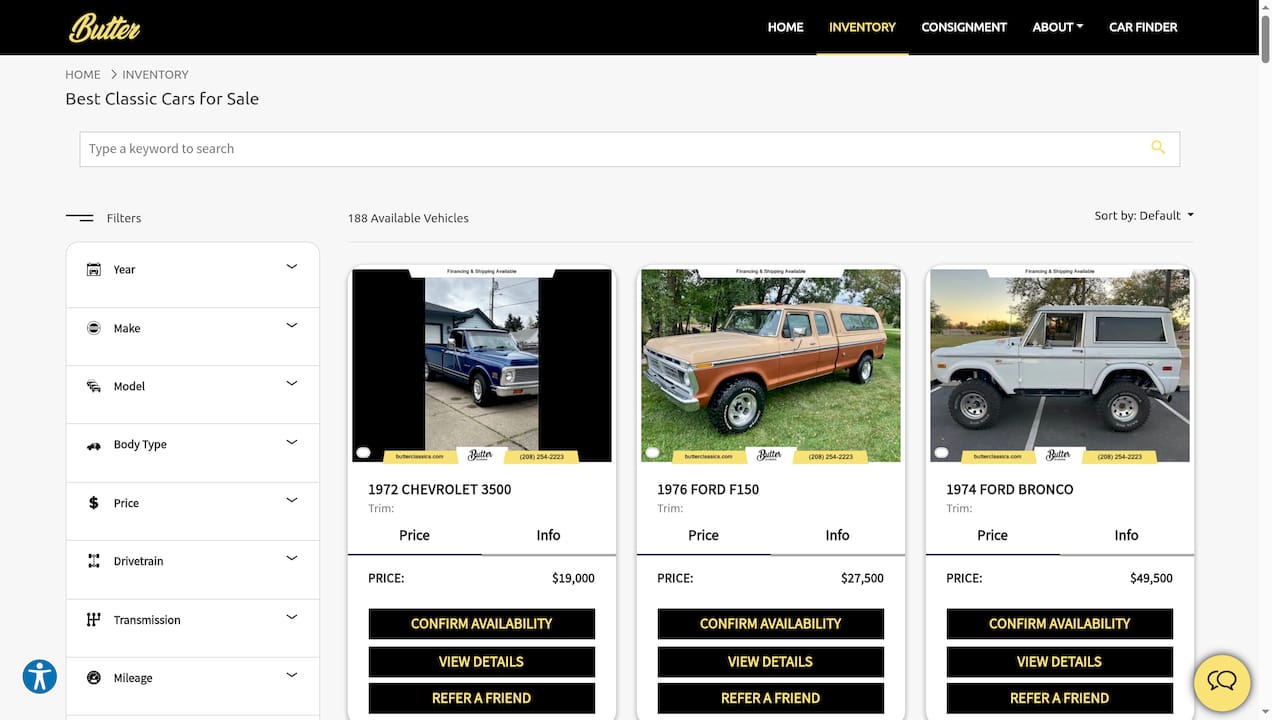
Have a classic of your own to move? You can consign your vehicle with us.
FAQ
Is the out-the-door price the same as the total cost of owning a classic?
No. The OTD price covers what you pay to complete the purchase. Insurance and loan interest are separate costs, so add them to your yearly budget.
Do I pay sales tax on a classic car?
Usually yes, and the rate depends on your state and sometimes your local area. Age alone doesn't exempt a car. Check your state DMV or revenue department for the rules that apply to your purchase.
Can I negotiate dealer fees on a classic?
Some of them. Government taxes and title fees are set by the state, but processing, advertising and prep charges can be negotiable. Ask for each line itemized so you know which is which.
Does buying out of state change my total?
It can. You'll need to coordinate tax, temporary tags, title and registration with your home state, and you'll likely add shipping. Ask for the paperwork steps before the car leaves.
Sources
- NerdWallet: What Does 'Out-the-Door' Price Mean?
- Edmunds: Out the Door Price for Cars
- FTC public comment on dealer documentary fees
- CFPB: Comparing auto loans tool
- CarFlipIQ: What Fees Do You Pay When Buying a Used Car?
- Sakaem Logistics: Buying a Car Out of State
- FTC: Buying a Used Car
- FindLaw: Historic Vehicle Registration Laws
- Passport Transport: Classic Car Transport Costs
- Car Concierge Pro: Out-the-Door Price Calculator