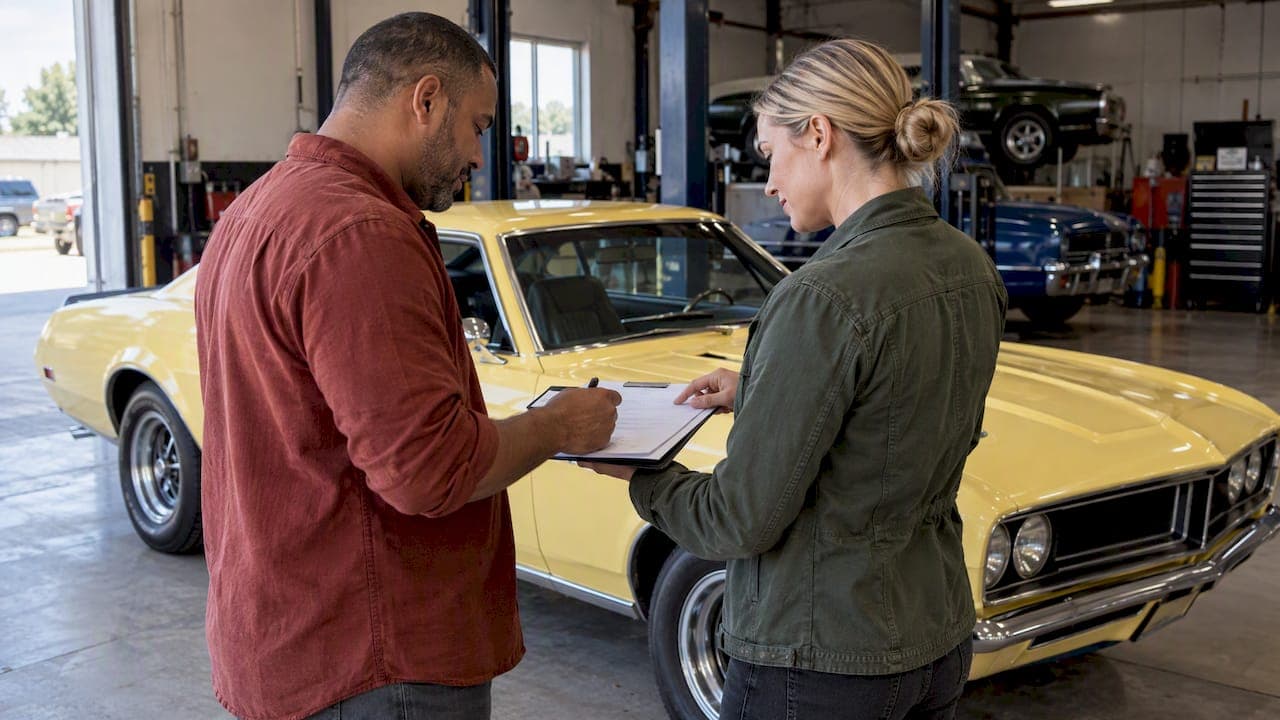
A classic car deposit is money you pay to take a car off the market while you finish the deal. Whether you get it back depends almost entirely on what the paperwork says before you pay. If the terms are not in writing, assume the seller may keep it.
That is the short version. The rest of this guide covers what a deposit does, how long it holds a car, what state and federal guidance says, and exactly what to put in writing so a good find does not turn into a lost payment.
TL;DR
- A deposit usually holds the car for a set time, but it can also commit you to buy. Never assume it is a free hold.
- Refundability is a matter of contract. Get the refund conditions in writing before you send a dollar.
- Rules vary by state. California caps some dealer-brokered deposits, New York allows a full refund in certain financing situations, and federal law has no general cooling-off period.
- Tie your deposit to the VIN, a pre-purchase inspection, a hold period and clear terms for title and transport.
Table of Contents
- What a classic car deposit actually does
- Is a classic car deposit refundable?
- What the law says: it depends on your state
- What to put in writing before you pay
- Dealer, private seller, or auction: how deposit terms differ
- Deposits on cars you have not seen
- How much should a classic car deposit be?
- Our take: a deposit should feel boring
- Ready to shop or sell with a clear process?
- FAQ
- Sources
What a classic car deposit actually does
A deposit does two jobs. It tells the seller you are serious, and it gives you time to line up an inspection, financing, and shipping. In exchange, the seller usually agrees to stop showing the car or taking other offers.
The catch is the second effect. In some places a deposit can be treated as the start of a contract. Maine's Attorney General says that putting down a deposit on a used car probably means you have entered into a contract to buy it, and that you may not get the money back if you do not complete the purchase. That guidance is for Maine, but the logic travels. A deposit is not a casual hold. It is a promise with money attached.
How long does a deposit hold the car?
There is no standard length. A hold can run from a couple of days to a few weeks, and it is whatever you and the seller agree to. For a local car you can inspect this weekend, a few days is plenty. For a car across the country that needs a third-party inspection and transport quotes, ask for more time and put the date on paper.
Two things are worth asking for:
- A specific end date for the hold, not "a reasonable time."
- A statement of what happens at that date. Does the car go back on the market and the deposit come back, or does the seller keep it?
Is a classic car deposit refundable?
Sometimes. It is refundable when the agreement says so, and often not when the agreement is silent. That is the single most important thing to understand.
The Federal Trade Commission's consumer guidance tells buyers to read the contract before signing and to get in writing whether the deal is final. If it is not final, the FTC says to get written terms that the down payment will be returned if the deal falls through. In plain words: ask the question, then make the seller answer on paper.
What usually decides whether you get it back
These are the situations that come up again and again with collector cars. How each one plays out should be spelled out before you pay.
- You change your mind. Most sellers will treat this as your decision and keep the money, unless the agreement says otherwise.
- The car fails the inspection. If your deposit is tied to a pre-purchase inspection, a failed inspection should mean a full refund. If it is not tied to one, you may have no claim.
- The car is not as described. Undisclosed rust, a non-matching engine, or a title problem should be grounds for a refund. Say so in the agreement.
- The seller backs out or sells the car elsewhere. You should get the deposit back promptly. Ask for a timeline, such as a specific number of business days.
- Your financing falls through. Only some agreements cover this. If you are financing, make approval a condition.
If you want to avoid the headaches, treat every one of those as a line in the agreement. A seller who is happy to write them down is usually a seller who is happy to be held to them.
What the law says: it depends on your state
There is no single national rule for classic car deposits. What protects you depends on who you are buying from and where. A few examples show how different the rules can be.
California: a cap on some deposits
California's Vehicle Code says a licensed dealer brokering a retail sale may not accept a purchase deposit above 2.5 percent of the selling price. It also requires refunds of purchase money on demand before the consumer signs a purchase agreement with a selling dealer and takes delivery. That rule is specific to dealer-brokered sales, so do not assume it covers every classic car deal in the state.
New York: a refund in certain financing cases
The New York Attorney General explains that if a dealer helps arrange financing and you have not yet picked up the vehicle, you may cancel before signing a finance agreement and get a full deposit refund. This matters for buyers who plan to finance a collector car.
Federal rules: no general cooling-off period
Many buyers assume they have three days to change their mind. The FTC's used-car guide says federal law does not generally give you a three-day right to cancel at a dealer. State rules vary, and the FTC recommends getting any return or cooling-off policy in writing and reading it closely.
The takeaway on rules
Check your own state's attorney general or motor vehicle agency for deposit rules before you pay, and check the seller's state too if the car is out of state. Where the law is thin, your written agreement is your protection.
What to put in writing before you pay
A good deposit agreement is short, but it is specific. Insurance and risk guidance for collectors says the same thing from a different angle: before money changes hands, a written sales agreement should confirm all negotiated terms, including your right to a pre-purchase inspection before final payment. That guidance also lists items such as what is included in the sale, payment timing and method, title delivery, storage and transport, and legal costs.
Here is a practical checklist you can copy into an email or ask the seller to sign:
- The car, identified by VIN. Year, make, model, and the full vehicle identification number.
- The deposit amount and how you are paying it.
- The hold period, with start and end dates.
- Refund conditions. Spell out each case: failed inspection, title problems, car not as described, seller backs out, financing not approved.
- Inspection rights. Who picks the inspector, who pays, and how fast the report is due.
- What is included. Spare parts, documentation, service records, original tools, extra wheels.
- Title. Who holds it, when it is delivered, and any liens that need to be cleared.
- Payment of the balance. Due date, method, and whether you will use a third-party arrangement.
- Storage and transport. Where the car sits until pickup and who is responsible for it in the meantime.
Our guides on the classic car bill of sale and on dealer fees to question go deeper on the documents and costs that come after the deposit.
Dealer, private seller, or auction: how deposit terms differ
Deposits do not work the same way everywhere. The broad patterns below are general, so confirm the specifics with the seller in writing.
Dealers. A licensed dealer usually has a standard deposit form and must follow state dealer rules, such as those in California and New York above. Ask to see the form before you pay, and ask for the return policy in writing. Maine's Attorney General says a dealer there must disclose its return policy in writing before accepting a deposit.
Private sellers. A private seller rarely has a form, so you will probably write one together. That is not a bad thing, since you can ask for exactly the terms in the checklist above. The risk is that a private seller may not know your state's rules, and there is no dealer license to complain to. Use a simple signed agreement and consider a neutral third party to hold funds. Our piece on dealer versus private classic car purchases covers how provenance and paperwork differ between the two.
Auctions. Auction houses set their own terms, usually in the bidder agreement you accept at registration. Those terms often decide how and when payment is due, and they may be far less flexible than a dealer's. Read the bidder terms before you raise your hand, because a winning bid is generally a binding commitment.

Deposits on cars you have not seen
Buying sight unseen is normal in the collector market. The best cars are rarely in your zip code. But it raises the stakes on a deposit, because you are paying before you can touch the car.
A few habits protect you:
- Pay for an independent inspection first, or make the deposit conditional on one. Our dealer inspection checklist shows what a good report should cover.
- Verify the seller and the title. Title problems are a common trap, which we cover in our guide to avoiding title scams when buying sight unseen.
- Watch for pressure. A seller who demands a large deposit right now, by wire or gift card, with no paperwork, is a red flag. Our list of classic car scams shows the patterns.
- Consider escrow. Having a neutral party hold funds until conditions are met removes a lot of the trust problem. We explain how it works in car escrow explained.
The stakes are real. In a 2011 report, the Center for Responsible Lending said respondents reported that over half of consumers they served who experienced yo-yo scams had trouble reclaiming their down payment or trade-in, or faced threats of legal action. That report is about ordinary used-car financing, not collector cars, but it shows what happens when a down payment has no written protection.
How much should a classic car deposit be?
There is no standard figure. Deposits are negotiated, and they tend to track the price of the car and how much effort the seller is giving up by holding it. The only firm number in our research is California's 2.5 percent cap, and that applies to dealer-brokered retail sales in that state, not everywhere.
A few rules of thumb that hold up:
- Put down only what you could stand to lose if the agreement turned out to be weaker than you thought.
- Make a bigger deposit conditional on a stronger agreement, such as inspection rights and a firm refund clause.
- Use a traceable payment method and keep the receipt, email thread, and signed terms together.
- If the seller asks for a deposit before sharing the VIN, photos, or title information, slow down.
A smaller deposit with solid terms beats a larger one with a handshake. If you plan to negotiate the price too, our guide on inspection-backed negotiation shows how to use the inspection report as leverage.
Our take: a deposit should feel boring
We spend our days around classic trucks, muscle cars, Broncos, and Corvettes, and we have seen the same pattern from the buyer's side. The deals that go sideways are almost never about the car. They are about a deposit that was paid on enthusiasm and a phone call.
Here is how we see it. When you find the one, your heart is already on the road. That is exactly when you should slow down for ten minutes and get the terms down. A deposit should feel boring: the VIN, the amount, the date, the refund conditions, the inspection. If any of those is a hard conversation, you have learned something useful before you spent real money.
We also think a good seller welcomes the questions. Listings with plenty of photos and detailed specifications make it easier to decide what to inspect and what to ask for. And a clear process, from first message to delivery, takes the guesswork out of the part that makes buyers nervous. Take your time, ask for it in writing, and enjoy the drive when it comes.
— Tony
Ready to shop or sell with a clear process?
If you are hunting for your next classic, you can browse our nationwide inventory of classic trucks, muscle cars, Broncos, and more on our classic cars for sale page, with detailed listings, extensive photos, and specifications. You can also schedule a test drive, request a quote, or ask about financing pre-qualification.
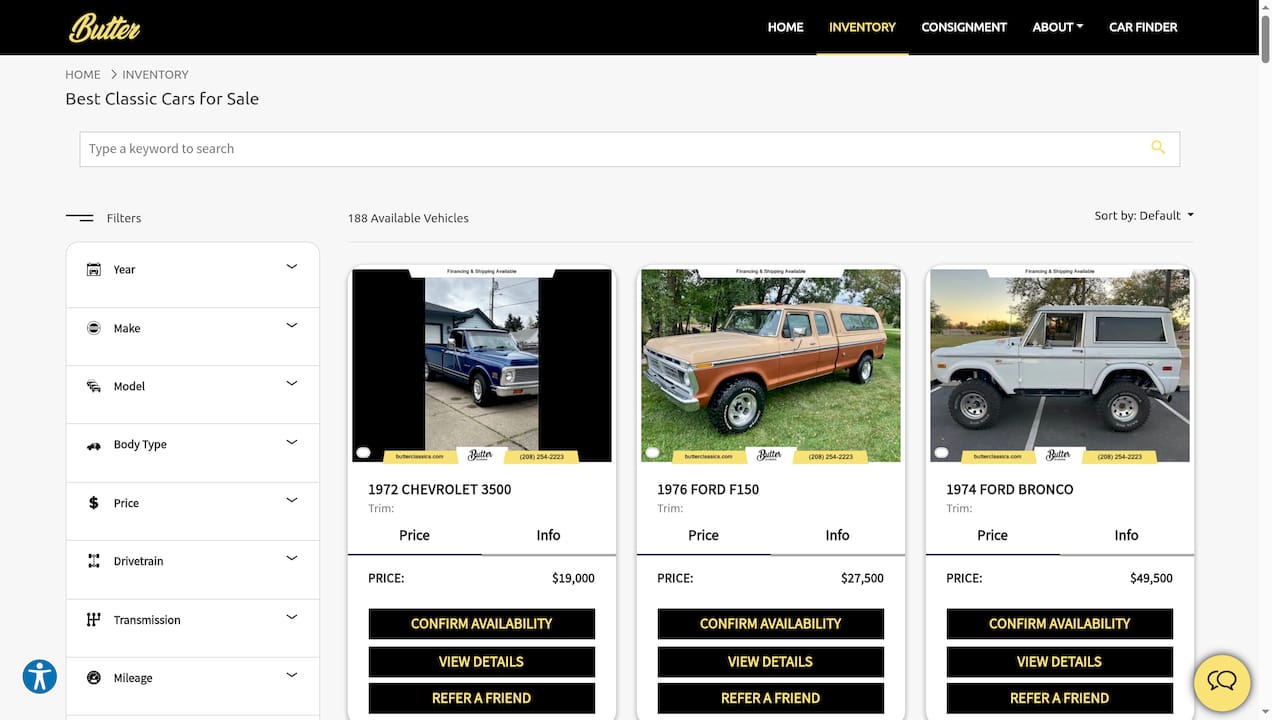
Have a car to sell? Our vehicle consignment service lets you list your classic without handling every buyer conversation and deposit discussion yourself. For a refresher on what to check before you drive one, see our classic car test drive checklist.
FAQ
Can I get my classic car deposit back?
Only if the agreement allows it, or if state law gives you a right to a refund in your situation. Federal guidance says to get in writing whether the deal is final and, if it is not, written terms that your down payment will be returned if the deal falls through. Without that, the seller may keep the money.
Is a deposit the same as a down payment?
Not exactly. A deposit usually holds the car for a short time before you complete the purchase, while a down payment is the part of the price you pay up front and the rest is financed or paid later. In practice sellers use the terms loosely, so write down what the money is for and what happens to it if the deal ends.
Should I pay a deposit before an inspection?
Only if the deposit is tied to the inspection. Collector-car guidance recommends that a written agreement confirm your right to a pre-purchase inspection before final payment. If the car fails, the agreement should say the deposit comes back.
Is there a three-day right to cancel a car purchase?
Usually not. The FTC says federal law does not generally provide a three-day cancellation right for dealer sales, and state rules vary. Get any return or cooling-off policy in writing, and check your state attorney general's website for local rules.
Should I use escrow for a classic car deposit?
It is worth considering, especially when you are buying from a distance or from a private seller. A neutral party holds the funds until the agreed conditions are met, so neither side has to rely on trust alone. Our escrow guide walks through how it works.
Sources
- Buying a Used Vehicle, Maine Attorney General
- Manuel Avoids Car-buying Trouble, Federal Trade Commission
- California Vehicle Code section 11736
- Buying a car?, New York Attorney General
- Buying a Used Car from a Dealer, Federal Trade Commission
- Collector cars: Buying sight unseen, Marsh McLennan
- Center for Responsible Lending comment on yo-yo scams, 2011