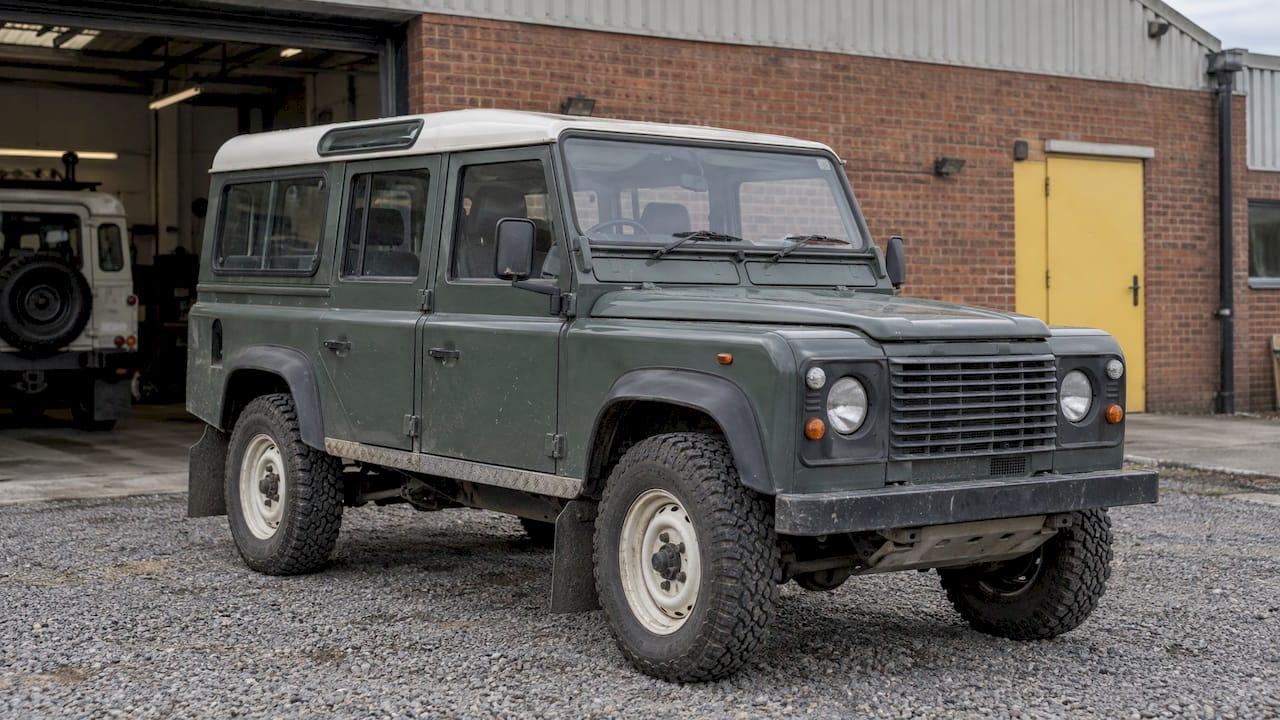
A classic Defender is one of the most rewarding old 4x4s you can own, and one of the easiest to buy badly. The short version: pick the body style first (90, 110 or 130), put the steel chassis and the paperwork ahead of paint and looks, and make sure the title, VIN and import status all line up before you send money. This guide walks you through each of those steps in plain terms.
TL;DR
- The classic Defender comes as the short 90, the longer 110 and the rare 130 (originally called the 127). Early 1983 to 1990 trucks are often the cheaper way in, while 1990s trucks tend to cost more.
- Auction results have ranged from about $10,000 to more than $100,000. Originality, rarity and the extent of restoration drive the gap.
- The aluminum body gets the attention, but the steel chassis, bulkhead and crossmember are where the expensive rust lives.
- Ask for the title, VIN plate match, service history and restoration photos. A history report alone will not prove a classic is what the seller says it is.
- For imported trucks, federal rules look at the build date, and state registration is a separate step.
Table of Contents
- Which classic Defender fits you
- What a classic Defender costs in the U.S.
- Rust: where a Defender really hides it
- Engines, gearboxes and what to check mechanically
- Paperwork: title, VIN and history
- Import status, emissions and registration
- What to budget after you buy
- Our take on buying a Defender
- Find your next classic 4x4 with us
- FAQ
- Sources
Which classic Defender fits you
The classic Defender story is one of body lengths. The two core versions are the 90 (short wheelbase) and the 110 (long wheelbase). The longer 127 was later renamed the 130, according to MotorTrend's Defender history and buying guide. Here is how to think about each one.
| Body style | Best for | What to know |
|---|---|---|
| Defender 90 | Weekend trail use, city streets, anyone who wants the classic short-wheelbase look | Tighter rear seating and less cargo room. Usually the one people picture first. |
| Defender 110 | Families, camping, overland builds | More space and more practical. Often easier to live with day to day. |
| Defender 130 (originally 127) | Collectors, work-truck builds, anyone after something unusual | Rarer, so expect fewer choices and a longer search. |
The same MotorTrend guide says 1983 to 1990 trucks are a likely lower-cost way in. It also says 1990s trucks often command a premium because they are among the newest ones you can import. That premium is worth understanding. You are paying for age-eligibility, condition and sometimes a better engine, not just a badge.
If you are comparing the Defender with other classic 4x4s on your shortlist, our classic 4x4 buying guide covers the cost traps to look for across the category.
What a classic Defender costs in the U.S.
Prices are wide. MotorTrend's 2020 look at auction sales found Defenders selling from roughly $10,000 to well over $100,000 (source: the same MotorTrend guide). That is a snapshot from 2020, so use it for the shape of the market, not as today's price list.
What moves a price up or down:
- Originality. A truck that still looks and runs the way it left the factory is a different animal from a heavily modified one.
- Rarity. Unusual body styles and low-production configurations carry a premium.
- Restoration quality. At the top of the market, how far a truck has been restored or modified can matter more than the model itself.
- Documentation. A thick folder of receipts and dated photos is worth real money, because it lets you see what was done and when.
A practical way to set your budget: decide your ceiling first, then hold back a cushion for the work every older 4x4 needs after purchase. Fluids, tires, brakes, belts and small repairs add up fast, and a truck with a complete history gives you a much clearer picture of what is left to do.
Rust: where a Defender really hides it
Here is the thing that surprises first-time buyers. The outer panels are aluminum, so they do not rust the way steel body panels do. The steel chassis underneath is the main rust risk, as Classics World's inspection guide explains.
A nice-looking body can sit on a tired frame. Get the truck on a lift or over a pit and check these spots:
- The rear crossmember
- The chassis rails and the outriggers
- Engine and axle supports
- The bulkhead, footwells and door pillars
- Door bottoms and the steel door frames
A separate used-buyer's guide from Classic Car AI adds spring seats, gearbox mounts and rear trailing-arm mounts to the list. It also suggests looking at the lower corners behind the front wings.
Watch for thin metal and welded patches. Ask whether the chassis was replaced, and if so, ask for the invoices and photographs. A fresh coat of underseal or paint is a reason to look harder, not a reason to relax, since it can cover a repair as easily as it can protect good metal. Ask to see the truck cold, and insist on a lift inspection.

For more on telling a harmless blemish from a real problem, read our guide on classic car rust spots, what to fix and what to fear.
Engines, gearboxes and what to check mechanically
Many classic Defenders you will see for sale run Land Rover's Tdi diesels. Each has its own habits.
200Tdi. Classics World recommends listening for head-gasket chuffing and looking for injector or injection-pump trouble, fuel-return leaks, oil leaks and turbo smoke.
300Tdi. The same guide warns that coolant leaks and overheating can warp the heads. Check the cooling system carefully and look at the temperature gauge on the test drive.
Timing belts. According to Classic & Sports Car's buyer's guide, Tdi timing belts need proof of replacement every 60,000 miles or five years in normal use. For the 300Tdi, the figure is 72,000 miles or six years. With no paperwork, assume it is due and price the job into your offer.

The same guide also points to axle, gearbox and transfer-box leaks, and to smoky engines, rattles, neglected oils and signs of hard off-road use.
A short test drive plan
- Start the engine cold and watch for smoke, odd noises and slow starting.
- Drive in a mix of city and highway speeds. Note any clunks or vibration.
- Engage high and low range, then test the differential lock. Classic Car AI lists this as a core step.
- Check steering play, brake feel and any pulling to one side.
- After the drive, look under the truck for fresh drips at the axles, gearbox, transfer box and engine.
Our classic car test drive checklist gives you a printable-style version you can take with you. If you want a broader framework for judging overall condition, see evaluating vintage car condition before you buy.
Paperwork: title, VIN and history
Good paperwork is half the truck. Motorious's classic car title checklist gives a solid starting routine:
- Confirm the seller's name matches the title.
- Confirm the VIN on the title matches the VIN plate on the vehicle.
- Look for alterations on the title.
- Check for liens, and ask for proof that any lien was released.
- Ask for service records, receipts, restoration photos, owner manuals, window stickers, build sheets and past registrations.
- Check mileage claims against inspection stickers, service tags and maintenance records.
On a Defender, the VIN and chassis numbers are stamped in more than one place, so check them on the vehicle itself and compare them with the title and any restoration paperwork.
Do not lean on one document
The American Association of Motor Vehicle Administrators notes in its best-practices document on reconstructed and replica vehicles that buyers are advised not to rely solely on title documents to verify authenticity. That matters for Defenders, because a truck with a new chassis, a swapped engine or a ground-up rebuild can be hard to tell from an original.
A vehicle history report is a useful screening step. Classic Decoder explains that a report can show title events, salvage or rebuilt brands, mileage readings and lien indicators. It cannot certify current mechanics, structural integrity, matching numbers or factory originality. Treat a clean report as one box checked, not as a green light. Our guide to the classic car history check and pre-1981 VIN issues goes deeper on older VINs.
For restored trucks, ask for a detailed work list (engine, gearbox, frame, wiring, suspension, brakes, interior) and dated before, during and after photos. These help you tell a cosmetic refresh from a true ground-up job. If a six-figure truck is on the table, an independent appraisal or pre-purchase inspection is money well spent. Our classic car investment due diligence guide shows how to structure that.
Import status, emissions and registration
Many Defenders in the U.S. came here through the import route, so eligibility matters. Under federal law, a vehicle that is at least 25 years old can be imported without meeting federal motor vehicle safety standards, and the 25 years count from the build date, as this explainer on the NHTSA 25-year rule lays out. Emissions, customs duty and state registration are separate tests.
On emissions, the EPA has its own exemption for older vehicles. According to GHY International's summary, a vehicle 21 or more years from its original production year, in original unmodified condition, is exempt from the Clean Air Act requirements. Note the words "original" and "unmodified". A truck with a heavily changed powertrain may be treated differently.
What this means for you as a buyer:
- Ask for the import paperwork (customs entry, the DOT and EPA declarations) and keep copies.
- Confirm the truck's build date, not just the model year.
- Check with your own state's DMV on titling and registration, since states set their own rules for imported and older vehicles.
- Be careful with a truck that has a foreign title or a salvage history, and get the DMV to confirm what it will accept before you buy.
If you are buying from out of state without seeing the truck, read our guide on avoiding title scams when buying a classic sight unseen.
What to budget after you buy
Plan for the first year, not just the purchase price. A sensible budget covers:
- A baseline service. Oils, filters, coolant, brake fluid, and a full look at belts and hoses. If there is no proof of a recent Tdi timing-belt change, do it.
- Rust or chassis work. Even a solid truck may need localized repair. Know the number before you sign.
- Tires and brakes. Safety items, and often worn on trucks that sat for years.
- Insurance. Ask an agent who writes collector policies how they value and cover older 4x4s.
- Registration and any import-related fees. Your state's DMV can tell you what applies.
We are not quoting a repair figure here, because costs vary by shop, region and the truck itself. Get a written estimate from a shop that knows Land Rovers before you commit.
Our take on buying a Defender
We love a good Defender, and we want you to drive away in one that is smooth as butter, not one that turns into a project you never planned.
Here is how we think about it. Start with the truck's story. A seller who hands over the title, the service folder and the restoration photos without being asked is telling you something good. Then look at the frame before you look at the paint. That order saves buyers more heartache than any other habit we know.
This is why we built Butter Classics the way we did. Our listings are packed with photos and specifications so you can see what you are getting. Our nationwide inventory means you are not stuck with whatever is on one local lot. And our Butter Certified vehicles come with our Worry Free Guarantee, backed by personalized delivery or pickup, so buying from a distance feels easy.
Take your time, ask every question you have, and call us if you want a second pair of eyes.
Tony
Find your next classic 4x4 with us
Ready to look? Browse our classic car inventory by price or type, check our 4x4 listings, and get pre-qualified for financing without leaving your couch. You can also schedule a test drive or request a quote on any vehicle that catches your eye.
Have a classic of your own to sell? Our vehicle consignment service puts it in front of serious buyers across the country. To see how buying and selling works with us, start at our 4x4s page.
FAQ
What is the best classic Defender to buy?
There is no single best one. The 90 suits trails and weekend driving, the 110 gives you more room for family and gear, and the 130 is the rare pick. Start with how you will use it, then look for the best-documented example you can afford in that body style.
Are classic Defenders expensive to own?
They reward buyers who budget for upkeep. A complete service history, a sound chassis and proof of the timing-belt change keep surprises small. Get a written estimate from a shop that knows Land Rovers for any work you plan to do.
Can I rely on a vehicle history report for a classic Defender?
Use it as a first screen only. For older vehicles, coverage is limited, and a report cannot confirm matching numbers, structure or originality. Pair it with a VIN check on the truck, the title, service records and a physical inspection.
Is a 25-year-old Defender legal to import to the U.S.?
Federal safety rules allow vehicles 25 years or older to be imported without meeting current safety standards, counted from the build date. Emissions and state registration are separate, so confirm the details with your state DMV before buying.
Sources
- MotorTrend: The Land Rover Defender, History, Buying Tips, and More
- Classics World: Land Rover Defender buyer's guide
- Classic Car AI: Land Rover Defender Used Buyer's Guide
- Classic & Sports Car: Land Rover 90, 110 and Defender buyer's guide
- Motorious: Classic Car Title and Paperwork Checklist for Buyers
- AAMVA: Best Practices for Title and Registration of Reconstructed and Replica Vehicles
- Classic Decoder: How to Use Vehicle History Before Buying a Classic Car
- US 25-Year Import Rule Explained
- GHY International: Is Your Imported Vehicle Excluded from EPA's Clean Air Act Regulations?