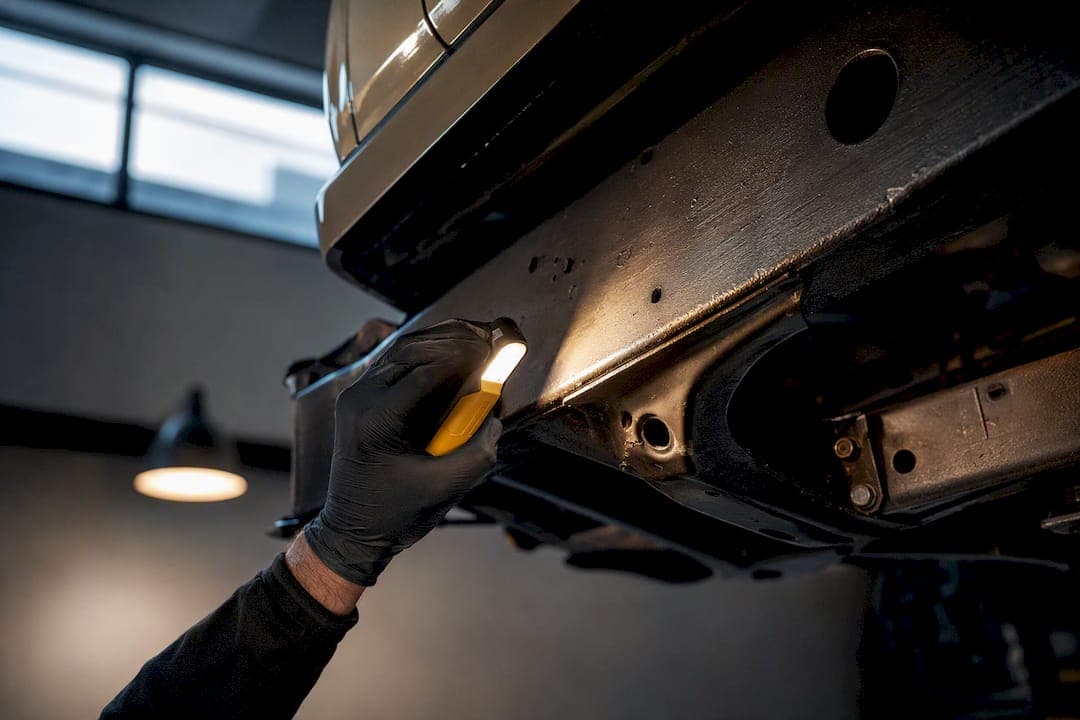
A classic SUV is a smart buy if you value character over convenience and you're willing to budget for surprises. The strongest starting shortlist includes the Ford Bronco (great looks, hot market), the Toyota Land Cruiser FJ40 (tank-tough drivetrain), the Range Rover Classic (comfort with corrosion risk), the Jeep Wagoneer or Grand Wagoneer (wood-paneled luxury), the International Harvester Scout (rare but rugged), and the Chevrolet K5 Blazer or Jeep Cherokee XJ (easier parts and daily use). This guide covers checklists, buying paths, and real costs next.
TL;DR:
- Buyers should carefully inspect for rust, frame issues, and hidden repairs before purchasing any classic SUV, especially for models like the Bronco and FJ40.
- The choice of purchasing depends heavily on intended use, budget, willingness to perform mechanical work, and parts availability, influencing which model is most suitable.
- Pre-purchase inspections covering structural, mechanical, and electrical aspects are crucial to avoid costly hidden problems, with specialist checks highly recommended.
- Accounting for ownership costs such as maintenance, insurance, fuel, and repair expenses is vital, as these can significantly exceed the initial purchase price.
- Modern upgrades can make daily driving more feasible for classic SUVs, but enthusiasts should weigh reliability and safety against maintaining originality.
Table of Contents
- Which Classic SUVs Should Be on Your Shortlist?
- How Do You Choose the Right Classic SUV for Your Budget?
- What Are the Five Ways to Buy a Classic SUV?
- What Should Your Pre-Purchase Inspection Cover?
- What Does It Really Cost to Own a Classic SUV?
- What Problems Should You Expect From Each Model?
- Should You Actually Drive a Classic SUV Every Day?
- How Can Butter Classics Make Buying Easier?
- What Most Buying Guides Get Wrong About Classic SUVs
- Ready to Find Your Classic SUV?
- Sources
Which Classic SUVs Should Be on Your Shortlist?
Every model on this list earns its spot for a different reason, and knowing which one fits your goals matters more than chasing the flashiest badge.
- Ford Bronco (1966–1977, early models): Boxy, charming, and the hottest classic SUV on the market right now. Best for buyers who want strong resale and don't mind paying up for it. Prices vary widely depending on condition, from lower amounts for rough projects to significantly higher for restored examples. Inspect the frame first, since rust hides in the boxed sections and rebuild costs can exceed the purchase price, according to Velocity Restorations. Our Bronco buying guide breaks down frame integrity and paperwork checks in more detail.
- Toyota Land Cruiser FJ40: Built like a brick and nearly indestructible mechanically. Best for buyers who want an off-road workhorse with a global parts network. Prices vary widely depending on condition. Check the floors and frame rails for rust, and budget extra for shipping costs on certain hard-to-source components, as our FJ40 buyer guide explains.
- Range Rover Classic: Comfortable, DIY-friendly under the skin, but famously corrosion-prone. Best for buyers who like a project and don't mind wrenching. Usable drivers land in the mid-range, while concours examples command steep premiums, per Classics World.
- Jeep Wagoneer / Grand Wagoneer: Wood-trimmed luxury with real off-road chops. Best for buyers chasing a distinctive daily cruiser.
- International Harvester Scout: Rare, quirky, and increasingly collectible. Best for buyers who enjoy standing out and can tolerate scarce trim parts.
- Chevrolet K5 Blazer: Simple GM mechanicals with strong aftermarket support. Best for buyers who want a project that's actually easy to finish.
- Jeep Cherokee XJ: Unibody, parts-friendly, and genuinely capable as a daily driver. Best for first-time classic buyers.
Dealer and consignment inventory tends to offer better provenance and financing options, while private-party and auction listings often mean better prices but far less recourse if something's wrong.
How Do You Choose the Right Classic SUV for Your Budget?
Start with four questions: What will you actually use it for? What's your real budget, including a cushion for surprises? How much wrenching are you willing to do yourself? And how easy are parts to find for the model you want?
Originality versus condition is the trade-off that trips up most first-time buyers. A numbers-matching, unrestored original commands a premium and forgives nothing mechanically. A well-executed restomod with updated brakes and cooling gives you a more livable truck, but purists may see it as less "correct." Neither answer is wrong. It depends on whether you're buying an investment piece or a vehicle you plan to drive.
Before you commit, ask the seller these questions:
- Is there a paper trail of past repairs, including welding or frame work?
- Has the vehicle ever been submerged, flooded, or stored outdoors long-term?
- Are original title and VIN documents available for review?
- What's the parts sourcing plan for anything currently broken?
Pro Tip: Walk away immediately if a seller can't explain recent frame welding or gets vague about flood history. Those two answers predict more hidden cost than anything else on the sheet.
What Are the Five Ways to Buy a Classic SUV?
- Buy ready to drive. Highest upfront cost, lowest risk, and you're driving the same week. Expect to pay full market value for the condition you're getting.
- DIY project. Lowest entry price, but timelines stretch to years and costs are unpredictable once you start disassembling.
- Shop restoration. A professional handles the labor while you supply the vehicle and the budget. Costs run high, but the outcome is far more predictable than a private-party gamble.
- Donor build or restomod. Starting from a known-condition donor vehicle controls the biggest variable, shortening timelines and making costs easier to forecast than an unknown project, according to Asc4x4.
- Consignment or dealer purchase. Buying through a consignment platform or specialty dealer adds a layer of vetting that reduces the odds of an expensive surprise, since listings typically come with more documentation than a random driveway sale.
Choose the path that matches whether you want the process or the outcome. Choosing a budget that does not match the buying path is a frequent mistake among buyers.
What Should Your Pre-Purchase Inspection Cover?
Walk the vehicle in daylight, and don't skip a single step just because the seller seems trustworthy.
Structural:
- Check the frame for rust bubbling, flaking, or fresh paint hiding old repairs.
- Look at suspension mounting points for cracks or amateur welding.
- Ask to see the vehicle on a lift if at all possible.
Mechanical:
- Pull the oil dipstick and check for a milky color, which signals coolant intrusion.
- Shift through the transmission and transfer case, feeling for grinding or hesitation.
Electrical and paperwork:
- Test every light, gauge, and switch.
- Confirm the VIN matches the title and any state registration documents.
On the test drive, listen for gear whine, feel for steering vagueness, and watch the temperature gauge on a longer stretch of road. Our test drive checklist walks through the full protocol.
Pro Tip: A specialist pre-purchase inspection typically costs a few hundred dollars, which is nothing compared to what a hidden frame problem can cost you later. Our dealer inspection checklist explains what to ask an inspector to check.
What Does It Really Cost to Own a Classic SUV?
Budget by tier: rough projects often start under $15,000, usable drivers land in the middle range, fully restored examples climb well past that, and restomods sit at the top. Ownership costs stack up fast beyond the purchase price. Specialist labor runs higher than a modern shop, tires for certain wheel sizes get pricey, and fuel costs are steep on anything with a big-block V8. Classic insurance policies often use agreed value coverage with mileage caps, which keeps premiums reasonable but means you need to plan your driving around the limit.
What Problems Should You Expect From Each Model?
- Range Rover Classic: Chassis and frame corrosion is the top concern, and non-galvanized steel can rust from the inside out while looking fine on the surface. Independent structural assessment matters more than a visual check, per Classic Car Hub.
- Early Ford Bronco: Frame and floor rust is common, and original panels are getting scarce. Watch for welded repairs disguised under fresh undercoating.
- FJ40: Drivetrains are tough, but rust hits floors and frame rails, and some replacement parts carry real shipping costs from overseas suppliers.
- Cherokee XJ and K5 Blazer: Generally parts-friendly with strong aftermarket support, but check carefully for previous crash repairs and worn drivetrain components.
Should You Actually Drive a Classic SUV Every Day?
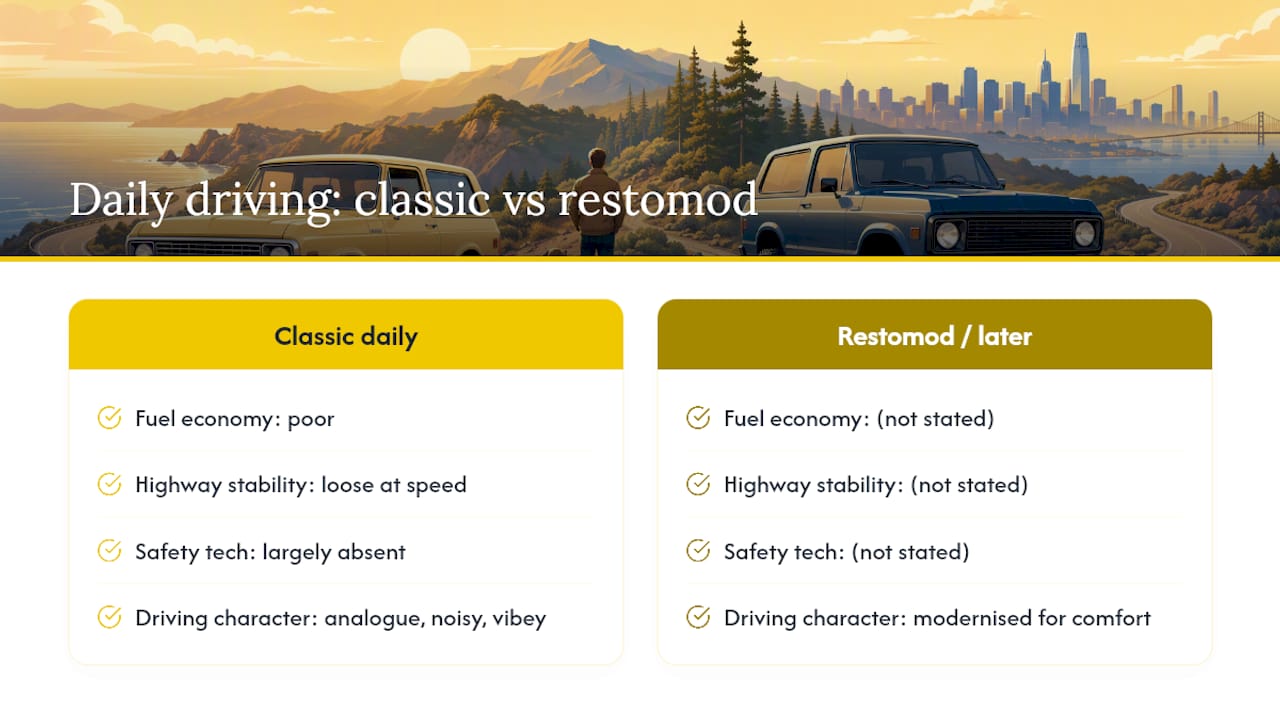
A classic SUV daily is a real commitment, not a Pinterest board. Fuel economy is poor, highway stability can feel loose at speed, and safety tech simply doesn't exist compared to a modern vehicle. That analogue character, the noise, the vibration, the honest mechanical feel, is exactly what enthusiasts love about a driving experience like the Land Rover Defender, but it's an acquired taste for a commute, according to Carscoops. Sympathetic upgrades like power steering conversions, disc brake swaps, upgraded cooling, and modern wiring (paired with a period-correct battery that still fits the original tray) make daily use far more tolerable. If you want daily comfort without the compromises, a well-built restomod or a later classic like the XJ is the better call.
How Can Butter Classics Make Buying Easier?
Some platforms offer searchable inventory, financing pre-qualification, certified listings, and scheduled test drives, designed to reduce the guesswork in buying. Whether you're buying ready, using our car finder for a specific spec, or consigning a vehicle you already own, our buyer resources meet you at whatever stage you're in.
What Most Buying Guides Get Wrong About Classic SUVs
Most advice treats every classic SUV like a fixer-upper waiting for your weekend labor. That's backwards for most buyers. The research here is consistent: mismatched budgets and paths cause more regret than any mechanical issue. A buyer who wants a Saturday cruiser but chooses a barn-find project is setting up years of frustration, not a fun hobby.
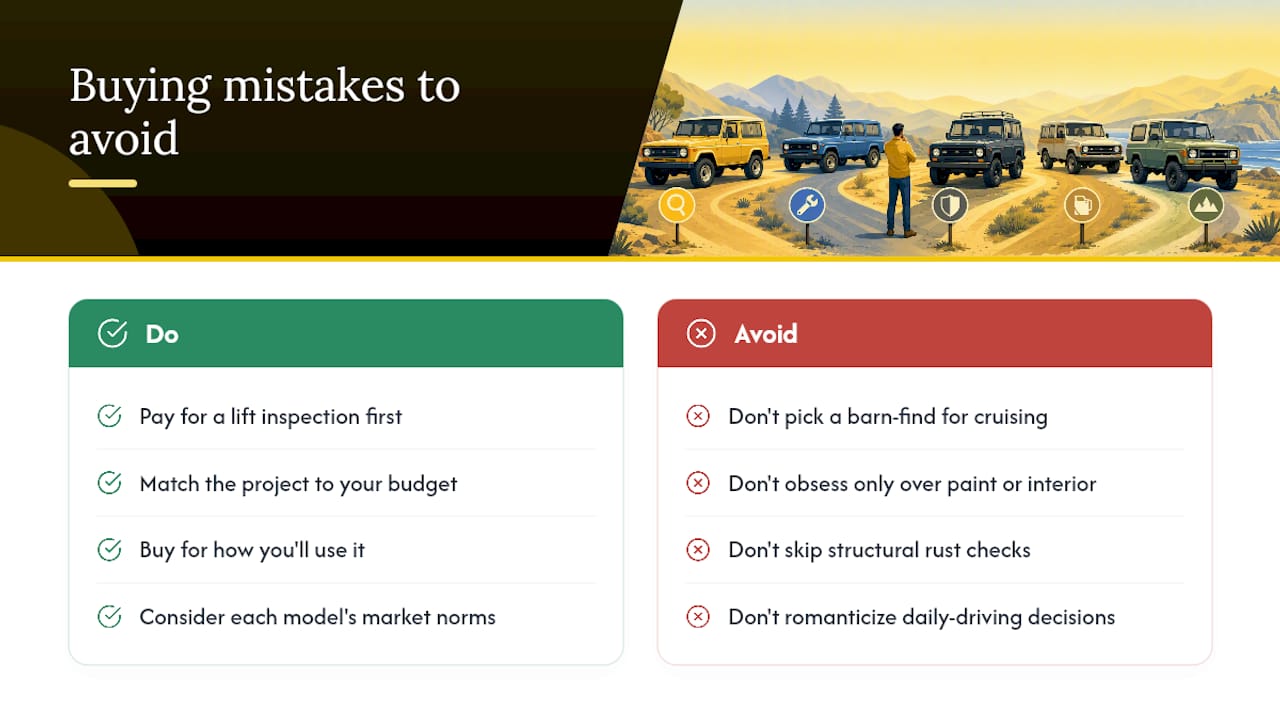
The bigger blind spot is structural rust. Buyers obsess over paint and interior condition while frame corrosion, often invisible from the outside, quietly destroys resale value and safety margins. If you take one thing from this guide, take this: pay for the lift inspection before you fall in love with the paint job.
I'd also push back on the idea that daily-driving a classic is either heroic or foolish. It's neither. It's a trade-off, and a clear-eyed one. The Bronco market rewarding untouched originals while the XJ market rewards practical drivers tells you everything about where each model actually belongs in your life. Buy for how you'll use it, not for what looks good parked.
— Tony
Ready to Find Your Classic SUV?
Certain online marketplaces offer certified, inspected classic SUV inventory, helping buyers avoid the uncertainties of private sales by providing vetted vehicles. Using online platforms, buyers can search, pre-qualify for financing, and book test drives remotely, avoiding travel to multiple locations.
Here's what to do next:
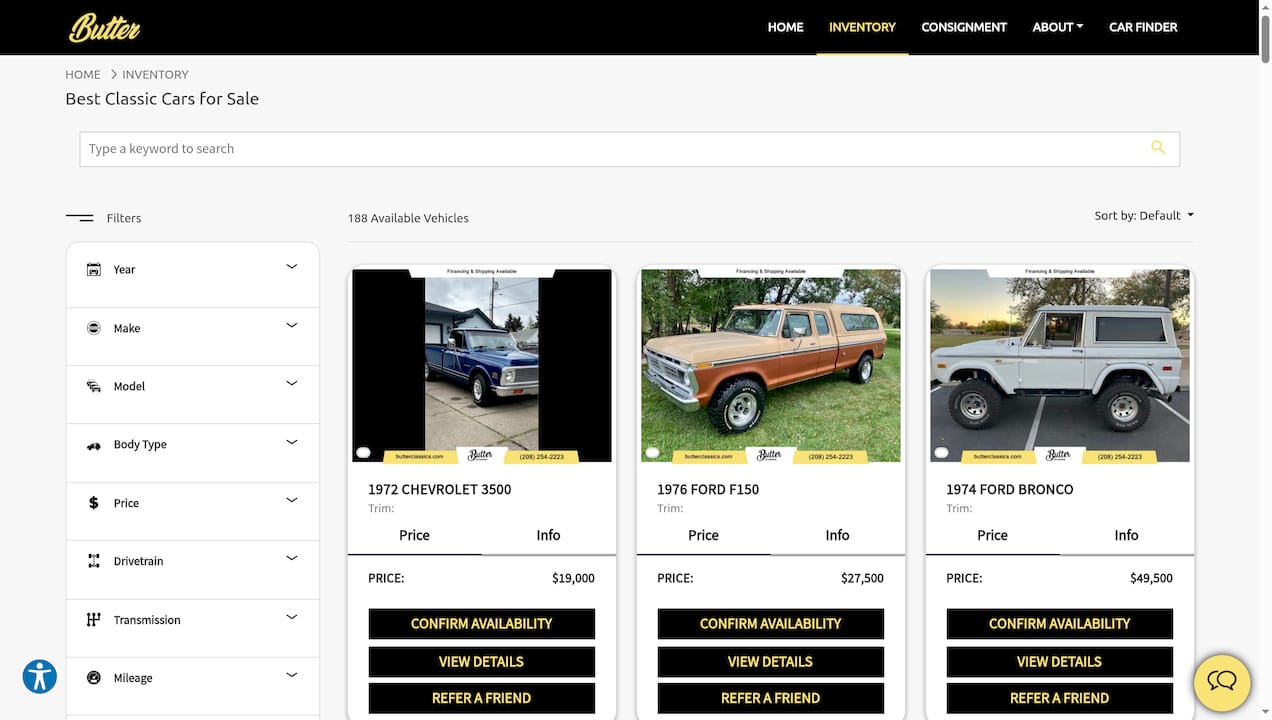
- Search our current inventory for Broncos, Land Cruisers, Wagoneers, and more.
- Use our car finder if you already know the exact model and spec you want.
- Schedule a test drive to feel the vehicle before you commit.
- Considering selling instead? Look into our consignment program to move your classic through a trusted channel.
Sources
- A 2003 Land Rover Defender 90 Makes 120 HP And Somehow Made Me Want To Keep The Keys | Carscoops
- Range Rover Classic buyer's guide - Classics World
- Asc4x4