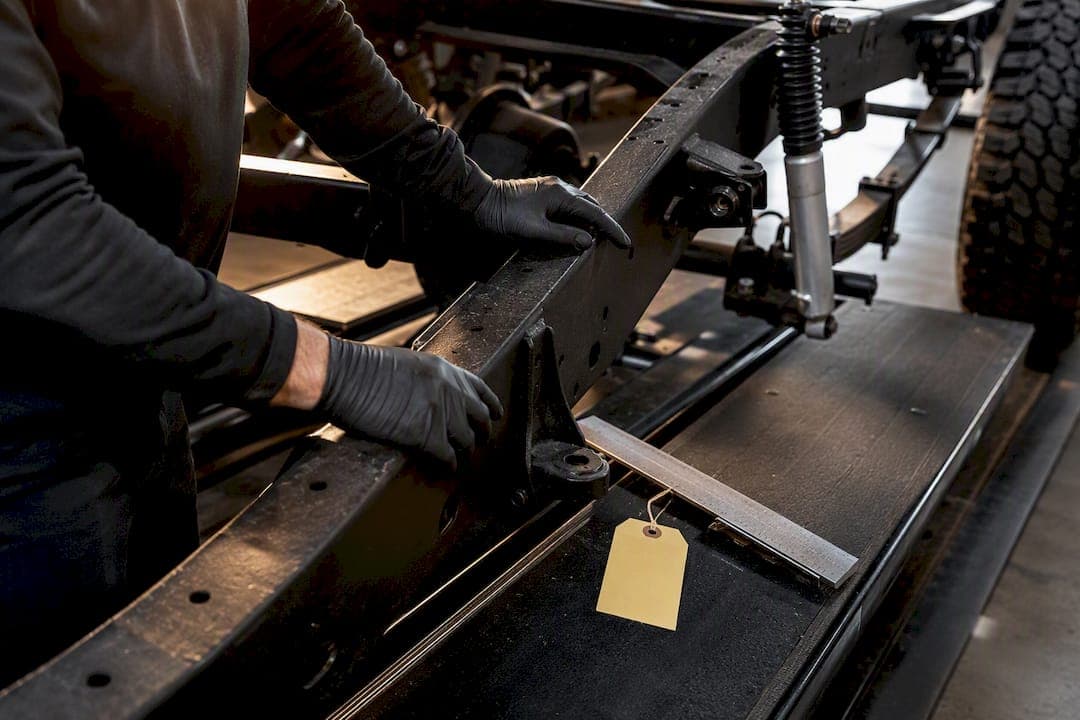
Buying a classic Bronco comes down to three paths: original, restored, or restomod, and the goal you're chasing decides which one fits. Concours collectors want originals with numbers-matching provenance. Buyers who want to drive it every weekend often prefer a well-built restomod. Either way, frame integrity and documented history matter more than shiny paint. Get a specialist pre-purchase inspection before you sign anything.
TL;DR:
- Originals with documentation, factory VIN matching, and rare factory options generally command the highest resale value at auctions.
- Frame and rust issues are the most critical factors to assess during inspection, with rust hiding in floor pans, rocker panels, and frame rails.
- A thorough pre-purchase inspection should include checking VIN consistency, drivetrain condition, and verifying proper upgrades for safety and reliability.
- Restomods built by reputable shops tend to be worth more, especially when their build quality and builder's reputation are well documented.
- Price ranges vary from low-cost project trucks to high-end restorations and restomods, with top-tier examples regularly reaching six figures.
Table of Contents
- Original, Restored, or Restomod: Which Bronco Path Fits Your Goals?
- Inspection Checklist: What to Check Before You Buy a Bronco
- What Does a Classic Bronco Cost, and Where Are Prices Headed?
- How Do You Find and Buy an Investment-Grade Bronco?
- Tony's Quick Rules for Buying an Investment-Grade Bronco
- Ready to Buy? How Butterclassics Makes Sourcing a Bronco Easier
- Where to Verify Bronco Values and Buying Guidance
- Sources
Original, Restored, or Restomod: Which Bronco Path Fits Your Goals?
Every serious Bronco hunt starts with a fork in the road. You're either buying an original that's aged in place, a rebuilt example that's been brought back to factory spec, or a restomod that blends vintage looks with modern guts. Each path serves a different kind of buyer, and mixing up your goals with the wrong Bronco type is how collectors overpay or underdeliver on resale.
Original examples are unmolested trucks, sometimes with light preservation work, prized for numbers-matching drivetrains and factory paperwork. Restored trucks fall into two camps: show-quality frame-off rebuilds and simpler "driver" restorations meant for regular use rather than judging tents. Restomods keep the classic silhouette but swap in modern suspension, fuel injection, or a built small-block, trading some purity for daily-driver comfort.
Here's how those paths map to buyer intent:
- Concours collectors and long-term investors want originals or documented frame-off restorations with matching VIN, engine, and transmission numbers.
- Buyers chasing period authenticity lean toward a restored truck that still runs its original drivetrain configuration, even if some parts were replaced during the rebuild.
- Buyers who want a truck they'll actually drive often do best with a restomod built by a shop with a track record, since factory-era brakes and steering weren't designed for modern traffic.
Provenance shifts value dramatically here. A frame-off restoration with build sheets, receipts, and shop invoices can be worth considerably more than a visually similar truck with no paper trail, according to Velocity Restorations' buying guide. Factory options like a V8 engine, a hardtop, or rare trim packages also tend to command a premium over base trucks, and a restomod's value leans heavily on the builder's reputation, not just the parts list.
Inspection Checklist: What to Check Before You Buy a Bronco
A Bronco inspection isn't a glance under the hood and a test drive around the block. It's a structured walk-through, and skipping steps is exactly how buyers end up owning a truck worth half what they paid. Work through this list yourself, or hand it to the specialist doing your pre-purchase inspection (PPI).
- Frame and rust first. Early Broncos are mechanically simple, running robust inline sixes and small-block V8s that aren't intimidating to rebuild, but frame rot is the problem that actually wrecks a truck's value, according to Hagerty's buyer's guide. Check floor pans, rocker panels, body mounts, and frame rails, the zones where rust hides longest, per Velocity Restorations.
- VIN and documentation. Match the door plate VIN against the chassis stamping and the title. Ask for build sheets and any restoration invoices that back up a numbers-matching claim.
- Engine, transmission, and drivetrain. Look for signs of an undisclosed engine swap, check compression across cylinders, and inspect for leaks at the pan, valve covers, and transmission seals.
- Suspension, steering, and brakes. Confirm whether these are original components or upgraded, and whether upgraded parts were installed correctly, since safety systems are not the place to guess.
- Electrical and fuel systems. Old wiring and decades-old fuel lines are common failure points; test everything rather than assume it works because the engine starts.
- Walk away if you see this. Structural rot near the frame rails, paperwork that doesn't match the truck in front of you, sloppy repair welds, or any hint of hidden accident damage should end the conversation.
Pro Tip: Bring a magnet and a flashlight to every viewing. A magnet won't stick to filler hiding rust repair, and a flashlight under the wheel wells reveals more than any seller's description ever will.
What Does a Classic Bronco Cost, and Where Are Prices Headed?
Bronco prices span a wide range, and knowing where your target truck should land keeps you from overpaying or underestimating a genuine deal. Project trucks needing frame or body work typically sit at the low end. Driver-quality restorations occupy the middle. Documented frame-off restorations and professionally built restomods claim the top tier, sometimes reaching six figures at major auctions, according to MotorTrend's market watch coverage.
What actually drives value:
- Originality and numbers-matching drivetrain components
- Documented restoration history, including build sheets and shop invoices
- Factory engine option, with V8 trucks generally outpacing inline-six examples
- Special editions and rare factory trim packages
- Quality and reputation of restomod builders when the truck isn't stock
First-generation Bronco values have climbed steadily since 2011, with a particularly sharp run-up in the 2017 to 2019 window, and restomods now regularly outperform stock trucks at auction when the build quality backs up the price.
Ownership costs deserve a line in your budget too. Enclosed storage, agreed-value collector insurance, and routine maintenance all add up over a year of ownership, and factoring those numbers in upfront avoids sticker shock later, per GetVintageVehicles' investment guide. Generation and engine option also swing average pricing meaningfully, so a breakdown by body style and drivetrain is worth reviewing before you set a target price.
How Do You Find and Buy an Investment-Grade Bronco?
Sourcing a Bronco worth buying comes down to picking the right channel, then following a process that protects you at every step.
- Specialty marketplaces, including Butterclassics' inventory, give you detailed listings, photos, and specs upfront, which speeds up your shortlist before you ever see a truck in person.
- Consignment sales put you in touch with a seller motivated to close, often with more documentation already assembled.
- Auctions move fast and can surface rare trucks, but they leave less room for negotiation once the gavel drops.
Once you've found a candidate, commission a PPI that covers structural condition, mechanical health, electrical systems, and a real road test. A thorough condition evaluation before you buy is the single most cost-saving step you can take, since it catches frame and drivetrain problems that a casual walk-around misses entirely, according to Velocity Restorations.
Use the PPI findings to negotiate. Structure a conditional offer tied to inspection results, and use an escrow or conditional deposit arrangement rather than handing over full payment before paperwork clears. Verify the title, run a lien check, confirm VIN alignment against the title and chassis, and collect every build or restoration record the seller has. Before you drive it, walk through a proper test-drive checklist so you know exactly what to confirm behind the wheel. Then plan transport and registration, and think ahead about long-term storage and care.
Tony's Quick Rules for Buying an Investment-Grade Bronco
Here's what actually matters once you strip away the noise: buy the straightest frame you can find, demand documentation before you fall for a paint job, and never skip the PPI to save a few hundred dollars. Buy the best example your budget allows rather than the cheapest one you can flip later. If you want a restomod, vet the builder as carefully as you'd vet the truck. Ownership costs, storage, insurance, upkeep, are real and ongoing, so budget for them from day one.
— Tony
Ready to Buy? How Butterclassics Makes Sourcing a Bronco Easier
Finding a Bronco with real documentation shouldn't mean scrolling through dozens of vague listings and hoping the seller tells you the truth about the frame. Butterclassics built its marketplace specifically to cut that guesswork out of the process.
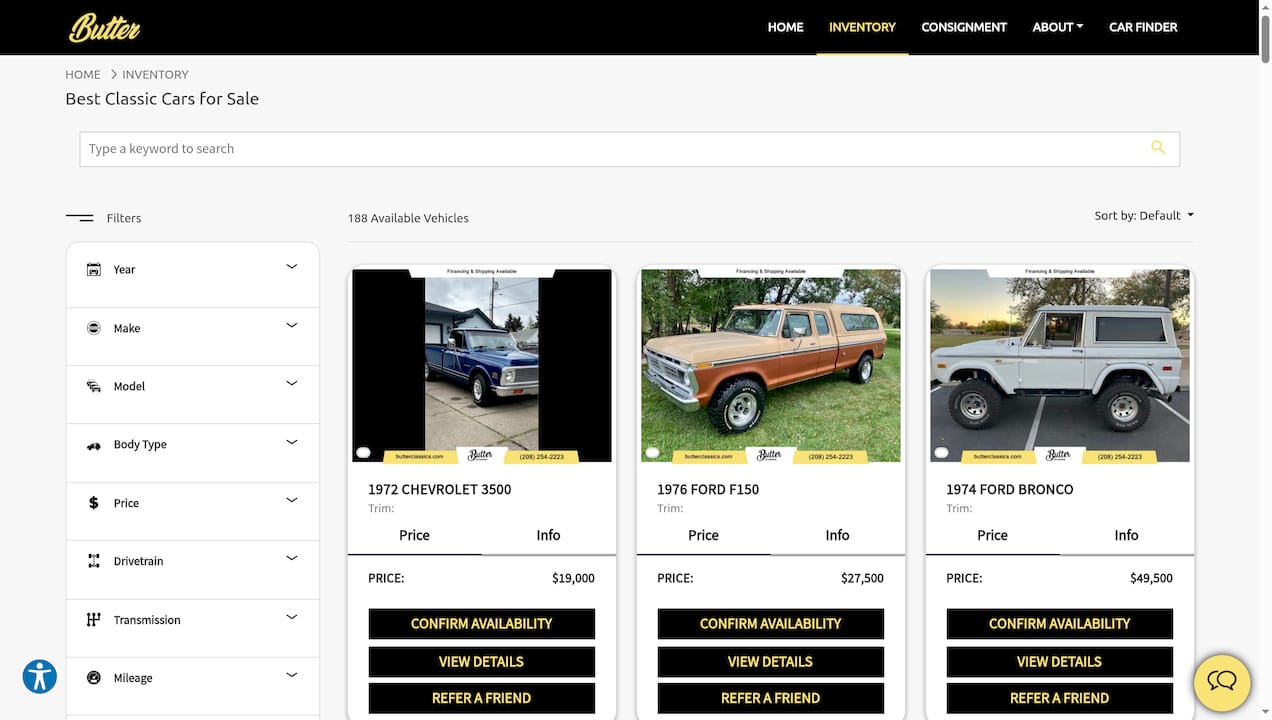
Every truck in the Butterclassics inventory comes with detailed specs and photos, so you can screen for the provenance signals this guide covers before you ever pick up the phone. Financing pre-qualification means you'll know your budget before you fall for a restomod outside your range, and consignment services give sellers a straightforward path to list a documented Bronco with buyers who actually understand what they're looking at. Once a truck catches your eye, you can schedule a test drive and put everything from this checklist to the test in person. If you'd rather have help narrowing the field, the Car Finder tool does the legwork based on what you're after. Start browsing the inventory today and see what's currently available.
Where to Verify Bronco Values and Buying Guidance
For live pricing and deeper background beyond this guide, a handful of sources are worth bookmarking.
- Hagerty's 1966-77 Bronco buyer's guide covers value trends since 2011 and the rust and provenance factors that matter most to investors.
- Hagerty's generation breakdown shows how body style and engine option shift average pricing across model years.
- MotorTrend's market watch tracks recent auction results, including six-figure restomod sales.
- Velocity Restorations' buying guide walks through restoration-level differences and documentation standards.
- GetVintageVehicles' investment guide offers sample ownership cost figures for storage, insurance, and maintenance.
- For general rust prevention once you own the truck, this winter road salt protection guide covers practical steps that apply directly to a vintage frame.
Sources
- Your handy 1966–77 Ford Bronco buyer's guide - Hagerty Media
- Classic Ford Bronco values, photos, and auction market watch - MotorTrend
- The Ultimate Guide to Buying a Classic Ford Bronco (1969–1977) - Velocity Restorations
- First Generation Ford Bronco Value And Investment Guide - GetVintageVehicles