Yes, buying a classic 4x4 is a smart move if you go in with clear eyes about repairs, provenance, and hidden costs. Before you hand over a dime, arrange a pre-purchase inspection, verify the title and VIN history, and set aside real money for rust repair, wiring gremlins, and transport. Skip any of those three steps and you're not buying a truck, you're buying a surprise.
TL;DR:
- Pre-purchase inspections should prioritize checking for rust in the frame, body panels, and critical structural components, as these are costly to repair later.
- The most valuable classic 4x4 models include the Toyota Land Cruiser FJ40, early Ford Bronco, Jeep Wagoneer, Chevrolet Blazer, and International Scout, especially with original high-demand features.
- Budgeting for hidden costs such as transportation, inspection, and potential repairs is essential, with typical expenses ranging from $300 to $3,000 depending on the purchase and condition.
- Provenance verification requires matching VIN, frame, and engine stamps with factory records, alongside thorough documentation and a clean title, to ensure authenticity and value.
- Modifications like well-documented engine swaps and brake upgrades can increase a truck’s value, while sloppy wiring or aggressive lifts may hurt its collector or resale appeal.
Table of Contents
- Which Classic 4x4 Models Should You Consider First?
- What Should a Pre-Purchase Inspection Checklist Cover?
- How Much Does It Cost to Buy and Restore a Classic 4x4?
- How Do You Verify Provenance and Matching Numbers?
- Which Modifications Add Value, and Which Hurt It?
- What Does Owning a Classic 4x4 Actually Cost?
- How Does Butter Classics Help You Buy With Confidence?
- A Buyer's Rulebook for Classic 4x4s
- Ready to Start Your Classic 4x4 Search?
- Sources
- FAQ
Which Classic 4x4 Models Should You Consider First?
Picking the right model matters more than almost anything else in this classic 4x4 buying guide. Each of these trucks has a personality, a price range, and a set of problems that shows up again and again.
- Toyota Land Cruiser FJ40 (1960 to 1984): Best for buyers who want off-road toughness with genuine collector cachet. Clean FJ40s command strong money now because good ones are getting scarce, and rising prices have made pre-purchase inspections more critical than ever. Check the frame rails, rear crossmember, and the wiring harness, since decades of amateur electrical work is common.
- Early Ford Bronco (1966 to 1977): Best for buyers who want a compact, simple, highly modifiable rig. Floor pans, rocker panels, and the area under the battery tray rust first. Values have climbed fast, so budget more than you expect for a clean example.
- Jeep Wagoneer (classic, 1963 to 1991): Best for someone who wants a family-friendly wagon with real luxury touches for its era. Wood trim, power windows, and independent front suspension on later models set it apart. Rust hides in the rear quarters, tailgate, and rocker panels, and electrical gremlins are frequent.
- Chevrolet Blazer (classic, 1969 to 1994): Best for a budget-friendly project or a driver you actually want to use. Parts are plentiful and cheap compared to Toyota or Land Rover products. Rocker panels, rear wheel wells, and the cab corners are the usual rust culprits.
- International Harvester Scout and Scout II: Best for buyers who want something genuinely different from the usual roundup. Values have been rising as buyers discover how capable and rugged these trucks are. Rust in the floor, cowl, and frame is common, and parts sourcing takes patience.
According to Car and Driver's roundup of classic off-roaders, the vehicles that hold value best combine mechanical simplicity with strong club support and parts availability, which is exactly why the models above dominate this list. Rarity signals worth watching include factory hardtops, original paint codes, and low-production trim packages. A truck with all three tends to sell fast and for a premium.
What Should a Pre-Purchase Inspection Checklist Cover?
A proper inspection follows a sequence, not a random poke-around. Work through these steps in order, and you'll catch the deal breakers before you fall in love with the paint job.
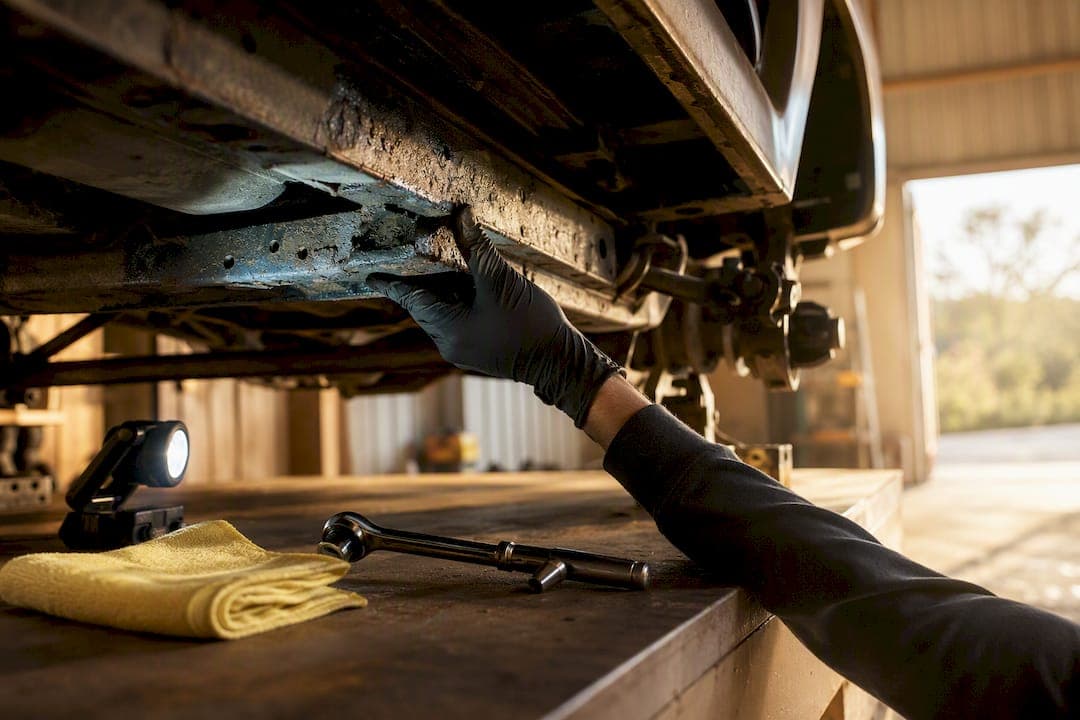
- Frame and chassis first. Rust hides inside boxed frame rails, at the rear crossmember, and where the body mounts bolt down. A frame that flexes, has been patched with plate steel, or shows fresh undercoating over rust needs a specialist look before you go further.
- Body, floors, and door jambs. Check floors, rocker panels, and door jambs for filler and mismatched paint texture. On Land Rover-style trucks, the bulkhead is the single biggest concern, since bulkhead corrosion is one of the most common and expensive failures in the classic Land Rover market.
- Engine and drivetrain. Run a compression test, check for oil and coolant leaks, and listen for driveline clunks on acceleration and deceleration. Inspect the transfer case, axles, and transmission mounts for fluid seepage or play.
- Suspension, steering, and brakes. Jack up each corner and check for play in ball joints, tie rods, and wheel bearings. Soft or grabby brakes on a 50-year-old truck are common, but a spongy pedal with no obvious cause is a walk-away sign.
- Electrical and wiring. Old wiring is often the weak point on any vintage 4x4, especially trucks that have had aftermarket lights, stereos, or winches added by previous owners. If the starter cranks slow or intermittently, a remanufactured starter built to original spec is often a smarter fix than a cheap replacement.
- Documentation. Match the VIN plate, frame stamp, and any engine stamps against the title. Ask for factory option codes, service receipts, and prior owner history.
- Decide: negotiate or walk. Cosmetic issues and worn rubber are negotiating chips. Frame rot, bulkhead failure, or a title that doesn't match the VIN are reasons to walk.
Pro Tip: Bring a magnet and a flashlight to every viewing. A magnet that won't stick to a "solid" fender or rocker panel usually means bondo, not steel.
For trickier calls, hire a marque specialist rather than a generic mechanic. Our own test drive checklist covers what to listen and feel for once you're behind the wheel, which pairs well with the static inspection above.
How Much Does It Cost to Buy and Restore a Classic 4x4?
Your acquisition path shapes your budget, your timeline, and how much risk you're carrying. ASC4x4's breakdown of vintage 4x4 buying paths splits buyers into four camps, and matching yourself to the right one avoids a lot of financial pain.
- Buy ready-to-drive. Highest purchase price, lowest risk, and you're driving the same weekend. Good for buyers who want to use the truck now, not spend two years under it.
- Buy a project and do it yourself. Lowest upfront price but the widest timeline swing. DIY builds commonly stretch across one to five years and frequently blow past the original budget.
- Shop restoration. You pay for expertise and speed, but a full frame-off build through a professional shop often runs 12 to 36 months and carries substantial labor costs on top of parts.
- Donor build or reproduction chassis. Faster than a from-scratch restoration and often cheaper than a shop job, but you sacrifice some originality and matching-numbers value.
Hidden costs trip up more buyers than the sticker price ever does. Plan for $300 to $600 for a professional pre-purchase inspection and $1,500 to $3,000 for enclosed transport if the truck lives far from home. Auction platforms add buyer premiums, typically 5 to 12 percent on top of the hammer price, and if you're flying out to inspect something in person, that's another few hundred dollars you didn't budget for.
Pro Tip: Match your patience level to your acquisition path. If you hate uncertainty, pay more for a ready-to-drive truck. If you love a challenge and have a garage, a project can save you real money.
Our guide to classic SUV buying paths walks through frame-related cost traps in more detail if you're leaning toward a project truck.
How Do You Verify Provenance and Matching Numbers?
Provenance is what separates a truck worth top dollar from one that just looks the part. Start by cross-referencing the VIN plate, the frame stamp, and any engine block stamps against factory records for that model year.
- Check the paper trail. Ask for the title, prior registration records, and any factory build sheet or option codes that came with the truck.
- Review service history. Receipts from known specialty shops carry more weight than a shoebox of unlabeled parts invoices.
- Watch for title red flags. A VIN that's been re-stamped, a title branded "rebuilt" or "salvage" without explanation, or a seller who's vague about how long they've owned it are all reasons to dig deeper.
- Use community resources. Marque-specific car clubs give inexperienced buyers access to inspectors who know exactly where a given model tends to lie, plus registries that can confirm original production numbers and rare option combinations.
Our Land Cruiser FJ40 buyer guide breaks down model-year specifics if you're chasing an early split-windshield truck or a later, more comfortable FJ40.
Which Modifications Add Value, and Which Hurt It?
Not every modification is a red flag, but every modification deserves a question. Ask who did the work, whether there's documentation or before-and-after photos, and whether the parts came from a reputable supplier.
- Engine swaps. A period-correct swap done well can boost usability without tanking value. A sloppy modern V8 crammed into an original bay usually hurts it.
- Brake upgrades. Disc conversions improve daily drivability and rarely hurt collector value, especially on trucks meant to be driven regularly.
- Suspension lifts. Great for off-road use, but an aggressive lift can complicate registration in some states and may turn off buyers chasing originality.
- Aftermarket wiring and lighting. Common, but sloppy amateur wiring is one of the most frequent causes of electrical fires in older 4x4s.
Pro Tip: A modification with a paper trail, photos, and a receipt from a known shop is worth more than the same modification done by "a guy who knew a guy."
What Does Owning a Classic 4x4 Actually Cost?
Buying the truck is the easy part. Living with it is where the real budget conversation happens.
- Parts sourcing. Toyota, Ford, and Chevy trucks benefit from deep aftermarket support, often with parts shipped within days. International Scouts and Land Rover products can mean longer waits and pricier reproduction parts.
- Routine maintenance. Fluid changes, brake work, and cooling system upkeep on a 40 to 60 year old truck run higher than on a modern vehicle, partly because everything takes more labor time.
- Insurance. Agreed-value policies protect you from a lowball payout after a loss, and limited-use or collector policies often cost less than standard coverage since they assume lower annual mileage.
- Transport logistics. Buying sight-unseen means budgeting for both the inspection and the truck's ride home, so factor in both before you bid.
How Does Butter Classics Help You Buy With Confidence?
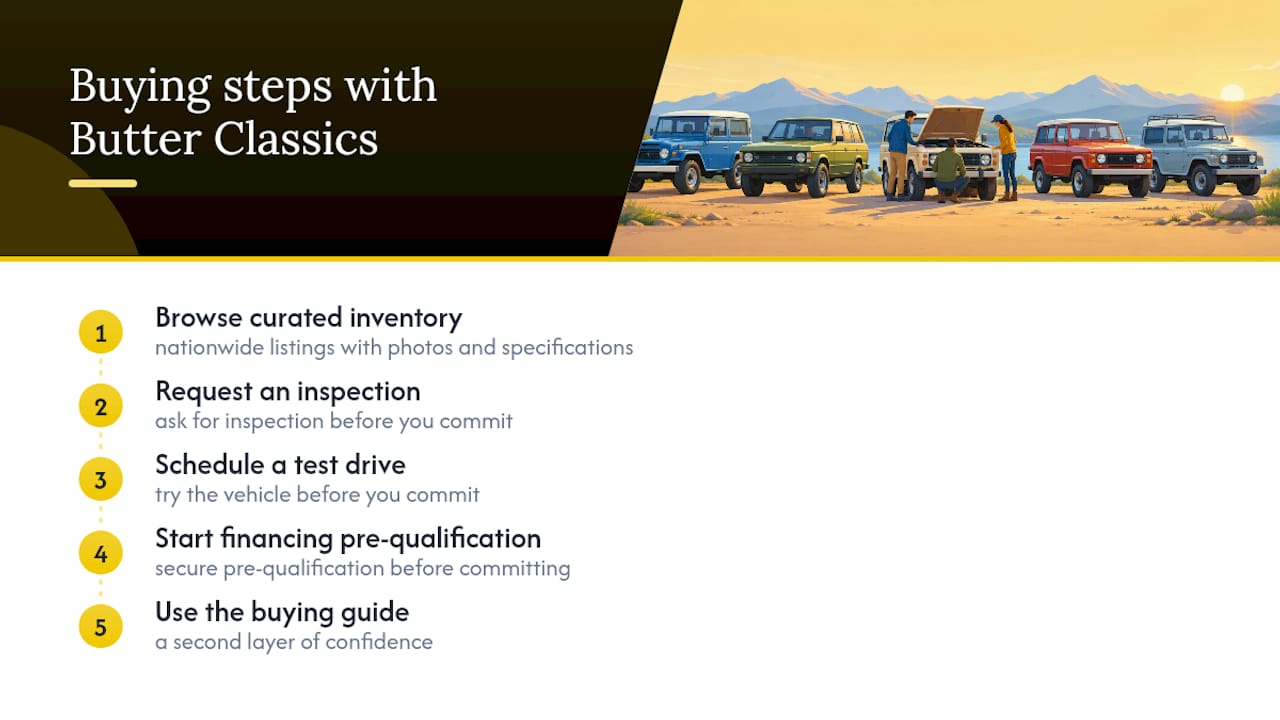
You can find a curated, nationwide inventory of classic trucks and 4x4s, each listed with detailed photos and specifications so you're not guessing from three blurry photos. You can request an inspection, schedule a test drive, or start financing pre-qualification before you commit. If you're on the selling side of the equation, our consignment program puts your truck in front of serious buyers. Pair the marketplace with our classic truck buying guide for a second layer of confidence before you sign anything.
A Buyer's Rulebook for Classic 4x4s
If you want a weekend driver, buy the most solid, rust-free example you can afford and skip the "great project" listings entirely. If you want a project, buy the cheapest truck with the straightest frame, because frame rot is the one thing money can't always fix cleanly. If you're buying as an investment, prioritize documented provenance and matching numbers over cosmetic condition every time. Join a marque club before you buy, not after, and always budget more for inspection and transport than feels comfortable.
— Tony
Ready to Start Your Classic 4x4 Search?
Butter Classics is the alternative to hunting through scattered local listings and unverified private sellers. Instead of guessing whether a truck's frame is solid from a phone photo, you get detailed specifications, extensive images, and a marketplace built specifically for collectors chasing trucks and 4x4s, not general used cars.
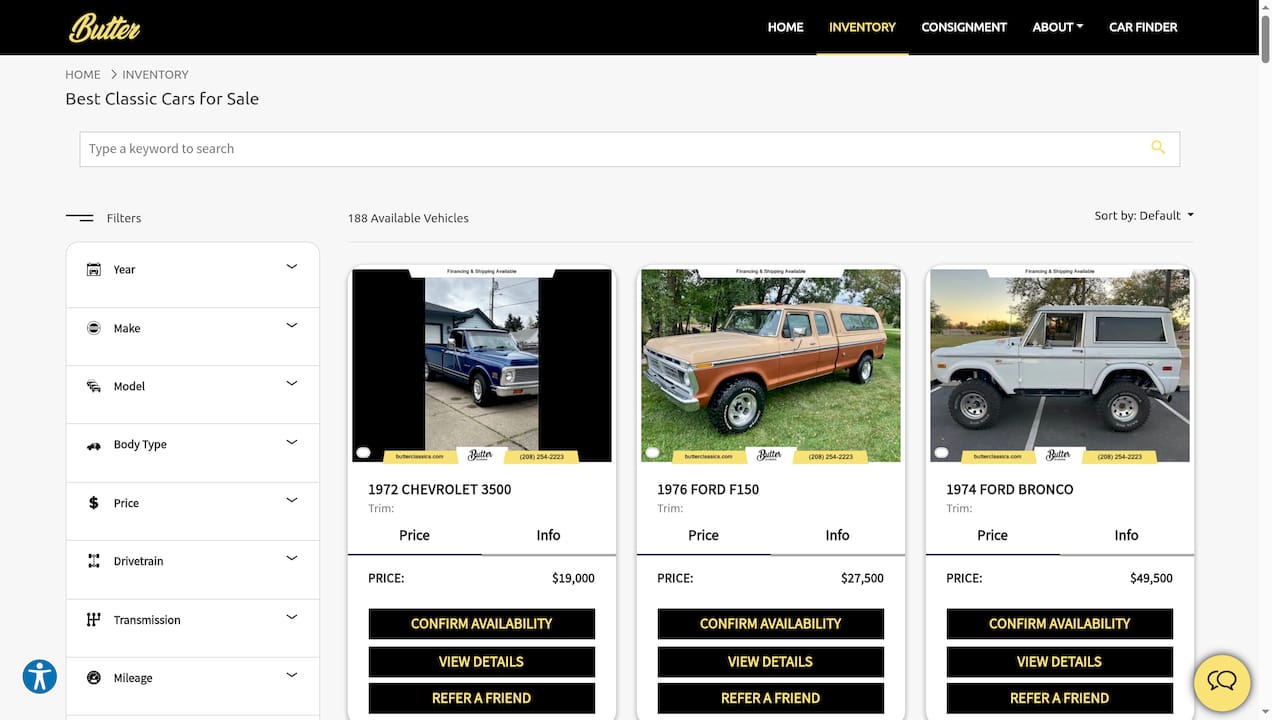
Browse the current classic 4x4 inventory to see what's available right now, or check out how the buying process works if you want financing pre-qualification lined up before you fall for a truck. Selling instead? Our consignment program puts your vehicle in front of buyers who already know what they're looking for. Start by browsing inventory and requesting an inspection on the first truck that catches your eye.
Sources
- Why joining a car club is worth it - CarGurus
- Pre-Purchase Inspection: What to Look for on an FJ40 - Over The Mountain Cruisers
- The Vintage 4×4 Buyer’s Guide: Every Path to the Truck You Actually Want - ASC4x4
- Pre-purchase inspection cost - RepairPal
- 20 Awesome Old-School 4x4s for Kicking Your Off-Road Game Up a Notch - Car and Driver
FAQ
Which Classic 4x4 Is Considered the Most Reliable?
The Toyota Land Cruiser FJ40 has the strongest reputation for mechanical reliability among classic 4x4s, largely because its simple drivetrain and strong parts network make repairs straightforward. That said, reliability depends heavily on how well a specific truck has been maintained, so a proper pre-purchase inspection matters more than the badge on the hood.
What Is the $3,000 Rule for Cars?
The $3,000 rule is a rough guideline suggesting that if a repair estimate exceeds roughly $3,000 on an older vehicle, it may make more financial sense to sell or part out the car rather than fix it. On a classic 4x4, this rule applies less strictly, since sentimental and collector value often justifies repairs that wouldn't make sense on an ordinary used car.
What Is the Best Old 4x4 Truck to Choose?
There's no single best old 4x4, since the right choice depends on your budget, mechanical skill, and whether you want a daily driver, a project, or an investment. The Toyota FJ40, early Ford Bronco, Jeep Wagoneer, Chevrolet Blazer, and International Scout each fit different goals, and comparing their typical price bands and rust hotspots is the fastest way to narrow your shortlist.
What Are the Key Things to Consider When Buying a Classic Car?
Focus on frame and body condition, documented provenance, and a realistic budget for hidden costs like inspection fees and transport. Joining a marque-specific club before you buy connects you with inspectors and resources that catch problems a casual look would miss.
Does Butter Classics Offer Financing for Classic 4x4 Purchases?
Yes, Butter Classics offers financing pre-qualification to help buyers understand their options before committing to a purchase. Details on the process are available directly through the Butter Classics site.