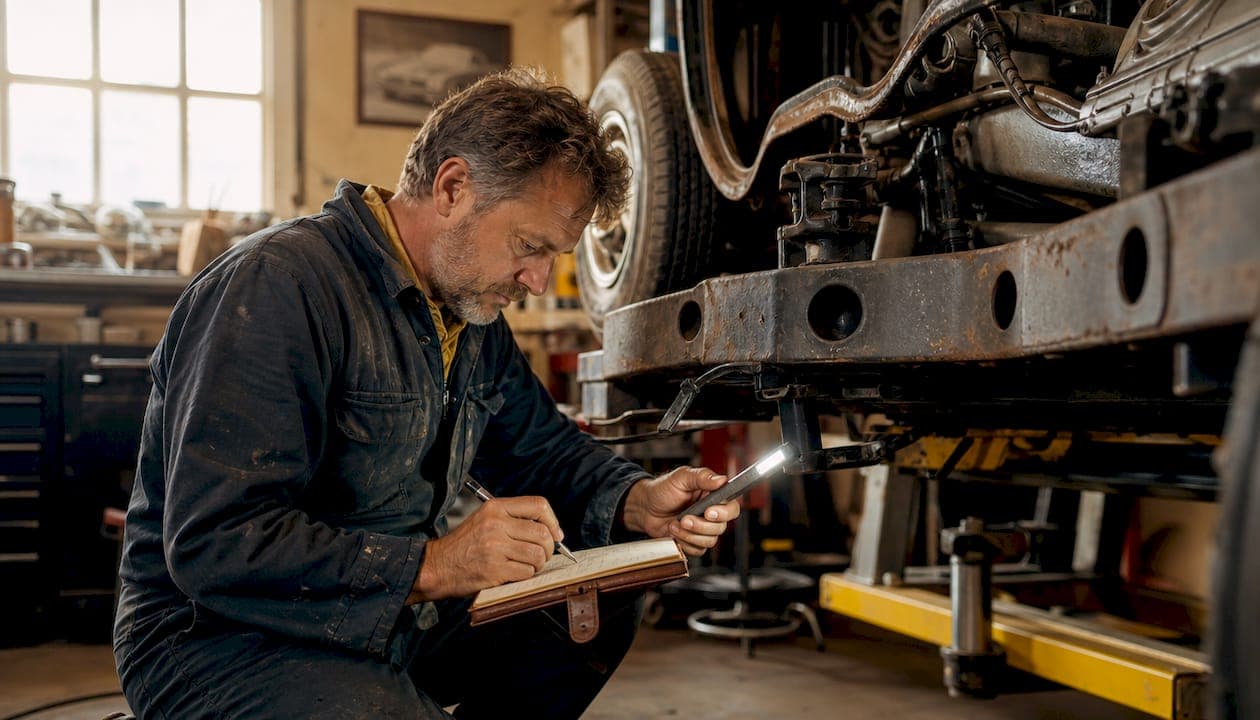
The most challenging classic cars to restore are defined by three factors: severe rust, scarce parts, and engineering complexity that outpaces the average restorer's skill set. These aren't just weekend projects. They're multi-year commitments that can cost well into five or six figures before you turn the key. Whether you're eyeing a Porsche 928, a Jaguar E-Type, or a DeLorean DMC-12, knowing what you're getting into before you buy is the difference between a rewarding build and an abandoned shell in your garage. This guide breaks down the hardest classic cars to restore and exactly why each one earns that reputation.
What makes a classic car particularly challenging to restore?
Restoration difficulty comes down to four core problems. Parts scarcity tops the list. When a manufacturer produced limited numbers or went out of business, reproduction parts either don't exist or cost a fortune. Complex engineering is the second factor. Cars with hydropneumatic suspensions, mid-engine layouts, or proprietary electronics require specialists who are increasingly rare.
Rust and structural damage rank third. Surface rust is manageable. Structural rust means fabricating replacement panels from scratch, which adds unpredictable labor hours and cost. Fourth is the shrinking pool of skilled fabricators and technicians who understand these specific platforms.
- Parts availability: Reproduction panels and mechanical components may not exist for low-volume or discontinued models.
- Engineering complexity: Systems like Citroën's hydropneumatic suspension or BMW M1's vacuum network require specialized knowledge that limits the number of qualified restorers.
- Rust severity: Structural rust drives fabrication needs, which are the largest and most unpredictable cost in any restoration.
- Finishing labor: Aligning door panels and perfecting paint consume the majority of labor hours in concours-quality work.
- Budget creep: Projects that start at a reasonable estimate routinely double or triple once hidden damage surfaces.
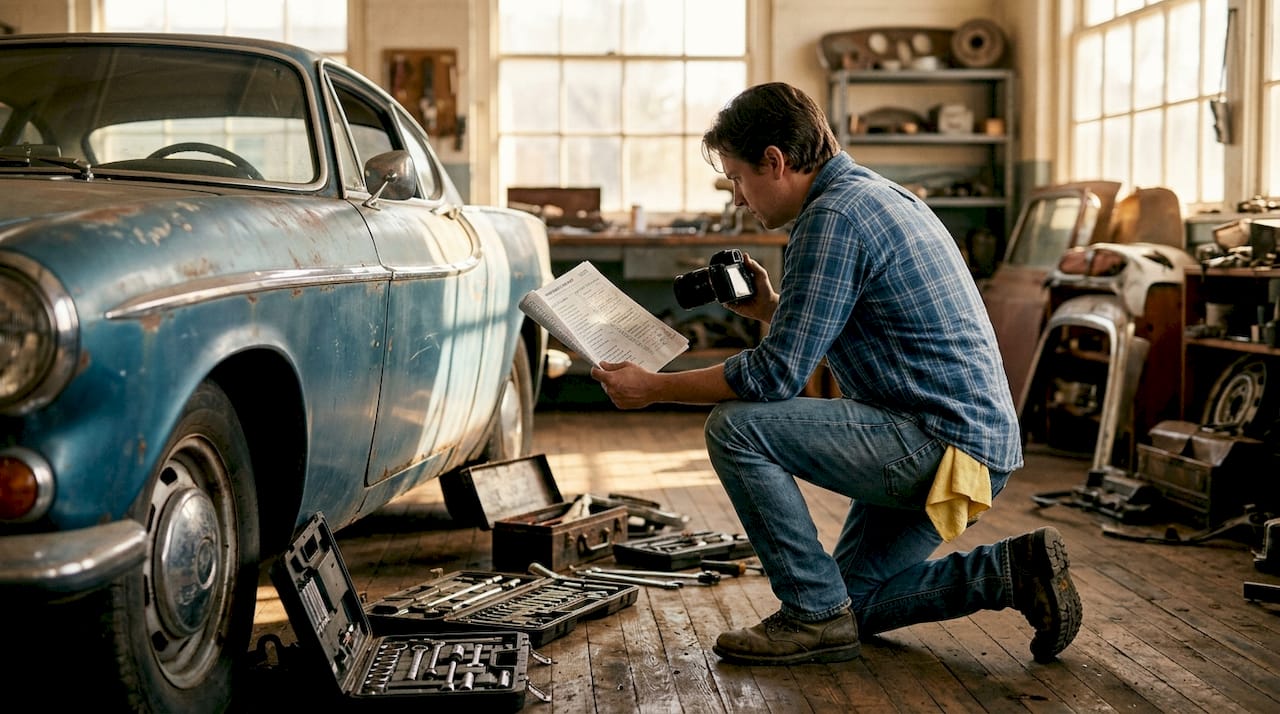
Pro Tip: Before you commit to buying a project car, spend a full weekend doing a documented inspection. Photograph every panel, pull every carpet, and probe every seam with a pick. That documentation prevents budget overruns and project abandonment later.
Top 10 most challenging classic cars to restore
1. Porsche 928
The Porsche 928 is one of the hardest classic cars to restore because of its complex engineering and scarce original parts. The front-engine, rear-transaxle layout means drivetrain work requires disassembling a large portion of the car. Electronic components from the late 1970s and 1980s are increasingly difficult to source, and many have no modern replacements. Expect to pay a premium for any specialist who actually knows this platform.
2. Jaguar E-Type
The Jaguar E-Type combines beautiful bodywork with notoriously difficult electrical systems. British-era Lucas electrics earned the nickname "Prince of Darkness" for good reason. The monocoque body construction means rust in the wrong place requires extensive structural repair, not just panel replacement. Sourcing correct-specification chrome trim adds another layer of complexity. Understanding chrome restoration techniques is practically mandatory for a proper E-Type rebuild.
3. DeLorean DMC-12
The DeLorean DMC-12 presents a unique problem: its stainless steel body cannot be painted or repaired using conventional methods. Dents and scratches in stainless require specialized metalworking skills that most body shops simply don't have. The PRV V6 engine was underpowered from the factory and has limited performance upgrade options. Parts availability has improved slightly through dedicated suppliers, but costs remain high.
4. Citroën SM
The Citroën SM pairs a Maserati-sourced engine with Citroën's hydropneumatic suspension system. That combination means you need expertise in two entirely different engineering traditions. The hydropneumatic suspension uses high-pressure hydraulic fluid to control ride height and steering feel. Finding a technician who understands both the Maserati V6 and Citroën's hydraulic network is genuinely difficult. This is not a car for a first-time restorer.
5. Volvo P1800
The Volvo P1800 looks elegant, but rust is its defining restoration challenge. Sill sections, floor pans, and rear wheel arches are notorious rust traps. Professional, concours-quality restorations for heavily corroded P1800s can exceed €80,000, with bodywork as the single largest cost driver. DIY partial restorations typically run €15,000 to €30,000, but that assumes you find a solid shell to start with. Body panel fabrication for unavailable sections adds labor hours that are nearly impossible to predict upfront.
6. Nissan S30 Z-Car (240Z/260Z/280Z)
The Nissan S30 Z-car looks straightforward until you strip it. Rust hides in the frame rails, inner rockers, and floor pans in ways that are invisible from the outside. One documented S30 project saw bodywork hours rise from an estimated 150 to nearly 400 hours once the full extent of rust damage became clear. That's a 160% increase in labor. Parts delays for correct-specification trim and mechanical components add months to timelines.
Pro Tip: On any S30 Z-car, cut inspection holes in the frame rails before you agree on a purchase price. What looks like surface rust on the outside is often full structural rot inside.
7. BMW M1
The BMW M1 is a mid-engine car with a complex cooling and vacuum system that causes difficult-to-diagnose failures when rubber components harden with age. A full engine-out service is required to properly inspect and replace these systems. Hardened vacuum lines create subtle drivability problems that can send restorers chasing the wrong diagnosis for months. The M1's rarity also means any mistake is expensive. Fewer than 500 were built for road use, so parts are genuinely scarce.
8. Ford Capri II GL
The Ford Capri II GL suffers from severe rust in predictable locations: the roof gutters, sill sections, and rear valance. Roof restoration is particularly difficult because the pressed steel construction traps moisture and the repair process requires lead loading skills that few modern fabricators possess. Understanding lead bodywork techniques is not optional on a proper Capri restoration. Correct-specification interior trim is also increasingly hard to find in good condition.
9. Alfa Romeo Spider (Series 1 and 2)
Alfa Romeo Spiders from the 1960s and early 1970s rust aggressively in the sills, floors, and inner wheel arches. The Pininfarina body design has complex curves that make panel fabrication a specialist job. Mechanical restoration is more approachable than bodywork, but sourcing correct Spica fuel injection components for early cars adds cost and expertise requirements. Color matching on Alfa's original paint codes requires careful research. A color code guide is a practical starting point before any paint work begins.
10. Triumph TR6
The Triumph TR6 is one of the most rewarding classic cars to restore when done right, but it earns its place on this list through rust and parts complexity. The separate chassis design means rust can attack the frame independently of the body, and a rotted chassis requires either replacement or professional repair. Lucas electrics again present reliability challenges. Overdrive gearbox rebuilds require specialized knowledge that is becoming harder to find as the technician pool ages out.
How rust and bodywork drive restoration challenges and costs
Rust falls into two categories, and confusing them is the most expensive mistake a restorer can make. Cosmetic rust affects surface panels and can be cut out and replaced without compromising the car's structure. Structural rust attacks frame rails, sill sections, and floor pans. Structural rust threatens safety and requires fabrication, not just panel swapping.
"Nice driver" cars with cosmetic rust repairs often hide deeper structural issues requiring full teardown. Surface filler can conceal thin metal that threatens structural safety and will fail inspection under serious scrutiny.
Bodywork and metal fabrication contribute the largest and most unpredictable costs in any restoration, consistently outpacing mechanical rebuilds. A mechanical rebuild has a knowable parts list. Fabrication does not. Every hour a fabricator spends making a panel that doesn't exist in the reproduction market is an hour that wasn't in your original budget.
The finishing side of bodywork is equally demanding. A single door alignment can consume a full day of labor to achieve the tight, even gaps that define concours-quality work. That level of precision separates a good restoration from a great one, and it costs accordingly.
| Rust type | Impact on restoration |
|---|---|
| Cosmetic (surface panels) | Panel replacement; predictable cost and labor |
| Structural (frame, sills, floors) | Fabrication required; unpredictable labor overages |
| Hidden (inner rockers, frame rails) | Discovered mid-project; causes major budget revision |
Common pitfalls and insider tips for tackling difficult restorations
Rushing is the single biggest mistake restorers make. Many restorers underestimate the time required, and accelerating the process leads to errors that cost more to fix than they saved in time. A proper restoration project takes years, not months.
- Document everything before you start. The most common amateur mistake is skipping a comprehensive documented assessment. Photograph every component before removal. Label every wire and fastener.
- Hire specialists for complex systems. Hydropneumatic suspensions, stainless steel bodywork, and mid-engine cooling systems are not areas to learn on the job. The cost of a specialist is always less than the cost of a mistake.
- Budget for 30% more than your estimate. Hidden rust, unavailable parts, and fabrication overages are not exceptions. They are the rule on challenging vintage car repairs.
- Prioritize structural integrity before cosmetics. A car that looks beautiful but has a compromised frame is both unsafe and worthless at auction.
- Verify authenticity before and after restoration. Understanding classic car authentication protects your investment and ensures the finished car commands the value it deserves.
Pro Tip: Patience and meticulous planning significantly improve restoration outcomes. If you feel pressure to finish quickly, that pressure will show in the final product.
Key Takeaways
The most challenging classic cars to restore share three traits: structural rust that multiplies labor hours, engineering complexity that limits the pool of qualified technicians, and parts scarcity that makes fabrication unavoidable.
| Point | Details |
|---|---|
| Rust type determines cost | Structural rust requires fabrication and creates unpredictable labor overages beyond any initial estimate. |
| Parts scarcity drives difficulty | Models like the BMW M1 and Citroën SM have limited reproduction parts, forcing custom fabrication or expensive sourcing. |
| Finishing work dominates labor | Panel alignment and paint finishing consume the most hours and define the quality gap between amateur and concours results. |
| Document before you start | A full pre-restoration assessment prevents budget overruns and project abandonment on difficult builds. |
| Specialist knowledge is non-negotiable | Complex systems like hydropneumatic suspensions and stainless steel bodies require technicians with specific, hard-to-find expertise. |
What I've learned from watching restorers tackle the hardest builds
The restorers who succeed with genuinely difficult cars share one habit: they spend more time planning than most people spend building. I've watched projects on Porsche 928s and Citroën SMs stall for years because the owner underestimated what they were getting into. The car sat half-stripped while they scrambled for parts or searched for a technician who actually knew the platform.
The uncomfortable truth about restoration projects for classic cars is that the purchase price is almost never the real cost. The real cost is the fabrication bill you didn't see coming, the specialist labor you couldn't avoid, and the finishing hours that nobody budgets for. Mileage and condition matter enormously when you're evaluating a project car, but they only tell part of the story. What's underneath the paint matters more.
My honest advice: if you're drawn to one of the cars on this list, don't let the difficulty stop you. Let it inform you. Go in with a realistic budget, a documented inspection, and a clear understanding of which tasks require a specialist. The most rewarding classic cars to restore are often the hardest ones, because the finished product reflects real effort and real skill. Just don't rush it.
— Tony
Classic cars worth restoring are waiting at Butterclassics
If you're ready to find your next restoration project, or a car that's already been done right, Butterclassics has a hand-picked inventory of classic and vintage vehicles across every category.

From muscle cars and Corvettes to Broncos and vintage trucks, the Butterclassics inventory covers the full range of collectible American and imported classics. Every listing includes detailed specs, high-quality photos, and transparent vehicle information so you know exactly what you're looking at. Financing pre-qualification and consignment services make the buying and selling process smooth as butter. Whether you want a turn-key classic or a solid project car, Butterclassics is the place to start.
FAQ
What is the hardest classic car to restore?
The Citroën SM is widely considered one of the hardest classic cars to restore because it combines a Maserati engine with Citroën's hydropneumatic suspension, requiring expertise in two entirely different engineering traditions.
How much does a full classic car restoration cost?
Costs vary widely by model and condition. A concours-quality restoration on a heavily corroded car like the Volvo P1800 can exceed €80,000, while a DIY partial restoration typically runs €15,000 to €30,000.
Why does rust make restoration so much more expensive?
Structural rust requires fabricating replacement panels from scratch, which adds unpredictable labor hours. One Nissan S30 Z-car project saw bodywork hours rise from 150 to nearly 400 hours once hidden rust was fully exposed.
What is the most common mistake in classic car restoration?
Skipping a comprehensive documented assessment before starting work is the most common amateur mistake. Without thorough documentation, budget overruns and project abandonment are nearly inevitable.
Are challenging classic cars worth restoring?
Yes, when approached with realistic budgets and proper planning. The most rewarding restoration projects for classic cars are often the most difficult ones, because a correctly finished example commands strong collector value and lasting satisfaction.