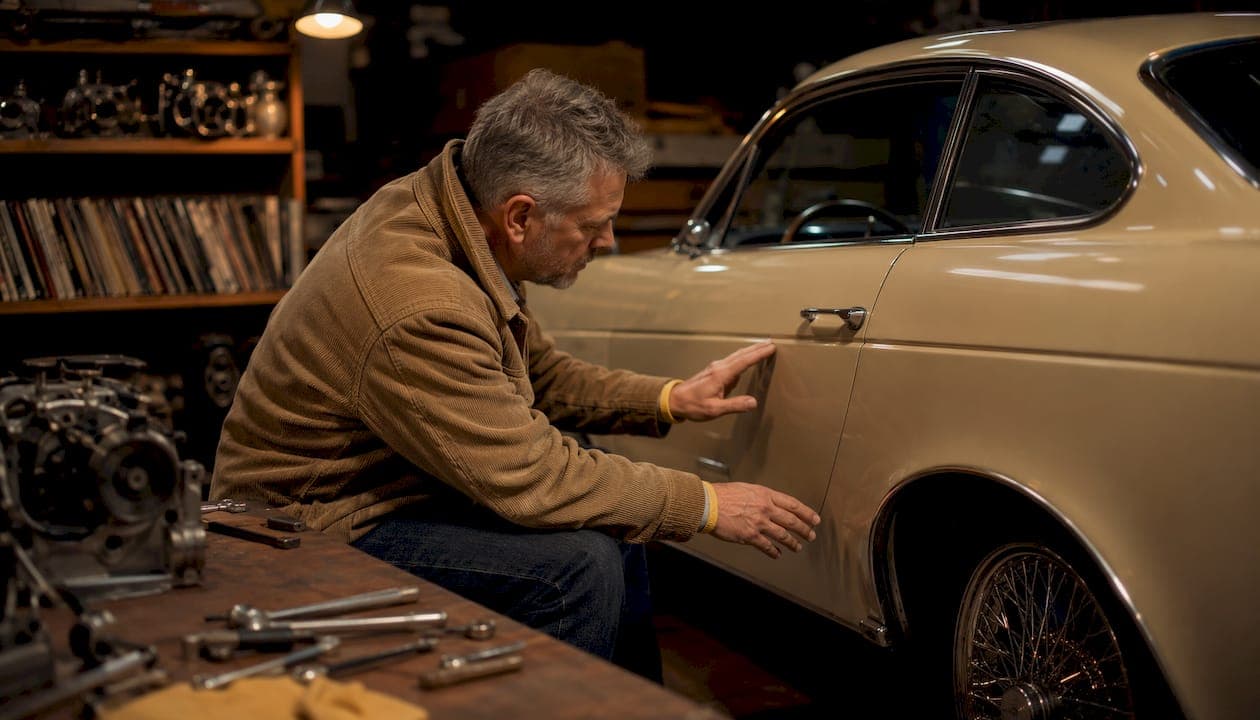
A restoration grade vehicle is a classic car evaluated against collector-focused condition scales that measure how closely it matches factory-original condition, finish quality, and drivability. The grade tells you, at a glance, whether a car belongs on a show field, in a weekend garage, or in a parts pile. The three systems you'll encounter most often are the 1–6 collector rating, the NAAA 0–5 auction scale, and the Concours/Show/Driver/Preservation language used at events like Concours d'Elegance competitions.
Here's the short version of how those systems break down:
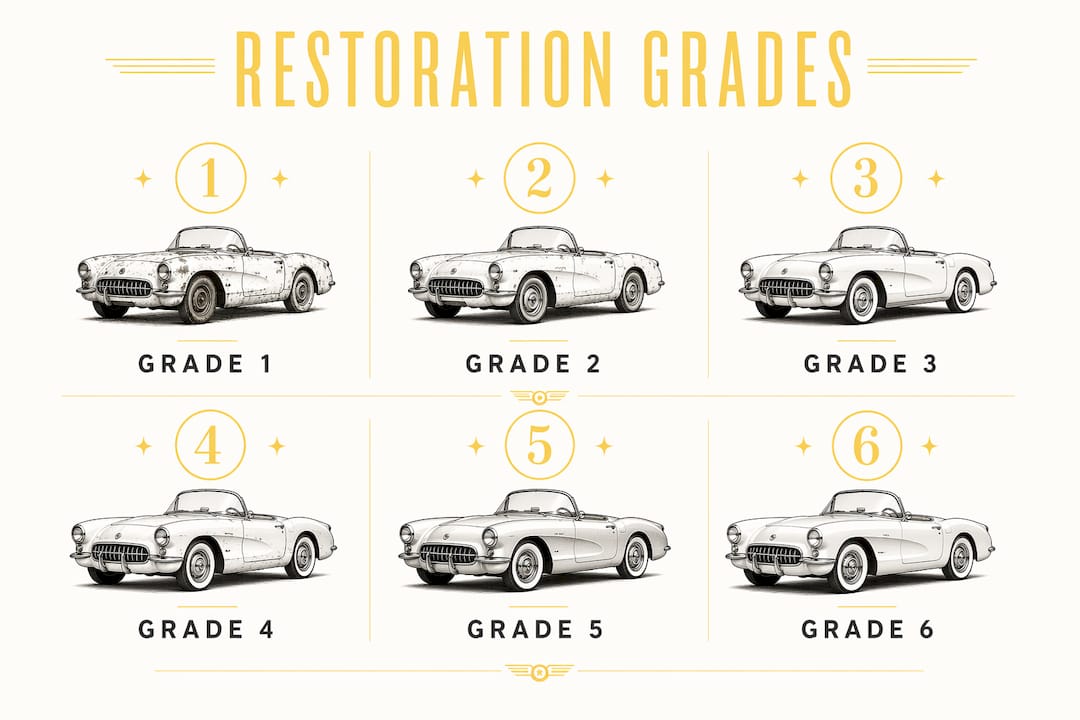
- 1–6 collector scale: Grade 1 is concours-perfect; Grade 6 is parts-only. Most cars you'll find for sale sit between Grade 2 and Grade 4.
- NAAA 0–5 auction grades: A wholesale scale focused on functional wear and repair history, not show-correct authenticity.
- Concours/Show/Driver/Preservation: Descriptive labels that map to numeric grades and tell you how the car was restored and what it's meant to do.
The practical verdict: Match the grade to your goal before you make an offer. A Grade 3 driver is a great weekend car and a poor investment if you're chasing concours points. A Grade 1 show car is a poor daily driver and a strong asset if documentation is solid. Grade first, then price.
Table of Contents
- What do "restoration" and "restoration grade" actually mean?
- What grading systems will you encounter?
- What do graders and appraisers actually check?
- What do restoration costs and timelines look like by grade?
- How does restoration grade affect use, insurance, and value?
- How do you use grades when buying or selling?
- Your 10-point quick inspection checklist
- Key Takeaways
- Why restoration grades matter more than most buyers realize
- Find your next classic at Butterclassics
- Useful sources and further reading
What do "restoration" and "restoration grade" actually mean?
The word "restoration" gets used loosely, so it helps to pin down what it means in collector terms. A restoration brings a vehicle back to factory-original condition by removing, replacing, or repairing components. Preservation, by contrast, keeps original parts intact, even when they show age and patina, because that originality carries its own value. A preserved car with honest wear can outprice a freshly restored one if the original components are intact and documented.
"Restoration grade" or "restoration level" is the collector community's shorthand for how complete and correct that restoration is. It's different from simply saying a car "runs" or is a "project." A project car might run fine but have incorrect trim, a repainted body in the wrong color, and no documentation. Its restoration grade is low even if it drives well.
The most common restoration types you'll see described in listings:
- Driver-level: Roadworthy, reliable, and presentable. Modern upgrades (radial tires, electronic ignition) are acceptable. Cosmetic flaws are tolerated.
- Street Show: Visually impressive and mostly correct, typically scoring in a judge-point range typical of street show quality. A strong weekend car that can enter local shows.
- Show Car: High-quality, show-correct restoration scoring in a high judge-point range typical of show-quality restoration. Incorrect parts are not acceptable at this level.
- Concours: The highest standard. Every nut, bolt, hose clamp, and date code is researched and correct. Often a frame-off restoration where body and chassis are fully separated and rebuilt.
- Preservation: Original, unrestored condition with documented history. Patina is a feature, not a flaw.
- Restomod: Factory body and structure with modern mechanicals or interior upgrades. Valued differently from a numbers-matching car because authenticity is intentionally modified.
Pro Tip: Decide your primary goal before you set a target grade. Driving, showing, and investing each demand a different level of investment and a different tolerance for imperfection. A show-quality restoration on a car you plan to drive daily will cost you twice in maintenance.
What grading systems will you encounter?
Three systems dominate the U.S. collector market, and knowing how they differ saves you from comparing apples to oranges when you're reading listings.
The 1–6 collector scale
The 1–6 condition scale is the standard language of the hobby. Grade 1 represents a concours-quality car with superior finish and correct documentation. Grade 6 is a parts car or a vehicle too far gone to restore economically. Many appraisers add plus and minus modifiers (e.g., 2+, 3-) for finer gradation.
The NAAA 0–5 auction scale
The NAAA grading system is a wholesale tool built for reconditioning decisions at auction. It measures functional wear, damage, and repair history, not show-correct authenticity. A car graded NAAA 4 might be mechanically sound but have incorrect trim, a non-original engine, or a repaint in the wrong color. Don't use NAAA grades to judge collector value.
Concours/Show/Driver terminology
These descriptive labels map directly to the numeric scale and tell you what the car was built to do.
| Numeric Grade | Label | Body & Paint | Interior & Authenticity | Mechanical / Drivability | Typical Buyer |
|---|---|---|---|---|---|
| 1 | Concours | Show-perfect, factory-correct color and finish | All original or correct-date-coded parts | Rebuilt to spec; often trailered | Serious investor, national show competitor |
| 2 | Excellent / Show | Near-perfect, minor imperfections only | Correct materials, minimal wear | Fully functional, strong | Regional show competitor, collector |
| 3 | Good / Street Show | Clean, presentable, minor flaws acceptable | Mostly correct, light wear | Reliable, drivable | Weekend driver, local show entrant |
| 4 | Fair / Driver | Visible flaws, possible repaint | Some incorrect parts, moderate wear | Runs and drives, may need work | Daily or occasional driver |
| 5 | Project | Rough, incomplete, or heavily modified | Incorrect or missing components | May not run or drive safely | Restorer, DIY enthusiast |
| 6 | Parts Car | Severe rust, collision damage, or rot | Stripped or unusable | Non-drivable | Parts harvesting only |
One more system worth knowing: Japanese auction grades, used in the import market, assign shorthand like Grade 4 (good condition) or Grade R (repaired after structural damage). These are inspector summaries of repair history, not collector-authenticity scores, so treat them the same way you'd treat NAAA grades when evaluating a classic.
What do graders and appraisers actually check?
Grading is part science, part judgment call. Rust level, originality, documentation, and finish quality are the four pillars every appraiser returns to, and rust is almost always the single largest value-affecting factor. Here's what each area covers.
Body and paint
Graders check panel gaps for consistency, look for orange peel or runs in the paint, and verify the color matches the factory code on the data plate. Mismatched paint codes are a red flag for an undisclosed repaint or collision repair. Bubbling near seams or wheel wells signals rust working from the inside out.
Interior and trim
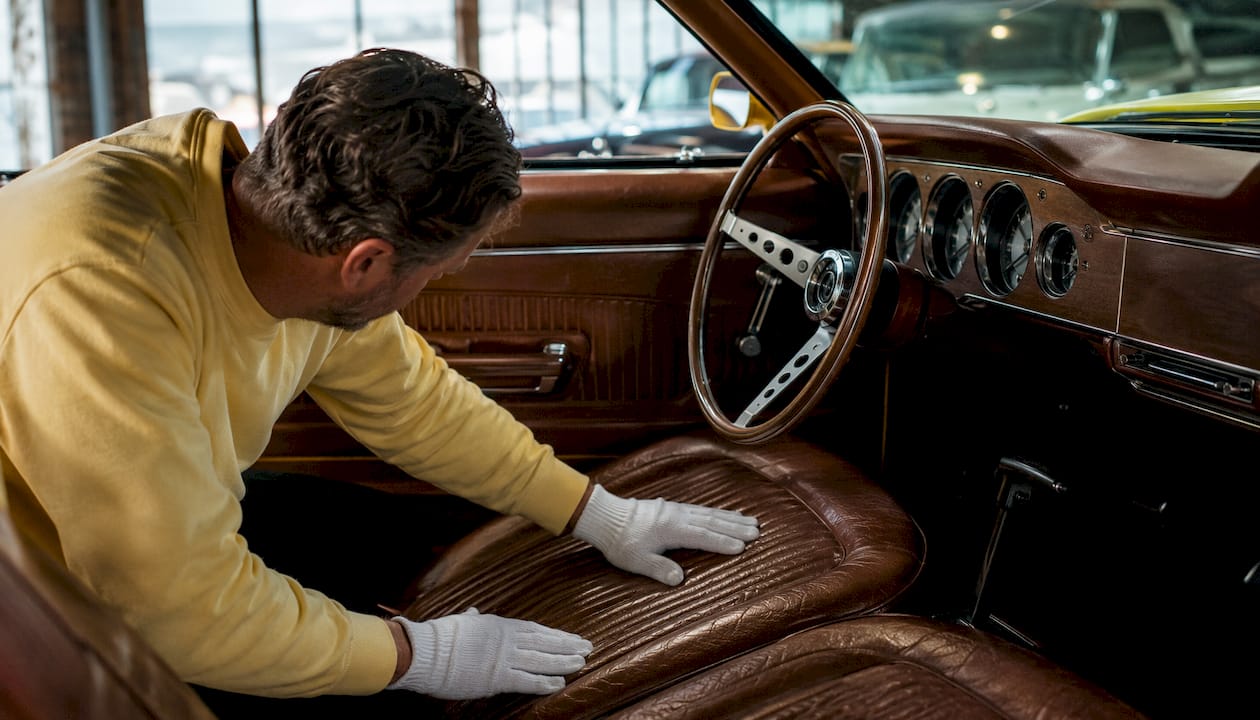
Correct materials matter. A 1967 Mustang with vinyl upholstery in the wrong color or pattern drops a grade regardless of how clean it looks. Graders check carpet, headliner, door panels, dash pad, and all trim pieces against factory specifications. Chrome condition is part of this assessment — pitting, peeling, or incorrect replacement pieces all affect the score. For a deeper look at what correct chrome work involves, the chrome restoration guide at Butterclassics covers the standards in detail.
Mechanical and drivability
A test drive reveals what photos can't show. Graders listen for bearing noise, check brake response, note transmission shifts, and assess cooling system performance. A car that runs but overheats or pulls to one side is not a Grade 3, regardless of how it looks.
Authenticity and documentation
VIN matching is the baseline. Beyond that, graders want build sheets, window stickers, original receipts, and marque-club certifications. A numbers-matching car with a documented history commands a meaningful premium over a cosmetically identical car with no paperwork.
Structural integrity
Frame rails, floor pans, and rocker panels are the make-or-break areas. A car with solid structure but rough cosmetics is a better investment than a pretty car with hidden frame rot.
Photos to request from any seller:
- VIN plate (dash and door jamb, both)
- Engine bay (full view and firewall stamp)
- Undercarriage (frame rails, floor pans, rear crossmember)
- Wheel wells (all four)
- Trunk floor and spare tire well
- Interior seams and door jambs
- Close-up of any repaired or repainted panels
Pro Tip: Ask for photos taken in natural daylight, not in a dim garage. Artificial lighting hides orange peel, color mismatch, and surface rust that daylight catches immediately.
What do restoration costs and timelines look like by grade?
Budget expectations vary widely by model, region, and rust extent, but these ranges give you a realistic starting point for planning.
- Project to Driver (Grade 5 → 4): Typically involves a mechanical refresh, basic bodywork, and a driver-quality paint job. Labor and parts for a common muscle car or pony car can range from relatively modest amounts for a clean-shell project to tens of thousands of dollars if structural rust repair is required.
- Driver to Street Show (Grade 4 → 3): Adds correct interior materials, a better paint job, and attention to trim correctness. Budget more time for parts sourcing, especially for discontinued interior components.
- Street Show to Show Car (Grade 3 → 2): This is where costs accelerate. Correct-date-coded parts, professional bodywork, and a show-quality paint job add up fast. Rare models with limited parts availability can push timelines out by months.
- Show to Concours (Grade 2 → 1): A frame-off restoration at this level is a multi-year project. Research alone, verifying correct hose clamps, wiring harness dates, and factory stampings, takes significant time. Total costs for a concours-level build on a desirable model can reach very high six-figure costs.
Typical project phases:
- Assessment and documentation review
- Mechanical disassembly and inspection
- Structural and rust repair (the phase most projects underestimate)
- Bodywork and paint
- Mechanical rebuild and reassembly
- Interior and trim installation
- Authenticity verification and final detailing
Pro Tip: The two most common budget-killers are hidden corrosion and rare parts delays. Always budget a 20–30% contingency for rust repair, and check parts availability for your specific model before you commit to a timeline. Some challenging models to restore have lead times of a year or more for correct components.
How does restoration grade affect use, insurance, and value?
Grade determines what you can reasonably do with a car, and it directly shapes how insurers and buyers price it.
Use cases by grade:
- Grade 1–2: Trailered to shows, stored in climate-controlled space. Not for daily use. Insurance is typically agreed-value coverage based on a formal appraisal.
- Grade 3: Weekend driver, local shows, occasional road trips. The sweet spot for collectors who want to enjoy the car and still show it.
- Grade 4: Daily or occasional driver. Insured closer to actual cash value. Enjoyable without the anxiety of a show car.
- Grade 5–6: Restoration project or parts source. Insured at minimal value or not at all.
On the value side, condition improvements don't move price in a straight line. The jump from Grade 3 to Grade 2 often produces a larger percentage gain in market value than the jump from Grade 4 to Grade 3, because the pool of buyers willing to pay a premium for a show-quality car is smaller and more motivated. Authenticity and documentation can multiply value beyond what cosmetic grade alone suggests. A numbers-matching, documented car at Grade 3 frequently sells for more than a cosmetically superior but undocumented car at Grade 2.
For agreed-value insurance policies, the grade you claim needs to be defensible. Insurers and appraisers use the same collector scales, and an inflated grade claim can create problems at claim time. A formal third-party appraisal, updated every few years, keeps your coverage accurate. Reassessing condition every 2–3 years is standard practice because environmental exposure and use change a car's grade over time. A Grade 2 car stored outdoors in a humid climate can slip to Grade 3 within a few seasons.
For a broader look at what makes a car hold or grow in value, the investment-grade criteria guide at Butterclassics covers the market signals worth tracking.
How do you use grades when buying or selling?
Knowing the grading systems is only useful if you apply them systematically. Here's a step-by-step approach for both sides of a transaction.
For buyers
- Request documentation first. Ask for the title (VIN match), build sheet or broadcast sheet, original window sticker, and any restoration receipts before you ask about price.
- Verify the VIN in multiple locations. Dash plate, door jamb, firewall stamp, and frame stampings should all agree. Mismatches are a serious red flag.
- Ask who did the work and when. A professional shop restoration with receipts is verifiable. "I did it myself" is not automatically bad, but it requires more scrutiny.
- Request the full photo set described in the grading criteria section above. If a seller won't provide undercarriage photos, that's your answer.
- Schedule a test drive or pre-purchase inspection. For any car above $15,000, a third-party pre-purchase inspection by a marque-club expert or independent appraiser is money well spent.
- Cross-check the claimed grade against price guides. Hagerty's valuation tool and auction records for comparable cars give you a market anchor.
For sellers
- Document everything before listing. Gather receipts, photos from the restoration, and any club certifications.
- Be honest about grade. Buyers who discover grade inflation during inspection walk away, and word travels fast in marque communities.
- Use factory color codes to verify and communicate paint correctness in your listing.
Red flags that signal grade inflation
- Paint that looks fresh but panel gaps are inconsistent (repaint after collision repair)
- Missing fasteners or incorrect hardware (shortcuts during reassembly)
- New undercoating sprayed over the entire undercarriage (hiding rust)
- Receipts that describe work but don't match the car's current condition
- A seller who resists an independent inspection
For independent verification, marque clubs (AACA, Mustang Club of America, National Corvette Restorers Society, and similar organizations) offer judging programs and member expertise. A dealer inspection checklist can also help you structure a formal review before committing.
Your 10-point quick inspection checklist
Use this list when viewing a car in person or screening photos online. Mark each item as Pass, Concern, or Fail to decide whether a formal inspection is worth scheduling.
- VIN and documentation: Title, build sheet, and VIN plates all match and are present.
- Rust and structural integrity: No bubbling on panels, no visible rust on frame rails or floor pans, no soft spots in rocker panels.
- Paint and panels: Consistent color, no obvious orange peel or runs, panel gaps even on all sides.
- Interior authenticity: Upholstery material, color, and pattern match factory specs; no incorrect aftermarket replacements.
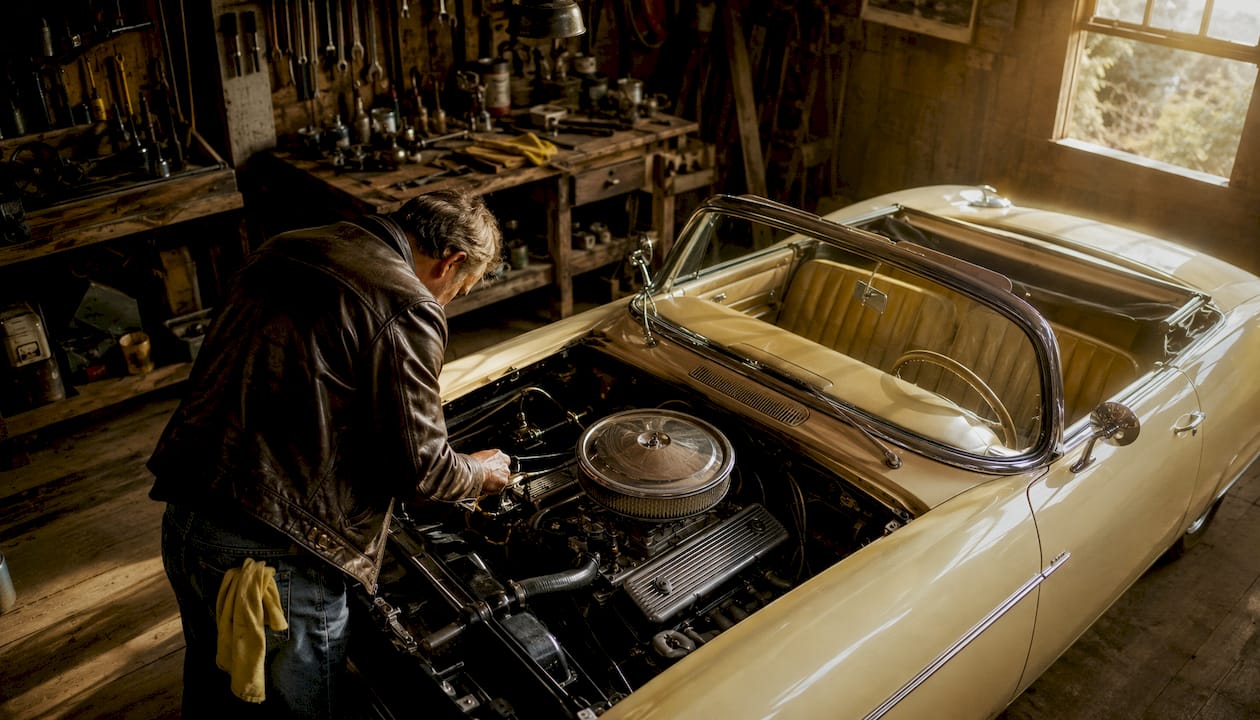
- Engine bay condition: Clean, no major leaks, correct components visible (air cleaner, valve covers, wiring harness routing).
- Drivability: Starts easily, idles smoothly, no pulling or unusual noises during a test drive.
- Wheels and tires: Correct wheel style for the model year; tires are safe and appropriately sized.
- Lights and trim: All exterior lights functional; chrome and trim pieces present, correct, and undamaged.
- Underside and frame: No heavy rust, no evidence of structural repair without documentation, floor pans solid.
- Service records and receipts: Restoration receipts, maintenance history, and any club certifications are available.
Three or more "Concern" marks in the structural or authenticity categories means you need a professional appraiser before proceeding. A single "Fail" on VIN matching is a walk-away. For a more detailed pre-purchase framework, evaluating vintage car condition covers the full process step by step.
Key Takeaways
A restoration grade vehicle is a classic car assessed on collector-focused condition scales that measure authenticity, finish quality, and drivability, and the grade should always match your intended use before you commit to a price.
| Point | Details |
|---|---|
| Grade matches your goal | Choose a grade that fits your use: driver, show, or investment. Mismatched goals and grades lead to buyer regret. |
| Rust and documentation are the top factors | Rust extent and authenticated paperwork (VIN, build sheets, receipts) move value more than cosmetics alone. |
| Collector vs. auction scales differ | The 1–6 collector scale measures authenticity; the NAAA 0–5 scale measures functional wear. Never use auction grades to judge collector value. |
| Grade is a snapshot, not permanent | Reassess condition every 2–3 years because environmental exposure and use change a car's grade over time. |
| Butterclassics for verified listings | Butterclassics surfaces high-resolution photos, detailed specs, and consignment support to help you verify a claimed grade before you buy. |
Why restoration grades matter more than most buyers realize
Here's something that gets glossed over in most grading guides: the grade on a listing is almost always the seller's grade, not an independent one. That distinction matters enormously in practice. A seller who genuinely believes their car is a Grade 2 because they spent $40,000 restoring it may be right on the investment but wrong on the result. Restoration cost does not equal restoration grade. A $40,000 restoration using incorrect parts, the wrong paint code, or a non-matching engine produces a Grade 3 at best, regardless of what was spent.
The other thing buyers consistently underestimate is how much documentation moves the needle on value. Two cosmetically identical cars, same model, same color, same apparent condition, can differ by 30–40% in market value if one has a build sheet, original window sticker, and marque-club certification and the other has none. The paperwork isn't just a nice-to-have. It's the difference between a car that appreciates and one that doesn't.
My honest advice: treat any claimed grade above a 3 as a hypothesis until you've seen the documentation and had an independent appraiser confirm it. The 10-point checklist in this article will get you through a first screening, but for anything you're seriously considering, a marque-club expert or certified appraiser is worth every dollar of their fee. The deals that look too good to be true at Grade 2 pricing usually turn out to be Grade 3 or 4 cars with a fresh detail and a confident seller.
Find your next classic at Butterclassics
Knowing the grade is only half the equation. Finding a car where the claimed grade is actually backed by photos, documentation, and transparent history is the harder part.
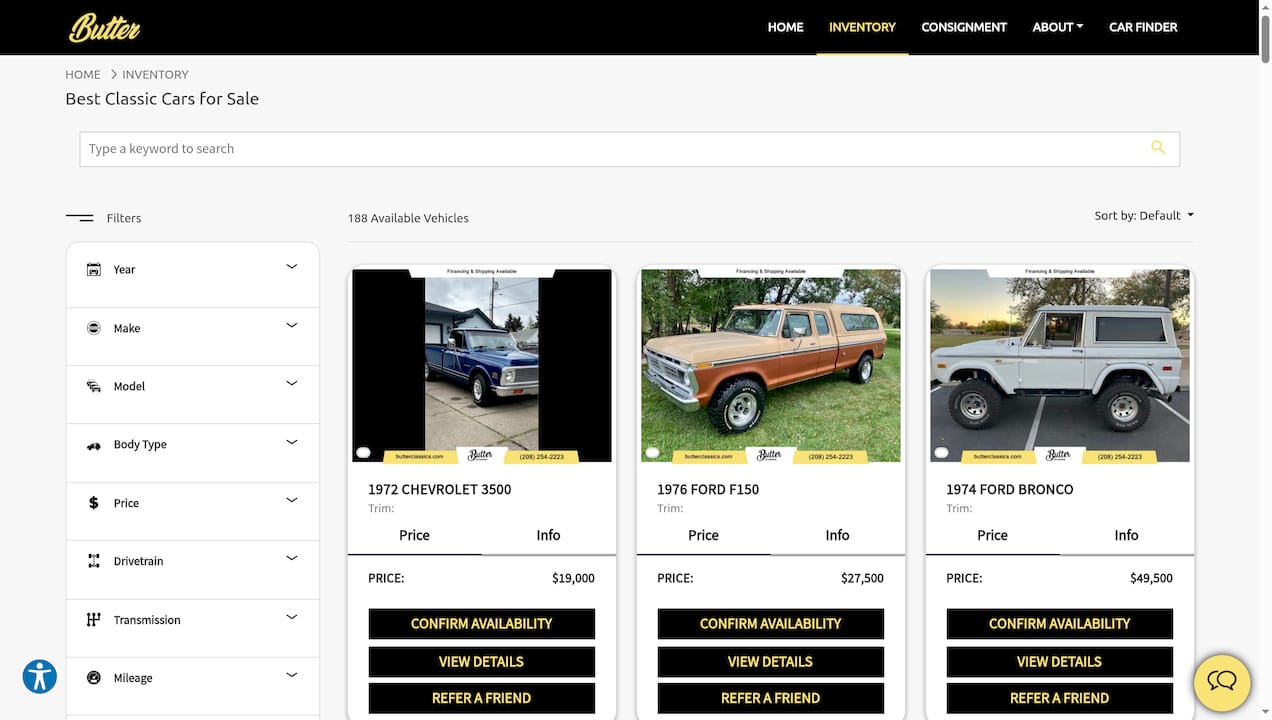
Butterclassics is built for exactly that. Every listing in the Butterclassics inventory includes high-resolution photos, detailed vehicle specs, and the documentation sellers have provided, so you can screen for grade before you ever pick up the phone. If you know the model and grade you're after but can't find it in the current inventory, the car finder service helps you locate specific vehicles. Consignment sellers get the same treatment: detailed listings, quality photo requirements, and a marketplace audience of serious collectors. Ready to see what's available? Browse the current inventory and schedule a test drive on any car that catches your eye.
Useful sources and further reading
These are the primary references used throughout this article. For model-specific grading questions, marque clubs and certified appraisers remain the most reliable resources.
- Hagerty Vehicle Condition and Relative Value Guide: The clearest explanation of the 1–6 collector scale, with value implications for each grade.
- Hagerty Insider: What Does a Car's Condition Really Look Like?: Practical grader perspective on rust, documentation, and finish as value drivers.
- NAAA Vehicle Grading Scale (PDF): The official wholesale auction grading reference. Use it to understand what auction grades do and don't tell you about collector value.
- Customs and Hot Rods of Andice: Levels of Classic Car Restoration: A shop-level breakdown of driver, street show, show, and concours restoration levels with judge-point expectations.
- Coastline Restorations: Frame-Off Restoration: What a full frame-off rebuild involves and why it's the standard for concours-level work.
- CT Inspections: Classic Car Condition Grades: Covers grade reassessment cadence and why condition is a snapshot rather than a permanent label.
- Wikipedia: Conservation and Restoration of Road Vehicles: Background on the distinction between restoration and preservation and why it matters for collector grading.
- Butterclassics Classic Car Grading Scales Guide: Butterclassics' own collector-focused breakdown of grading scales and how they affect marketplace value.
- Marque clubs to consult: AACA (Antique Automobile Club of America), Mustang Club of America, National Corvette Restorers Society, and model-specific registries offer judging programs and member expertise for grade verification.