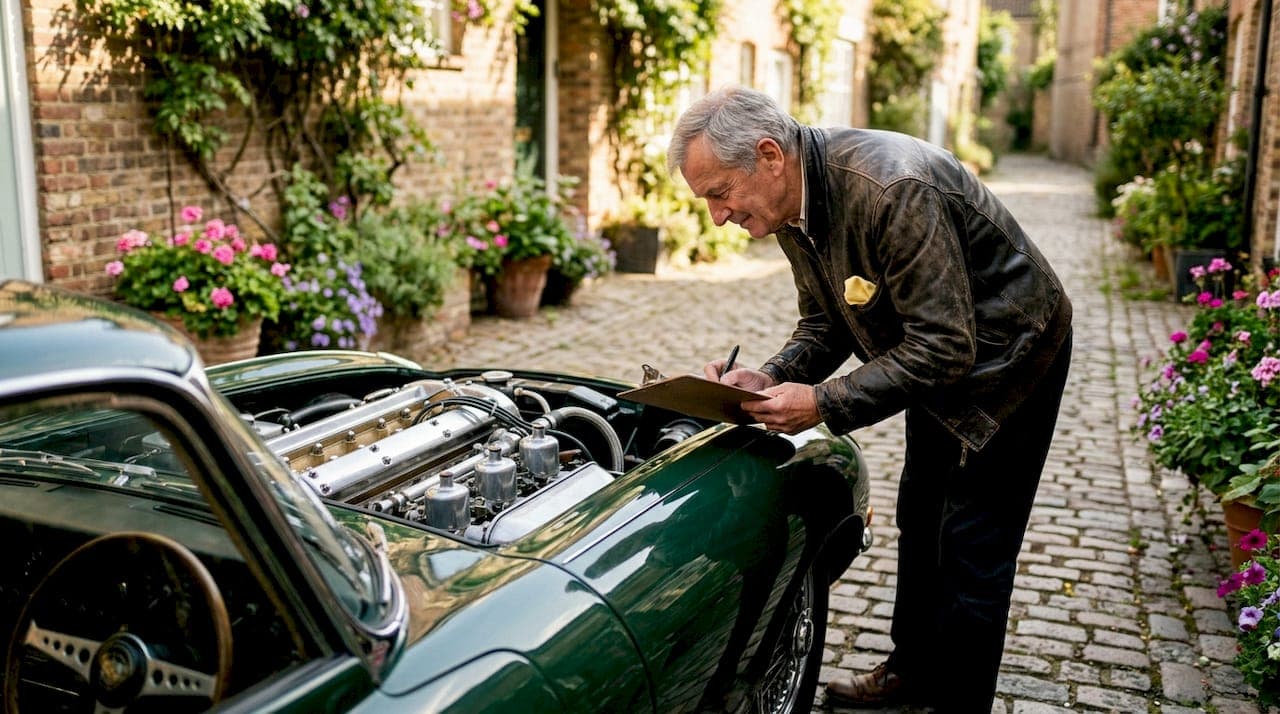
An investment-worthy car is defined by three non-negotiable traits: genuine scarcity, cultural or motorsport significance, and terminal generation engineering that collectors cannot replace. These factors separate cars that appreciate from cars that simply age. The classic car market proved this distinction sharply during the 2022–2024 downturn, when models lacking these traits dropped 20–30% in value while cars with strong provenance held firm. Understanding what makes a car investment worthy before you buy protects your capital and positions you for real long-term returns. This guide covers every factor that serious collectors and first-time investors need to evaluate before writing a check.
What makes a car investment worthy?
Investment-worthy cars share a specific combination of attributes that drive collector demand over time. The industry term for this category is "investment-grade," and it applies to vehicles that meet strict criteria around originality, documentation, and market significance. Not every classic car qualifies.
The three core drivers are:
- Scarcity. Limited production numbers and a shrinking surviving population create supply pressure. A car built in large numbers with many survivors faces weak pricing power regardless of age.
- Cultural or motorsport significance. Cars tied to racing victories, film appearances, or defining automotive moments carry a desirability premium that pure production cars rarely match.
- Terminal generation engineering. The last naturally aspirated engines, final manual transmissions, and analog driving experiences command growing premiums as the industry shifts to electrification. The Porsche 911 GT3 (992.1) and the manual Ferrari F430 are textbook examples of this principle in action.
Brand heritage amplifies all three factors. A rare car from a marque with deep racing history carries more weight than an equally rare car from a brand with no competitive legacy.
Pro Tip: Check production records through marque registries before you buy. Many cars are marketed as "rare" when factory records show thousands were built.

Provenance and documentation complete the picture. A car with a full, verifiable service history and matching numbers across its engine, chassis, and transmission is worth significantly more than an identical car with gaps in its paper trail. The investment-grade classification depends as much on what you can prove as on what the car is.
How do ownership costs and net returns affect car investment decisions?
Nominal appreciation figures for classic cars look attractive on paper. The real picture changes once you account for holding costs.
Annual holding costs run between 2% and 4% of a car's value. That figure covers climate-controlled storage, specialized insurance at 1–2% of value annually, and routine maintenance. Add auction and dealer transaction fees of 10–15% at the point of sale, and a car showing 8% nominal annual appreciation may deliver net returns closer to 4–5%. That gap matters enormously when you are evaluating whether a classic car beats other asset classes.
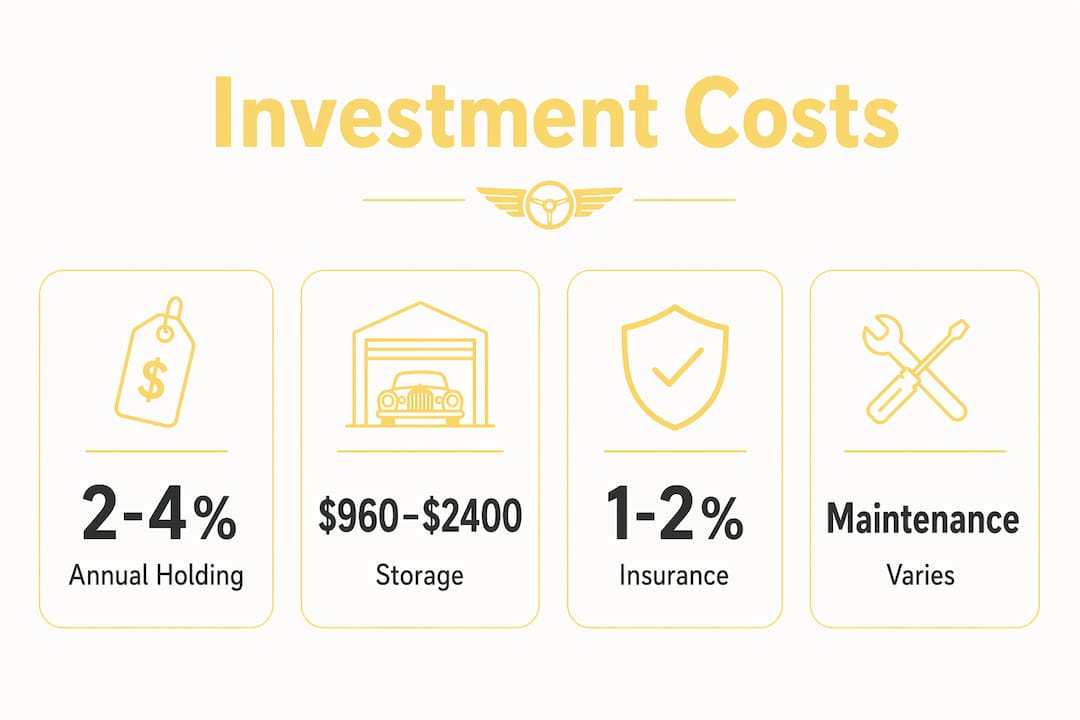
| Cost Category | Typical Annual Range |
|---|---|
| Storage (climate-controlled) | $960–$2,400/year |
| Insurance | 1–2% of vehicle value |
| Maintenance | $600–$2,400/year |
| Sale/auction fees | 10–15% of sale price (one-time) |
| Net return after costs | ~4–5% annually |
Classic cars are best understood as wealth preservation tools rather than aggressive growth assets. They diversify a portfolio and hedge against inflation, but they do not outpace equities over most long time horizons. The 2022–2024 market cycle reinforced this. Many models fell 20–30% in value, and investors who bought at peak prices without accounting for holding costs faced real losses.
Pro Tip: Build a full cost model before you commit. Include storage, insurance, maintenance, and a realistic sale fee. Then compare your projected net return against a simple index fund. The comparison clarifies whether the car earns its place in your portfolio.
For a detailed breakdown of how classic car returns compare to stock market performance, the numbers tell a nuanced story that every investor should read before committing capital.
What practical steps validate a car as a sound investment?
Due diligence on an investment-grade car follows a clear sequence. Skipping any step introduces risk that can cost you far more than the inspection fee.
- Commission a marque-specific pre-purchase inspection (PPI). A professional PPI generates independent verification of paint condition, frame integrity, interior originality, and service history. Dealer representations alone are not sufficient for investment-grade purchases.
- Verify matching numbers. Confirm the VIN across the engine block, chassis, and transmission. Mismatched numbers signal replacement parts or a rebuilt car, both of which reduce value and authenticity.
- Audit the documentation. Request every service record, ownership transfer document, and restoration receipt. Incomplete documentation reduces a car's market value by 10–30%. Missing receipts and fragmented ownership chains are the most common red flags.
- Assess condition honestly. Survivor-condition cars with original paint and unrestored interiors consistently outperform restored examples at auction. A poor-quality or undocumented restoration can destroy 30–50% of a car's value versus a comparable original example.
- Confirm storage and insurance arrangements. Climate-controlled storage is not optional for investment-grade vehicles. Temperature and humidity fluctuations accelerate deterioration in rubber seals, paint, and mechanical components.
The documentation audit deserves special attention. Many buyers focus on the car itself and treat paperwork as secondary. The market does the opposite. A well-documented car with average cosmetics regularly sells above a beautiful car with a thin paper trail. Provenance is the cornerstone of investment-grade value.
Watch for these specific red flags during your review:
- Mismatched VINs on any major component
- Gaps of more than two years in service records
- Undocumented body or paint work
- Replacement engines or transmissions without factory authorization records
- Ownership history that cannot be traced through titles
How should classic cars fit within an investment portfolio?
Classic cars belong in a portfolio as diversifiers, not as core growth positions. The recommended allocation is 2% to 5% of total investable assets. Concentrating more than 20–30% of a portfolio in classic cars introduces illiquidity risk that most investors cannot afford to carry.
The illiquidity point is critical. Unlike stocks or bonds, a classic car cannot be sold in minutes. Finding the right buyer at the right price can take months, and forcing a sale in a down market locks in losses. This reality makes classic cars suitable for investors with long time horizons and sufficient liquid reserves elsewhere.
Diversification within the classic car allocation matters just as much as the overall percentage. Owning 3 to 5 classics across different marques and eras reduces the risk of any single model's market softening. A portfolio concentrated in one brand or one era is exposed to shifts in collector taste that can be slow to reverse.
| Allocation Level | Risk Profile | Suitable For |
|---|---|---|
| 2–5% of portfolio | Conservative, diversifying | Most serious collectors |
| 5–15% of portfolio | Moderate, concentrated | Experienced enthusiast investors |
| Above 20–30% | High illiquidity risk | Not recommended for most investors |
Classic cars also carry what analysts call "consumption value." The non-financial benefit of owning and driving a significant car helps justify holding costs that pure financial returns alone might not support. Passion for the car is a legitimate factor in the investment calculus, but it should supplement financial rationale rather than replace it.
Key Takeaways
Investment-worthy classic cars combine scarcity, cultural significance, and terminal generation engineering with complete documentation and professional verification to deliver real long-term value.
| Point | Details |
|---|---|
| Three core criteria | Scarcity, cultural significance, and terminal engineering define investment-grade cars. |
| Net returns are lower than nominal | Holding costs of 2–4% annually reduce 8% appreciation to roughly 4–5% net. |
| Documentation drives value | Incomplete records reduce market value by 10–30%; matching numbers are non-negotiable. |
| Portfolio allocation matters | Keep classic car exposure at 2–5% of total assets to manage illiquidity risk. |
| Diversify across marques and eras | Owning 3 to 5 different classics reduces single-model volatility. |
What I've learned watching the classic car market shift
The 2022–2024 downturn taught a lot of investors a hard lesson. Cars that were bought purely on momentum, without strong fundamentals, gave back significant value fast. The collectors who came through that cycle well shared one trait: they bought cars with genuine stories, complete paperwork, and real engineering significance. They also had the patience to hold.
What I find genuinely interesting right now is the "terminal generation" trend. The market is waking up to the fact that the last manual Ferrari, the last naturally aspirated Porsche GT car, and the last analog sports cars of their kind are not coming back. That realization is creating appreciation opportunities that have nothing to do with traditional rarity metrics. A car does not need a production run of 50 units to be scarce. It just needs to represent something that cannot be repeated.
The other thing I keep coming back to is passion. The investors who treat classic cars as pure financial instruments tend to make worse decisions than the ones who genuinely love what they own. Passion keeps you patient during down cycles. It keeps you from panic-selling. And it keeps you doing the homework, because you actually care about the car's history and condition. That said, passion without financial discipline is how people end up with beautiful cars and ugly portfolios. The two have to work together.
My honest advice: start with a thorough inspection checklist before you fall in love with any specific car. The numbers either support the purchase or they do not.
— Tony
Butterclassics: your source for investment-grade classics
Butterclassics specializes in exactly the kind of vehicles this article describes: well-documented, professionally inspected, and genuinely investment-worthy classics. Every car in the Butterclassics inventory is evaluated for originality, provenance, and condition before it reaches you.
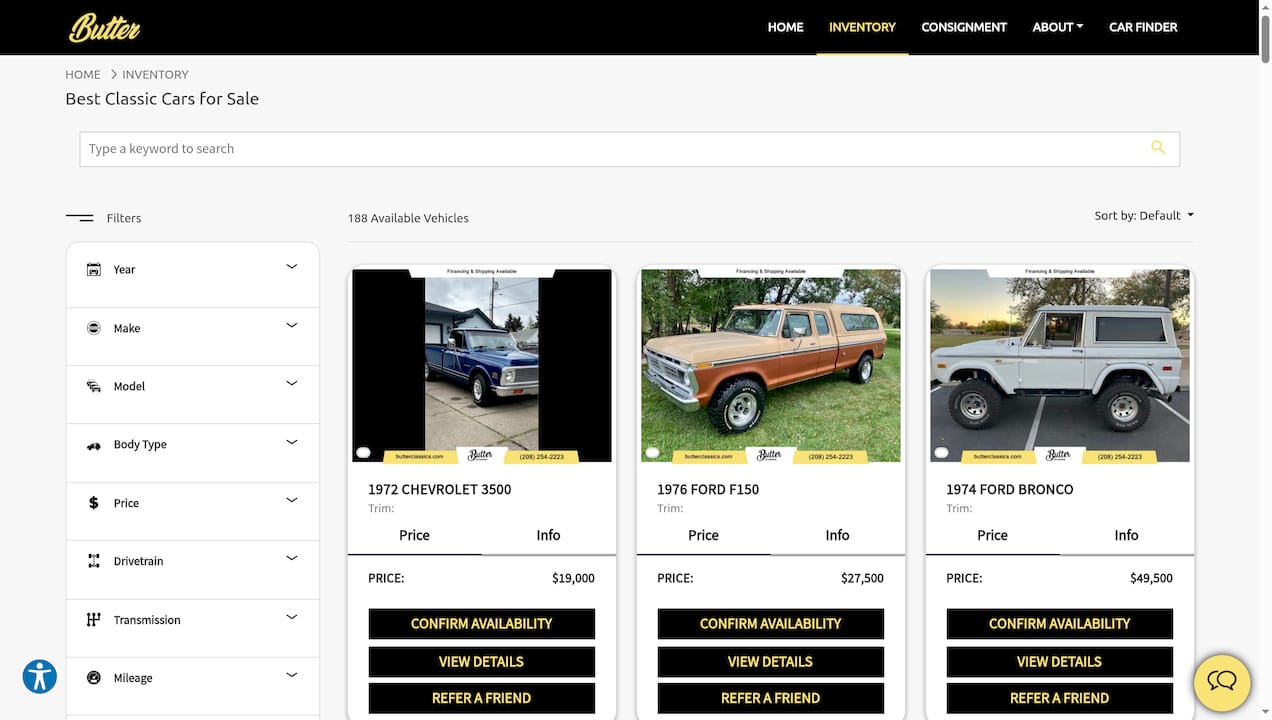
If you are ready to move from research to ownership, the Butter Certified inventory is the right place to start. Each certified vehicle comes with verified documentation and a professional inspection report, so you know exactly what you are buying. Browse the full classic car inventory and find the model that fits your portfolio and your passion.
FAQ
What is an investment-grade classic car?
An investment-grade classic car combines genuine scarcity, cultural or motorsport significance, and complete verifiable documentation including matching numbers across the engine, chassis, and transmission.
Is a car a good investment compared to stocks?
Classic cars function best as portfolio diversifiers rather than growth assets. After holding costs of 2–4% annually, net returns typically land around 4–5%, which trails long-term equity market averages.
How much of my portfolio should I put into classic cars?
The recommended allocation is 2% to 5% of total investable assets. Concentrating more than 20–30% in classic cars introduces illiquidity risk that most investors cannot manage safely.
What factors hurt a car's investment value most?
Incomplete documentation, mismatched VINs, poor-quality restorations, and high mileage are the biggest value destroyers. Missing service records alone can reduce market value by 10–30%.
How do I validate a classic car before buying it?
Commission a marque-specific pre-purchase inspection, verify matching numbers on all major components, and audit the full ownership and service history before making any offer.