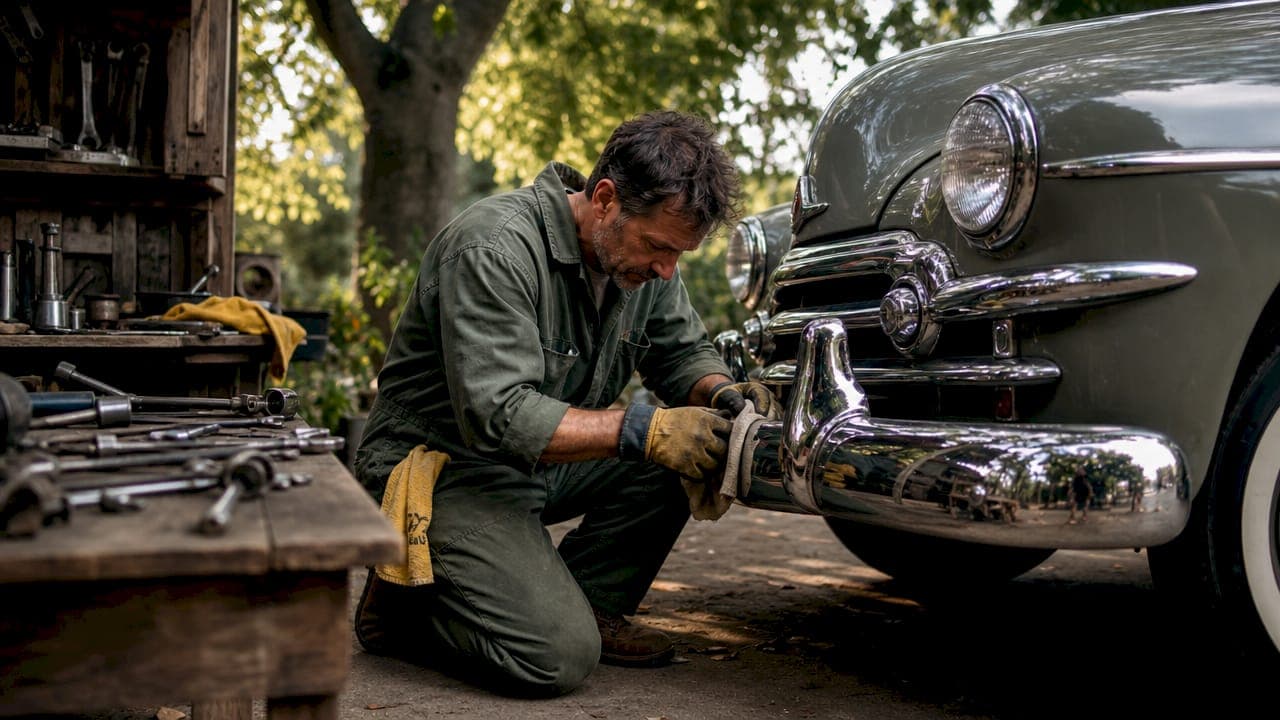
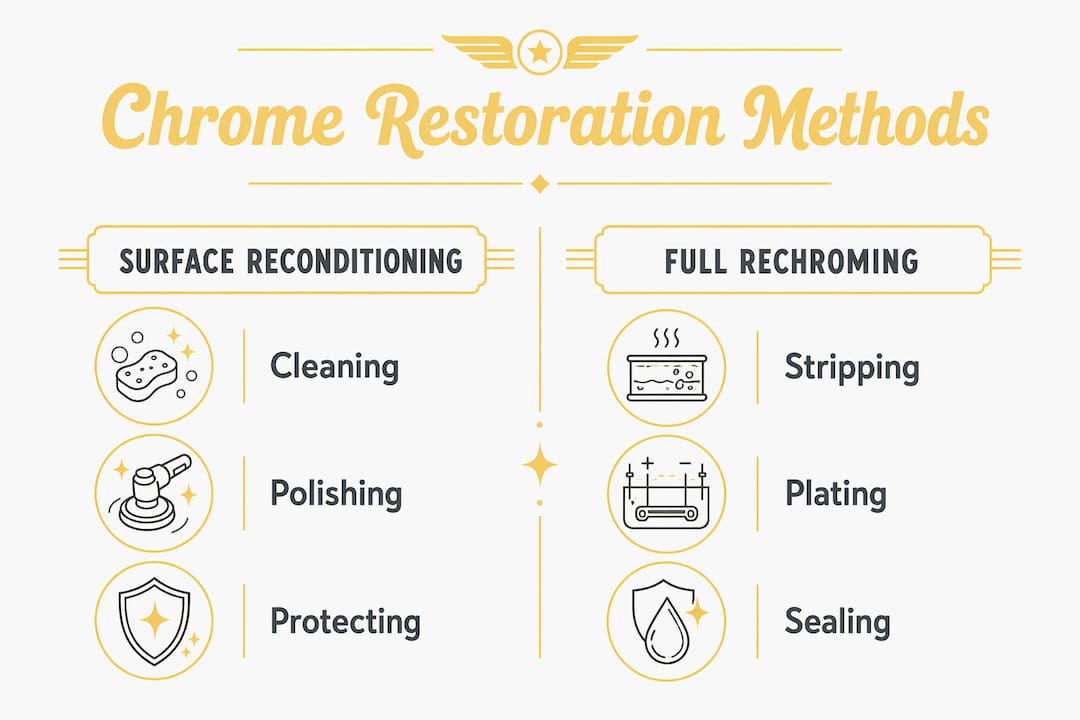
Chrome restoration for classic vehicles is the process of revitalizing a metal's reflective finish through controlled reconditioning or professional rechroming to preserve durability and originality. The two paths diverge quickly: surface reconditioning works for light oxidation and hazing, while full strip and replating handles deep pitting and plating failure. Industry-standard triple plating technique uses a copper base, a nickel mid-layer, and a thin chromium topcoat. Done right, that finish lasts 15–20 years. Done wrong, it fails within a few years. Knowing which path your car needs before you pick up a polishing pad is the most important decision in the whole process.
How to assess chrome condition for restoration
The condition of your chrome tells you exactly what restoration method to use. Start with a visual inspection in direct sunlight. Light surface oxidation appears as a dull, hazy film. Deep pitting looks like small craters or flaking, and it signals that the plating itself has broken down.
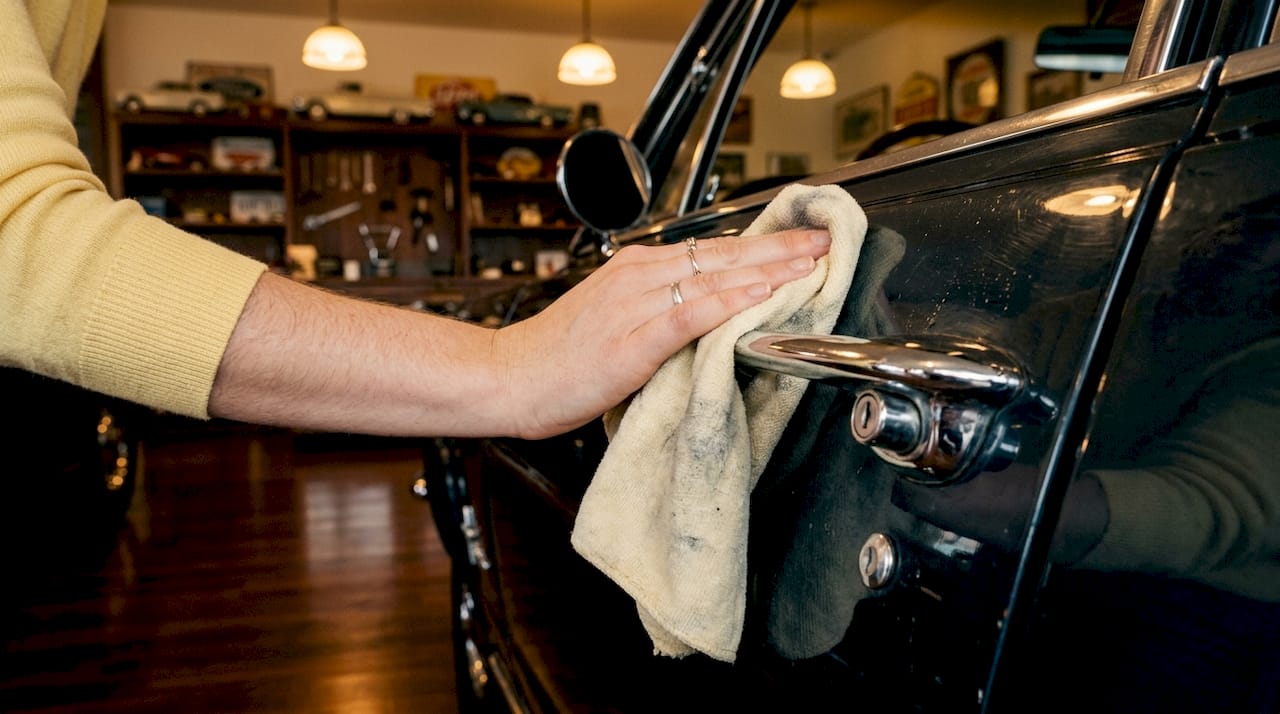
Run your fingertip across the surface. Smooth haziness responds to polishing. Rough, pitted texture means the substrate metal underneath has corroded. At that point, polishing cannot fix the problem. Polishing over deep corrosion actually causes irreparable harm by removing what little plating remains.
Check the edges and mounting holes. These spots corrode first because water collects there. Lift the part if possible and inspect the back side. Hidden corrosion on the reverse face often predicts how far the damage has spread through the metal.
Signs your chrome needs surface reconditioning only:
- Uniform dull or hazy appearance with no visible pits
- Surface feels smooth to the touch
- No lifting, bubbling, or flaking of the plating
- Oxidation clears partially when you wipe with a damp cloth
Signs your chrome needs full strip and replating:
- Visible pitting, craters, or bubbling across the surface
- Flaking or peeling sections where plating has separated
- Rust bleeding through from the substrate metal
- Structural dents or cracks in the base metal
Pro Tip: Wrap a soft white cloth around your finger and rub a small section firmly. If the cloth picks up dark gray or black residue, the plating is still intact and reconditioning is viable. If you see rust-colored particles, the substrate is corroding and you need professional replating.
What tools and materials do you need?
Getting your supplies right before you start saves time and protects the chrome. The tools you need depend on whether you are reconditioning the surface or sending parts out for full replating.
For surface reconditioning:
- Chrome-specific polishing compound (not general metal polish)
- Microfiber cloths, at least four clean ones per part
- Soft foam polishing pads for machine application
- pH-neutral car wash shampoo for pre-cleaning
- Isopropyl alcohol for degreasing before polish
- Chrome sealant or polymer coating for post-polish protection
- Nitrile gloves and safety glasses
For professional replating preparation:
- Chemical stripping agents (handled by the plating shop)
- Sandpaper in grits from 80 through 400 for metal repair
- Body filler or lead solder for substrate repairs
- Rust converter for treating exposed base metal before sending to the shop
| Category | Surface Reconditioning | Full Rechroming |
|---|---|---|
| Cleaning | pH-neutral shampoo, isopropyl alcohol | Same, plus chemical stripping |
| Abrasives | Chrome polish, foam pads | Sandpaper 80–400 grit |
| Finishing | Chrome sealant or ceramic coat | Post-plate polish, sealant |
| Safety gear | Nitrile gloves, glasses | Full PPE, chemical-rated gloves |
| Who does it | You, at home | Professional plating shop |
One thing most enthusiasts overlook: the quality of your microfiber cloths matters as much as the polish itself. Cheap cloths leave micro-scratches that dull the finish you just worked to restore. Use high-GSM cloths rated for paint and chrome work.
Step-by-step guide to restoring chrome finishes
Follow these steps in order. Skipping preparation is the most common reason chrome restorations fail early.
-
Wash the part thoroughly. Use a pH-neutral shampoo and warm water. Remove all road grime, grease, and loose debris. Rinse completely and dry with a clean microfiber cloth. Any contamination left on the surface will grind into the chrome during polishing.
-
Degrease the surface. Wipe the entire part with isopropyl alcohol on a clean cloth. This removes wax, silicone, and oils that block the polish from reaching the chrome. Let it dry fully before moving on.
-
Test a small section first. Apply a small amount of chrome-specific polish to a foam pad and work a 6-inch test area using light, circular motions. Check the cloth for rust-colored residue. If you see it, stop and consult a professional plating shop. Controlled correction is the rule here, not aggressive pressure.
-
Polish the full surface. Work in small sections, applying light and even pressure. Overlap each pass by about 50%. Wipe residue with a clean microfiber cloth after each section. Never let polish dry on the surface, as dried compound is difficult to remove without scratching.
-
Inspect under direct light. After polishing, hold the part at an angle to a light source. Remaining haze or dull spots need a second pass. Deep scratches that polishing cannot remove indicate plating failure in that area.
-
For professional triple plating: strip the part. The plating shop chemically strips all existing chrome, nickel, and copper layers down to bare metal. Triple plating then applies copper first for surface leveling, nickel second for corrosion resistance, and chromium last for hardness and reflectivity. Skimping on the copper or nickel layer compromises the entire finish.
-
Address metal repairs before replating. Dents, pits, and cracks in the base metal must be repaired before the copper layer goes on. The plating shop fills or welds damaged areas and sands them smooth. Sending a part with unrepaired substrate damage produces a wavy, uneven finish no matter how good the plating is.
-
Cure and finish post-plating. After plating, the shop buffs the chromium layer to its final reflectivity. Once you receive the part, apply a thin coat of chrome sealant within 48 hours. This seals microscopic pores in the surface and slows oxidation from the start.
Pro Tip: Large bumpers for classic cars typically cost $400–$1,200 to rechrome and take 2–6 weeks to complete. Get two or three quotes from plating shops and ask specifically whether their process includes all three layers: copper, nickel, and chromium. A shop that skips the copper base is cutting corners.
For a deeper look at what each restoration method involves from start to finish, the types of chrome restoration guide at Butterclassics breaks down each approach clearly.
How do you maintain restored chrome long-term?
Restored chrome needs consistent care to reach its full lifespan. The finish is durable, but it is not indestructible. Environmental exposure is the primary enemy.
Core maintenance habits:
- Wash with a pH-neutral shampoo every two weeks during driving season. Acidic or alkaline cleaners break down the chromium layer over time.
- Apply a polymer or ceramic sealant every three to four months. Ceramic coatings bond to the surface and resist road salt, UV rays, and moisture far better than wax.
- Rinse chrome parts immediately after driving in rain or on salted roads. Road salt accelerates pitting faster than almost any other environmental factor.
- Never use steel wool, abrasive scouring pads, or household cleaners on chrome. These scratch the surface and open pathways for moisture to reach the substrate.
- Store the vehicle covered and off damp concrete during winter months. Moisture trapped under a car cover against chrome trim causes the same damage as road exposure.
Pro Tip: Apply a light coat of mineral oil to chrome trim before long-term storage. It creates a barrier against humidity without leaving a residue that attracts grit. Wipe it off completely before driving the car again.
Classic vehicle storage conditions affect chrome longevity as much as the quality of the plating itself. A perfectly rechromed bumper stored in a damp garage will pit within two seasons.
Key Takeaways
Proper chrome restoration requires choosing the right method first: surface reconditioning for light oxidation, and professional triple plating for deep pitting or plating failure.
| Point | Details |
|---|---|
| Assess before you polish | Rust-colored residue on your cloth means the substrate is corroding and needs professional replating. |
| Triple plating is the standard | Copper, nickel, and chromium layers each serve a specific function; skipping any one compromises durability. |
| Prep determines outcome | Metal repairs and thorough cleaning before plating determine whether a rechrome lasts 15–20 years or fails early. |
| Maintenance extends lifespan | pH-neutral washing and ceramic sealant applied regularly protect chrome from salt, UV, and moisture damage. |
| Reproduction parts fall short | Re-plating original parts preserves authenticity and investment value better than reproduction chrome for collector-grade vehicles. |
What I've learned from watching chrome restorations go wrong
The most expensive mistake I see classic car owners make is polishing chrome that should have gone straight to a plating shop. The logic feels sound: the part looks dull, so you polish it. But aggressive polishing on compromised plating removes the last thin layer of chromium and exposes the nickel underneath. Once that happens, the part corrodes faster than it would have if you had left it alone.
The second mistake is choosing reproduction chrome to save money on an investment-grade car. Reproduction trim rarely matches the original plating depth, reflectivity, or profile geometry. On a numbers-matching muscle car or a show-quality Corvette, that difference is visible to any experienced judge or buyer. Reproduction chrome reduces authenticity and measurably affects resale value. Re-plating the original part costs more upfront, but it pays back at the point of sale.
My honest advice: treat chrome restoration like a medical diagnosis before treatment. Inspect carefully, identify the actual problem, and match the solution to the damage. Controlled reconditioning preserves original factory finishes on parts that do not need replating. Full strip and rechrome is the right call when the substrate is compromised. Knowing the difference before you spend money is what separates a good restoration from an expensive redo.
— Tony
Classic vehicles and chrome expertise at Butterclassics
Restoring chrome is one part of the larger picture of keeping a classic vehicle in top condition. Butterclassics connects enthusiasts with certified classic vehicles that have already passed rigorous quality checks, so you know exactly what you are working with before a single polishing pad touches the chrome.
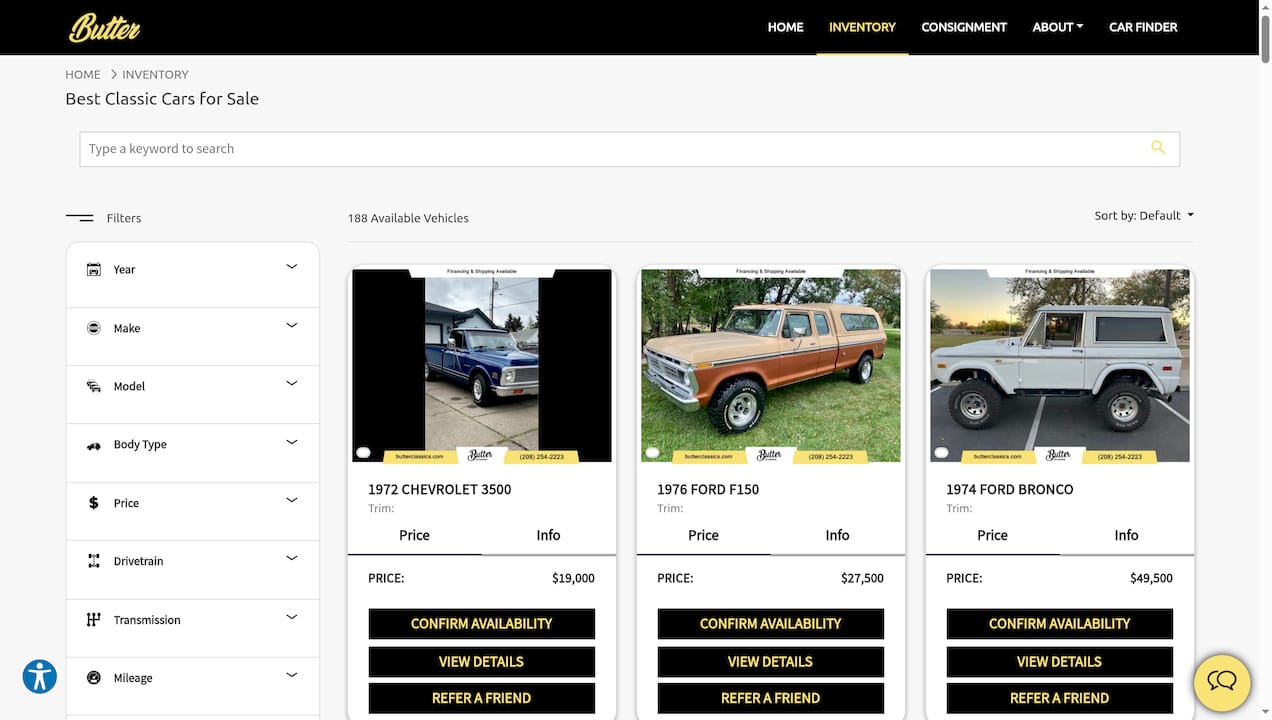
Whether you are sourcing a vehicle to restore or looking for one that is already show-ready, the Butterclassics inventory covers muscle cars, Corvettes, Broncos, trucks, and more. The team understands what investment-grade restoration looks like and can point you toward the right resources. Visit Butterclassics to browse the current inventory and get expert guidance on your next classic car project.
FAQ
What is chrome restoration on a classic vehicle?
Chrome restoration is the process of reviving a vehicle's reflective metal finish through either surface reconditioning or full strip and professional replating, depending on the extent of the damage.
How do I know if my chrome needs polishing or full replating?
Run a soft white cloth over the surface. If you see rust-colored particles, the substrate is corroding and the part needs professional replating. Smooth haziness responds to polishing alone.
How long does rechromed trim last on a classic car?
High-quality triple plating lasts 15–20 years with proper maintenance. Poor surface preparation before plating causes failure within a few years.
How much does it cost to rechrome a classic car bumper?
Large bumpers typically cost $400–$1,200 to rechrome and take 2–6 weeks to complete, depending on the part's size, condition, and the plating shop's process.
Should I use reproduction chrome or rechrome the original part?
For investment-grade and show-quality vehicles, re-plating the original part is the better choice. Reproduction chrome rarely matches the original's reflectivity, profile geometry, or plating depth, which affects both authenticity and resale value.