When you consign a classic car, the written consignment agreement decides who insures it while it sits with the dealer. The best setup layers two policies: your own collector policy, updated for the consignment, and the dealer's coverage for the cars in its care. You also want it all in writing before the keys change hands. Get that right and you can enjoy the sale instead of worrying about the car.
This guide is for collectors, restorers, investors and dealers. It walks through what each policy covers, where gaps show up, and what to ask for before you sign.
TL;DR
- Insurance on a consigned car is set by the agreement, so get the responsible party, insurer name and policy number written down.
- Some collector policies keep covering a consigned car with an endorsement, and some pause coverage while a dealer has custody, so call your insurer first.
- Dealer programs for classic cars can cover consigned inventory on an agreed value basis, including test drives and transit. Confirm that yours does.
- Layer your policy and the dealer's, and document which one responds first.
- Agreed value, not stated value or actual cash value, is the figure to look for.
Table of Contents
- Why consignment changes your insurance picture
- Who is responsible for insuring a consigned car?
- What a dealer's consignment coverage can include
- Personal policy vs. dealer policy
- Does consignment insurance cost a lot?
- A step-by-step checklist before you consign
- What to do if a consigned car is damaged or stolen
- For dealers: what your coverage should look like
- Consigning with Butter Classics
- Our perspective
- FAQ
- Sources
Why consignment changes your insurance picture
On a normal day, your classic sits in your garage, you drive it a few hundred miles a year, and your collector policy is built around that. Consignment changes three things at once. Someone else has possession. The car moves to a new location. And strangers sit behind the wheel on test drives.
Those are exactly the points where policies get picky. Many collector car policies ask you to notify the insurer when the storage location changes or when someone other than the named insured takes possession, and skipping that notice can give an insurer grounds to deny a claim. The same source notes that some policies continue coverage during consignment with an endorsement or rider, while others suspend coverage while the car is in a dealer's custody.
So the first job is a short phone call to your own insurer. Ask three things:
- Does my policy stay active while the car is at a consignment dealer?
- Does it cover test drives, showings and transport?
- Do I need an endorsement, and what does it cost?
Write down the answers and who gave them. It takes ten minutes and it settles the biggest unknown.
Who is responsible for insuring a consigned car?
The honest answer is: whoever the agreement says. Ownership usually stays with you while possession moves to the dealer, but risk of loss follows the contract. Some states make the contract spell this out. Minnesota's dealer rule requires a written consignment agreement stating who is responsible for maintaining insurance, along with the insurer's name and policy number, and the dealer must keep it for three years after the vehicle is sold or disposed of. Utah's DMV requires a written agreement before a consigned vehicle can be driven. It must say who is responsible for damage to or misuse of the car and what uses are permitted, and the consignee must carry liability insurance on dealer plates.
You may not live in either state, but both show what a good agreement looks like in any state. Look for:
- The party responsible for insuring the car, named plainly.
- The insurer's name and policy number.
- Who is responsible for damage, theft and misuse.
- What uses are allowed, such as test drives, shows and transport.
- The valuation method if the car is damaged or totaled.
Vague wording is the thing to avoid. Avery Insurance warns that some agreements push all risk back onto the owner whoever caused the damage, or cap the dealer's liability well below the car's value. If a clause reads that way, ask for it to be rewritten before you sign. Our own guide to consignment agreement terms covers the other clauses worth reading closely.
What a dealer's consignment coverage can include
A dealer who handles collector cars should carry coverage built for them. Specialty programs for classic car dealers spell out what is included. One classic car dealer program lists comprehensive coverage for owned and consigned vehicles, physical damage on an agreed value basis, coverage in transit, protection during test drives and demonstrations, plus garagekeepers coverage, dealer plate liability and premises liability. Another dealer program uses a single blanket limit so consigned cars don't have to be added one at a time, and includes test drive and overseas shipping coverage.
Two terms are worth knowing:
- Garagekeepers coverage protects customer cars in a dealer's care. It comes in three forms: legal liability, which pays only if the dealer is at fault; direct primary, which pays for damage regardless of fault; and direct excess, which pays after the owner's own insurance.
- Direct primary is the one consignors want to hear about. A dealer insurance agency explains that it responds directly when a consigned car is damaged or stolen in the dealer's care, so the owner is not left arguing over fault.
Policy details differ by insurer and state. Underwriting guidelines from one commercial insurer say consigned autos belong under dealers physical damage coverage rather than garagekeepers, and that earthquake, flood and mudslide are excluded in all states. That kind of exclusion is the sort of detail a certificate of insurance and a quick read of the policy will surface.
Why "custody" alone isn't enough
One specialty agency points out that a consignment contract or a generic custody heading does not by itself create direct physical damage coverage for every owner's interest. What matters is whether the policy provides direct property cover or only liability-based cover, how the car is valued, and who gets paid at each stage. When you see a dealer's insurance summary, check those three things.

Personal policy vs. dealer policy
Here is how the two typically compare, based on a consignment insurance comparison from an insurance agency:
| Your collector policy | Dealer garage coverage | |
|---|---|---|
| Valuation | Usually agreed value | Often actual cash value or a stated limit, though specialty classic programs can use agreed value |
| Typical deductible | $0 to $1,000 | $500 to $2,500 per vehicle |
| Test drives | May be excluded during showings | Usually covered under dealer operations |
| Transport | Sometimes included, must be verified | Rarely covers transport to off-site auctions |
| Consigned cars | May need an endorsement | Some policies exclude consigned cars from comprehensive |
The takeaway is the same one the source reaches: the strongest protection comes from layering both policies with clear documentation of which responds first. Your policy protects the agreed value of a car you've put years into. The dealer's policy protects the car while it's in their hands, on their lot and on test drives.
Agreed value is the number that matters
Agreed value means you and the insurer settle on the car's worth up front, and in a total loss that amount is paid. One specialty dealer program describes it this way: once underwriters agree to the values, those values become the coverage limits. Stated value and actual cash value work differently and can leave you short on a rare car. Our guide to agreed value vs. stated value explains the gap, and how to get agreed value with appraisals and photos shows what paperwork to gather. If you want to understand how the figure is built, see classic car insurance value explained.
A good habit before consigning: refresh your photos and appraisal so the agreed value on file matches the car as it is today. Newly restored work, a rebuilt engine or correct reproduction parts all belong in that file.

Does consignment insurance cost a lot?
Usually not. Specialized collector policies are often 40% to 50% less expensive than standard auto coverage because they account for limited use, so adding transit or exhibition riders for a consignment period is typically a modest cost. Ask your insurer for the exact figure for your car, since rates depend on the vehicle, your state and the policy.
A step-by-step checklist before you consign
- Call your insurer. Ask whether coverage continues while the car is with a dealer, and whether you need a rider for showings, test drives and transport. Get the answer in writing.
- Ask for the dealer's certificate of insurance. It should show the insurer, policy number and limits. Check that consigned vehicles are included and how they are valued.
- Read the agreement for the insurance clause. It should name who insures the car, who is responsible for damage and theft, and what uses are permitted.
- Confirm the test drive rules. Ask how the dealer qualifies drivers and whether test drives are covered under the dealer's policy.
- Plan for transport. If the car will move to a show or another location, confirm which policy covers the trip.
- Document the car. Date-stamped photos and video of the car at drop-off, plus odometer reading, give everyone a clean baseline.
- Keep the paperwork together. Agreement, certificates, endorsements and appraisal in one folder, with copies.
For the rest of the process, our consignment best practices for sellers and the consignment timeline show what to expect from drop-off to sale. If you're still weighing routes, compare consignment and auction, and think about dealer or private sale from a provenance angle. While the car waits for a buyer, where it's stored matters too: see classic car storage options.
What to do if a consigned car is damaged or stolen
Speed and paperwork help everyone. In practice:
- Report it right away. The dealer should notify its garage insurer for major damage or theft, and call the police and file a report when insurance is involved. The same dealer association advises looking after the customer even when the dealer isn't legally liable.
- Tell your own insurer too. If your policy is part of the layering, it needs to hear about the loss.
- Preserve evidence. Photos, video, incident notes and the signed agreement matter if a question comes up about fault or valuation.
- Check the valuation method. An agreed value policy pays a set amount in a total loss, while actual cash value policies calculate it after the fact.
This is also where your drop-off photos pay for themselves.
For dealers: what your coverage should look like
If you're a classic car dealer reading this, your consignors will ask you the same questions. A few points to settle with your own agent:
- Consigned cars should be covered under dealers physical damage, not left to garagekeepers alone, and limits should be insured to value. The commercial insurer's guidelines cited above mention a 100% coinsurance provision requiring this.
- Standard commercial general liability typically excludes garage operations, which is why garage liability, open lot and garagekeepers are separate coverages.
- Minimum requirements vary by state. The same page reports that most states require a $300,000 combined single limit minimum, some $500,000, and that every state requires a surety bond. Check your state's licensing authority for your exact numbers.
A dealer who can hand over a clear certificate and a plain agreement earns a consignor's trust faster than any sales pitch.
Consigning with Butter Classics
We built our consignment service for collectors who want their car in front of buyers across the country, not stuck on one lot. Our site lists vehicles with detailed specifications and extensive photos, and buyers can browse by price and type, schedule test drives and request quotes. We also offer financing pre-qualification for buyers.
If you're thinking about consigning, start on our consignment page. Bring your questions about insurance and the agreement along with your car's details.
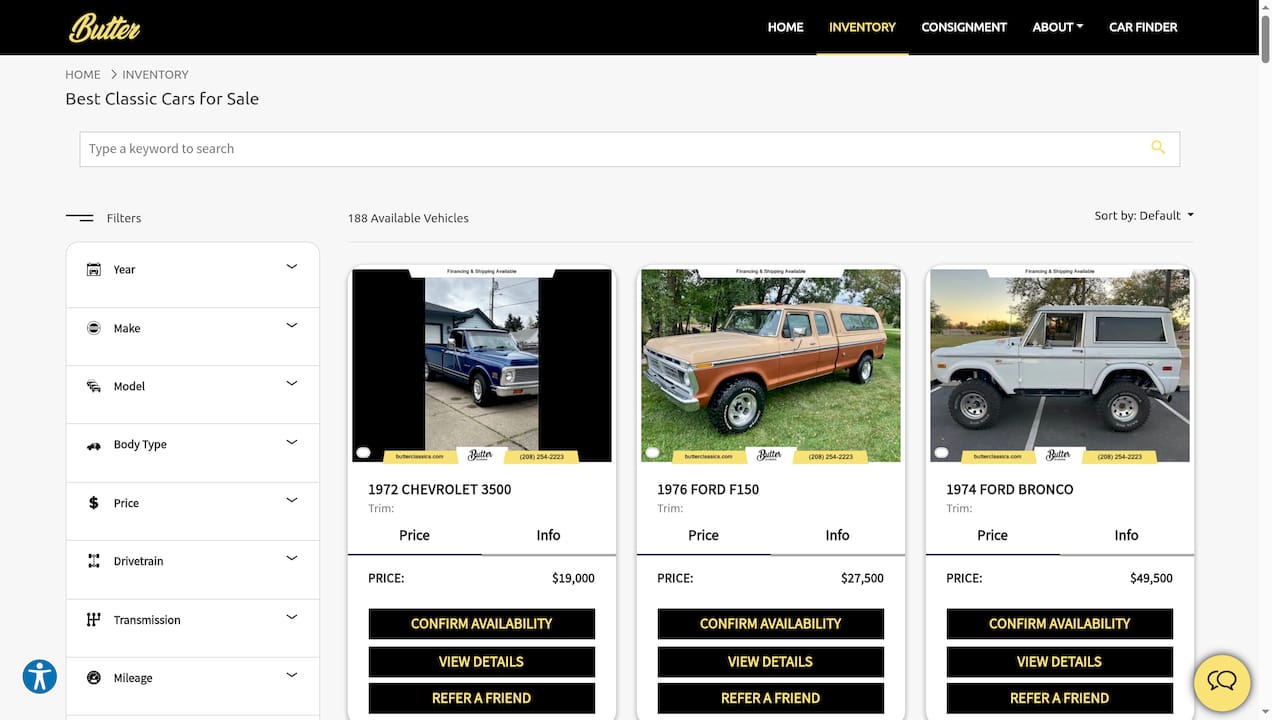
Buyers looking for their next collector car can browse our inventory.
Our perspective
We love classic cars, and we know the worry that comes with handing one over. Your car isn't just inventory. It's years of work, and often a piece of family history.
Here's how we look at insurance on a consignment. Don't leave it to assumptions. Get the insurance responsibilities in writing, make sure the value on paper is an agreed value, and keep your own policy in line with the plan. Two layers of protection beat one, and clear documents beat good intentions every time.
That's why we like consignment done openly. A seller who understands the agreement, and a team that welcomes the questions, makes for a smooth sale. Ask us anything about the process, and bring your insurance questions with you. We'd rather answer them up front.
Tony
FAQ
Does my classic car policy cover the car while it's on consignment?
Sometimes. Some policies continue coverage with an endorsement or rider, and others suspend it while a dealer has custody. Call your insurer, describe the consignment, and get the answer in writing.
Who pays if a consigned car is damaged on the dealer's lot?
It depends on the agreement and the policies in place. A dealer with direct primary garagekeepers coverage can respond regardless of fault, while legal liability coverage pays only if the dealer is at fault. Your agreement should name who is responsible so there's no guessing.
What proof of insurance should I ask a dealer for?
Ask for a certificate of insurance showing the insurer, policy number and limits, and confirm that consigned vehicles are covered and valued on an agreed value basis. Some states, such as Minnesota, require the insurer's name and policy number in the written agreement itself.
Is agreed value better than stated value for a consigned car?
For a collector car, agreed value is the one to look for, because the amount is settled up front and paid in a total loss. Read our agreed value vs. stated value guide for the differences.
Sources
- Minnesota Rule 7400.5300
- Utah DMV: Consignment Sales
- How to Insure a Collector Car During Consignment
- Classic Car Dealer Insurance
- Classic & Collector Car Dealer Insurance
- Texas Used Car Dealership Insurance
- Specialized Insurance for Classic Car Dealers
- Underwriting Guidelines and Classifications
- Classic & Specialty Car Dealer Insurance
- Specialty Dealers
- Dealing with Damaged Customer Vehicles on Your Lot
- Auto Dealer Insurance Requirements