Sales tax on a classic car usually follows the registration, not the sale. You owe it to the state where you title and register the car, calculated on the price you paid, and age alone rarely makes a car exempt. If you buy from a seller in another state, the rules on credits and paperwork decide whether you pay once or twice. We built our marketplace around buyers who cross state lines, so here is the routine we would walk a friend through.
TL;DR
- Tax is generally paid by the buyer to the state DMV or revenue agency at titling and registration, not to a private seller.
- The state where you register the car taxes it, no matter where you bought it. Most states credit tax already paid elsewhere.
- Antique exemptions are rare and narrow. Louisiana added one in 2025 with age, value and use limits.
- A signed bill of sale at the true price is your best protection when a state questions the value.
- Some states tax at book value when the stated price looks low, so plan on the number a state would accept.
Table of Contents
- Who collects the tax
- Tax follows your registration state
- How the taxable price is set
- Out-of-state purchases: use tax and credits
- Do age or antique status exempt the car?
- Paperwork that protects you
- Our take
- Ready to buy or sell?
- FAQ
- Sources
Who collects the tax
Most states charge sales tax on used cars, and 45 states impose a sales tax of some kind, according to Day Pitney's tax attorneys. On a dealer sale, the dealer often collects it. On a private sale, the buyer typically pays the state DMV when registering, not the seller.
A few states charge nothing on used cars. Alaska, New Hampshire, Oregon, Delaware and Montana are listed that way, though some allow local taxes. Buying in one of them does not help if you live elsewhere, as the next section shows.
Tax follows your registration state
The state where you pay registration fees charges the tax. A Massachusetts resident who buys in New Hampshire still pays Massachusetts tax when picking up plates. Driving to a no-tax state to buy does not avoid your home state's tax.
For collectors this makes the choice of where you register and store the car a tax decision. Because collectible cars, unlike art or watches, must be registered with a state DMV, the state you pick drives the tax on buying, storing, trading and selling. If you hold cars through an entity, our guide to a classic car LLC purchase covers the steps. Dealers who track DMV pass-through fees can see how DMV fee accounting is handled on the books.
How the taxable price is set
States differ on what counts as the price. A few examples from official pages:
| State | Rate and base |
|---|---|
| Virginia | 4.15% of gross sales price or $75, whichever is greater. Dealer processing fee included, trade-ins and rebates excluded. |
| Vermont | 6% of the purchase price or J.D. Power clean trade-in value, whichever is greater. |
| Colorado | State and local tax on the full price, including mandatory dealer fees such as documentation and destination. |
| Washington | Use tax on fair market value from Price Digests. The purchase price may be accepted if value is below $7,500 or the price is within 20% of market value, with supporting documents. |
The lesson: a low price on paper does not always lower the tax. Vermont and Washington can use book value, and unusual cars may need an appraisal or a signed value declaration. Dealer fees can be taxable too, so read our list of classic car dealer fees before you compare out-the-door numbers.
Texas is a good example of a rule that treats older cars differently. Hagerty reports that Texas skips its presumptive value system for vehicles 25 years and older and charges 6.25% of the indicated sale price.
Out-of-state purchases: use tax and credits
When you buy in one state and register in another, the registration state charges use tax. Texas gives a credit for sales or use tax legally paid to another state, but not for tax paid to a foreign country. California applies use tax when you did not pay California sales tax, including on private or out-of-state deliveries, usually collected at DMV registration.
Two traps are worth knowing:
- Selling-state rules at the counter. Some states exempt out-of-state buyers with an affidavit, such as New Jersey Form ST-10 or New York Form DTF-820. Others collect at your home-state rate.
- Refunds come from the collecting state. If a state collects at your home rate, that money is not passed to your home state, so you seek any refund from the state that took it.
A few state pairings limit or refuse the credit, so check your DMV's rule before you wire money. Our piece on the best states to buy a classic car shows how a $2,000 saving can vanish.
A worked example
You live in Texas and buy a 1969 Camaro for $60,000 from a dealer in a state that charged you 6% there ($3,600). Texas use tax at 6.25% would be $3,750, and with a credit for the tax paid, you would owe the $150 difference, subject to Texas's own rules. If the seller collected nothing, you would owe the full $3,750. Always confirm the figures with your registration state.

Do age or antique status exempt the car?
Usually not. Antique plates often reduce registration fees, but sales tax is separate. Louisiana is a recent exception: since July 1, 2025, it exempts state and local sales and use tax on antique vehicles made at least 35 years ago, not used commercially, and valued at $10,000 or more. The buyer completes form R-1399 and presents it to the Office of Motor Vehicles. The form is valid through December 31, 2030.
If you are a collector who buys and sells often, be careful. Day Pitney notes that someone operating like a dealer can buy with a resale certificate, but gains become ordinary income and dealer status can be challenged based on how often you sell. For the income side, see our capital gains guide for classic cars.
Paperwork that protects you
States test the price you report, so the documents matter.
- Bill of sale with the real price. Idaho requires a bill of sale or receipt as proof, and without one it taxes the NADA average trade-in price. A $1 bill of sale is treated as low unless a gift affidavit is filed. Read more in our classic car bill of sale guide.
- Seller-signed forms. In Texas, you file Form 130-U with a joint certification of the price. An out-of-state private seller cannot be compelled to sign, so a signed bill of sale is the fallback.
- Proof of tax paid elsewhere. Virginia asks for proof if the car was bought within 12 months and you already hold an out-of-state title.
- Clean title. Tax is due at titling, so a title-only car or messy title work slows everything down. Our documentation checklist lists what to gather.
Understating the price is a bad bet. Utah, for example, charges the tax difference plus interest and a penalty of up to 100% of the unpaid tax or $500, whichever is greater.
Our take
Tax surprises are the most avoidable part of buying a classic. People fall in love with a Bronco in another state, wire the money, and only then ask what their DMV will charge.
We sell nationwide, so buyers often register far from the car. Our advice: ask your state's rule before you commit, get the bill of sale right, and have the title paperwork ready. Our financing pre-qualification and test drive scheduling help you settle the budget first, so the tax number is not a shock at the counter.
If you are selling, consignment lets you reach buyers beyond your own state, and they handle their own registration tax.
Tony
Ready to buy or sell?
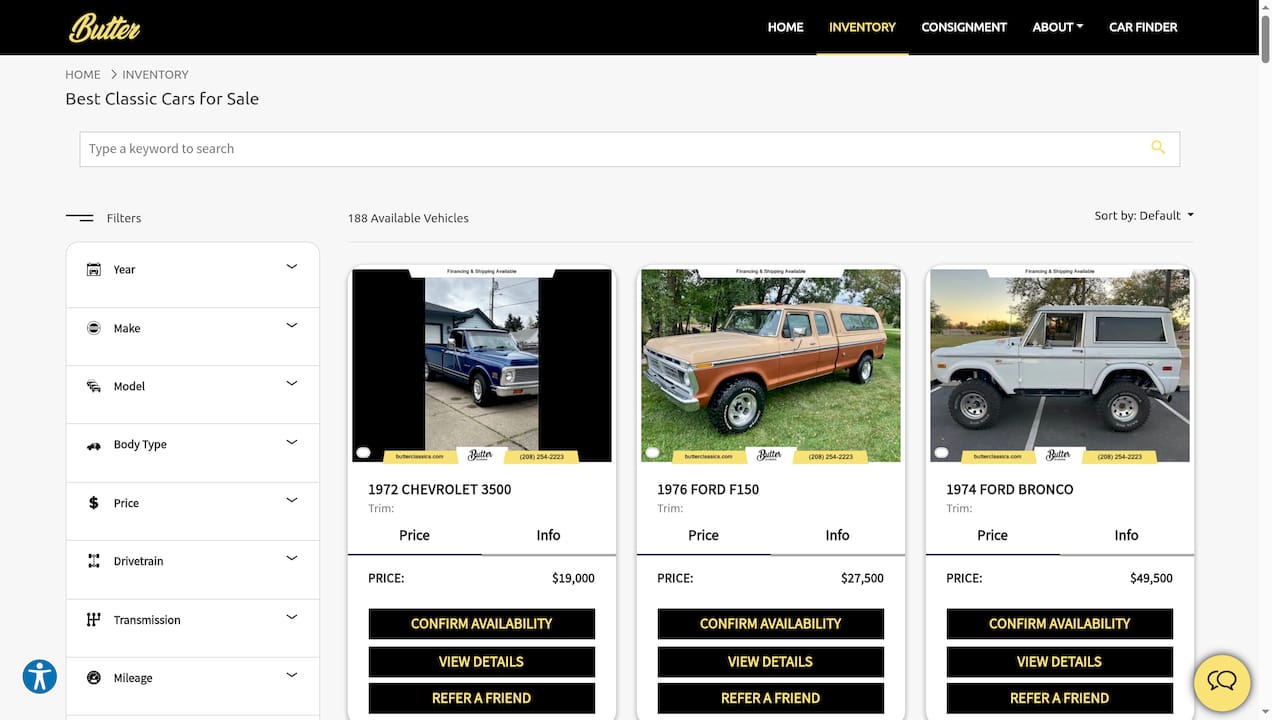
Browse our classic car inventory from anywhere in the country, or look at classic vehicle financing to set your budget, tax included. If you have a car to sell, you can consign your vehicle with us.
FAQ
Do I pay sales tax to a private seller?
Generally no. On private sales the buyer pays the tax to the state DMV or revenue agency when titling and registering. Colorado, for example, has unlicensed private sellers skip collection, so the buyer pays the county clerk.
Can I avoid tax by buying in a state with none?
No, if you register in a state that taxes. Tax attaches to the registration state, so your home state still charges it, usually with a credit for tax legally paid elsewhere.
Are antique cars exempt from sales tax?
Mostly not. Antique status often affects registration, not sales tax. Louisiana's 2025 exemption is a narrow exception with age, value and non-commercial-use conditions.
What if the price on my bill of sale is low?
Some states will tax book value instead. Idaho uses NADA average trade-in, and Vermont uses the greater of price or J.D. Power value. Document the true price and keep supporting records.
Sources
- Understanding Taxes When Buying and Selling a Car
- Generations Fall 2022: The Daunting Mix of Taxes
- Virginia DMV: Motor Vehicle Sales and Use Tax
- Vermont DMV: Tax
- Colorado Department of Revenue: Motor Vehicle Sales
- Washington Department of Licensing: Use tax
- Texas Comptroller: Motor Vehicle Tax Guide
- California CDTFA: Tax Guide for Purchasers of Vehicles
- Car Sales Tax by State (2026)
- Hagerty Media: How classic car-friendly is your state?
- Louisiana Revenue: 2025 sales and use tax exemptions
- Louisiana R-1399: Antique Motor Vehicle
- Idaho State Tax Commission: Vehicle transactions guide
- Utah State Tax Commission: Pub 5