The best states to buy a classic car combine deep inventory with buyer-friendly purchase rules, not just a low sticker price or a state with no sales tax. California, Florida, and Texas lead on inventory and active markets, while sales tax perks in places like Montana or Oregon usually get erased by home-state use tax and shipping once you register the car. Butter Classics and Tony break down where to actually shop and what the total bill looks like.
TL;DR:
- Buying in California, Florida, or Texas offers the largest inventory, but consider competition, fees, and condition verification before purchase.
- Out-of-state costs include shipping, dealer fees, and use tax that can offset any initial savings from lower sticker prices.
- Verify state-specific registration rules, antique vehicle exemptions, and emissions laws to avoid unexpected future expenses.
- Insurance costs vary by state, and agreed value policies are essential for high-value cars, with some states offering significant discounts for antiques.
- Climate impacts a car's condition; vehicles from dry states tend to need less restoration, which should influence your assessment of a deal.
Table of Contents
- Which States Have the Best Classic Car Inventory?
- How Do You Calculate the Real Cost of an Out-of-State Classic?
- What Does It Cost to Ship a Classic Car Safely?
- What DMV Rules Should You Check Before You Buy Out of State?
- Do Classic Car Exemption Laws Change the Math?
- How Much Does Classic Car Insurance Cost by State?
- Does Climate Affect the Cars You're Buying?
- Tony's Take: Use the Marketplace, Not Just the Map
- Ready to Find Your Next Classic? Start With the Right Marketplace
- Where to Verify These Numbers Yourself
- Sources
Which States Have the Best Classic Car Inventory?
If you want selection, go where the cars already are. California, Florida, and Texas consistently rank among the states with the largest classic-car inventories and most active markets, largely because big populations and a packed calendar of automotive events keep supply moving. These states also host the auctions that set market tone for the whole country. Pebble Beach, Barrett-Jackson, and Scottsdale don't just concentrate high-quality inventory. They create real price competition, which is a useful signal if you're chasing something rare rather than a bargain.
Here's how the strongest sourcing states stack up, and what to watch for in each:
- California: Massive inventory across every category, from Corvettes to trucks. Dry climate helps with condition, but competition at auction can push prices above private-sale comps, so budget for buyer premiums if you're bidding.
- Florida: Deep dealer network and steady turnover thanks to year-round car culture. Watch dealer documentation fees closely. Florida dealers commonly charge high, uncapped dealer doc fees that can quietly wipe out savings from a lower sticker price.
- Texas: Wide range of trucks, muscle cars, and Broncos, with a large enough market that regional price variation inside the state is common. Good if you can drive to inspect in person rather than buying blind.
- Delaware, New Jersey, Pennsylvania: Historically low median used-vehicle listing prices, sometimes around $8,000 in Delaware and $10,000 in Pennsylvania for comparable used inventory. Low prices here often reflect high local supply from lease returns and fleet liquidations rather than superior condition, so verify title history before you fall for the number.
- No-sales-tax states (Alaska, Delaware, Montana, New Hampshire, Oregon): Five states charge no state-level sales tax on vehicle purchases, which sounds like an easy win. It usually isn't for out-of-state buyers, because your home state will typically bill you use tax at registration anyway.
The practical takeaway: match the state to your situation. If you live within a few hundred miles of California, Florida, or Texas, driving distance alone makes those markets worth checking first. If you're chasing a specific bargain in a low-price state, budget time to verify condition and confirm the title is clean before you wire a deposit.
How Do You Calculate the Real Cost of an Out-of-State Classic?
A lower sticker price out of state doesn't mean a lower total cost. Run the math before you commit, using this sequence:
- Gather the paperwork. Get the bill of sale, the listed price, the dealer's documentation fee in writing, and confirmation of any sales tax the seller's state collected.
- Check your home state's use tax rules. Most states charge use tax on out-of-state vehicle purchases, often crediting whatever sales tax you already paid to the seller's state. If your home rate is higher, you'll owe the difference at registration.
- Add the dealer doc fee. These fees vary widely and some states cap them while others leave them uncapped, so a "great deal" in one state can carry a hidden few hundred dollars in fees a capped state wouldn't allow.
- Estimate shipping. Get at least two transport quotes based on distance, transport type, and whether you want door-to-door or terminal pickup.
- Add VIN inspection and temporary permit costs if your home state requires them for out-of-state titles.
Here's a simple worked example. Say a truck lists for $2,000 less in another state. Add the fees and shipping, and your "savings" evaporates before you've even titled the car.
Pro Tip: Some collectors explore registration workarounds like Montana LLCs to sidestep sales tax entirely. These carry real legal and compliance risk, and state tax authorities have gotten more aggressive about challenging them. Talk to a tax professional before you go that route, not after.
What Does It Cost to Ship a Classic Car Safely?
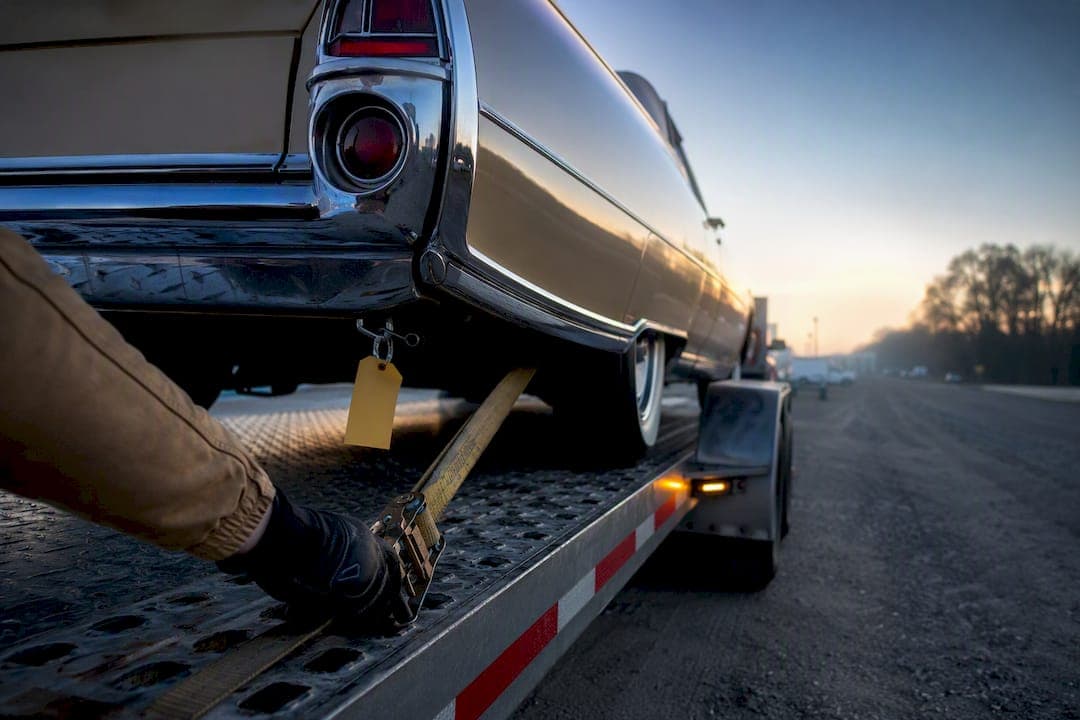
Transport is where a lot of buyers underestimate the bill. Terminal-to-terminal shipping runs cheaper than door-to-door since the carrier isn't routing a driver directly to your address, but you'll need to arrange pickup and drop-off at a terminal yourself. Enclosed transport, meanwhile, typically costs about 50% more than open transport, a worthwhile premium if you're moving a high-value or fully restored car across long distances or through bad weather.
Before you book a carrier, ask:
- What's the cargo liability limit per load, and is it enough to cover the car's actual value?
- Does the policy include a transit endorsement, or do you need supplemental coverage from your own insurer?
- What's the estimated pickup and delivery window, and is there a penalty for delays?
Most carriers carry cargo liability limits in the $250,000 to $500,000 range per load, which sounds like plenty until you remember that's shared across every vehicle on the trailer. If your classic's market value pushes close to that ceiling, ask your insurer about agreed value coverage before the truck ever shows up. Also check whether your home state requires a temporary transit permit to drive the car once it arrives and before you've finished titling it. A breakdown of shipping costs by distance and transport type can help you budget before you request quotes.
What DMV Rules Should You Check Before You Buy Out of State?
Registration paperwork is where good deals quietly go bad. Most states expect you to register a newly purchased vehicle within a specified timeframe, which varies by state, and miss that window and you're often looking at late fees on top of everything else.
Before you commit to an out-of-state purchase, confirm:
- Your home state's VIN inspection requirements and fees for vehicles titled elsewhere.
- Whether your state uses ad valorem (value-based) taxes or flat registration fees. States with ad valorem or annual property-style taxes can mean an ongoing yearly cost tied to the car's assessed value, not just a one-time hit at purchase.
- Whether your state offers a historic or antique vehicle plate program, and what qualifies. These programs often trade mileage restrictions for reduced fees, which can materially change your long-term ownership cost if you're not planning to drive the car daily anyway.
- Whether the seller's state title is clean and transferable without extra steps like a duplicate title request or lien release.
None of this is exciting reading, but skipping it is how a "great deal" turns into a stack of unexpected fees six weeks after you drove the car home.
Do Classic Car Exemption Laws Change the Math?
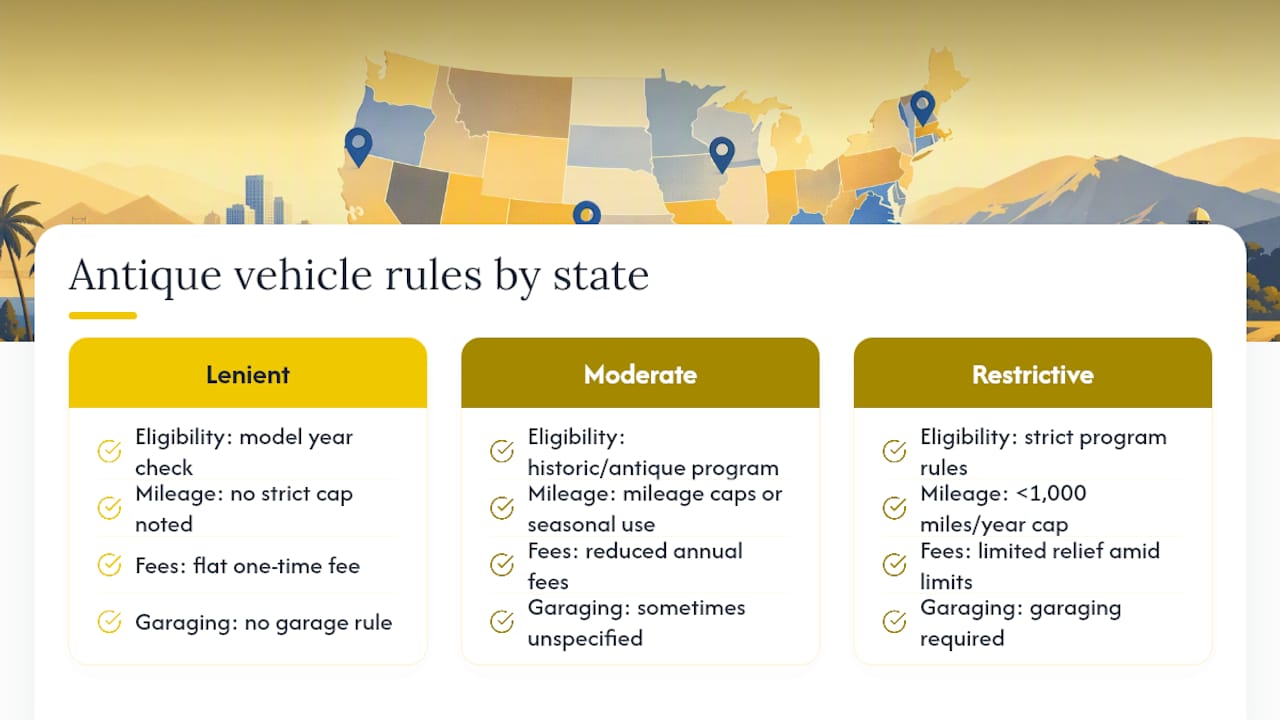
Some states offer real financial relief for classic and antique vehicles, and it's worth knowing before you assume every state treats old cars the same way. Historic or antique vehicle registration programs, where they exist, often reduce annual fees significantly compared to standard registration, in exchange for mileage caps or seasonal-use restrictions. If you're buying a car to show and drive occasionally rather than daily, that tradeoff usually favors you.
Emissions testing is the other lever. Many states exempt vehicles above a certain age, often somewhere in the 20 to 25-year range, from routine emissions inspections. That matters more than it sounds, because a classic that fails to meet modern emissions standards can otherwise become nearly impossible to register in states with strict testing regimes.
The catch is that none of this is standardized nationally. One state's "antique" plate might require the car to be garaged and driven under 1,000 miles a year. Another might just check the model year and charge a flat one-time fee. Before you buy out of state, check your home state's actual antique or historic vehicle statute rather than assuming it mirrors what you've read about a neighboring state. The exemption laws that make classic car ownership affordable in one state can be nonexistent, or far more restrictive, right across the border.
How Much Does Classic Car Insurance Cost by State?
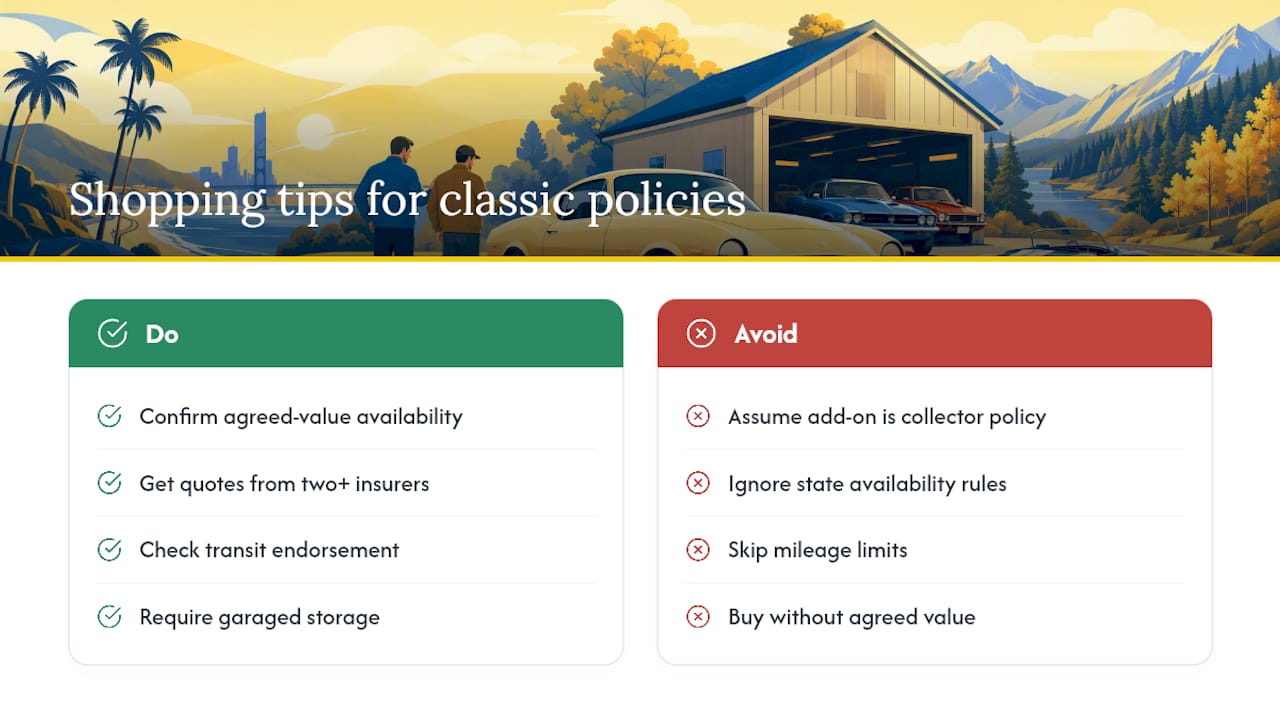
Insurance for a classic isn't priced like insurance for a daily driver, and availability itself varies more by state regulation than most buyers expect. Agreed value policies, where you and the insurer set a fixed payout amount up front rather than relying on depreciated market value, are the standard for serious collectors. Not every insurer offers them in every state, so it's worth confirming coverage availability before you finalize a purchase, especially if you're buying somewhere your usual insurer doesn't have a strong regional presence.
Rates for classic car coverage tend to run lower than standard auto insurance for a comparable-value vehicle, mainly because collector policies typically cap annual mileage and often require garaged storage. States with stricter minimum liability requirements or higher rates of uninsured motorists tend to push base premiums up across the board, which affects your classic's policy too even under an agreed value structure. If you're transporting a car across state lines before you've secured a policy, that's exactly the gap transit endorsement coverage is meant to fill, and it's worth confirming with your carrier, or a specialist like Diamondback, before the car ever leaves the seller's driveway.
Shop your classic car policy the same way you'd shop the car itself. Get quotes from at least two insurers who specifically write agreed value collector policies, not just your standard auto carrier's add-on product, because the difference in claim payout can be substantial if the car is ever totaled.
Does Climate Affect the Cars You're Buying?
Climate matters here for one reason only: it affects what condition a car arrives in and how much restoration work you're inheriting, which is a direct cost question, not a comfort one. A classic that's spent decades in a dry, low-humidity state has usually seen less rust damage to the frame, floor pans, and rocker panels than a comparable car from a high-humidity or heavy-salt region.
That's worth factoring into your inspection, not just your shopping list. A Bronco priced $1,500 cheaper out of a rust-belt state might need thousands in frame repair that a comparable truck from a dry-climate state wouldn't. Ask for detailed undercarriage photos, or better yet, a third-party pre-purchase inspection, before you assume a lower price is actually a better deal. A specialty shop familiar with collector vehicles, like Artec Automotive in the Bay Area, can flag rust and prior repair work that photos alone won't reveal.
This isn't about picking a state to live in or drive in. It's about reading where a specific car spent its life before you calculate what it's actually worth to you.
Tony's Take: Use the Marketplace, Not Just the Map
Here's what I'd tell any collector before they start calling dealers in three different states: the state matters less than the specific car's history, and the marketplace tools you use to vet that history matter more than most buyers realize. Using inventory filters by price and location, requesting VIN documentation and additional photos before you get emotionally attached, and using financing pre-qualification early help you know your real budget before taxes and shipping get added.
If you're searching by radius, set it wide enough to catch inventory-rich states like California, Florida, and Texas, but narrow enough that shipping doesn't eat your savings. If you're selling rather than buying, the consignment process works the same logic in reverse: your car's total cost to a buyer, not just your asking price, determines how fast it moves.
The sticker price is the least important number in this whole process. Total cost, and how much friction stands between you and a clean title, is what actually decides whether a deal was good.
— Tony
Ready to Find Your Next Classic? Start With the Right Marketplace
A quality marketplace gives you the one thing a state-by-state search can't: a single place to filter by price, model, and location without juggling five different dealer sites and a spreadsheet of tax math. Listings often include detailed specs and photos so you can evaluate condition before you ever ask about shipping quotes or use tax.
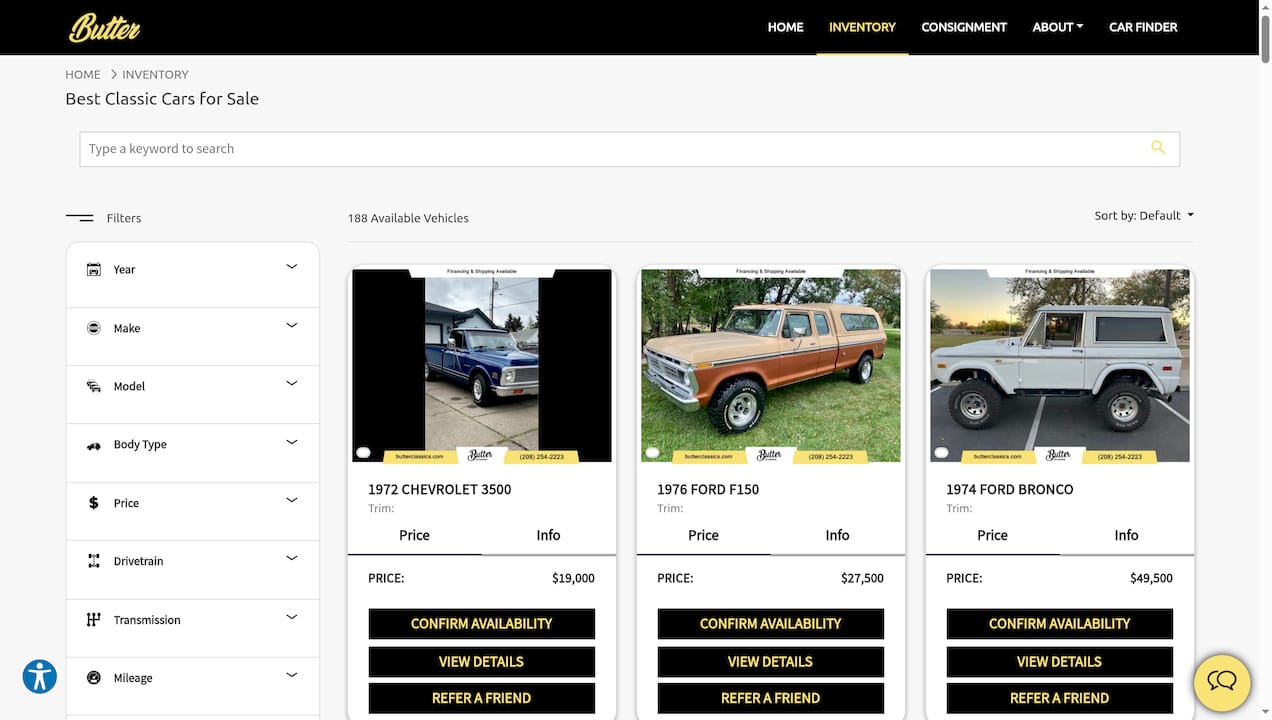
Start by browsing the current inventory and filtering by price range and body style, whether you're after a Corvette, a vintage truck, or a Bronco. If you know exactly what you want but don't see it listed, the Car Finder service can source a specific model on your behalf. Buyers who want to inspect before committing can schedule a test drive, and anyone financing the purchase can start pre-qualification the same day. If you're on the other side of the transaction, the consignment page walks you through listing your own classic for sale. Either way, the fastest next step is the same one: browse the inventory and see what's actually available near you right now.
Where to Verify These Numbers Yourself
Before you finalize any out-of-state purchase, confirm the specifics against primary sources rather than taking a dealer's word for it:
- Motorious's collector car inventory report for state-by-state market activity.
- Policygenius's auto tax rate breakdown for current no-sales-tax states and use tax exposure.
- LegalClarity's guide to used car taxes and fees for dealer doc fee patterns by state.
- Navi Auto Transport's shipping guidance for transport cost comparisons.
Always cross-check final registration and tax rules with your state's own DMV page. Rules change, and the number you saved before shipping isn't final until you've registered the car at home.
Sources
- Report: These Are The States With The Most Collector Cars
- Auto tax rates by state — Policygenius
- Cheapest State to Buy a Used Car: Taxes and Fees - LegalClarity
- Terminal-to-terminal car shipping — Navi Auto Transport