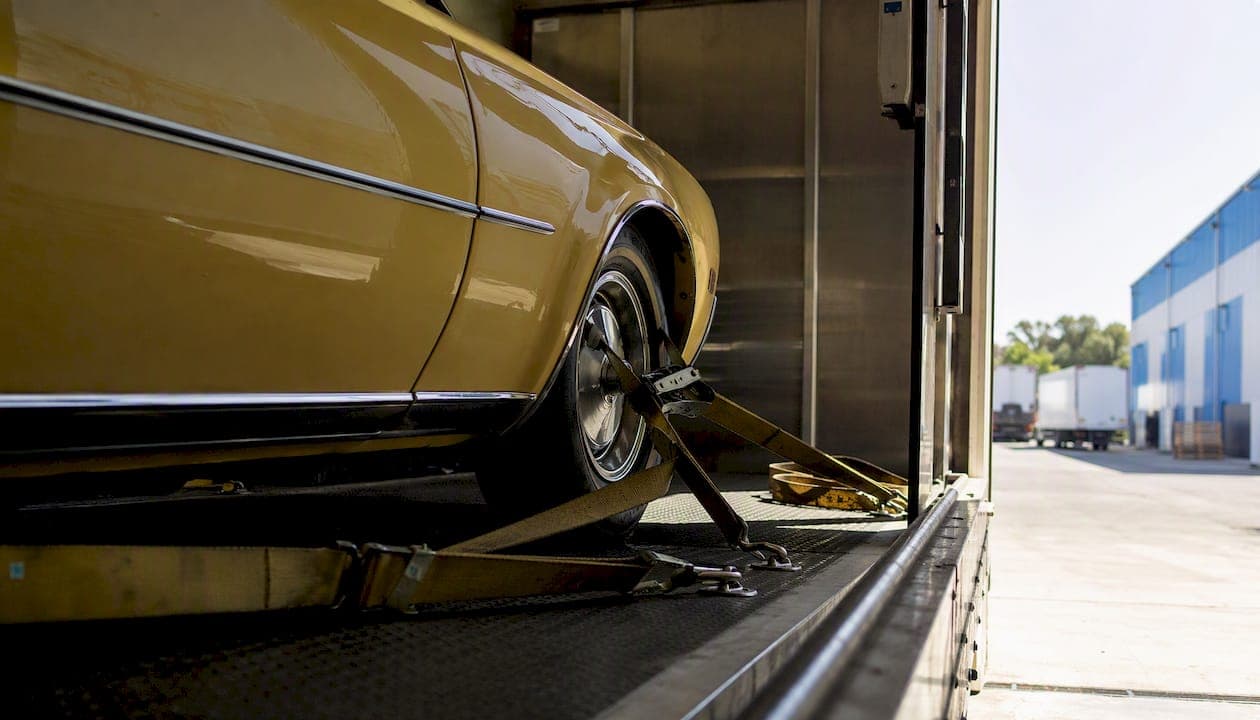
Shipping a classic car across the U.S. typically costs a few hundred to several thousand dollars, depending on distance and how you choose to move it. The single biggest decision you'll make is trailer type: open carrier or enclosed. Carrier-published ranges place open-carrier shipments at roughly a mid-hundreds to about fifteen hundred dollars and enclosed at somewhat higher for most routes, with expedited pickup adding several hundred dollars on top. For coast-to-coast enclosed moves, budget closer to low thousands up to several thousand dollars.
After trailer type, declared value is the next biggest cost lever. Insuring a $300,000 Shelby Cobra at its real market value costs meaningfully more than a blanket cargo policy, and that difference is worth every dollar. If your car is worth more than $50,000, enclosed transport with an agreed-value rider isn't optional — it's the baseline.
Key Takeaways
Enclosed transport with an agreed-value insurance rider is the right default for any classic car worth $50,000 or more, and getting at least three itemized quotes is the single most reliable way to avoid overpaying or under-insuring.
| Point | Details |
|---|---|
| Expected cost range | Most U.S. classic car shipments run $800–$4,500; coast-to-coast enclosed moves typically reach $1,500–$4,500. |
| Enclosed vs. open | Enclosed transport costs significantly more than open transport and is the baseline for collector vehicles of certain value. |
| Declared value matters | Set declared value at current appraised market value; agreed-value riders typically add $75–$1,200 depending on vehicle value. |
| Get three quotes minimum | Compare itemized quotes and verify each carrier's FMCSA number and Certificate of Insurance before booking. |
| Butterclassics for comps | Use Butterclassics' inventory and valuation resources to set an accurate declared value before contacting carriers. |
Table of Contents
- How much does classic car shipping cost by distance and service tier?
- What actually changes the price of shipping a classic car?
- Which transport method is right for your classic car?
- Real cost examples: what three typical shipments actually look like
- How to prepare your classic car for transport
- What does carrier insurance actually cover, and when do you need more?
- How to get and compare quotes the right way
- Pickup windows, lead times, and surcharges that affect your budget
- How to lower your shipping cost without cutting corners
- How to set the right declared value using market data
- How regional routes affect what you pay
- What collectors actually care about when shipping a classic
- Butterclassics can help you get the valuation and transport prep right
- Sources
How much does classic car shipping cost by distance and service tier?
Calculator-backed ranges for 2026 show short regional hauls from about $700–$1,400, mid-range hauls $1,100–$2,500, and coast-to-coast enclosed moves typically $1,500–$4,500. Per-mile rates decline as distance grows, but total cost rises. Cost Insider's per-mile guide shows enclosed transport typically runs 40–65% more than open on the same route.
Common add-ons that raise the headline price include fees for lift-gate or low-clearance loading, inoperable vehicle surcharges, expedited pickup, oversized or extra-heavy vehicles, and remote pickup or delivery areas, each varying by several hundred dollars.
What actually changes the price of shipping a classic car?
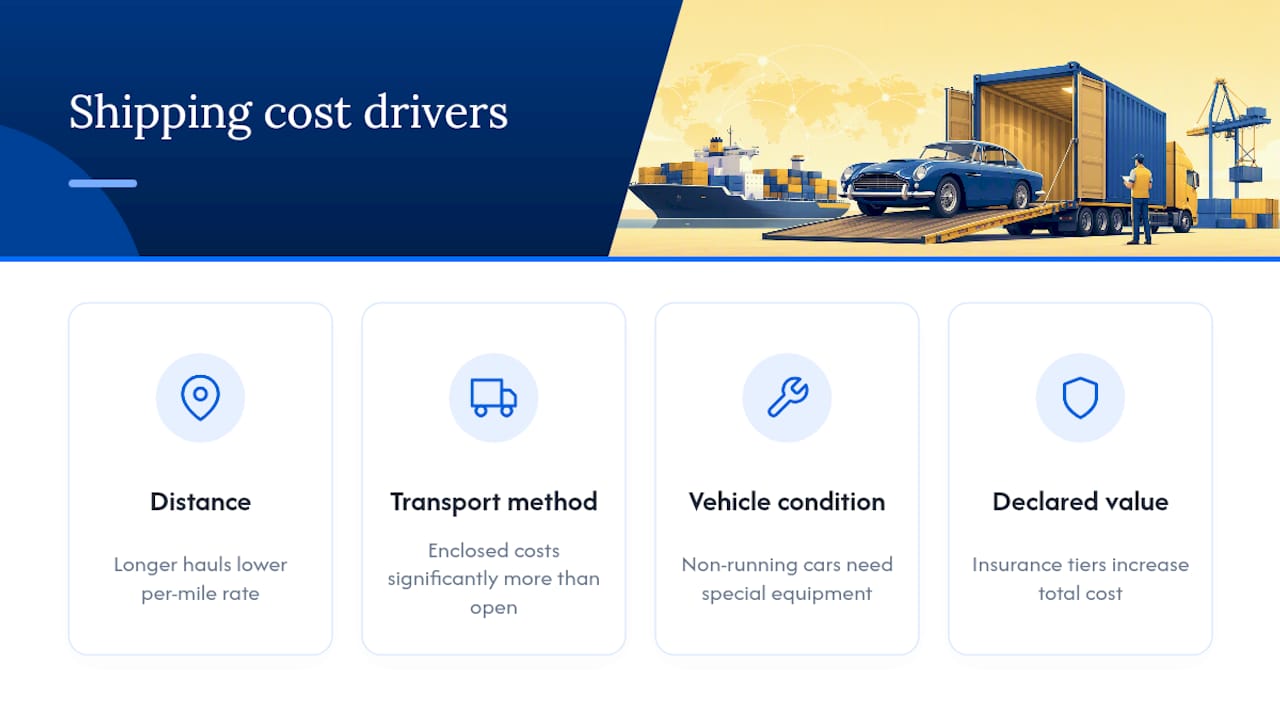
Distance is the foundation of every quote, but it's not the whole story. Longer hauls lower the per-mile rate while raising the total. A 300-mile regional move might cost $1.50–$2.50 per mile enclosed; a 2,500-mile coast-to-coast run often drops to $0.60–$1.00 per mile, yet the total bill is three to four times higher.
Primary cost drivers include transport method, with enclosed carriers costing significantly more than open; vehicle size and weight affecting space and rigging needs; condition requiring special equipment for non-running cars; low ground clearance needing lift-gates; pickup and delivery locations affecting door-to-door fees; timing and demand such as peak auction weeks increasing prices; and declared value with insurance tiers impacting total cost due to added coverage needs.
Which transport method is right for your classic car?
Open carrier
Open transport is the most common and affordable option. Your car rides on a multi-level trailer exposed to weather and road debris. For a daily-driver classic or a project car moving to a restoration shop, open is perfectly reasonable. The cost profile is lower, carrier availability is higher, and lead times tend to be shorter.
The tradeoff is exposure. Road grit, rain, and UV light aren't catastrophic for a car that's already going to a shop, but they're a real concern for a freshly restored show car or a concours-condition vehicle.
Enclosed carrier
Enclosed transport puts your car inside a fully covered trailer, protected from weather, debris, and prying eyes. Allied Auto Transport notes that enclosed is the expected baseline for collector vehicles, with carrier-stated ranges of $400–$700 for under 500 miles, $700–$1,400 for 500–1,500 miles, and $1,200–$2,200 coast-to-coast. Lead times run slightly longer than open because enclosed trailers are fewer and fill up faster.
For any vehicle worth $30,000 or more, the premium over open transport is modest relative to the risk you're eliminating.
Flatbed and dedicated trailers
A flatbed is typically used for non-running vehicles, extremely low-clearance cars, or situations where a standard ramp would damage the undercarriage. Dedicated single-vehicle trailers (sometimes called "hot shot" or white-glove transport) carry one car at a time, which eliminates any risk of contact with other vehicles. Concours-level moves, auction deliveries, and vehicles worth $500,000 or more almost always use dedicated trailers.
Recommended use by vehicle value
| Vehicle Value | Recommended Transport | Notes |
|---|---|---|
| — | Open carrier | Acceptable for project cars and drivers |
| — | Enclosed carrier | Standard collector baseline |
| — | Enclosed + agreed-value rider | Require COI before booking |
| $250,000+ | Dedicated / white-glove | Underwriter-placed policy recommended |
Real cost examples: what three typical shipments actually look like
These scenarios use door-to-door, operable vehicle assumptions. Prices reflect 2026 market ranges.
Scenario 1: 300-mile regional move (e.g., Atlanta to Nashville), enclosed
Scenario 2: 1,100-mile mid-range move (e.g., Dallas to Chicago), enclosed
Scenario 3: 2,600-mile coast-to-coast (e.g., Los Angeles to New York), enclosed
Cost Insider's breakdown confirms that carrier price builds include materials, labor, equipment, permits, and insurance as separate line items — so always ask for an itemized quote, not just a single number.
How to prepare your classic car for transport
Getting your car ready before pickup prevents damage, avoids surprise fees, and protects your insurance claim if something does go wrong.
Pre-shipment checklist:
- Fuel level: Keep the tank at 1/4 full or less. A full tank adds unnecessary weight and increases fire risk.
- Fluids: Check for leaks in oil, coolant, brake fluid, and transmission fluid. Active leaks can damage other vehicles on the trailer and void your claim.
- Battery: Make sure it's charged and secured. Disconnect the negative terminal if the car will sit for more than a few days in transit.
- Handbrake: Set it, but don't leave it engaged for extended periods on older drums — use wheel chocks instead if the carrier provides them.
- Tire pressure: Inflate to the manufacturer's recommended PSI. Under-inflated tires can shift during loading.
- Loose items: Remove all personal belongings, floor mats, and aftermarket accessories that could shift or scratch the interior.
- Convertible tops and windows: Secure soft tops and close all windows. Even enclosed trailers experience vibration.
- Photos: Take timestamped photos of every panel, the undercarriage, the interior, and all four wheels before the carrier arrives. These are your evidence if a claim is needed.
- Documentation: Have the title, registration, and any appraisal documents ready. The carrier will need to complete a Bill of Lading at pickup — review it carefully before signing.
Common mistakes that cost money:
Undisclosed modifications are the most frequent source of day-of surprises. A car with a lowered suspension that wasn't mentioned in the quote may require a lift-gate the carrier didn't bring, causing a delay and an added fee. Incorrect ground clearance disclosure is the same problem. Measure your car's lowest point and state it explicitly when requesting quotes.
Pro Tip: Disclose your ride height in inches when you first contact a carrier. If your car sits below 4 inches, ask specifically whether the trailer has a lift-gate or hydraulic ramp. Ramp clearance is a frequent day-of-pickup surprise for low-clearance classics, and budgeting for a lift-gate fee ($150–$400) upfront avoids costly scrambles at pickup.
Progressive's classic car storage and maintenance guidance also recommends checking rubber seals and weatherstripping before any extended period of movement or storage — a small step that prevents moisture intrusion during transit.
What does carrier insurance actually cover, and when do you need more?
Standard carrier cargo policies cover physical damage during transit, but they almost never cover a classic car at its true market value. Most basic cargo policies are actual-cash-value (ACV) policies, which means the carrier's insurer can depreciate your vehicle's value at the time of a claim. For a 1969 Camaro Z/28 worth $120,000, an ACV payout could be a fraction of that.
Agreed-value riders are the answer. Most specialty carriers routinely offer $150,000–$1,000,000 agreed-value riders, and concours-level moves often require underwriter-placed policies.
Declared value tiers and typical insurance premiums:
| Declared Value | Typical Rider Premium | Notes |
|---|---|---|
| Up to $50,000 | $75–$200 | Often included in base enclosed rate |
| $50,000–$150,000 | $150–$400 | Require separate COI confirmation |
| $150,000–$500,000 | $400–$1,200 | Specialty carrier or broker required |
| $500,000+ | $1,000–$4,500 | Underwriter-placed policy recommended |
Before pickup, require these documents:
- Certificate of Insurance (COI) naming your vehicle and declared value
- Carrier's FMCSA Motor Carrier number (verify at Safer)
- Signed Bill of Lading with condition noted at pickup
Claims checklist:
- Photograph the vehicle at delivery before moving it off the trailer.
- Note any damage on the Bill of Lading before signing — once you sign without noting damage, the claim becomes much harder.
- File the claim with the carrier's insurer within 24–48 hours of delivery.
- Submit your pre-shipment photos as primary evidence.
Pro Tip: Ask the carrier to email you the COI at least 48 hours before pickup. If they can't produce it, that's a clear signal to find a different carrier.
How to get and compare quotes the right way
Getting three quotes is the floor, not the ceiling. Forbes Advisor's roundup underscores that comparing multiple vetted quotes is one of the most reliable ways to avoid overpaying or under-insuring. The key is comparing apples to apples, which means asking the same questions of every carrier.
Exact questions to ask every carrier:
- What is your FMCSA MC number, and can I verify your authority online?
- Is this quote for open or enclosed transport?
- What is the declared value included in this quote, and what type of policy covers it (ACV or agreed-value)?
- Can you provide a Certificate of Insurance before pickup?
- What is the pickup window — how many days of flexibility do you need?
- Is this door-to-door or terminal-to-terminal?
- Does the trailer have a lift-gate or hydraulic ramp for low-clearance vehicles?
- What surcharges are not included in this quote (fuel, oversized, remote delivery)?
- What is your per-mile rate and the specific route you're quoting?
- What is your cancellation and rescheduling policy?
Red flags that suggest an unreliable quote:
- Price is 30% or more below other quotes for the same service tier
- Carrier can't produce a COI or FMCSA number
- Quote is a single lump sum with no line-item breakdown
- Carrier asks for full payment upfront before pickup
- No physical address or only a P.O. box listed
- Vague answers about which actual carrier will move the vehicle (broker vs. carrier confusion)
Industry experts caution that quotes far below market averages often indicate carriers aren't properly vetted or that the insurance declared value is insufficient. A quote that looks like a deal is sometimes a carrier with inadequate coverage and no real accountability.
Checking a carrier's BBB profile — including complaint history and accreditation status — takes two minutes and can save you a major headache. Sherpa Auto Transport's BBB profile is one example of what a transparent, accredited carrier looks like.
Platforms like Sherpa Auto Transport, Passport Transport, AmeriFreight, Montway Auto Transport, and uShip all operate in the U.S. classic car shipping space. When using a broker platform like uShip or AmeriFreight, confirm that the actual carrier assigned to your vehicle (not just the broker) holds adequate cargo insurance for your declared value.
Pickup windows, lead times, and surcharges that affect your budget
Timing is one of the most underestimated cost variables in classic car freight charges. Carriers quote a pickup window, not a specific date, and that window length directly affects price.
| Pickup Window | Typical Premium | Notes |
|---|---|---|
| Standard (5–10 business days) | Base rate | Most economical option |
| Priority (2–4 business days) | +$150–$300 | Moderate flexibility required |
| Expedited (24–48 hours) | +$200–$500 | Carrier must be available immediately |
Common surcharges to budget for:
- Fuel surcharge: $40–$150, varies with diesel prices
- Peak-event surcharge: $100–$400 during major auction weeks
- Oversized vehicle: $100–$300 for wide-body, lifted, or extra-long vehicles
- Remote pickup/delivery: $75–$200 for rural or hard-to-access addresses
- Lift-gate: $150–$400 for low-clearance or non-running vehicles
- Inoperable vehicle: $150–$300 if the car can't be driven onto the ramp
Transit time examples:
- Under 500 miles: 1–3 days in transit
- 500–1,500 miles: 3–6 days in transit
- Coast-to-coast (1,500–2,800+ miles): 6–10 days in transit
Booking 3–4 weeks ahead of your target delivery date is the standard recommendation for enclosed transport. During peak auction season, 6 weeks is safer.
How to lower your shipping cost without cutting corners
Flexibility is the most reliable way to reduce auto shipping costs for classics. Carriers fill trailers more efficiently when they have a wider pickup window, and they pass some of that efficiency back to you in the form of lower rates.
Tactics that legitimately reduce cost:
- Flexible pickup window: Agreeing to a 7–10 day window instead of expedited pickup can save $200–$500.
- Terminal-to-terminal delivery: Dropping off and picking up at a carrier terminal instead of door-to-door cuts the last-mile surcharge, typically saving $75–$200 each way.
- Consolidated shipping: Sharing trailer space with other vehicles on the same route lowers your per-mile cost on open carriers. Less practical for enclosed, where space is limited.
- Off-peak booking: Avoid the two weeks surrounding Barrett-Jackson Scottsdale (January), Mecum Kissimmee (January), and Monterey Car Week (August). Rates spike noticeably during those windows.
- Book direct with a carrier: Broker platforms add a margin. Booking directly with a licensed carrier can save $100–$300, though it requires more vetting work on your end.
When paying more is the right call:
Agreed-value insurance is never the place to cut costs. Neither is a dedicated trailer for a vehicle worth $500,000 or more. The math is simple: a $500 savings on transport insurance is not worth the exposure on a seven-figure car. Similarly, if your car has a fresh restoration or concours-level paint, the $300–$600 premium for enclosed over open is trivial compared to the cost of a single paint correction.
Fraud patterns to watch for:
- Carriers who can't name the actual driver or truck assigned to your vehicle
- Quotes that arrive via text only, with no written contract or itemized breakdown
- Requests for cash payment or wire transfer before pickup
- No verifiable FMCSA authority number
How to set the right declared value using market data
Declared value isn't just an insurance number — it's the figure that determines your payout if the car is damaged or totaled in transit. Setting it too low saves a few dollars on the rider premium and costs you tens of thousands in a claim. Setting it too high can trigger carrier scrutiny and higher premiums without added benefit.
The right declared value matches your car's current market value, ideally supported by a recent appraisal or comparable sale data.
Valuation checklist before booking transport:
- Get a written appraisal from a certified appraiser (NADA Classic, Hagerty Valuation Tools, or a marque specialist)
- Pull recent sale comps for your make, model, year, and condition grade
- Check current listings on Butterclassics' inventory for real-market pricing on comparable vehicles
- Review the 2026 market trends checklist to confirm whether your segment is appreciating or softening
- Use the resale pricing guide to cross-check your estimate against recent transaction data
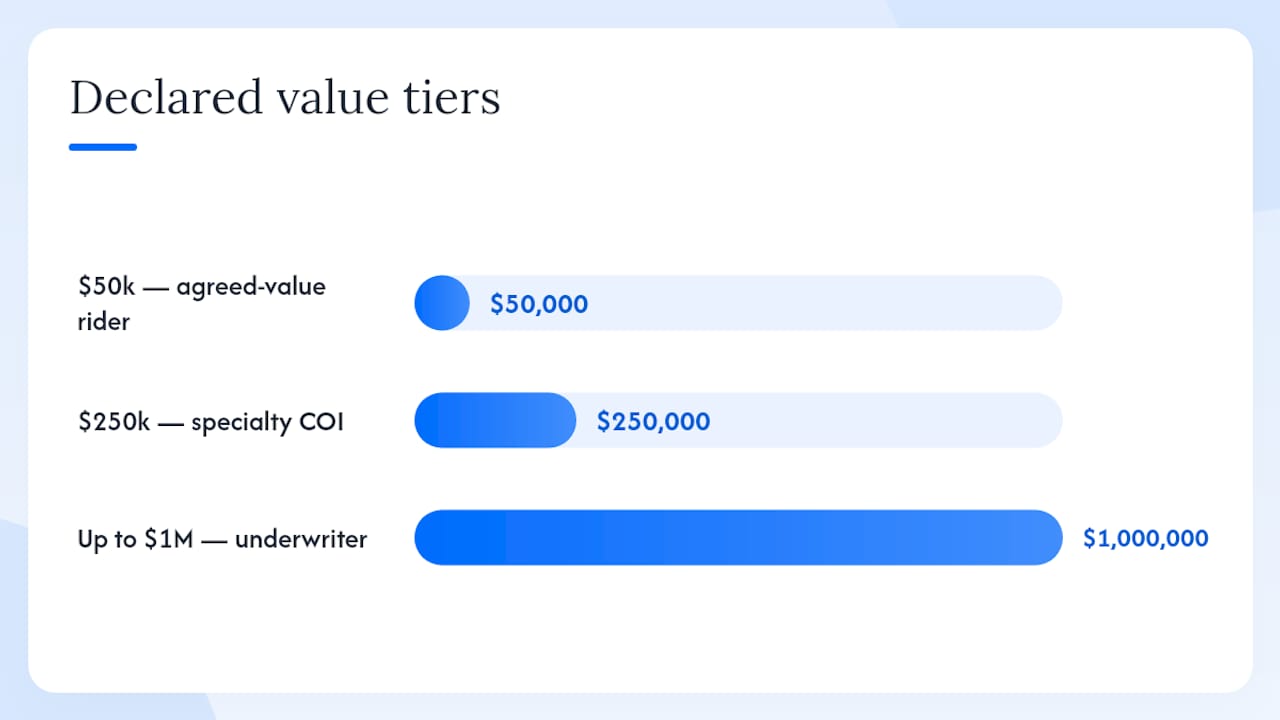
Declared value tiers and coverage implications:
| Vehicle Value | Declared Value Approach | Coverage Type |
|---|---|---|
| $50,000 | Match appraised value | Standard agreed-value rider |
| $250,000 | Match recent comp sale price | Specialty carrier COI required |
| up to $1,000,000 | Underwriter-placed policy | Dedicated trailer mandatory |
For a $50,000 vehicle, a standard agreed-value rider from most enclosed carriers is sufficient. At $250,000, you need a specialty carrier who can produce a COI that specifically names your vehicle and its declared value. At $1,000,000 or more, the insurance is typically placed by an underwriter separately from the transport contract, and the carrier is selected to match that policy's requirements.
Pro Tip: Use Butterclassics' classic car insurance value guide to understand how agreed-value and stated-value policies differ before you call a carrier. Knowing the terminology means you'll ask the right questions and catch gaps in coverage before pickup.
How regional routes affect what you pay
Classic car transportation rates vary not just by total distance but by the specific corridors and regions involved. Some routes are heavily traveled by carriers, which keeps prices competitive. Others are thin on carrier availability, which pushes rates up regardless of mileage.
High-traffic corridors (lower rates, more carrier options):
- California to Florida (and reverse): one of the busiest enclosed-transport lanes in the country, driven by auction activity and snowbird relocations
- Texas to the Midwest: strong carrier density due to volume of collector car sales in both regions
- Northeast to Southeast: consistent demand from auction houses and private sales
Thin-coverage regions (expect surcharges):
- Rural Mountain West (Montana, Wyoming, Idaho): remote pickup surcharges of $100–$200 are common
- Upper Midwest in winter (Minnesota, Wisconsin, North Dakota): weather delays and limited carrier availability push rates up seasonally
- Hawaii and Alaska: require ocean freight or air freight, which operates on a completely different pricing model from mainland transport
The Pacific Coast and the I-95 corridor between Boston and Miami are the two most competitive lanes for enclosed transport. If your route touches either of those, you'll have more carrier options and better pricing leverage than on a rural or off-corridor move.
Seasonal demand also shifts regional pricing. Spring and fall are the busiest shipping seasons for collector cars, driven by show season and auction calendars. Winter shipping to warm-weather states (Florida, Arizona, California) stays active year-round because of auction activity, but rates in northern states drop in winter due to lower demand.
What collectors actually care about when shipping a classic
The cost conversation is real, but most serious collectors will tell you the thing that keeps them up at night isn't the bill — it's the condition of the car when it arrives.
Every collector who has shipped a significant car has a story. A door ding from a poorly secured ramp. A scratch from a tie-down strap that wasn't padded. A convertible top that got soaked because the driver didn't check the weather. These aren't catastrophic events, but they're infuriating when the car was perfect when it left. The paperwork and photos matter because they're the only leverage you have when something goes wrong.
The tradeoff collectors consistently make is paying more for certainty. Enclosed transport, agreed-value insurance, and a carrier with a verifiable track record cost more than the cheapest quote on a broker platform. The premium is real. So is the peace of mind. For a car that took years to restore or represents a significant investment, the math almost always favors spending the extra $400–$800 for a service tier that matches the vehicle's value.
Timing is the other variable that gets underestimated. Shipping a car to an auction or a show with a hard deadline is a completely different exercise from a flexible private sale move. If the car needs to be at Mecum on a specific date, you're paying expedited rates and booking 6–8 weeks out. That's not a complaint — it's just the reality of moving a high-value vehicle on a fixed schedule.
The Butterclassics collector transport guide covers these tradeoffs in more detail, including how to vet carriers and what to expect at pickup and delivery.
Butterclassics can help you get the valuation and transport prep right
When you're buying or selling a classic car, the shipping decision doesn't happen in isolation. You need an accurate declared value before you call a carrier, and that means knowing what comparable vehicles are actually selling for right now.
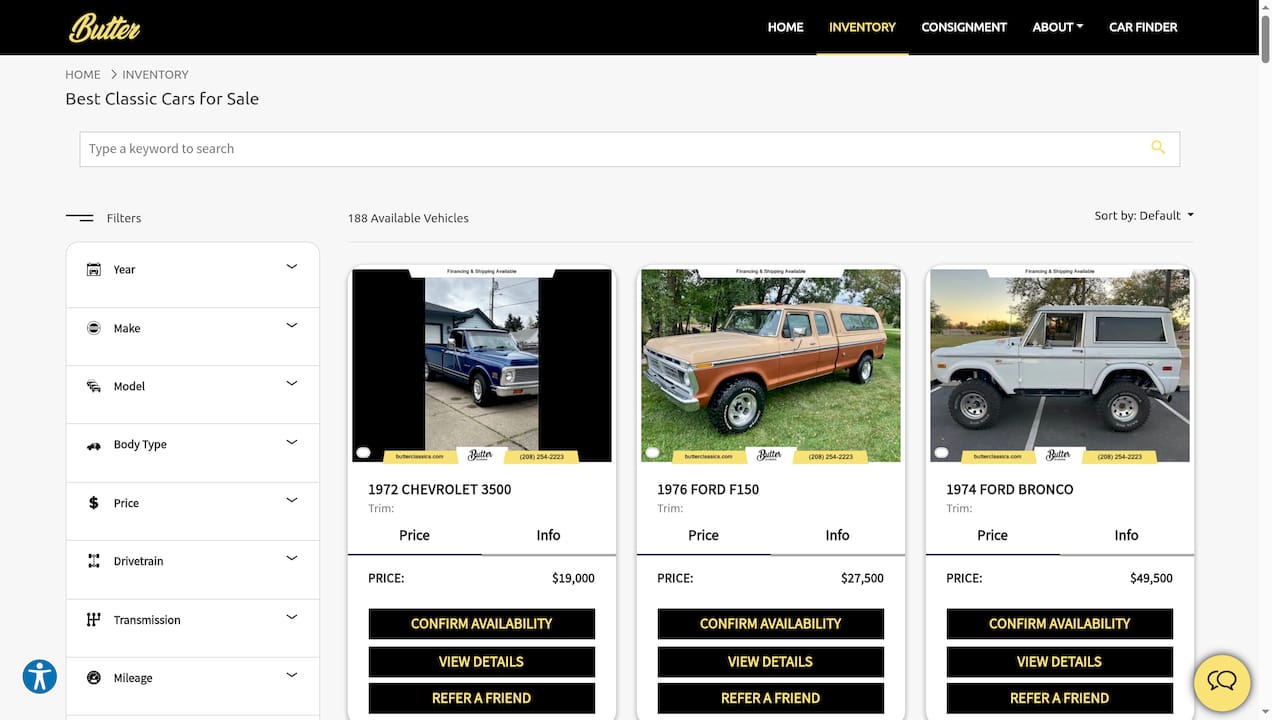
Butterclassics gives you real-market inventory data on classic and vintage vehicles across every major segment — muscle cars, Corvettes, Broncos, trucks, and more. Browse the current inventory to pull real comps for your make and model before you set a declared value. If you're selling and considering whether to ship or consign, the consignment service handles the logistics of listing, valuation, and connecting you with qualified buyers — so you're not managing a cross-country shipment on a car you're trying to sell anyway. Ready to find your next classic or get a valuation before your next shipment? Start with the inventory and see what the market is actually doing.
Sources
These are the primary resources referenced throughout this guide:
- Classic Car Transport Cost: Price Guide for U.S. Buyers – Cost Insider
- Classic Car Shipping Cost Calculator — UseCalcPro
- Classic Car Shipping | Enclosed Transport Costs & Prep - Allied Auto Transport
- Best Classic Car Shipping Companies Of 2026 — Forbes Advisor