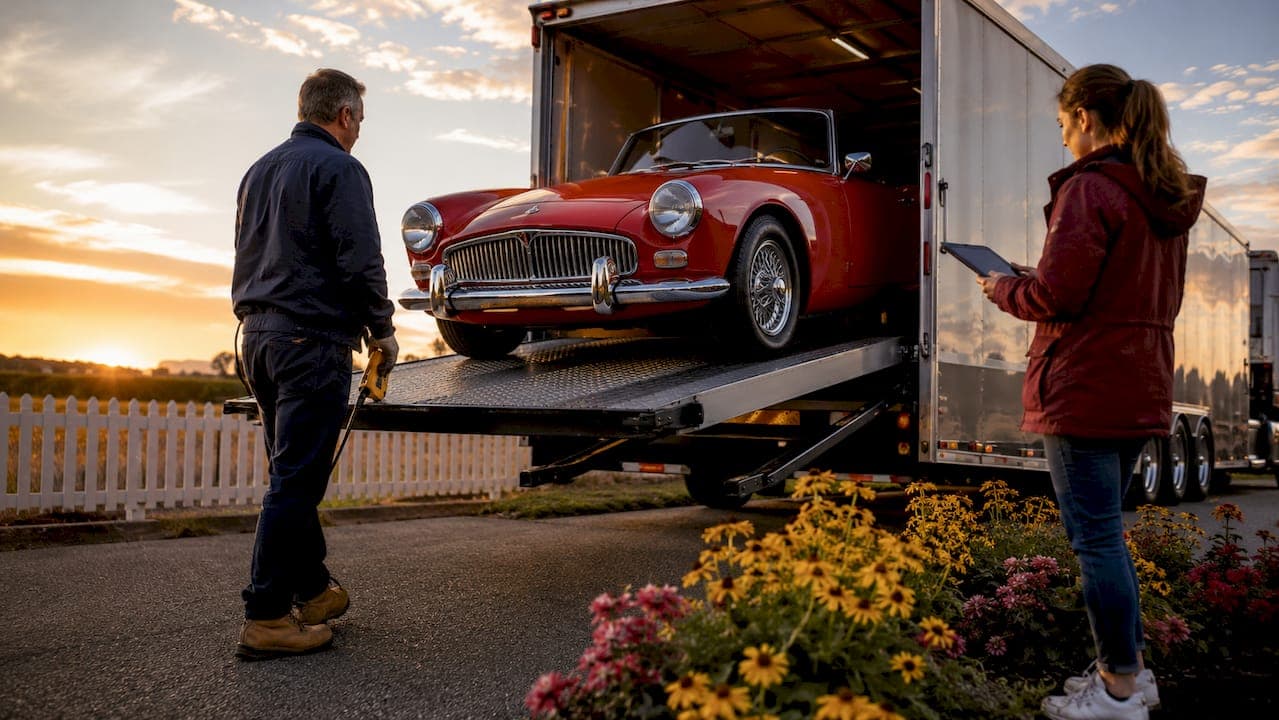
A classic car transport service is a specialized logistics solution that moves vintage and high-value vehicles using enclosed trailers, soft nylon straps, and climate controls designed to protect the car's finish, suspension, and mechanical integrity during transit. Unlike standard auto shipping, this service treats your 1969 Camaro or numbers-matching Corvette the way it deserves: with care that matches its value. Enclosed transport typically costs $800–$2,500, which runs 30%–50% more than open carriers. That premium buys real protection, not just peace of mind.
What is a classic car transport service and how does it differ?
A classic car transport service is not simply a truck that hauls cars. It is a purpose-built system using enclosed trailers, specialized loading equipment, and trained drivers who understand the difference between a daily driver and a restored 1957 Thunderbird. Open transport is not recommended for vehicles with restored paint or high collector value. Road debris, UV exposure, and weather can undo years of restoration work in a single cross-country haul.
The core difference comes down to containment and contact. Standard carriers use metal chains and open flatbeds. Classic vehicle transportation uses enclosed trailers that seal the car away from the elements and soft restraints that never touch painted surfaces. This is the industry standard in 2026, and any carrier not following it should raise a red flag for you immediately.
What specialized equipment is used in classic car hauling?
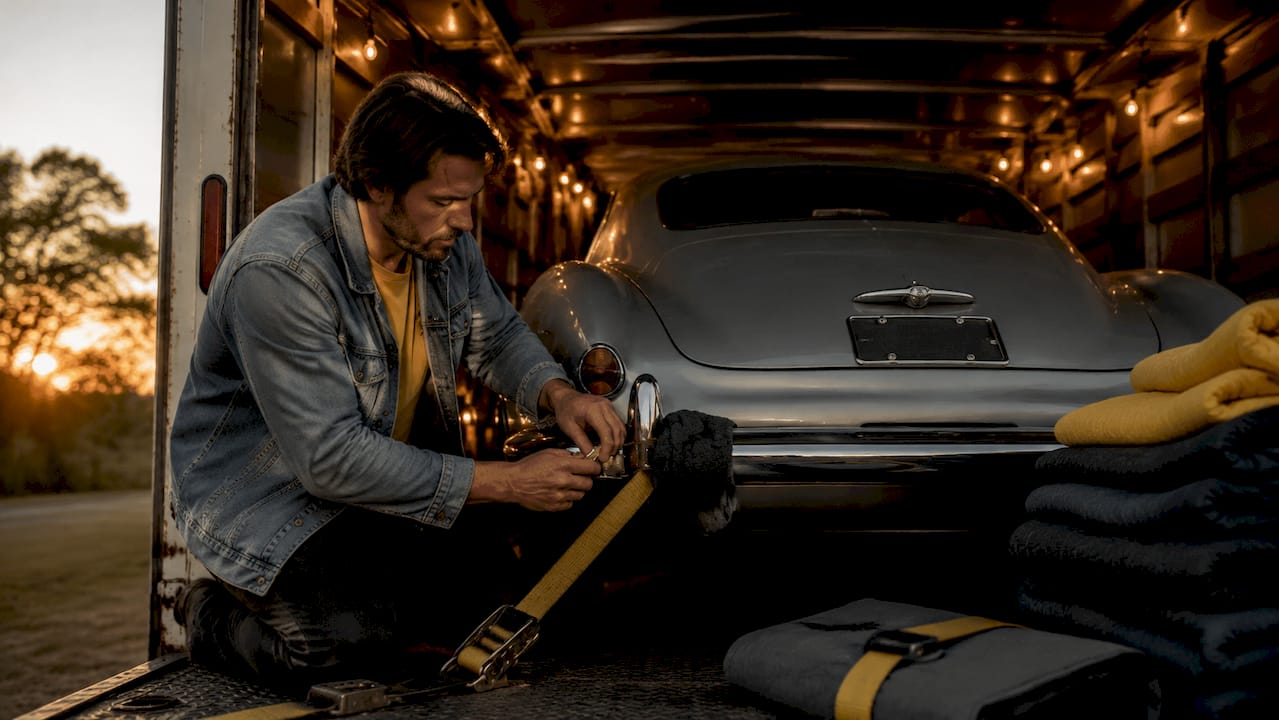
The equipment inside an enclosed trailer is what separates a classic car shipping service from a generic hauler. Each component is chosen to prevent the specific types of damage that destroy collector car value.
Here is what a properly equipped enclosed trailer includes:
- Enclosed trailer with climate control. Temperature and humidity regulation prevents paint cracking, leather drying, and rubber seal deterioration during long hauls across varying climates.
- Hydraulic liftgate. Hydraulic liftgates keep the vehicle level during loading, unlike angled metal ramps that can scrape front splitters, low-profile bumpers, or custom bodywork. This is non-negotiable for any car sitting below four inches of ground clearance.
- Soft nylon straps and wheel nets. Soft straps contacting only the chassis or wheels are the 2026 industry standard. Metal chains are prohibited for classic cars because they scratch paint and stress suspension components.
- Drip guards. Multi-level enclosed trailers carry vehicles on upper and lower decks. Drip guards prevent fluids like oil or brake fluid from leaking off upper deck vehicles onto the clear coat of cars below.
- Locking, sealed trailer doors. Full enclosure protects against theft and weather. This matters especially for vehicles traveling through multiple states or sitting overnight at a terminal.
Pro Tip: Always ask your carrier specifically whether their trailer has drip guards. Many enclosed trailers skip this feature, and a single fluid drip from an upper deck vehicle can ruin a freshly restored clear coat. It is a small question that can save you thousands.
The combination of these features is what makes specialized car transport for classics worth every dollar of the premium. You are not paying for a fancier truck. You are paying for a system engineered to deliver your vehicle in exactly the condition it left.
How do you choose the best classic car transport company?
Choosing the right carrier requires verification, not just trust. The classic car moving service industry includes reputable specialists and brokers who hand off your vehicle to unqualified haulers. Brokers often delegate shipments to unqualified drivers, which puts collector vehicles at serious risk. Here is how to verify you are working with a legitimate specialist.
- Check USDOT and MC numbers. Every licensed carrier must have a USDOT number and Motor Carrier (MC) number. Verify both through the FMCSA SAFER database at safer.fmcsa.dot.gov. A carrier that cannot provide these numbers is not legally operating.
- Request a Certificate of Insurance. Do not accept verbal assurances. Ask for the actual certificate and confirm the coverage limits. Carrier insurance limits commonly range $1,000,000–$2,000,000 for collector vehicles. Anything lower is a warning sign.
- Confirm Agreed Value or Stated Value coverage. Standard carrier policies use Actual Cash Value, which depreciates your vehicle. Agreed Value coverage pays the pre-agreed amount regardless of market fluctuation. For a collector car, this distinction is critical. You can learn more about how this applies to your specific vehicle in this guide to classic car insurance value.
- Ask about driver experience with classic cars. A carrier experienced with modern vehicles is not automatically qualified to handle a numbers-matching muscle car. Ask directly how many collector vehicles they have transported and request references.
- Confirm proper equipment. Ask whether they use hydraulic liftgates, soft straps, and enclosed trailers. If a carrier hesitates or offers alternatives, move on.
Pro Tip: Search the carrier's USDOT number on the FMCSA SAFER database before you sign anything. Look at their safety rating, inspection history, and any out-of-service orders. Five minutes of research here can prevent a nightmare.
What does classic car transport cost and when should you book?
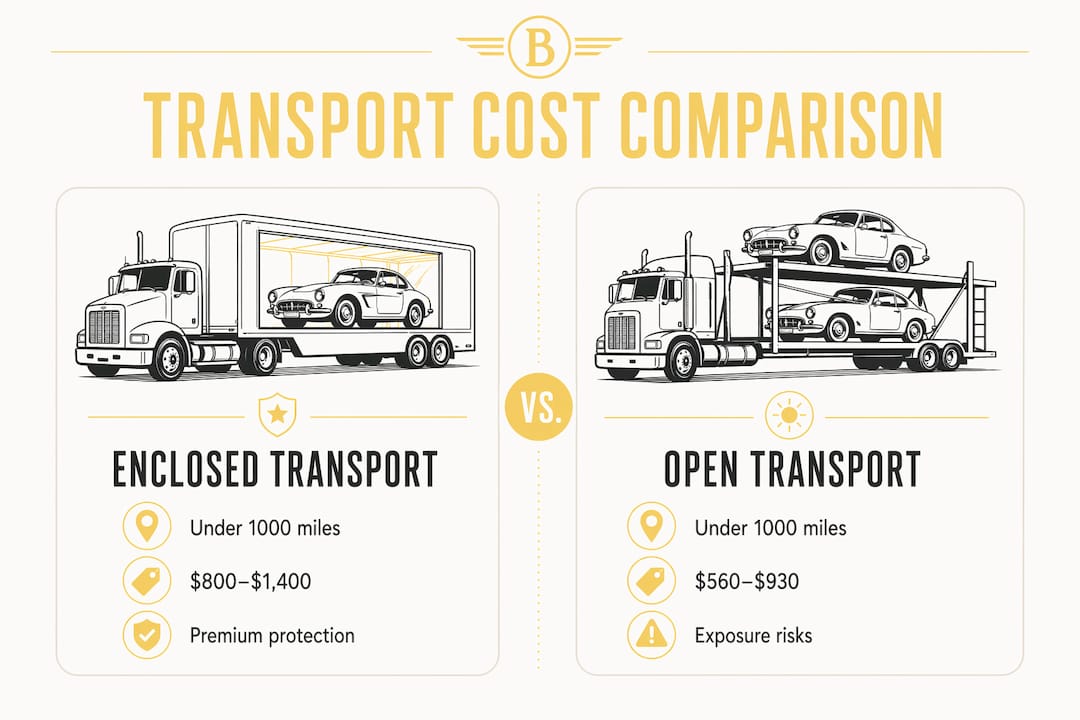
Pricing for classic car shipping service depends primarily on distance and the level of service you choose. The table below reflects 2026 industry pricing for enclosed transport.
| Distance | Enclosed Transport Cost | Open Transport Comparison |
|---|---|---|
| Under 1,000 miles | $800–$1,400 | $500–$900 |
| Coast to coast | $1,400–$2,500 | $900–$1,600 |
| Premium add-ons (guaranteed pickup, door-to-door) | +$150–$400 | Not typically available |
Enclosed transport costs 30%–50% more than open shipping across all distance ranges. For a restored vehicle worth $40,000 or more, that difference is a small fraction of the asset's value.
Timing matters as much as price. Book 1–2 weeks in advance for standard shipments. For major auction events like the Scottsdale auctions in January or the Monterey Car Week in August, book 4–6 weeks out. Enclosed carrier capacity fills fast around those events, and last-minute bookings often mean settling for a less qualified hauler or paying a rush premium.
Door-to-door service reduces the number of times your vehicle changes hands, which directly lowers damage risk. Guaranteed pickup locks in your date so you are not waiting on a carrier to fit you into their schedule. Both upgrades are worth the added cost for high-value vehicles. If you are timing a transport around a purchase or auction, the 2026 classic car market trends checklist is a useful planning reference.
How to prepare your classic car for shipping
Preparation before pickup protects your vehicle and protects you legally if something goes wrong. Follow these steps before any carrier takes possession of your car.
- Photograph every angle before pickup. Shoot all four sides, the roof, the undercarriage, the interior, and any existing damage. Use a phone with a timestamp or a camera with metadata. High-resolution dated photos combined with the Bill of Lading form the legal record of your vehicle's condition before transport.
- Complete a thorough pre-shipment inspection. Walk the car with the driver and note every scratch, chip, and imperfection on the Bill of Lading. Both you and the driver sign it. This document is your legal protection if damage occurs. For a detailed approach to evaluating vintage car condition before any transaction, Butterclassics has a practical guide worth reading.
- Check fluid levels and tire pressure. Overfilled fluids can leak during transport. Tires should be at the manufacturer's recommended pressure, not overinflated.
- Remove loose items from the interior and trunk. Loose parts become projectiles during transport and can scratch interior panels or glass.
- Disable the alarm system. A triggered alarm during transport is a headache for the driver and can drain your battery over a long haul.
- Leave the fuel tank at one-quarter full. A full tank adds unnecessary weight. An empty tank creates condensation risk. One-quarter is the industry-recommended level.
Upon delivery, inspect the vehicle thoroughly before signing the delivery copy of the Bill of Lading. If you notice damage, document it immediately with photos and note it on the paperwork before the driver leaves. Signing without noting damage makes a claim significantly harder to pursue.
Key takeaways
A classic car transport service is the only reliable method for moving a high-value vintage vehicle without risking paint, mechanical, or structural damage.
| Point | Details |
|---|---|
| Enclosed transport is the standard | Use only enclosed trailers with climate control for any restored or high-value classic car. |
| Verify carrier credentials | Check USDOT and MC numbers via the FMCSA SAFER database before booking any carrier. |
| Insist on Agreed Value coverage | Carrier insurance should be $1M–$2M with Agreed Value terms, not Actual Cash Value. |
| Document condition before pickup | Photograph every angle and complete the Bill of Lading with the driver before the car leaves. |
| Book early for peak seasons | Reserve enclosed carriers 4–6 weeks ahead of major auction events like Scottsdale or Monterey. |
Why I think most collectors underestimate transport risk
I have seen collectors spend $30,000 restoring a muscle car and then hand it to the cheapest carrier they could find online. The logic seems sound at the time. The car made it to the last show just fine. Why pay more?
The answer is that transport damage is rarely dramatic. It is a fluid drip on a fresh clear coat. It is a soft strap placed two inches too high, leaving a pressure mark on a door panel. It is a driver who does not know how to use a hydraulic liftgate and scrapes the front air dam on a ramp. None of these show up in a carrier's safety record. They show up on your car.
The verification steps in this article are not bureaucratic formalities. They are the difference between a carrier who has done this a hundred times and one who picked up the load because they had an empty trailer going the right direction. Brokers are the biggest risk here. They take your booking and assign it to whoever is available. You have no idea who is actually driving your car until the truck shows up.
My honest advice: pay the premium for a direct carrier with verifiable classic car experience. Confirm the equipment, confirm the insurance, and document everything. The $200–$400 you save by cutting corners is not worth it when you are staring at a repair bill for a paint job that took six months to complete.
— Tony
Ready to find your next classic? Butterclassics has you covered
If you are buying or selling a classic car, transport is just one piece of the puzzle. Butterclassics specializes in high-quality collector vehicles, from muscle cars and Corvettes to vintage Broncos and investment-grade trucks. Every listing comes with detailed specs and high-resolution photos so you know exactly what you are getting before transport ever enters the conversation.
Whether you are adding to your collection or moving on a vehicle you have been watching, the Butterclassics inventory is the place to start. For collectors who want added confidence, the Butter Certified program offers verified vehicles that meet a higher standard. Browse the inventory today and find the classic that is smooth as butter.
FAQ
What is the difference between open and enclosed car transport?
Open transport exposes your vehicle to weather, road debris, and UV damage on an uncovered trailer. Enclosed transport seals the car inside a climate-controlled trailer, making it the only recommended option for restored or high-value classic cars.
How much does it cost to ship a classic car?
Enclosed classic car transport costs $800–$1,400 for trips under 1,000 miles and $1,400–$2,500 for coast-to-coast shipments in 2026. That is 30%–50% more than open transport, reflecting the specialized equipment and protection involved.
What insurance should a classic car carrier have?
Carriers should carry $1,000,000–$2,000,000 in liability coverage with Agreed Value or Stated Value terms. Actual Cash Value policies can significantly underpay on a claim for a collector vehicle with appreciated market value.
How far in advance should I book classic car transport?
Book 1–2 weeks ahead for standard shipments. For major events like the Scottsdale auctions in January or Monterey Car Week in August, book 4–6 weeks in advance to secure an enclosed carrier.
What is a Bill of Lading and why does it matter?
The Bill of Lading is the legal document recording your vehicle's condition at pickup and delivery. Combined with dated pre-shipment photos, it is your primary evidence in any damage claim against a carrier.