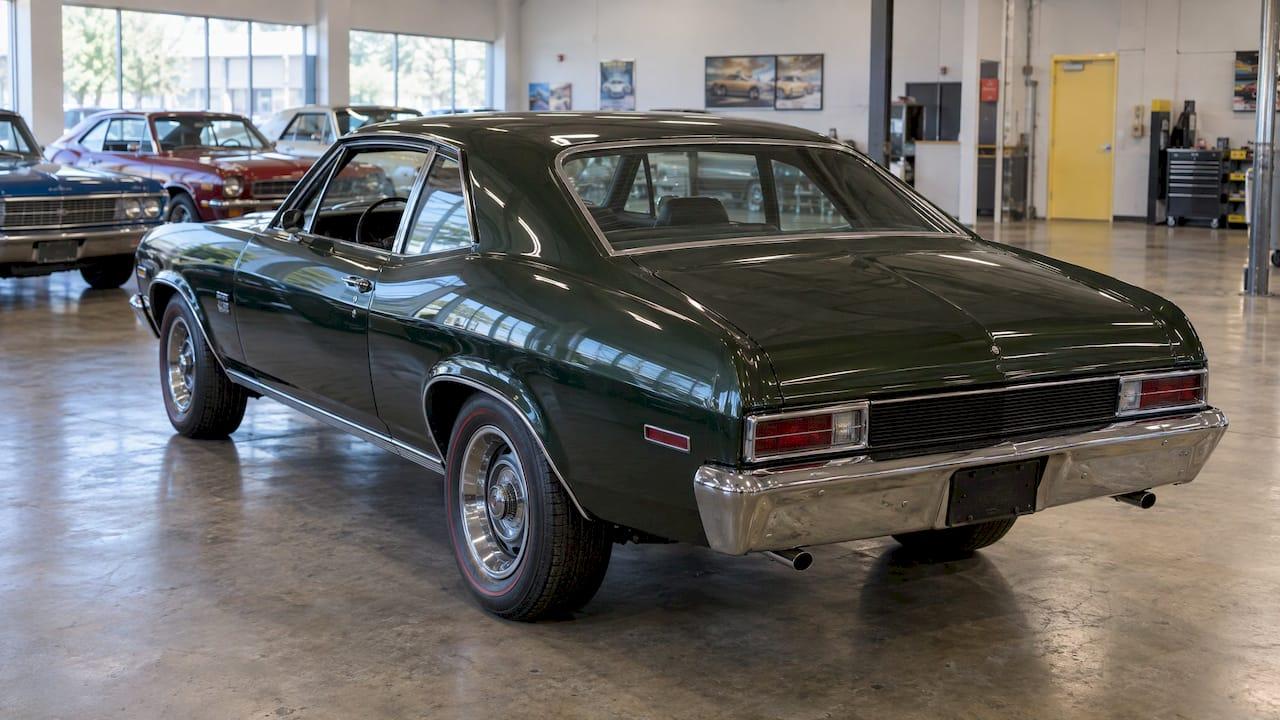
The best way to buy a Chevy Nova is to pick the generation first, verify the numbers before the paint, and let a rust check set your budget. A real SS and a tired six-cylinder coupe can look the same from ten feet away and sell tens of thousands of dollars apart. We list Novas, financing and consignment at Butter Classics, and this guide covers what we would want any friend to know before writing a check.
TL;DR
- Third-generation cars (1968 to 1974) are the sweet spot for most collectors, and the SS versions carry the biggest premiums.
- Rust in the subframe pockets, torque boxes and floor pan seams is a restoration-grade repair, so inspect there first.
- Cowl tag, VIN and engine pad stamping must agree with each other. Many base cars have been dressed up as SS models.
- Published price ranges are wide: condition, originality and engine matter more than the model year alone.
- Ready to look? Browse our classic car inventory or ask about financing pre-qualification.
Table of Contents
- Which Nova generation fits you
- What a Nova costs
- Inspect the body and structure first
- Check the mechanicals
- Verify the identity: numbers before paint
- Modified, restored and project Novas
- Perspective
- Ready to buy or sell a Nova
- FAQ
- Sources
Which Nova generation fits you
The Nova started life as the Chevy II. Per HotCars' generations guide, the first generation ran 1962 to 1965 and the second 1966 to 1967. The third ran 1968 to 1974, the fourth 1975 to 1979, and a fifth, built at the NUMMI plant on a Toyota Corolla platform, ran 1985 to 1988. That last one is a different animal from the rest, so most collectors skip it.
Here is how the years break down for a buyer.
| Generation | Years | Body styles | What it suits |
|---|---|---|---|
| First | 1962 to 1965 | Sedan, hardtop, convertible, wagon | Simple, light, vintage look |
| Second | 1966 to 1967 | Sedan, hardtop, wagon | Early SS 327 cars |
| Third | 1968 to 1974 | Sedan, coupe, hatchback from 1973 | Muscle car buyers, SS hunters |
| Fourth | 1975 to 1979 | Coupe, sedan, hatchback | Budget entry, drivers |
Body styles come from the HotCars guide above.
The 1968 to 1974 cars
Motor Trend's history of the Nova explains why this generation gets the attention. The 1968 redesign brought semi-fastback styling, a 111-inch wheelbase and a 295-hp 350 SS. The "Chevy II" name was dropped in 1969, when 396 big-blocks of 350 and 375 hp arrived. In 1970 the top engine became a 402 cubic-inch unit that was still badged a 396. The 1973 model year added a hatchback and turned SS into a package. By 1974 the body style ended with only a 100-hp six and a 185-hp 350 on the menu.

If you want muscle-era performance and presence, the 1968 to 1972 SS cars are the target. If you want the look with fewer headaches, a well-sorted small-block car from the same years is the sensible pick.
The 1975 to 1979 cars
The 1975 redesign was a new X-body generation with an LN luxury model, and Motor Trend notes the SS was killed off in 1976. Production of the last cars ended in December 1978. These are the budget doorway into Nova ownership. They are easier to find and cost far less, but they do not have the collector pull of the muscle-era cars.
What a Nova costs
Prices swing widely, so treat any single number with care. BidBetter reports a median completed-auction sale of $40,250 for 1962 to 1979 Novas, with a typical range of $27,500 to $63,750 across 724 sales.
The Sports Car Market Pocket Price Guide (2025 edition, published May 2026) breaks it down by SS era, at its grade D range:
| Model | Production | Price range |
|---|---|---|
| Nova SS 1963 to 1965 | 57,308 | $17,000 to $45,000 |
| Nova SS 1966 to 1967 | 31,055 | $30,000 to $100,000 |
| Nova SS 327 L79 1966 | n/a | $50,000 to $120,000 |
| Nova SS 1968 | 4,670 | $30,000 to $70,000 |
| Nova SS 1969 to 1972 | 27,290 | $30,000 to $155,000 |
Those spreads are the point. The same year can sit at the bottom or the top of its range depending on engine, documentation, originality and how much work the body needs. Market values move as new auction results come in, so check the latest guide and recent sales for the exact car you are chasing. Our classic car market trends checklist shows how we read those comparisons.
Inspect the body and structure first
A Nova is a unibody car. There is no separate frame to hide behind, so the structure is the car. Hot Rod Hardware's classic car inspection guide says rust in the subframe pockets on unibody cars like Novas is a restoration-grade repair, not a $200 fix. Start there, then move through this list:
- Subframe pockets and torque boxes. These are where the front subframe meets the body. Look from above and below.
- Floor pan seams and subframe connectors. Seams trap moisture. Fresh seam sealer over old rust is a warning sign.
- Wheel wells, door bottoms, rear quarters and trunk floor. These are classic Nova water traps.
- Surface oxidation versus structural rust. The same guide separates light surface oxidation, normal on a car this age, from pitting, flaking scale or metal that feels soft under screwdriver pressure. The second kind changes your budget.
- Collision clues. Paint overspray on rubber seals, kinked structural parts and mismatched welds all point to past repairs.
Consumer Reports adds practical habits: inspect in daylight on a dry day, on level ground, after the car has sat for at least an hour. Look for misaligned panels and blistered paint, and be wary of fresh undercoating that may hide recent repairs. It also suggests a Carfax-style history report, though one rarely covers a 50-year-old car in full, and a written pre-purchase inspection from a mechanic for roughly $100 to $150.
Brakes deserve a look too. Corroded rotor hats are an early sign of neglect, and these rotor hat rust checks show what to look for around the hub area.

Check the mechanicals
Novas are simple cars, and that helps you. Still, run through the basics:
- Cold start. Ask that the car not be warmed up before you arrive. Listen for rattles, watch for smoke and note how long it takes to settle.
- Drive of at least 20 minutes. Heat shows up leaks, overheating and weak transmissions. Our classic car test drive checklist walks you through what to feel and hear.
- Steering and suspension. Wandering, clunks over bumps or pulling under braking point to worn bushings, tired springs or a front end that has been hit.
- Differential and driveline. Listen for whine on acceleration and clunks on the throttle transition.
- Fluids. Look under the car after the drive, not before.
Parts are a bonus. Aftermarket support for Novas is deep, so panels, floor pans and interior pieces are available for most years. That makes mechanical repairs cheaper than on many rarer muscle cars. Structural body repair is where the money goes.
Verify the identity: numbers before paint
This is the step that separates a good buy from an expensive lesson. SS Novas are valuable enough that clones and re-stamped parts exist. Fully Sorted's pre-purchase checklist puts numbers ahead of paint: photograph every identifying number and compare stamping style, depth and spacing against known-original examples. It also notes that a replacement engine is a problem only when undisclosed, since matching-numbers cars are priced differently.
Work through three documents:
- VIN. Verify that it fits the claimed year, model and body style. Our classic car VIN decoding workflow shows the process. Note that on many muscle-era Chevrolets the VIN does not encode the engine, so you cannot prove an engine from the VIN alone.
- Cowl tag. This tag shows the body, trim and build information. It is a key piece of documentation, and it should agree with the VIN and the car in front of you. Tags can be replicated, so treat it as one piece of evidence, not the final word.
- Engine pad stamping. The machined pad on the block carries a code for the plant, build date and engine suffix, and it should match the story you were told.
For 1960s and 1970s cars, factory build records and title history help fill gaps. Ask for the paperwork before you travel, and compare the car to completed sales of the same specification and condition. If any number looks off, slow down and get a second opinion from someone who knows Novas.
If you buy a lot of Chevys, the same approach carries across models. See our guides for the Chevelle SS and the Camaro Z28 for the same number-first logic.
Modified, restored and project Novas
A lot of Novas have been changed over the years. That is not a flaw in itself: a well-built modified car can be a great driver, and many are priced accordingly. Ask how each change was done and who did it.
Restored cars. Ask for photos from the restoration, especially the body in bare metal or primer. Good paint can cover poor metalwork, and photos tell you what is under it. Receipts and shop names matter as much as the shine.
Modified cars. Swapped engines, upgraded brakes and modern suspension can make a Nova easier to live with. They also change how collectors value the car, since matching-numbers originality is priced differently. Buy a modified car because you like how it drives, not because you expect it to be priced like a numbers-correct original.
Projects. A project is only a bargain if the structure is sound. Surface rust can be treated, but subframe pocket and floor pan damage is a bigger job. Price the work before you buy, and count the parts you will need: panels, interior and trim add up quickly. Interior upkeep is part of the job too, and these tips on restoring an Alcantara wheel are handy if you are freshening a later car's cabin.
A simple rule: add up the purchase price, the work the car needs and a cushion for surprises. If that total sits near or above what a finished, documented car sells for, buy the finished car.
Perspective
We love Novas because they are honest. They are light, simple and fun, and the right one is a muscle car you can actually enjoy on a Saturday.
The mistake we see buyers worry about most is falling for a story. A car looks right, the seller sounds sure, and nobody checks the tag against the VIN against the pad. Our advice is to slow down, get the numbers on paper and look under the car before you look at the paint.
That is also why we built Butter Classics around detailed listings with extensive photos and specifications, and a nationwide inventory that is not limited to a single lot. We offer Butter Certified vehicles backed by our Worry Free Guarantee, and we can help with delivery or pickup. For collectors, that means more cars to compare and fewer surprises when the car arrives.
Tony
Ready to buy or sell a Nova
When you are ready to move, browse our classic car inventory by price or type, schedule a test drive or request a quote. We also offer classic vehicle financing with pre-qualification, so you know your budget before you bid, which you can start from our home page.
If you own a Nova and want it in front of serious buyers, consign your vehicle with us. New to the hobby? Our classic car buying guide for first-timers is a good place to start.
FAQ
What is the best year Chevy Nova to buy?
For most collectors it is the 1968 to 1972 third-generation car, especially an SS with documented original equipment. If you want a driver on a tighter budget, a small-block coupe from the same years or a 1975 to 1979 car is easier to afford. The right year depends on whether you want a collectible or a weekend cruiser.
What should I check first on a Nova?
Check rust and structure before anything else. Look at the subframe pockets, torque boxes, floor pan seams, wheel wells and trunk floor. Then confirm that the VIN, cowl tag and engine pad stamping tell a consistent story.
How can I tell a real Nova SS from a clone?
Start with paperwork and numbers: the VIN, the cowl tag and the engine pad stamping, checked against each other. Photograph each one and compare the stamping style to known originals. Build records and title history add confidence, and a Nova-savvy inspector can confirm the rest.
How much does a classic Nova cost?
It varies widely. BidBetter's median completed sale for 1962 to 1979 Novas is $40,250, with a typical range of $27,500 to $63,750. The Sports Car Market price guide shows even wider ranges for SS cars, depending on year and engine.
Sources
- Hot Rod Hardware: What to Look for When Buying a Classic Car
- Consumer Reports: How to Inspect a Used Car
- Motor Trend: The Chevrolet Nova History, Generations, Specifications
- HotCars: Chevrolet Nova Generations Guide
- BidBetter: Model values
- Sports Car Market: 2025 Pocket Price Guide
- Fully Sorted: Pre-Purchase Checklist for Collector Cars