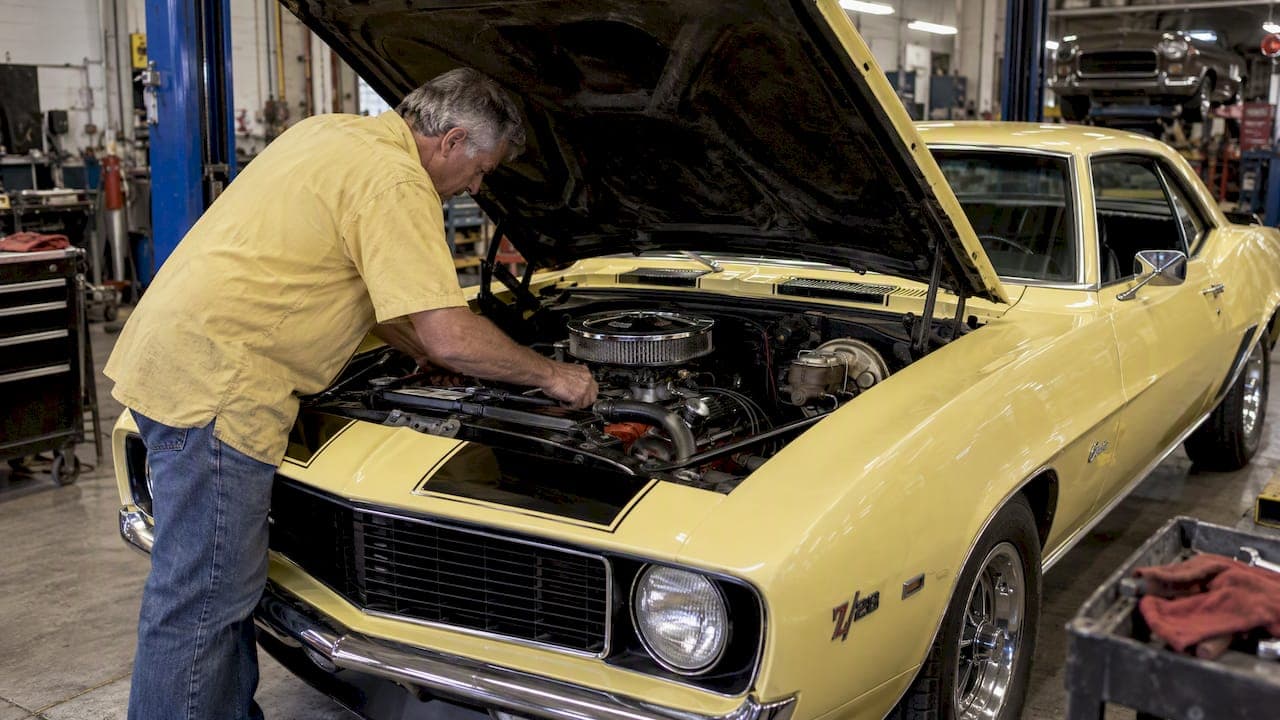
A Camaro Z28 is worth pursuing if you verify three things first: the authenticity paperwork matches the car, the structure is free of hidden rust or frame damage, and the drivetrain checks out mechanically and numbers-wise. Before you spend another dollar, order a professional pre-purchase inspection and ask the seller for build documentation.
TL;DR:
- Collectors should target 1967–69 cars, but authentication is harder because the Z/28 option was absent from VINs; 1977–81 cars are more plentiful and affordable.
- For 1967–69 cars, require a build sheet or shipping records; VINs and cowl tags alone cannot prove authenticity, and tags can be reproduced.
- Inspect rocker panels, floor and trunk pans, frame rails, and torque boxes; fresh paint can hide collision repairs and expensive structural rust.
- During a test drive, check oil pressure, smoke under acceleration, clutch chatter, braking pull, and suspension noises; use documented defects to negotiate the price.
- Price the car around documented condition: rust repairs, axle or transmission rebuilds, and suspension work can outweigh fresh paint, while early 302 parts are scarce.
Table of Contents
- Which Z28 years to prioritize and why
- Inspection checklist by system and hotspot
- Verifying authenticity and building a provenance file
- What to pay: condition, value drivers, and trends
- Parts availability and common repairs to budget for
- Test-drive checklist and next steps before you buy
- What kind of buyer should you be?
- How we can help you find the right Z28
- FAQ
- Sources
Which Z28 years to prioritize and why
The year you target should match your budget and your tolerance for research. The first-generation 1967-69 Z/28 package paired a high-revving 302 with a Muncie close-ratio 4-speed and race-bred suspension, and it remains the most collectible version of the car. It is also the hardest to authenticate, since factory coding varied by plant and the Z/28 option was not always tracked the same way across build years.
The early second-generation cars, built from 1970 to 1973, carried that high-performance DNA into a bigger body and still draw strong collector interest. From there, production shifted. The 1970-81 Camaro buyer's guide from Hagerty notes that the Z28 moved from a performance option into its own higher-volume model, and total 1978-81 Z28 production reached approximately 228,200 units, which makes those years far easier to find and generally more affordable to buy and maintain.
Here is how the years tend to sort by buyer type:
- 1967-69: best for collectors chasing top-tier value who are prepared for a documentation-heavy purchase.
- 1970-73: a strong middle ground of performance and collectibility for buyers who still want an early car.
- 1977-81: the practical choice for a weekend driver, with more supply and friendlier prices.
- Later revivals: worth considering separately, since they serve a modern-performance buyer rather than a classic-collector one.
Inspection checklist by system and hotspot
Walk any Z28 systematically rather than falling for a shiny paint job. Start with authentication: check the VIN plate, request photos of the partial engine stamp, and confirm the cowl or trim tag matches expectations for that production year. For Norwood-built 1969 cars, look for X33 or X77 codes on the cowl tag, but treat the tag itself as a starting point only, since verification resources note that tags can be reproduced. A genuine Protect-O-Plate or build sheet carries far more weight than any stamped tag alone.
Follow this sequence during a walkaround:
- Check the VIN plate on the dash and door, then compare it against the title and any build documentation.
- Inspect rocker panels, floor pans, and the trunk pan for rust, filler, or mismatched paint texture that suggests prior repair.
- Look underneath at the frame rails and torque boxes, where structural rust is both common and expensive to fix.
- Check inner fenders and cowl areas for water staining or patch panels.
- Start the engine cold and listen for knocking, then check for smoke on acceleration once warm.
- Inspect the bellhousing and engine mounts for oil seepage and cracked rubber.
- Shift through the transmission (manual or automatic) and note any slipping, grinding, or delayed engagement.
- Examine suspension bushings, shock and strut mounts, and leaf spring condition for sag or cracking.
- Check brake pedal feel and look for upgraded components that may indicate a prior safety issue.
- Review the interior for a correct tachometer, dash cracks, original wiring versus aftermarket splices, and seat condition.
Drivetrain specifics shift by era. The original 302 in 1967-69 cars is a high-strung, documentation-sensitive engine, while later 350 and 305 variants are more common and easier to source parts for. Automatic transmissions became more widely available as the second generation matured, so a manual-only car from certain years is worth a second look at the paperwork.
Collision repair often hides behind fresh paint. Uneven panel gaps, overspray inside the trunk or door jambs, and mismatched bolt heads are all signs of prior bodywork that should factor into your offer.

Pro Tip: Bring a flashlight and a small magnet on your inspection, since a magnet that won't stick to a rocker panel or quarter panel often reveals body filler hiding rust repair.
Verifying authenticity and building a provenance file
Authenticating a 1967-69 Z/28 is genuinely harder than with most classics, because the Z28 option was not coded into the VIN during that era. That gap is exactly why a build sheet, Protect-O-Plate, or NCRS shipping documentation matters more than any visual cue. Engine casting numbers and date codes help, but they only tell part of the story since date stamps and final assembly dates can fall in the same week, which makes it hard to confirm an engine is original to a specific car without archival records.
Ask the seller to photograph the engine block casting number, the stamped VIN derivative on the block, and the cowl tag before you travel to see the car. If something does not line up, that is not automatically a dealbreaker, but it does call for a specialist authenticator rather than a guess. Our guide on verifying numbers-matching cars walks through how to read these discrepancies before you commit funds.
Before any earnest deposit changes hands, request:
- The original title and any prior title history.
- A copy of the build sheet or Protect-O-Plate, if the seller has one.
- Restoration or repair receipts covering major work.
- Photos of the cowl tag, VIN plate, and engine stamp.
- Any NCRS or shipping-data reports already on file.
A classic car history check is also worth running early, especially for older cars where VIN-era limitations can complicate a clean title search.
What to pay: condition, value drivers, and trends
Condition grading drives price more than almost anything else, and the gap between a rough driver and a well-documented survivor car is significant. The Hagerty market data on 1970-81 Z/28 values shows that values for these later second-gen cars have softened relative to earlier peaks, while early 1970-73 Z/28s continue to command stronger money.
Early Z/28s typically outvalue later second-gen cars, and that gap is one of the clearest patterns in the Hagerty Z/28 value analysis, which makes model-year selection one of the biggest levers on your total cost.
The factors that move a Z28's price most:
- Numbers-matching drivetrain with documentation to back it up.
- Original paint or a well-documented, period-correct repaint.
- Original interior condition versus a full reupholstery.
- A rust-free structure with no hidden frame repair.
- Rare factory options noted on the build sheet.
When you build an offer, subtract realistic repair costs from the asking price rather than negotiating off emotion. A car needing floor pans or a transmission rebuild should be priced accordingly, even if the paint looks fresh.
Parts availability and common repairs to budget for
Reproduction parts cover most of what a second-gen Z28 needs: body panels, trim, interior pieces, and many suspension components are readily available through specialist vendors. Original 302-specific parts and factory dash components from the first-generation cars are a different story, since they remain scarce and expensive when they turn up at all.
Budget for these common repair categories:
- Floor pan or trunk pan replacement, which runs higher when rust has spread to the torque boxes.
- Rear axle or differential rebuilds, especially on cars that sat unused for years.
- Transmission rebuilds, more common on manual cars with heavy mileage.
- Full suspension overhauls, including bushings, shocks, and springs.
For driver-focused cars, sensible upgrades like improved brakes or a reliable clutch kit from a specialist like Underground Dynamics can make the car safer and more enjoyable without erasing its collector appeal, as long as you keep the original parts you remove.
Test-drive checklist and next steps before you buy
A test drive tells you things paperwork cannot. Our classic car test-drive checklist covers the fundamentals, and for a Z28 specifically:
- Start the car cold and note how quickly oil pressure builds.
- Listen for knocking or ticking that disappears once the engine warms up.
- Check clutch engagement point and listen for chatter on a manual car.
- Watch the exhaust for smoke under acceleration, which can signal worn rings or valve seals.
- Brake hard at low speed in a safe area and feel for pulling or fade.
- Note any unusual noises over bumps that point to worn suspension components.
Before making an offer, ask the seller for restoration receipts, the original title, and photos of the build sheet if one exists. A trusted pre-purchase inspection service can confirm mechanical condition beyond what a visual check reveals, and any documented defects from that inspection become your strongest negotiating tool.
What kind of buyer should you be?
If you want a car to drive and enjoy, a well-sorted 1977-81 Z28 gives you most of the character for a fraction of the cost of an early car. Restorers and investors tend to gravitate toward 1967-73 cars, where documentation and originality carry the most weight. Whichever profile fits you, verify the paperwork and commission a professional inspection before you commit.
— Tony
How we can help you find the right Z28
We built our inventory so you can browse classic muscle cars online: our listings include detailed photos and specifications, so you can compare options from your couch before you travel to see one in person.
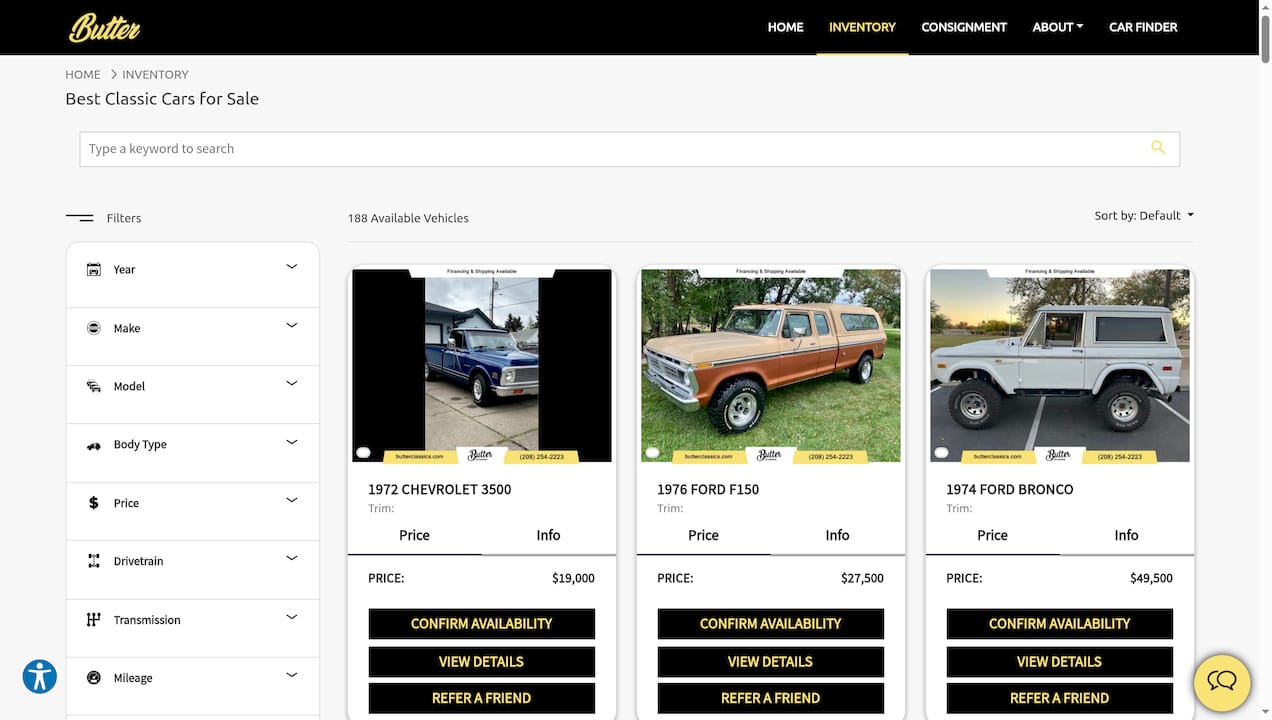
If financing fits your plan, our classic vehicle financing pre-qualification process is quick to start, and if you are selling or have found a Z28 you would rather hand off to a specialist, our consignment program is worth a look too.
- Browse our current inventory of classic cars to see what is available now.
- Schedule a test drive once you find a car you want to see in person.
- Still request build documentation and a professional inspection on any car, even one we list, before you finalize a purchase.
FAQ
What years are considered the best Camaro Z28?
The 1967-69 first-generation Z/28 is the most collectible, prized for its race-bred 302 and Muncie 4-speed combination. The 1970-73 second-gen cars offer similar performance appeal at a somewhat lower cost, while 1977-81 Z28s are the most affordable and plentiful for everyday driving.
How do I know if a Camaro Z28 is authentic?
Authentication relies on matching the VIN, cowl tag, and engine casting numbers against original documentation like a build sheet or Protect-O-Plate, since the Z28 option was not coded into the VIN on early cars. Visual cues alone, including tags, can be reproduced, so documented provenance carries the most weight.
What should I pay for a Camaro Z28?
Price depends heavily on year and condition: early 1970-73 Z/28s generally command stronger values than later second-gen cars, according to Hagerty's market data. Numbers-matching drivetrains, original interiors, and rust-free structures push prices toward the top of their range.
What are the most common problems to check on a Z28?
Rust in the floor pans, rocker panels, and trunk pan is the most common structural issue, along with frame rail and torque box corrosion. Mechanically, watch for oil leaks at the bellhousing, worn transmission engagement, and suspension bushings that have deteriorated from age.
Where can I find parts for a classic Camaro Z28?
Most body, trim, and suspension parts for second-generation Z28s are reproduced by specialist vendors and are reasonably easy to source. Original first-generation 302-specific components and factory dash parts remain harder to find and typically cost more when available.