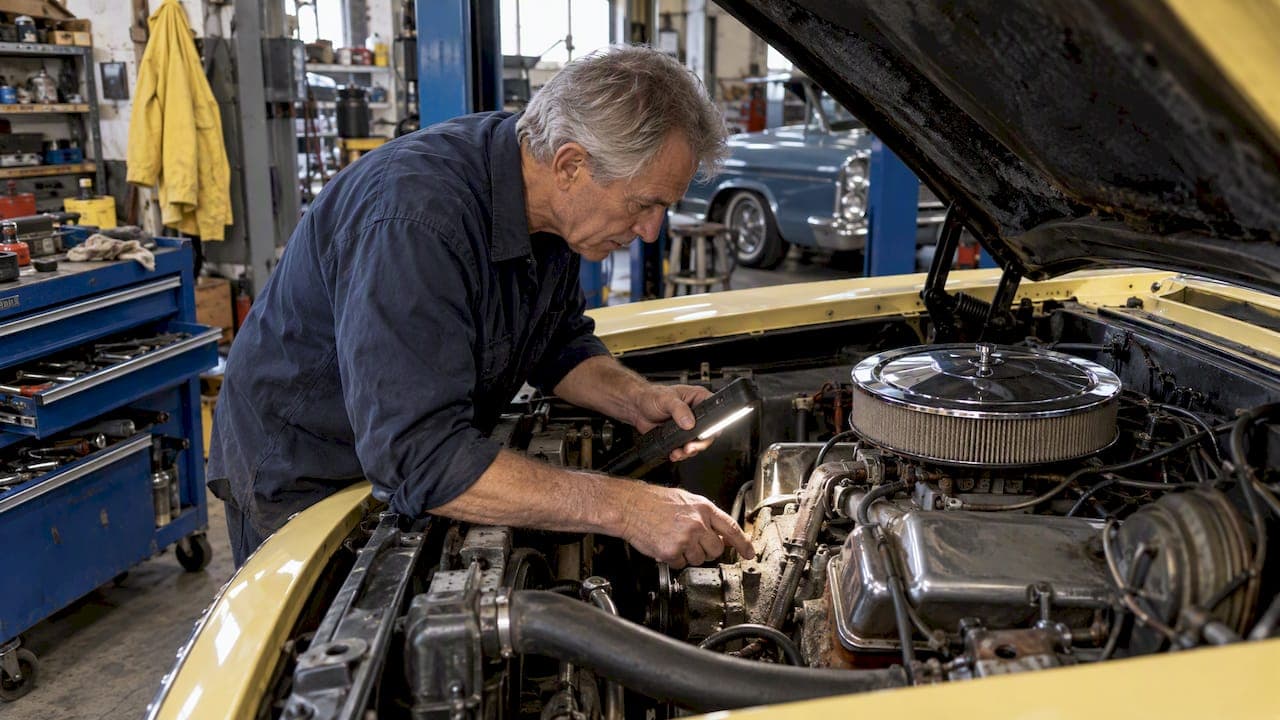
Numbers matching means the engine, transmission, and sometimes the rear axle in a classic car still carry the same codes they had when the factory built it, confirmed against the VIN and build records. It matters most to concours judges and investment buyers chasing top dollar. For everyday drivers, it matters less than solid documentation and an honest seller.
TL;DR:
- Matching numbers claims often vary by manufacturer and model year, so buyers must clarify whether it includes the engine, transmission, and rear axle with proof backing.
- Verification requires examining stamped pads, casting numbers, and factory records like build sheets, with professional reports like Marti or Kardex improving certainty.
- Signs of restamping or forgery include irregular font, inconsistent spacing, pad damage, or conflicting paperwork, which should never be overlooked.
- For investment or concours cars, documented original drivetrains command higher premiums, while well-disclosed period-correct replacements suit everyday drivers better.
- Buyers should request detailed documentation, capture clear photos of stamps, and consider expert inspections before committing to a high-value purchase.
Table of Contents
- Numbers matching has layers, and the layers depend on the car
- Which parts count, and where the proof is stamped
- Why matching numbers changes the price, and when it doesn't
- How to verify a matching-numbers claim before you buy
- Red flags that suggest a restamped or forged claim
- Matching your budget and goals to how much originality matters
- How Butter Classics documents originality in its listings
- A buyer-first take on chasing perfect originality
- Ready to shop with documentation you can trust
- Where to go for deeper verification
- Sources
- FAQ
Numbers matching has layers, and the layers depend on the car
Not every "numbers matching" claim means the same thing, and that's where a lot of buyers get tripped up. The phrase covers a few related but distinct ideas, and a seller who throws it around loosely might mean something very different from what you're picturing.
An original numbers-matching car has its factory-installed engine, transmission, and often the rear axle still in place, with casting numbers, date codes, and VIN stampings that line up with the factory build. A documented original car goes a step further: the physical stampings are backed by paper, a build sheet, invoice, or manufacturer certificate that confirms those components left the factory together. A period-correct car has components that match the right year, style, and specification but weren't necessarily born with that specific chassis.
The definition shifts by maker and model year too. Chevrolet started stamping partial VINs on engine blocks fairly consistently by the late 1960s, which is why "matching numbers Corvette" became such a specific, prized phrase in the hobby. Ford's practices varied more by plant and year. Porsche buyers lean on the Kardex, a factory record that ties a specific chassis to its original equipment, colors, and options.
Before you take a listing at face value, ask the seller exactly which components they mean:
- Does "numbers matching" include the engine only, or the transmission and rear axle too?
- Is there a factory build sheet, invoice, or certificate backing the claim?
- Has anyone outside the seller verified the codes against official records?
Which parts count, and where the proof is stamped
Figuring out what counts as "matching" starts with knowing where the factory actually put its marks. A few components carry the bulk of the weight in any authenticity conversation.
- Engine block: Look for a stamped pad near the front of the block, usually showing a partial VIN, casting number, and sometimes an assembly date.
- Transmission: Many manufacturers stamped a code on the case or a tag riveted to the housing, which should correspond to the build sheet.
- Rear axle: Some marques stamped the housing or axle tube with a code tied to gear ratio and assembly batch, relevant mostly for muscle cars and performance models.
- VIN or data plate: Usually riveted to the cowl, door jamb, or dash frame, this is the anchor every other number gets checked against.
- Casting numbers: Cast into the metal itself during manufacturing, these identify the part's design and sometimes its production run, separate from the stamped assembly codes added later.
When you're documenting any of these, take a wide context shot showing the part's location on the car, then a close, well-lit macro shot of the actual stamp or casting mark. Blurry phone photos of a grease-covered pad tell you nothing.
For marque-specific verification, factory-backed services carry real weight. A Marti Report pulls Ford production records for a specific VIN, confirming original equipment and options. Porsche's Kardex does something similar. These aren't universal, every manufacturer handled recordkeeping differently, so check what exists for your specific make before assuming a generic build sheet will settle the question.

Why matching numbers changes the price, and when it doesn't
Collectors and concours judges care about originality because it's proof a car is what it claims to be, not a tribute built from parts bins. Judging criteria at major shows often weight unmolested, original components heavily, and that filters straight into what serious buyers are willing to pay.
The premium gets largest where three things line up: a genuinely rare model, thorough documentation, and a car that's survived decades without an engine swap. A low-production muscle car with a factory build sheet and a numbers-matching drivetrain can command a steep markup over an otherwise identical car running a period-correct replacement engine.
- Rare, documented, original drivetrain cars draw the strongest premiums from investment buyers and concours entrants.
- Driver-focused buyers often find more value in a well-maintained period-correct replacement, since reliability and cost matter more than a stamped pad.
- A car with a clean, honestly disclosed replacement engine can still be an excellent purchase, as long as the listing doesn't misrepresent it as original.
Unverified matching-numbers claims show up often in listings, and sellers sometimes lean on the phrase to justify a higher asking price without backing it up with paperwork or third-party checks. Before you pay a premium, check current market pricing for comparable documented cars so you know whether the number on the sticker reflects the market or just the seller's hope.
How to verify a matching-numbers claim before you buy
Verification isn't complicated, but it does take patience and a willingness to ask for paperwork before you ask for a handshake. Here's a workflow that works whether you're buying in person or sight-unseen.
- Request documents first. Ask for the original build sheet, dealer invoice, window sticker, and any prior sale listings or auction records. A seller with nothing to show should raise your guard immediately.
- Cross-check the VIN. Pull the VIN from the data plate and compare it against the engine and transmission codes the seller claims match. A quick VIN decode tells you what the car should have left the factory with.
- Photograph everything, including context. Get a wide shot showing the stamp's location relative to the rest of the block or case, then a sharp close-up of the actual characters. Context shots make it much harder for a seller to crop around a problem.
- Learn basic casting chronology. A casting date stamped into the metal should predate the engine's assembly date, which should predate the car's final build date. If the casting date is later than the VIN build date, something doesn't add up.
- Use third-party verification when it exists. A Marti Report for Fords or a Kardex for Porsches can confirm original equipment straight from factory records, cutting through guesswork that stamped pads alone can't resolve.
- Bring in a professional for high-value purchases. A focused authenticity inspection often runs a couple hundred dollars, a small cost relative to the price difference between a documented original and an undocumented claim.
Pro Tip: Ask the seller to photograph the stamp while holding a printed copy of the VIN or build sheet in the same frame, it's a simple way to confirm the photo wasn't recycled from another car's listing.
Reconciling paperwork with physical evidence is the whole game. A build sheet that lists a 327 small block means nothing if the engine pad shows casting numbers for a 350. Specialists who do this for a living check stamp execution, surrounding metal condition, and whether every date lines up in the right order before they'll call a car genuinely original.
Red flags that suggest a restamped or forged claim
A convincing fake usually leaves clues if you know where to look. Learning to spot them protects you from paying original-car money for a car that isn't.
- Grinding marks or dressed metal around a stamp pad often mean the original numbers were removed and new ones added.
- Pad height differences between the stamped area and the surrounding casting can indicate material was shaved down before restamping.
- Font, depth, or spacing inconsistencies in the stamped characters are a common giveaway. Experts look closely at letterforms and alignment because factory stamping machines produced consistent results, and hand tools rarely replicate that precisely.
- Paperwork that contradicts the metal , a build sheet listing one engine code while the block shows another, is one of the clearest signs something has been altered.
An apparently correct stamp carries little weight on its own. Without a paper trail or an expert who's cross-checked the chronology, a clean-looking stamp could be a skilled restamp job rather than proof of anything. Treat the physical evidence and the documentation as two halves of the same question, never as substitutes for each other.
Matching your budget and goals to how much originality matters
Not every buyer needs the same level of originality, and figuring out which camp you're in saves you from overpaying for something you won't use the way it was bought.
- Concours and investment buyers should prioritize documented original drivetrains and walk away from anything with unresolved paperwork gaps, since resale value and show eligibility depend on it.
- Show and restoration buyers can often accept a period-correct replacement if it's honestly disclosed, especially when the original component is long gone and a correct-spec swap keeps the car authentic in spirit.
- Driver and enthusiast buyers frequently get better value from a well-documented replacement engine, since reliability and cost of ownership matter more than a stamped pad nobody but you will ever inspect.
Weigh condition against originality honestly. A rough original engine needing a full rebuild might cost more to bring back than buying a car with a correct-spec replacement already sorted. When negotiating, ask for every document up front, and treat a seller's hesitation to provide paperwork as a bargaining chip, not a dismissal.
How Butter Classics documents originality in its listings
Butter Classics built its marketplace around the idea that buyers shouldn't have to guess. Every listing aims for detailed photos and specifications so you can see the car, not just a description of it.
- Photo standards push for wide context shots alongside close-ups of identifying marks, so buyers can start their own verification before ever picking up the phone.
- History and documentation requests are part of how listings get prepared, giving buyers a starting point for the paperwork-to-metal comparison every serious purchase deserves.
- Buyer-facing services , including financing pre-qualification and scheduled test drives, let you move from research to an in-person look once a listing checks out.
Consignors working with Butter Classics go through a similar standard, since a well-documented car sells with more confidence and, often, a stronger price.
A buyer-first take on chasing perfect originality
Perfect originality is a worthy goal for a small slice of the market and a trap for everyone else. If you're buying a car to drive, a honestly documented replacement engine will serve you better than an original unit you're afraid to run hard. Save the premium for cars you genuinely intend to show or hold as an investment, where documented originality translates directly into resale strength. For everything else, prioritize a seller who shows you the paperwork over one who just repeats the phrase "numbers matching" and hopes you don't ask for proof.
— Tony
Ready to shop with documentation you can trust
Butter Classics lists vehicles with detailed photos and specifications so you're not stuck guessing about a drivetrain's history before you ever make a call. Our inventory spans classic cars, vintage trucks, muscle cars, and 4x4s, with listings built to give you the context shots and documentation requests this kind of verification depends on.
If you're selling, our consignment service is built around the same documentation standards, helping your car sell with the kind of proof serious buyers want to see. If you're buying, start by browsing our current inventory for documented listings, or schedule a test drive once you've found a car worth a closer look.
Where to go for deeper verification
For marque-specific records, a Marti Report covers Ford production history, while Porsche's Kardex serves a similar role for that marque. For general documentation practice, this collector's checklist walks through preserving provenance paperwork, and marque registries remain a reliable path to cross-check casting and engineering numbers.
Sources
- Number matching - Wikipedia
- Matching Numbers: How to Check a Classic Car - Nordic Provenance
- Understanding matching numbers: what they mean and why collectors pay more - Yahoo Autos
FAQ
What does it mean when a classic car has matching numbers?
It means the engine, and often the transmission and rear axle, still carry the stampings and codes they had when the factory built the car, verified against the VIN and build records. The specific components included vary by manufacturer and model year, so it's worth confirming exactly what a seller means before assuming the full drivetrain qualifies.
Is a numbers matching car worth more?
Often, yes, especially for rare models with strong documentation, since concours judges and investment buyers place real weight on verified originality. For everyday driver cars, many enthusiasts actually prefer a period-correct replacement for reliability, so the premium matters most to a specific type of buyer.
What is the $3000 rule for buying cars?
This isn't a recognized standard in classic car buying or authentication, and no major registry or verification service defines it that way. If you've seen it referenced, it likely refers to a general used-car budgeting guideline rather than anything tied to numbers-matching verification.
What car is the poor man's Corvette?
This nickname gets applied informally to various affordable sports cars over the years depending on the era and who's talking, and it isn't a term tied to any official classification or matching-numbers standard. It's worth treating it as hobbyist slang rather than a defined category when you're shopping.
How much does a professional authenticity inspection cost?
A focused inspection checking stamp execution and documentation typically runs a couple hundred dollars, a modest cost against the price gap between a documented original and an unverified claim. For high-value purchases, that inspection is generally worth scheduling before you commit to a deal.