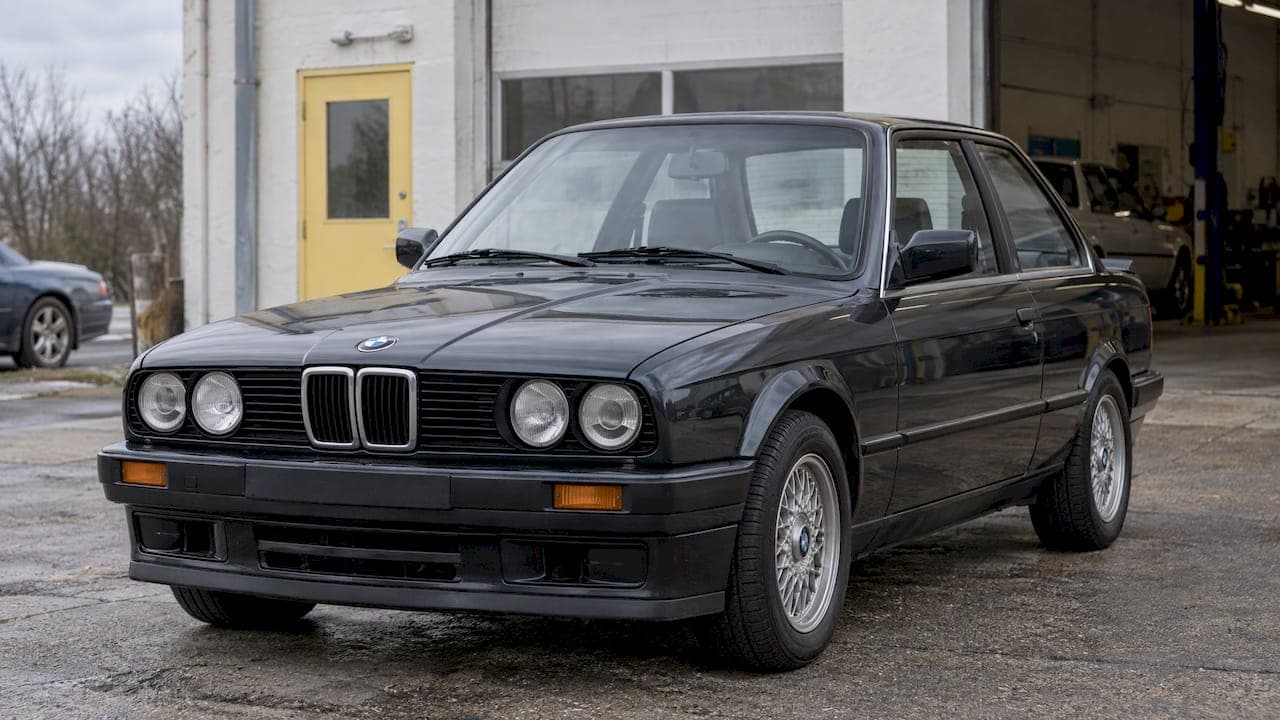
Buy the cleanest, best-documented E30 you can afford, and walk away from rusty floors, a neglected cooling system and a pile of mystery modifications. That one rule saves more money than any other. The E30 (the 1980s and early 1990s BMW 3 Series) is one of the most fun classics you can own, but values have climbed, and a cheap car often turns into the most expensive one in the end.
This guide covers which E30 to look for, where they rust, what to check under the hood, what the market looks like and how to run a smart test drive.
TL;DR
- Condition beats mileage and trim. Experts say major rust repair and full interior restoration rarely pay off, so pay more for a clean car.
- Check the floor pans around the drain holes behind the front seats first. Rot there is a deal breaker for most buyers.
- Ask for proof of timing belt and water pump service on any six-cylinder car. Neglect is a leading cause of engine failure.
- Look for original cars. Modifications are everywhere, and undoing them is hard and costly.
- Budget for a pre-purchase inspection, and let an enthusiast owner or a specialist help you judge the car.
Table of Contents
- Which E30 should you look for?
- What an E30 costs in 2026
- Start with rust
- Engine and drivetrain checks
- Read the check panel and test the interior
- Originality matters more than you think
- Paperwork and history
- How to run the test drive
- Get a pre-purchase inspection
- Our take: buy the car, not the dream
- Find your next classic with Butter Classics
- FAQ
- Sources
Which E30 should you look for?
The E30 came as a two-door, four-door, convertible and wagon, with several four-cylinder and six-cylinder engines. A few are worth knowing before you start scrolling listings.
| Model | What it is | Why buyers like it |
|---|---|---|
| 318i | Four-cylinder entry car, one of the first 3 Series models sold | Lowest entry price, simple to work on |
| 325i | Six-cylinder, 171 hp M20B25 from 1985 | The sweet spot of power, usability and parts support |
| 325is | Sportier two-door six-cylinder | Collector favorite, strongest value growth |
| M3 | Homologation special | Blue-chip collectible, priced like one |
MotorTrend's advice is to start with an 89-or-later 325i, and a 325is would be even better. That matches what we see: the later six-cylinder cars are the best mix of drivability and long-term desirability.
A quick note if you arrived here while searching for a BMW 2002 guide: the 2002 is an earlier, different car. The E30 is its successor in spirit. The approach below (rust first, mechanicals second, documentation always) applies to both, but the specific trouble spots here are E30 ones.
What an E30 costs in 2026
E30 prices have moved a lot. According to Hagerty, as of August 2025 the generation had an average value of $17,500, up 62% since 2020. The 325is two-door averaged $26,500, more than double its value of five years earlier.

At the top, the market gets dramatic. Hagerty-reported values put the M3 (1986 to 1992) at an average of $111,300, and auction results for a 1990 M3 range from $10,400 for a fair-condition car to $540,275 for a perfect one. A well-kept standard 325i is a much more accessible way in. Hagerty also reported a 1991 325i Sport selling for a record $66K, which tells you how hard buyers will chase the right car.
What this means for you:
- Prices for clean, original cars are firm. A bargain E30 usually has a reason.
- Condition spread is huge. A fair car and an excellent car of the same model can sit tens of thousands of dollars apart at the top end.
- If you want to see how broader trends could affect your timing, our classic car market trends checklist for 2026 buyers is a good companion read.
Start with rust
The E30's Achilles heel is rust. Its youngest cars are now more than three decades old, and Turner Motorsport notes that decades of neglect can rot them badly, especially in northern states. A car from the Southwest or California is a good start, but no region guarantees a clean shell, so check every car.
Surface rust and rust on bolt-on panels can be fixed. Structural rust cannot be fixed cheaply. Look closely at:
- Floor pans. Look around the drain holes behind each front seat. This is a notorious spot, and Turner says many cars have Flintstones-style holes that make them structurally unsound. Factory floor panels are no longer available, so repairs mean cutting panels from another shell.
- Rocker panels and sills. Press gently and look for bubbling paint along the edge.
- Wheel arches and quarter panels. Check the lips and the area behind the arch.
- Battery tray and trunk floor. Leaking batteries and wet trunks go together.
- Tail light surrounds and suspension towers. Carwow's UK guide also flags sills, wheel arches, the battery tray and suspension turrets as places to inspect.
Bring a flashlight and a small magnet. Lift the carpets if the seller allows it. Fresh undercoating on an old car is not proof of anything good, and it can hide repair work.
Here's the hard truth: if the floors or rockers are rotten, keep looking. Experts consistently say it's almost always cheaper to buy a good one than to rescue a cheap one. Our own article on evaluating vintage car condition before you buy walks through the general approach.
Engine and drivetrain checks
Most E30 engines are tough when maintained. The trouble starts when maintenance is skipped.
Timing belt and water pump
The six-cylinder M20 is a belt-driven engine. Turner Motorsport says the timing belt and water pump should be replaced every 60,000 miles or seven years, and that skipping this is the leading cause of engine failure. Neglected engines can suffer camshaft wear, and an overheated one can crack the cylinder head, which is not a simple head gasket job.
Other guides are more conservative. Classic & Sports Car suggests a cambelt change every 30,000 miles or four years for the sixes, plus the water pump. Intervals vary by source, so the practical rule is this: if the seller cannot show a recent receipt, treat the belt and pump as due now and price the job into your offer.
If you want a second opinion on what a proper belt service involves, a general-purpose shop can explain timing belt symptoms and service in plain terms, which helps when you are reading maintenance invoices.
Cooling system
The E30's cooling system is known as a weak point. A simple check from Turner: with the engine running at idle, hold a loosely rolled newspaper to the spinning fan. If the fan stops, the fan clutch is bad. Also look at the radiator, hoses and expansion tank for age, and watch the temperature gauge on the drive.

Gearbox and rest of the drivetrain
Most E30s have a five-speed manual that, per Classic & Sports Car, is cheap and easy to replace with a good used unit if needed. Check for smooth shifts, no grinding into second and no whine. On automatics, look for smooth, prompt shifts and clean fluid.
For all cars, check for oil leaks around the valve cover, the rear main seal and the power steering. A little weeping on an old car is normal. A puddle is not.
Read the check panel and test the interior
The small check panel above the rearview mirror is one of the E30's best features. Turner says it is an incredibly accurate diagnostic tool: unless someone has disconnected a sensor, trust the lights for oil, coolant and lighting failures. A seller who has ignored them may have ignored the mechanical side too.
Then work through the cabin:
- Run every power window and lock.
- Cycle through the on-board computer functions, if fitted.
- Test the heater, vents and air conditioning.
- Look at the dashboard for cracks and the headliner for sagging.
- Check seat bolsters and door cards for wear that doesn't match the odometer.
A tired interior is a negotiating point, but complete interior restorations are rarely worth the money. Better to find a car where the cabin is already good.
Originality matters more than you think
The E30 is one of the most modified cars of its era. That means finding an unmolested example is getting harder. Hagerty specialists advise scrutinizing any car for non-standard changes, since returning a car to factory specification can be difficult and expensive.
Watch for:
- Engine swaps, especially a V8 or a different BMW six in a four-cylinder shell.
- Aftermarket suspension that has been cut, lowered hard or poorly welded.
- Non-original wheels, seats, steering wheels and stereo work.
- Cut wiring, sloppy splices and unlabeled switches.
- Paint color that doesn't match the build sticker or the door jambs.
Modifications are not always bad. A tasteful, reversible setup on a solid car can be great fun. But if you want a collector-grade car, the more original it is, the better. Our guide on original versus restored classic cars explains how that choice affects cost and value.
Paperwork and history
Don't pass on a good E30 because the history is unknown, but be careful with cars that have little or no documentation. Turner's view is that service records separate a good buy from a gamble. Ask for:
- A clean title in the seller's name, and a VIN that matches the car
- Receipts for the timing belt, water pump, cooling parts and clutch
- Photos from any past restoration or rust repair
- Records of ownership changes, and the reason for selling
If you can, buy from a known E30 enthusiast. Dealers who handle collector cars point out that these owners have often already paid for the maintenance. Even when the asking price looks higher, it is usually far less than bringing a neglected cheap car up to standard.
How to run the test drive
A proper drive tells you a lot. Start with the engine cold, since cold starts reveal problems that a warm engine hides.
- Cold start. It should fire quickly and settle into a steady idle. Watch for smoke and listen for ticking.
- Warm-up. Check that the temperature gauge climbs normally and stays put.
- Steering and suspension. Look for a straight, steady line, no clunks over bumps and no wandering.
- Brakes. The car should stop straight without pulling or pulsing.
- Clutch and shifting. The pedal should engage smoothly, with no slipping in higher gears.
- Warning lights. Make sure the check panel is quiet while driving.
- After the drive. Park, let it idle and look underneath for fresh drips.
For a full walk-through, use our classic car test drive checklist. If you are buying a car at a distance, a dealer inspection checklist helps you know what to ask for in photos, videos and reports.
Get a pre-purchase inspection
Even a careful buyer misses things. A specialist who knows BMWs can put the car on a lift, check the floors from below and read the maintenance history with an expert eye. We suggest budgeting $150 to $600 for a classic car inspection, which is small next to the cost of a missed rust repair or a failed engine.
If this is your first classic, our classic car buying guide for first-time buyers covers the rest of the process, from setting a budget to closing the deal.
Our take: buy the car, not the dream
At Butter Classics, we spend our days around enthusiasts and collectors, and the pattern with cars like the E30 is the same every time. Buyers fall for a low price and a good paint job, then discover the real cost under the car. The ones who are happiest a year later paid a fair price for a solid, honest example and enjoyed it from the first weekend.
Here is how we would shop for an E30:
- Decide how you'll use it. A weekend cruiser, a collector piece and a track toy call for different cars.
- Pick condition over model. A clean 325i beats a tired 325is.
- Look for proof, not promises. Records, photos and an open seller are worth more than a story.
- Get help when you're not sure. An inspection is cheap insurance.
- Think about the long run. Original, well-kept cars are the ones that hold their appeal.
We built Butter Classics to make buying a collector car feel smooth as butter: detailed listings, lots of photos, clear specs, and a nationwide inventory that isn't limited to a single lot. Our vehicles are Butter Certified and come with our Worry Free Guarantee, and we can arrange delivery or pickup. We care about the same things you do: honest cars and happy owners.
— Tony
Find your next classic with Butter Classics
Ready to look? Browse our classic car inventory by price or type and schedule a test drive or request a quote when something catches your eye. If you don't see exactly what you want, our Car Finder can help. We also offer financing pre-qualification through our classic vehicle financing options, and if you have a car to sell, you can consign your vehicle with us.
FAQ
What is the best E30 model to buy?
For most buyers, a later 325i or 325is is the best balance of performance, usability and long-term appeal. MotorTrend recommends starting with an 89-or-later 325i. The M3 is a serious collector car with a price to match, and the four-cylinder 318i is the cheaper way in.
Is the BMW E30 reliable?
A well-maintained E30 can be dependable, but the cars are old and maintenance history decides everything. The biggest risks are rust, a neglected timing belt and water pump, and a weak cooling system. Cars with records and recent service are far safer than ones with no paperwork.
How much should I pay for an E30?
Hagerty put the average value of the generation at $17,500 as of August 2025, with the 325is two-door averaging $26,500. M3 prices run far higher. Local market, condition and originality will move any individual car well above or below those averages.
Should I buy a cheap E30 project car?
Usually not. Experts advise that major rust repair and full interior restoration rarely make financial sense. In most cases it costs less to buy a clean, maintained car than to fix a neglected one.
Is a BMW 2002 buyer's guide the same as an E30 guide?
No. The 2002 is a different, earlier model with its own weak spots. The general rules carry over: check for rust first, ask for service records and get an inspection before you pay.
Sources
- Turner Motorsport: BMW E30 Buyers Guide
- Classic & Sports Car: BMW E30 3 Series buyer's guide
- MotorTrend: BMW E30 3-Series 1983-1991 Buyers Guide
- Hagerty: Valuation Trends, BMW
- Hagerty Media: 1991 BMW 325i Sport sells for a record $66K
- Conceptcarz: 1990 BMW E30 M3 auction results
- BMW Group Classic: BMW 318i (E30)
- Carwow: BMW 3 Series (E30) Review & Buying Guide