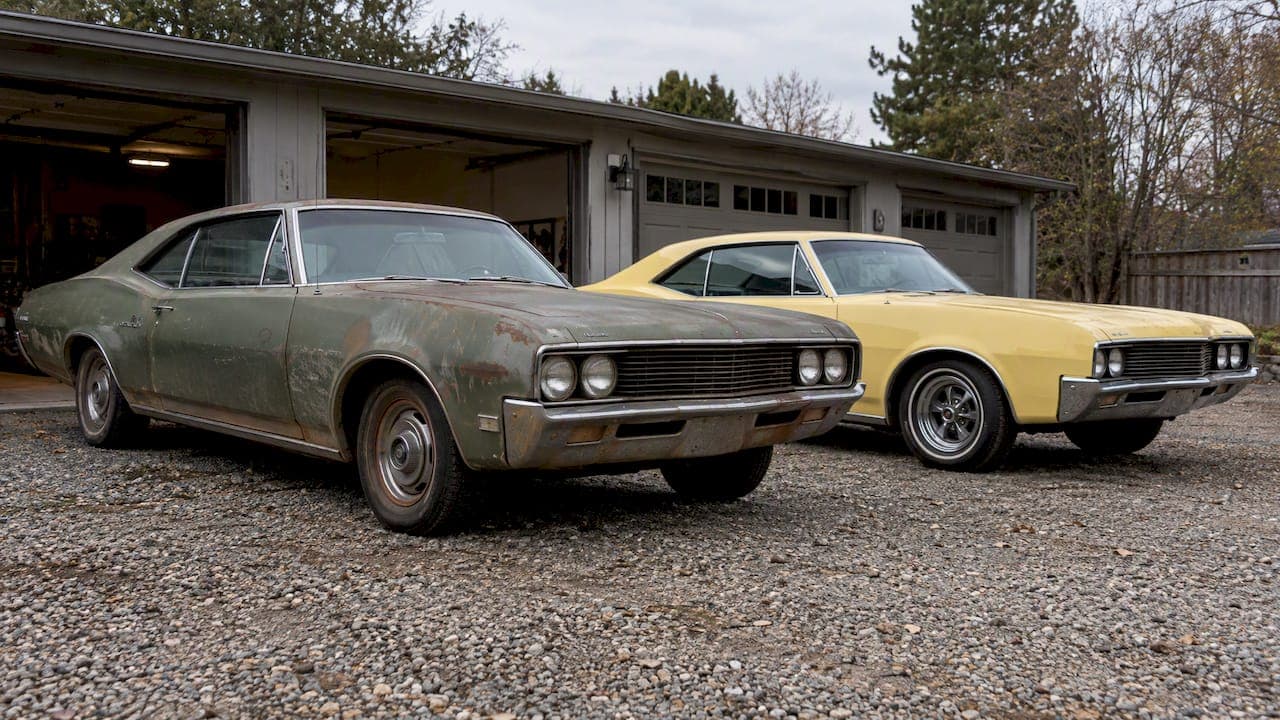
Neither original nor restored is the universal winner here. We'd preserve a true survivor with solid documentation, restore a car with safety or structural issues (or a common model with little originality left), and lean toward a restomod when daily drivability matters most. Rarity, condition, and how you plan to use the car are the three factors that settle it.
TL;DR:
- A documented, numbers matching survivor can command an auction premium and support agreed value coverage, especially when build sheets and prior appraisals establish its history.
- Driver level restorations often cost in the mid five figures, while concours rebuilds can exceed six figures and take years; budget roughly 30% extra.
- For daily driving, start with brakes and cooling; fuel injection, modern wiring, and suspension upgrades improve usability, but modifications can undermine a rare survivor’s value.
- Structural rust around the windshield frame is a safety issue that may require a specialist, while cosmetic work can wait until originality is assessed.
- Call a specialty insurer before buying: restomods may be classified as modified vehicles, and mileage limits, storage rules, or club membership can affect coverage.
Table of Contents
- What do original, restored, and restomod actually mean?
- Preservation, driver-level, and concours: the restoration spectrum
- Why owners choose restomod upgrades for everyday driving
- How restoration and originality affect resale value
- The decision checklist before you restore or preserve
- What our marketplace experience shows about documentation
- How originality and restoration affect your insurance
- Tax considerations when buying original or restored classics
- Balancing collector values and the joy of driving
- Ready to buy, sell, or finance your next classic?
- FAQ
- Sources
What do original, restored, and restomod actually mean?
Before you can choose a path, you need a shared vocabulary, because these three terms get mixed up constantly.
- Original (survivor): a car that retains most of its factory finish, original drivetrain, and numbers-matching components; a true survivor is only original once, which is why appraisers treat them as primary documentary evidence.
- Restored: any car brought back from wear or damage, covering everything from a light mechanical refresh to a full nut-and-bolt rebuild.
- Restomod: a classic that keeps its vintage styling but gains modern mechanical components, built specifically for better performance, safety, or everyday reliability.
The gap between these categories matters because it drives almost every other decision in this article, from what a car is worth at auction to what your insurance company will ask about it.
Preservation, driver-level, and concours: the restoration spectrum
Restoration isn't one thing. It runs along a spectrum, and where your car lands determines both the price tag and the time commitment.
- Preservation: minimal intervention, limited to cleaning, stabilizing, and light mechanical servicing; this is the right call for a documented survivor, and it's usually the cheapest option on the list.
- Driver-level restoration: focuses on safety, reliability, and a presentable finish rather than perfection; typical driver-level projects run in the mid five-figure range, and shop veterans often recommend this tier for first-time restorers.
- Concours or frame-off restoration: complete disassembly and rebuild to original (or better) specification; full concours work commonly exceeds six figures and can take years, so it makes sense mainly for rare or historically significant cars.
Whatever tier you land on, adding roughly a 30% contingency to your budget is smart. Hidden rust, mismatched parts, and surprise labor hours show up on almost every project, and treating your estimate as a floor rather than a ceiling keeps the build from stalling halfway through. For a deeper look at how shops grade these projects, our guide on what makes a restoration grade vehicle breaks down the condition scales buyers and sellers use.
Why owners choose restomod upgrades for everyday driving
A restomod keeps the look you fell in love with while swapping out the parts that make old cars miserable to drive daily.
- Fuel injection (EFI) in place of a carburetor for easier starts and steadier running.
- Disc brakes instead of drums for shorter, more predictable stopping distances.
- Upgraded suspension and modern wiring for safer handling and fewer electrical gremlins.
- Improved cooling systems that keep classic engines happy in traffic and summer heat.
These swaps improve safety and day-to-day reliability, but they do trade away originality, so a restomod is rarely the right move for a rare, numbers-matching survivor. Restomods have moved from niche to mainstream, with owners increasingly picking mechanical upgrades a la carte to make their classics usable without losing the styling that drew them in.
Pro Tip: If you're unsure how far to go, start with brakes and cooling. Those two upgrades solve the most common daily-driving headaches without touching the car's visual identity.
How restoration and originality affect resale value
Money follows documentation and quality here more than anything else. Well-documented, unrestored survivors can command premiums at auction, and barn-find discoveries sometimes defy normal valuation logic entirely, because buyers are paying for a piece of history that can't be recreated once it's gone.
A high-quality restoration can also raise value substantially, especially on models where few clean, documented examples survive. The opposite is true too: a rushed or poorly sourced restoration using incorrect parts can actually hurt a sale, because knowledgeable buyers notice the difference immediately. Collector market sentiment has shifted toward prizing originality in many segments, while still rewarding restorations executed to a high standard. Before you buy, it's worth confirming the drivetrain actually matches the car's build sheet; our piece on verifying numbers-matching classic cars walks through exactly what to check.

The decision checklist before you restore or preserve
Run through these questions before you commit a dollar to either path.
- Rarity and paperwork: do you have the build sheet, Protect-O-Plate, or clean title history to prove the car's story?
- Intended use: is this a trailer queen, a weekend driver, or something you plan to use daily?
- Condition: does structural rust or a mechanical failure force restoration for basic safety?
- Budget and timeline: have you built a realistic estimate with a 30% buffer for surprises?
- Reversibility: can you hold off on cosmetic work until you're certain originality won't matter to a future buyer?
If structural rust shows up around the windshield frame during inspection, that's a safety call, not a cosmetic one. Fixing rust around a windshield opening often needs a specialist rather than a DIY patch job, since a compromised frame affects glass fitment and crash safety. Our five-question framework for originality versus restoration covers this checklist in more depth if you want to work through it with a specific car in mind.
Pro Tip: Photograph everything before you touch the car. Date codes, VIN tags, and factory stampings are evidence you can never recreate once a panel is replaced or repainted.

What our marketplace experience shows about documentation
Every day we see how much documentation matters in a listing. Build sheets, VIN tags, and photos of factory date codes give buyers confidence long before a test drive happens, and listings with that detail tend to move faster and attract more serious inquiries. Original paperwork closes the trust gap that photos alone can't bridge.
That's part of why high-quality, detailed listings are important when presenting inventory. When you're ready to sell, consigning your vehicle can put a well-documented survivor or a carefully restored driver in front of serious buyers nationwide rather than just local traffic.
How originality and restoration affect your insurance
Insurers treat classic cars differently from daily drivers, and originality plays a real role in that conversation. A documented survivor often qualifies more easily for agreed-value coverage, where you and the insurer settle on a fixed payout based on the car's appraised worth rather than depreciated market value. Having original paperwork, including build sheets and prior appraisals, tends to make that process smoother because it gives the insurer concrete evidence to base the valuation on.
Restored cars can also qualify for agreed-value policies, but the appraisal usually leans heavily on the quality and documentation of the restoration itself. A thorough restoration with receipts, photos, and a paper trail of parts sourcing typically supports a stronger agreed value than a restoration with no records at all. Restomods sit in a slightly different category: some insurers price them like modified vehicles rather than classics, since the drivetrain and safety systems no longer match factory specification. That can affect both eligibility for classic car policies and the premium you're quoted.
Mileage restrictions, storage requirements, and club membership are common conditions across all three categories, original, restored, and restomod alike. Before you buy or finish a project, it's worth calling a specialty classic car insurer directly to confirm how they'll classify your specific car, since practices vary by provider and by vehicle.
Tax considerations when buying original or restored classics
Buying a classic car, whether original or restored, typically triggers the same sales or use tax treatment as buying any other vehicle in your state, with the tax calculated on the purchase price at the time of sale. The restoration status of the car doesn't usually change how that initial transaction is taxed, since the tax applies to what you paid, not to how original or modified the vehicle happens to be.
Where things get more specific is around money spent after the purchase. Parts and labor for a restoration project may be subject to sales tax depending on your state and whether the work is done by a shop or performed yourself with purchased parts. Some states also apply different rules to vehicles registered as historic or antique, which can affect registration fees rather than purchase tax directly.
If you're buying a classic car as part of a larger investment strategy, or planning to sell one for a gain, consult a tax professional familiar with collector vehicles in your state. Rules around capital gains on a car you've restored and later sold can get complicated fast, especially if you've invested significant money into parts and labor along the way. We're not positioned to give tax advice here, but a qualified accountant can walk you through exactly how your specific situation shakes out.
Balancing collector values and the joy of driving
We understand the pull of originality. There's something irreplaceable about a car that's never been apart. But a classic sitting under a cover isn't doing much for anyone. When originality carries real value, stay conservative and reversible. When you just want to drive it, a thoughtful driver-level build often serves you better than chasing concours perfection. Either way, talk to a marque specialist before you do anything you can't undo.
— Tony
Ready to buy, sell, or finance your next classic?
Whether you have a documented survivor or a freshly finished driver-level build, it is important to get it in front of the right buyer. A nationwide reach can help ensure your listing isn't limited to local foot traffic, and detailed, photo-rich listings help buyers trust what they're looking at before they inquire.
Start by gathering your paperwork: build sheets, VIN tags, photos of date codes, and any restoration receipts you have on hand. From there, browse our current inventory to see how similar cars are presented, or request a consignment quote and let us help you find the right buyer without the hassle of managing the sale yourself.
FAQ
What is the $3,000 rule for classic cars?
The so-called "thousand-dollar rule" is an informal guideline some buyers use, suggesting you avoid cars that need significant immediate repairs before they're safe or drivable. It's not an official industry standard, just a rough gut check some shoppers use to flag a car that may need far more work than the asking price suggests.
Is it worth it to restore a classic car?
It depends on the car and your goals. Restoration spending is often best treated as a cost rather than a guaranteed investment, so restoring makes the most sense when you plan to drive and enjoy the car rather than flip it for profit.
Is a 25-year-old car considered classic or antique?
Definitions vary by state, insurer, and club, so there's no single legal line. Many insurers and clubs use specific age-based thresholds for "classic" and "antique" status, but these vary widely depending on the organization and location.
At what point is a car not worth restoring?
A car usually stops being worth restoring when the cost of parts, labor, and bodywork exceeds what the finished car would realistically sell for, especially on common models with little rarity or demand. Severe structural rust, a flooded title, or a drivetrain that's been swapped away from factory specification can also tip the math against restoration.
Sources
- State of the restomod market (SEMA)
- How to restore a classic car (OldsClub 2026)
- Restoration vs preservation (Modern Car Collector)