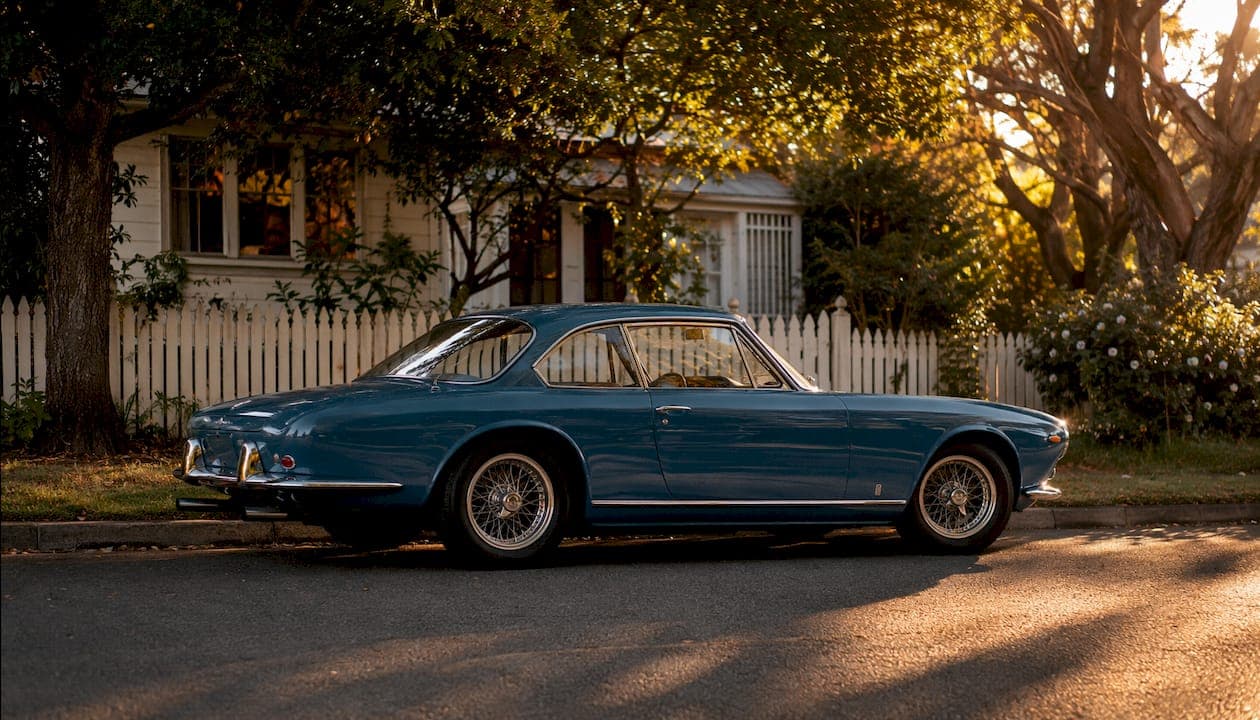
What defines a classic two-door coupe?
A classic two-door coupe is a passenger car with exactly two side doors, a fixed roof, and a sloping or truncated rear roofline designed to prioritize style and driver engagement over pure practicality. That combination of form and function is what separates a true coupe from everything else on the road.
The definition has real teeth behind it. ISO 3833 formally defines a coupe as a vehicle with two doors, a fixed roof, and limited rear volume, at least two seats in one row, and at least two side windows. Since the 1960s, that standard has been the benchmark automotive historians and enthusiasts use when the debate comes up.
The word itself traces back to French. "Coupe" comes from couper, meaning "to cut," and it originally described a shortened horse-drawn carriage built for two passengers without rear-facing seats. That idea of a trimmed, purposeful silhouette carried straight into the automobile era.
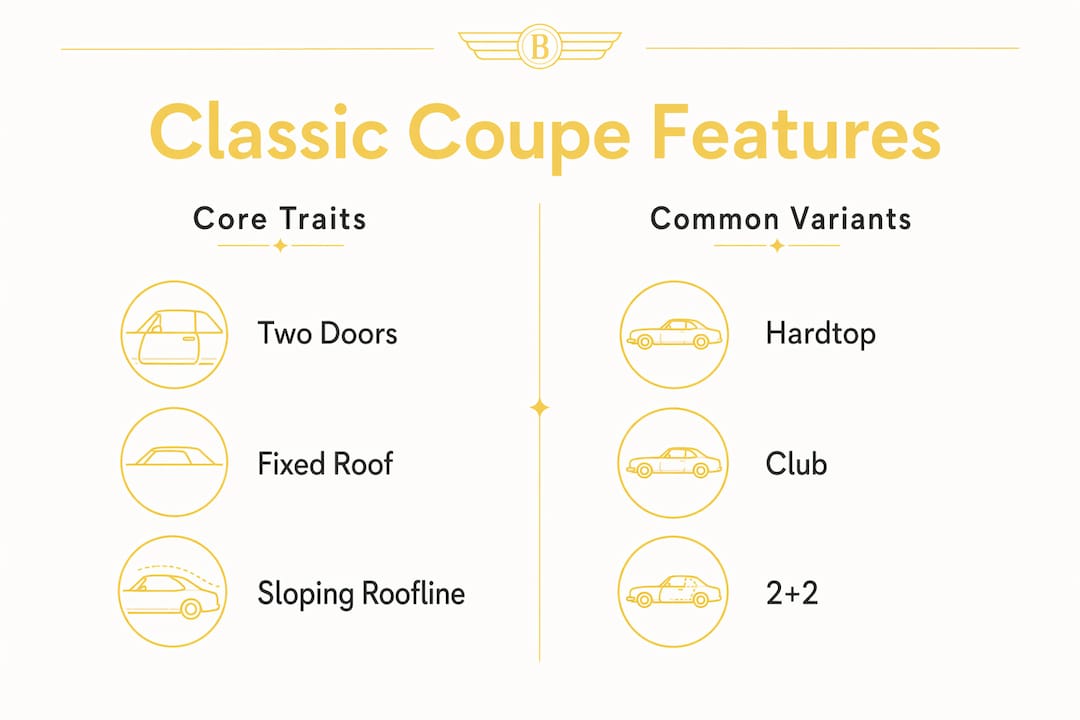
Here is what physically sets a classic two-door coupe apart:
- Two side doors (not four, regardless of what modern marketing says)
- Fixed roof with no convertible or removable panel
- Sloping or truncated rear roofline that gives the car its signature sporty profile
- Limited rear volume, meaning a smaller trunk or cargo area than a sedan
- Compact, driver-focused cabin that trades rear-seat space for visual drama
One thing worth knowing: today's automakers sometimes label four-door SUVs or sedans with sloped rooflines as "coupes" to signal sportiness. Classic coupe enthusiasts don't buy it. For them, two doors and a fixed roof are non-negotiable.
How the coupe body style evolved over time
The coupe's story starts well before the automobile existed. In 19th-century France, a coupé de berline was a carriage with the rear compartment literally cut away, leaving a compact two-passenger cab. When early automakers began classifying body styles in the early 1900s, they borrowed the term directly, applying it to closed cars shorter and sportier than full sedans.
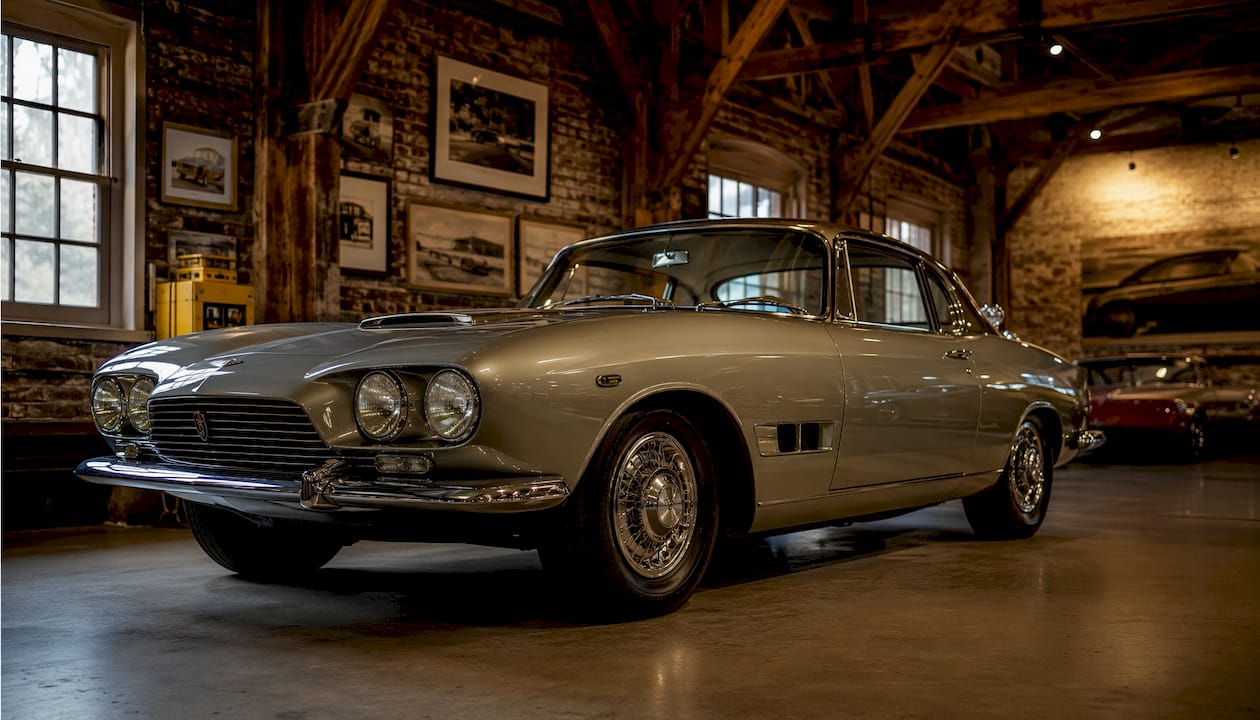
Through the 1920s and 1930s, coupes were typically business coupes or rumble-seat coupes, small fixed-roof cars with minimal rear accommodation. The business coupe had no rear seat at all, just a large trunk, while the rumble seat version folded out an exterior seat from the trunk lid for occasional passengers.
By the 1940s and 1950s, the hardtop coupe emerged as a genuine styling breakthrough. Automakers like General Motors figured out how to build a fixed-roof car that looked like a convertible, with no B-pillar interrupting the side glass. The result felt open and airy without sacrificing year-round usability.
The 1960s and 1970s were the golden era. That's when the coupe body style split into distinct cultural camps: the personal luxury coupe, the muscle car coupe, and the sports coupe. Each had its own proportions, its own buyer, and its own place in American car culture. The classic coupe's design freedom during this period gave designers room to create longer doors, dramatic roof slopes, and hood-to-deck proportions that sedans simply couldn't match.
Variants and subtypes you'll find in classic coupes
Not every classic two-door coupe is built the same way. The body style covers a wide range of configurations, and knowing the differences helps you identify what you're actually looking at.
Club coupe
The club coupe was popular from the 1930s through the 1950s. It featured a full rear seat, making it more practical than a business coupe, but kept the two-door format and a shorter roofline than a full sedan. Think of it as the family-friendly coupe of its era.
Hardtop coupe
The hardtop coupe eliminated the B-pillar entirely, the vertical post between the front and rear side windows. With all windows rolled down, the side of the car opened up completely. Pillarless coupes provide an unobstructed side view but pose structural challenges, which is part of why they command serious attention from collectors today.
Pro Tip: When shopping for a pillarless hardtop, check the door gaps carefully. Without a B-pillar to anchor the body, these cars are more prone to flex over time, and uneven gaps are one of the first signs of structural fatigue.
Post coupe
The post coupe keeps the B-pillar in place. It's structurally stiffer than a hardtop, which made it a practical choice for buyers who wanted coupe styling without the rigidity trade-off. Less glamorous to collectors, but often better preserved.
2+2 coupe
The 2+2 layout puts two full front seats and two small rear seats in the same cabin. Those rear seats are tight, often described as occasional-use only. The configuration signals a sports-oriented design rather than a family car, and you'll find it in models like the Ford Mustang fastback and various Italian grand tourers.
Key features of the 2+2:
- Rear seats suitable mainly for short trips or smaller passengers
- Longer wheelbase than a pure two-seater sports car
- Often paired with a fastback or notchback roofline
Berlinetta
The berlinetta is an Italian term for a lightweight, high-performance coupe body. Ferrari used it extensively, and it became shorthand for a coupe built around driving dynamics rather than passenger comfort. American collectors know the term mostly through Italian sports cars, but the concept influenced domestic performance coupes too.
Personal luxury coupe
This is a distinctly American subtype. Personal luxury coupes from the late 1960s and 1970s prioritized comfort, style, and status over outright speed. They were bigger than sports coupes, loaded with features, and aimed at buyers who wanted to look good without the harshness of a true muscle car.
Personal luxury coupe hallmarks:
- Long hood, short deck proportions
- Plush interior with bucket seats and a center console
- V8 engines tuned for smooth power rather than peak output
- Vinyl roofs and opera windows as common styling touches
How classic coupes differ from sedans
The coupe versus sedan question comes up constantly, and the answer is cleaner than most people expect.
| Feature | Classic two-door coupe | Traditional sedan |
|---|---|---|
| Door count | Two | Four |
| Roof style | Sloping or truncated rear | Traditional three-box profile |
| Rear-seat access | Requires tilting front seat | Direct entry via rear doors |
| Cabin priority | Driver focus, style | Passenger comfort, practicality |
| Roofline height | Lower, sportier | Taller, more upright |
| Trunk design | Often integrated into roofline | Distinct, separate trunk lid |
A sedan follows a three-box design: a distinct engine compartment, a passenger cabin, and a separate trunk. The coupe collapses or slopes that rear box, which is exactly where the style comes from and where the practicality goes. Traditionalists reserve "coupe" strictly for two-door vehicles, regardless of what a manufacturer's marketing team decides to call a four-door fastback.
Rear-seat access is the most tangible daily difference. Getting into the back of a classic coupe typically means the front passenger tilts their seat forward, then you climb in. It's workable for occasional passengers, but it's not something you'd want to do every day with a car seat or a set of golf clubs. Buyers should weigh their passenger usage patterns honestly before falling in love with a two-door body style.
The modern marketing blur is real but easy to cut through. If it has four doors, it's not a classic coupe, no matter what the badge says.
Iconic classic American two-door coupes and their cultural legacy
American car culture and the two-door coupe grew up together. The models that came out of Detroit in the 1960s and 1970s didn't just sell well; they defined what a generation thought a car should look like, sound like, and feel like.
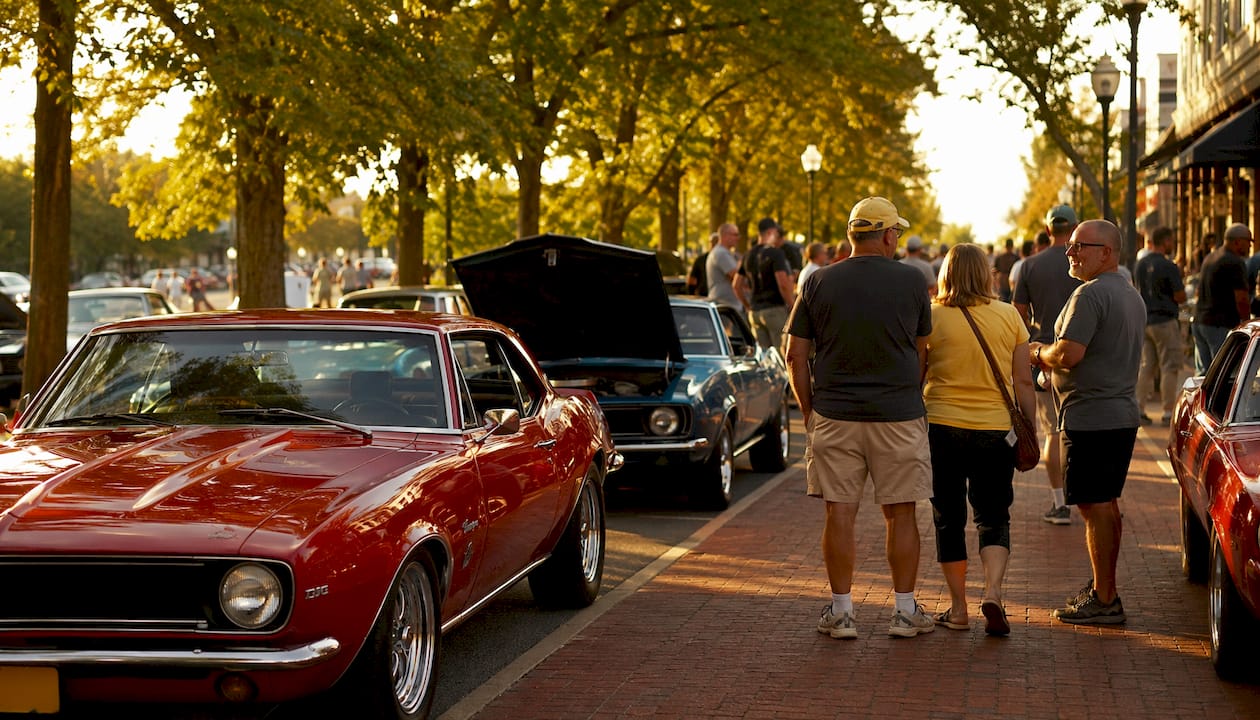
The 1965 Ford Mustang Fastback is the obvious starting point. Its long hood, short rear deck, and fastback roofline set the template for the American pony car. It wasn't the most powerful car on the road, but it looked like it was moving even when it was parked. The Mustang's proportions became a reference point that designers still cite today.
The 1970 Dodge Challenger took that formula and pushed it further. Wider, lower, and available with engines that ranged from sensible to genuinely alarming, the Challenger represented the muscle car coupe at its peak. The long hood and short deck proportions that defined these cars weren't accidental; they were a deliberate visual language that communicated performance before you ever heard the engine.
Then there's the Oldsmobile Cutlass, which took a different path entirely. Rather than chasing quarter-mile times, the Cutlass leaned into personal luxury. It became one of America's most popular cars across multiple years, a remarkable achievement for a two-door coupe, because it offered style and comfort in a package that felt special without being intimidating.
The classic American coupe wasn't just a body style. It was a statement about who you were and what you valued. Whether you chose a muscle car or a personal luxury coupe, you were picking a side in a conversation about American identity that played out in every driveway and every drive-in across the country.
The cultural weight of these cars is part of why they hold value so well. A well-preserved 1970 Challenger or a numbers-matching Cutlass Supreme isn't just a collector car; it's a piece of American history with sheet metal you can touch. If you're curious about what makes a vehicle cross from "old car" into genuine collector territory, the collector car definition covers exactly that ground.
Styling was never separate from performance in these cars. The design freedom that two-door architecture gave designers produced longer doors, more dramatic greenhouse shapes, and rooflines that swept back in ways a four-door body simply couldn't accommodate. That's the visual vocabulary of the classic American coupe, and it hasn't lost its power.
Before you buy, it's worth knowing that classic coupe ownership comes with real maintenance considerations. The body panels on pillarless hardtops and fastbacks are often unique to that model and year, which makes finding replacements a project. A specialist in collector car dent repair can tell you a lot about what to look for during a pre-purchase inspection.
Key Takeaways
A classic two-door coupe is defined by two doors, a fixed roof, and a sloping rear roofline, and that combination of style and driver focus is what has made it one of the most enduring body styles in automotive history.
| Point | Details |
|---|---|
| Core definition | Two doors, fixed roof, and sloping or truncated rear roofline per ISO 3833 standards. |
| French origins | The word "coupe" comes from couper, meaning "to cut," referencing shortened horse-drawn carriages. |
| Key variants | Club coupe, hardtop, 2+2, berlinetta, and personal luxury coupes each serve different buyer needs. |
| Coupe vs. sedan | Coupes have two doors and a sloped roofline; sedans have four doors and a three-box design. |
| American icons | The 1965 Ford Mustang Fastback, 1970 Dodge Challenger, and Oldsmobile Cutlass shaped the coupe's cultural legacy. |
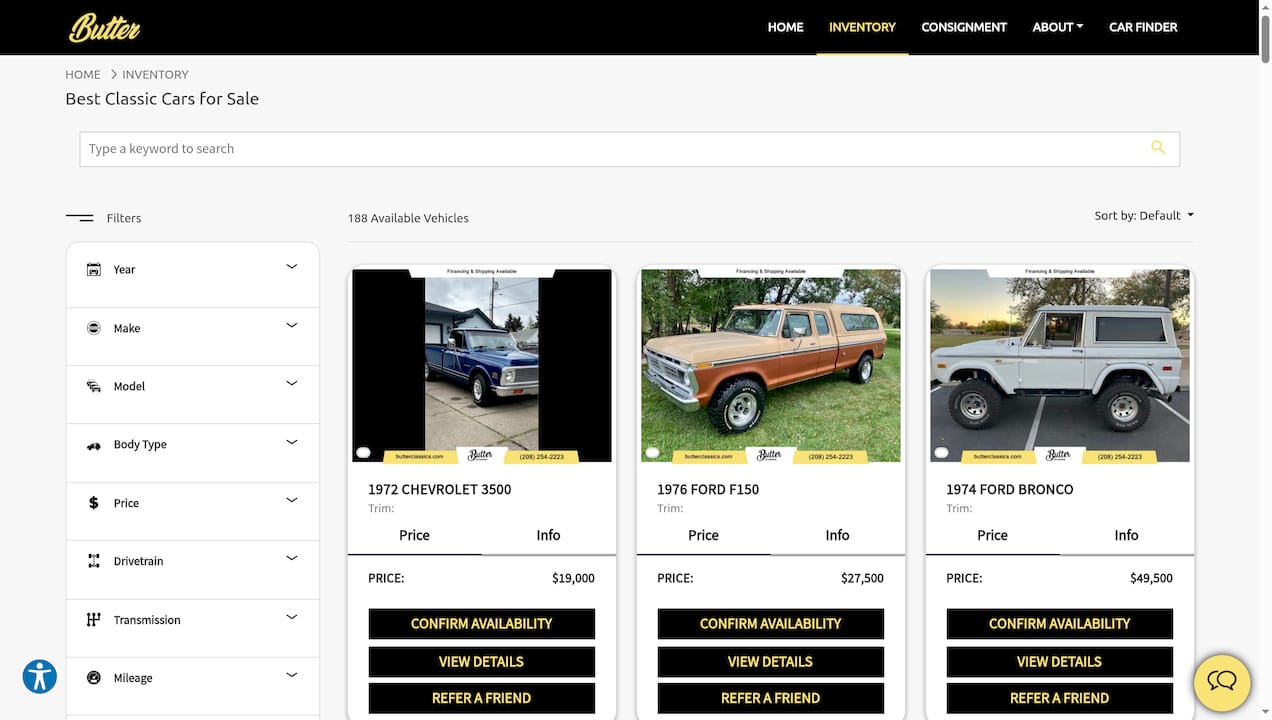
Ready to find your classic coupe?
At Butterclassics, we live and breathe this stuff. Whether you're chasing a pillarless hardtop from the 1960s or a personal luxury coupe from the 1970s, we've curated an inventory that makes the search smooth as butter. Browse classic coupes and more in our full inventory, and check out our 2026 buyer's market guide to shop with confidence. Your next classic is out there. Let's find it together.