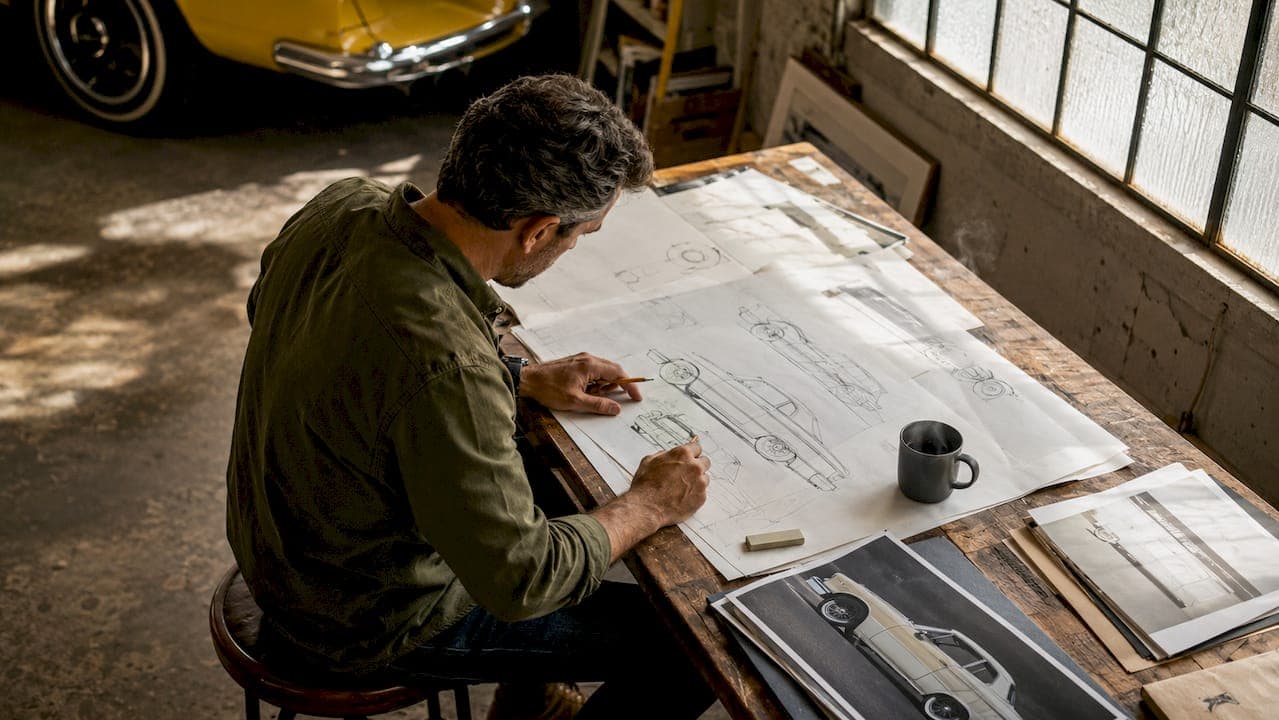
The most celebrated classic car designers are defined by institutional recognition, landmark models, and styling philosophies that outlasted their own lifetimes. Names like Giorgetto Giugiaro, Harley Earl, and Marcello Gandini did not just draw beautiful cars. They changed how the entire industry thinks about form, function, and public desire. If you study classic automotive design or collect the cars these legends created, understanding their contributions gives you a sharper eye and a deeper appreciation for what makes a vehicle truly timeless.
1. what makes a classic car designer "most celebrated"?
The title of celebrated designer is not self-appointed. It comes from a combination of awards, lasting influence, and models that define entire eras. The Global Automotive Elections Foundation formalized this standard in 1999 with the Car Designer of the Century award, which prioritized designers with sustained impact across the full 20th century rather than isolated popularity.
Institutional recognition like Automotive Hall of Fame inductions provides an objective framework for identifying top automotive designers. Popularity fades. Hall of Fame status does not. The criteria that consistently separate legends from talented professionals include:
- Landmark models: Designs that became cultural touchstones, not just commercial successes
- Process innovation: New methods like clay modeling or concept car development that changed how the industry works
- Cross-brand influence: Styling choices that competitors adopted, voluntarily or not
- Collector culture impact: Models that appreciate in value and remain sought after decades later
Pro Tip: When studying classic car design, look up a designer's Hall of Fame induction year and compare it to their most famous model. The gap between creation and recognition often reveals how far ahead of their time they were.
Recognition through awards like the Compasso d'Oro or Pebble Beach Best of Show adds another layer of credibility. These are peer-reviewed honors, not popularity contests. They tell you which designers the industry itself respects most.
2. giorgetto giugiaro: the designer of the century
Giorgetto Giugiaro is the most decorated figure in classic car design history. He was named Car Designer of the Century in 1999 and inducted into the Automotive Hall of Fame in 2002. That combination of honors is unmatched in the field.
Giugiaro's portfolio reads like a greatest-hits album for the automotive world. He designed the Volkswagen Golf Mk1, which became one of the best-selling cars of all time. He shaped the DMC DeLorean, which achieved pop culture immortality through Back to the Future. He also designed the Maserati Ghibli, the BMW M1, and the Lotus Esprit. The range alone is staggering.
What set Giugiaro apart was his ability to work across market segments without losing his design identity. A budget hatchback and a supercar both carried his unmistakable geometric precision. He won the Compasso d'Oro six times, including a lifetime achievement award in 1984. That industrial design honor is rarely given to automotive designers, which shows how far his influence extended beyond the car world.
3. harley earl: the man who invented the concept car
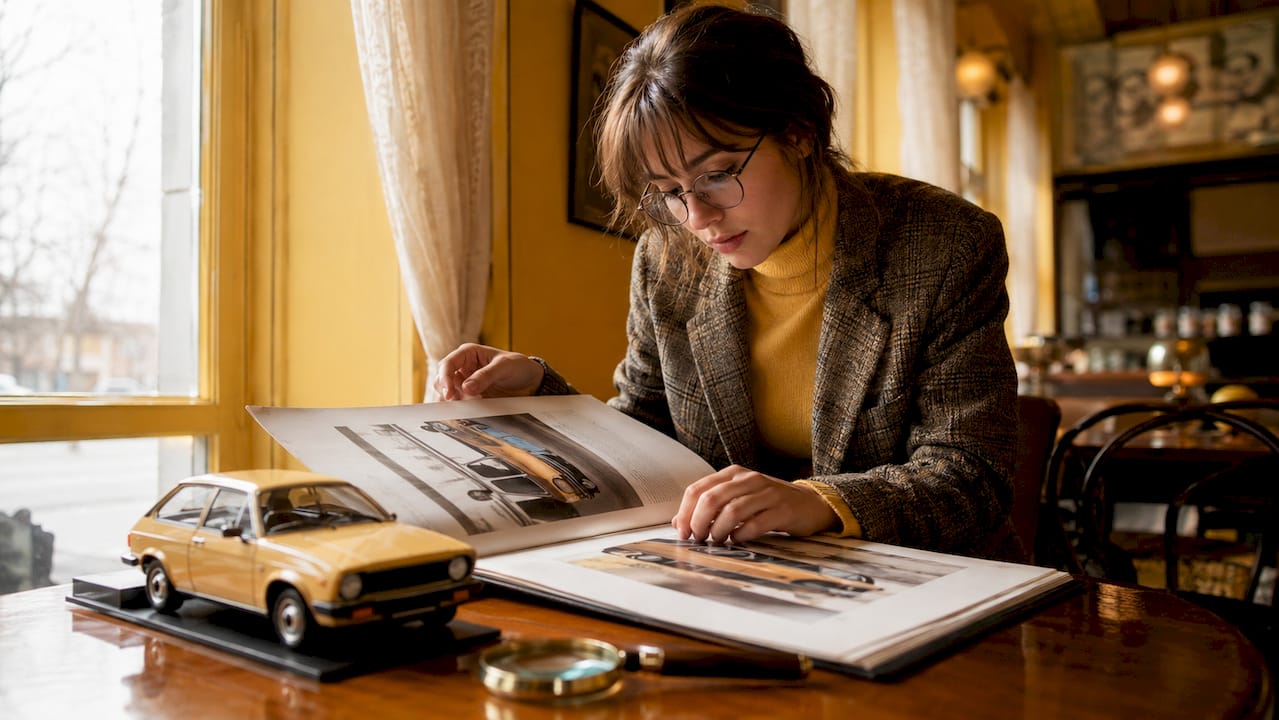
Harley Earl is the father of American automotive styling. He pioneered clay modeling as a design tool and introduced the concept car to the world with GM's 1939 Buick Y-Job. The Y-Job was the first purpose-built concept car used to gauge public reaction, and Earl drove it as his personal vehicle. That detail says everything about his confidence in his own vision.
Earl's process innovations transformed styling from a singular artistic effort into an iterative, feedback-driven system. Before Earl, car bodies were largely shaped by engineers. After Earl, design studios became central to the manufacturing process. That shift is still felt in every modern automaker's design department today.
His visual contributions are just as significant. Earl is credited with introducing the tailfin and the wraparound windshield, two features that defined the look of 1950s American cars. The tailfin was inspired by the Lockheed P-38 fighter jet. That cross-industry borrowing was pure Earl. He looked everywhere for inspiration and translated it into sheet metal.
4. marcello gandini: the architect of supercar geometry
Marcello Gandini designed two of the most visually radical cars ever built: the Lamborghini Miura and the Lamborghini Countach. Both came from Bertone's studio, and both redefined what a supercar could look like. Gandini's philosophy was direct. He intentionally created the Countach to have its own soul, completely distinct from the Miura that preceded it.
That philosophy explains why his designs endure in collector culture. Gandini did not iterate. He reinvented. The Miura and Countach prototypes were developed within days of each other, which shows the speed and confidence of his creative process. The Countach became a benchmark for angular supercar design that influenced an entire generation of performance cars through the 1980s and 1990s.
"I wanted the Countach to be a car with its own soul, not a continuation of the Miura." — Marcello Gandini
Gandini also designed the Alfa Romeo Montreal, the Lancia Stratos, and the BMW E9 coupe. His range was wide, but his signature was always present: sharp angles, dramatic proportions, and a visual tension that made you feel the car was moving even when it was standing still.
5. gordon buehrig: the prewar master of elegance
Gordon Buehrig represents the art-driven end of classic automotive design. His Cord 810/812 was recognized by the Museum of Modern Art in 1951 as a design object worthy of fine art status. That recognition came years after the car's production ended, which proves the staying power of his work.
Buehrig was inducted into the Automotive Hall of Fame in 1989 and was a serious candidate for Car Designer of the Century. His Duesenberg 20 Grand was voted one of the ten most beautiful cars in the world and won Best of Show at Pebble Beach. For collectors interested in prewar collector cars, Buehrig's work represents the highest standard of that era.
His designs were functional as well as beautiful. The Cord 810 introduced hidden headlights and a front-wheel-drive layout at a time when both were considered experimental. Buehrig proved that aesthetic ambition and engineering progress were not competing priorities.
6. battista "pinin" farina: the italian standard-bearer
Battista Farina founded Carrozzeria Pininfarina in 1930 and built it into the most prestigious coachbuilding house in the world. His partnership with Ferrari, which began in 1952, produced some of the most beautiful road cars ever made. The Ferrari 250 GT series, the 275 GTB, and the Dino 206 GT all carry Pininfarina's DNA.
Farina was inducted into the Automotive Hall of Fame in 2004. His last major design was the 1966 Alfa Romeo 1600 Duetto, a car so well-proportioned that it appeared in The Graduate and became a symbol of Italian style worldwide. His legacy extends to the present day. The Pininfarina Battista all-electric hypercar is named in his honor, connecting his 1930s craftsmanship to 21st-century performance technology.
What made Farina's approach distinct was his belief that a car's body should flow like water. Smooth curves, long hoods, and restrained ornamentation were his signatures. That philosophy stood in direct contrast to Harley Earl's chrome-heavy American excess, and both approaches produced iconic results.
7. how these designers shaped automotive styling forever
The influence of these classic car design legends reaches far beyond the models they personally created. Harley Earl's clay modeling process gave every manufacturer a repeatable method for testing designs before committing to tooling. That single innovation saved the industry billions of dollars and made iterative design the global standard.
Gandini's angular geometry became the visual language of performance cars through the 1980s. Giugiaro's geometric precision influenced the design of everyday hatchbacks sold in the tens of millions. Pininfarina's flowing curves set the template for Italian sports car design that Ferrari still follows today. Understanding these influences helps you read what makes a car collectible and why certain models command premium prices at auction.
Pro Tip: When evaluating a classic car's design pedigree, research whether the body was designed or influenced by a named studio like Bertone, Pininfarina, or Giugiaro's Italdesign. Studio attribution adds both historical credibility and collector value.
The table below summarizes the key styling contributions each designer introduced to the broader automotive world.
| Designer | Signature Innovation | Lasting Impact |
|---|---|---|
| Harley Earl | Clay modeling, concept cars, tailfins | Standardized iterative design across mass manufacturing |
| Giorgetto Giugiaro | Geometric precision across market segments | Influenced hatchback and supercar design globally |
| Marcello Gandini | Angular supercar geometry | Defined performance car aesthetics through the 1980s |
| Gordon Buehrig | Hidden headlights, flowing prewar elegance | Set the standard for art-as-automotive-design |
| Battista Farina | Flowing coachbuilt curves, Ferrari partnership | Established Italian coachbuilding as the global prestige benchmark |
8. comparing design philosophies: art vs. market vs. vision
The most celebrated car creators did not share a single approach. Their philosophies diverged sharply, and that diversity is exactly what made the era so productive.
| Designer | Approach | Signature Style | Brand Legacy |
|---|---|---|---|
| Harley Earl | Market-responsive, public feedback-driven | Chrome, fins, American scale | GM, Cadillac, Buick |
| Giorgetto Giugiaro | Cross-segment geometric discipline | Sharp angles, clean surfaces | Volkswagen, Maserati, Lotus |
| Marcello Gandini | Vision-first, soul-driven reinvention | Dramatic angles, wedge profiles | Lamborghini, Alfa Romeo, Lancia |
| Gordon Buehrig | Art-first, sculpture as transportation | Flowing prewar elegance | Cord, Duesenberg, Auburn |
| Battista Farina | Craft-driven, flowing coachbuilt beauty | Smooth curves, restrained detail | Ferrari, Alfa Romeo, Lancia |
Earl built cars for a mass market and shaped public taste from the top down. Gandini built cars for a vision and let the market catch up. Giugiaro operated in between, bringing design rigor to vehicles at every price point. Buehrig treated the automobile as fine art. Farina treated it as the highest expression of Italian craft. All five approaches produced investment-grade classics that collectors pursue today.
Key takeaways
The most celebrated classic car designers are defined by institutional honors, process innovations, and design philosophies that shaped the entire automotive industry for generations.
| Point | Details |
|---|---|
| Awards define celebration | Hall of Fame inductions and Car Designer of the Century provide objective proof of lasting influence. |
| Process innovation matters as much as aesthetics | Harley Earl's clay modeling changed how every manufacturer designs cars, not just GM. |
| Philosophy drives longevity | Gandini's soul-first approach explains why the Countach remains a collector icon decades later. |
| Range signals greatness | Giugiaro's ability to design the Golf and the DeLorean in the same era proves true design mastery. |
| Legacy extends to the present | Pininfarina's name lives on in a modern electric hypercar, proving great design never expires. |
Why classic car design still hits different
I have spent years around classic cars, and the one thing that never gets old is the moment you realize a car's shape was a deliberate argument. Harley Earl was not just drawing fins. He was telling America what the future looked like. Gandini was not just sketching wedges. He was rejecting every design convention that came before him.
What I find most underappreciated is how much these designers disagreed with each other. Earl and Farina were working at the same time and producing cars that looked like they came from different planets. That tension is what made the postwar era so extraordinary for automotive design. There was no consensus on what a car should look like, and the competition produced masterpieces.
For design students, my honest advice is to study the failures as much as the hits. Buehrig's Cord was a design triumph and a commercial disaster. The company went bankrupt. That story teaches you something no textbook does: great design does not guarantee survival, but it does guarantee immortality. The Cord is in MoMA. The companies that outsold it are forgotten.
If you want to develop a real eye for this stuff, spend time with the classic car market trends that connect design pedigree to collector value. The market is the most honest judge of which designers truly mattered.
— Tony
Find cars shaped by design legends at Butterclassics
The designers covered in this article did not just create beautiful objects. They created vehicles that people still want to own, drive, and preserve. At Butterclassics, you can browse a hand-selected inventory of classic and vintage cars that carry the DNA of these iconic eras.
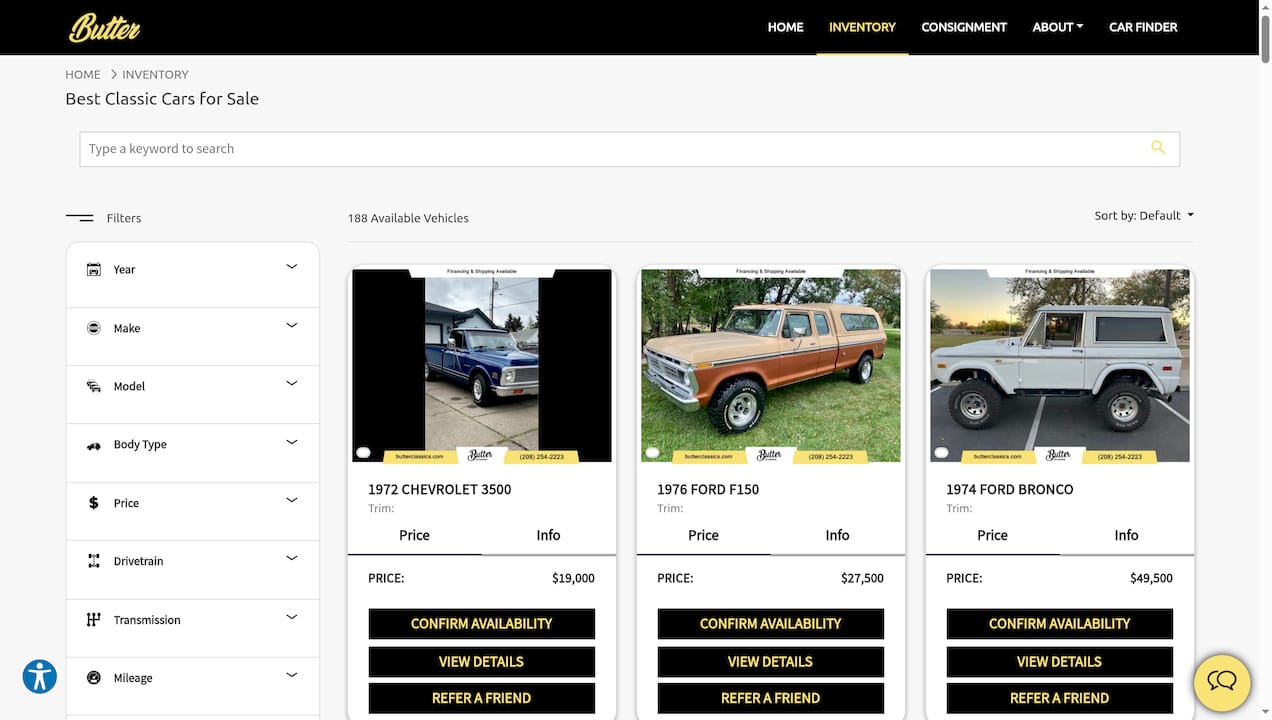
Whether you are looking for a muscle car with that unmistakable American scale Harley Earl helped define, or a European sports car shaped by the Italian coachbuilding tradition, Butterclassics has options worth your time. Every vehicle in the Butter Certified collection is vetted for quality and authenticity, so you can buy with confidence. Browse the full classic car inventory and find the one that speaks to you. Smooth as butter, every time.
FAQ
Who is considered the greatest classic car designer of all time?
Giorgetto Giugiaro is widely considered the greatest, having been named Car Designer of the Century in 1999 by the Global Automotive Elections Foundation. His portfolio spans the Volkswagen Golf, DMC DeLorean, and Maserati Ghibli across multiple decades and market segments.
What did harley earl invent that changed car design forever?
Harley Earl invented clay modeling as a design tool and created the concept car with the 1939 Buick Y-Job. These two innovations turned automotive styling into an iterative, feedback-driven process that every major manufacturer still uses today.
Why is the lamborghini countach considered a design icon?
Marcello Gandini designed the Countach with the explicit goal of giving it a completely original soul, distinct from any prior design. Its angular geometry became the defining visual language for performance cars through the 1980s and set a benchmark that influenced decades of supercar design.
How do i know if a classic car has genuine design pedigree?
Look for studio attribution from houses like Pininfarina, Bertone, or Italdesign, and check whether the model appears in recognized collections like MoMA or has won at Pebble Beach. Hall of Fame connections and auction history also confirm a car's design credibility.
What makes a car designer's work last in collector culture?
A distinct styling philosophy, as seen in Gandini's soul-driven approach, is the key factor. Designs that reflect a clear point of view rather than market compromise tend to appreciate in collector value and cultural significance over time.