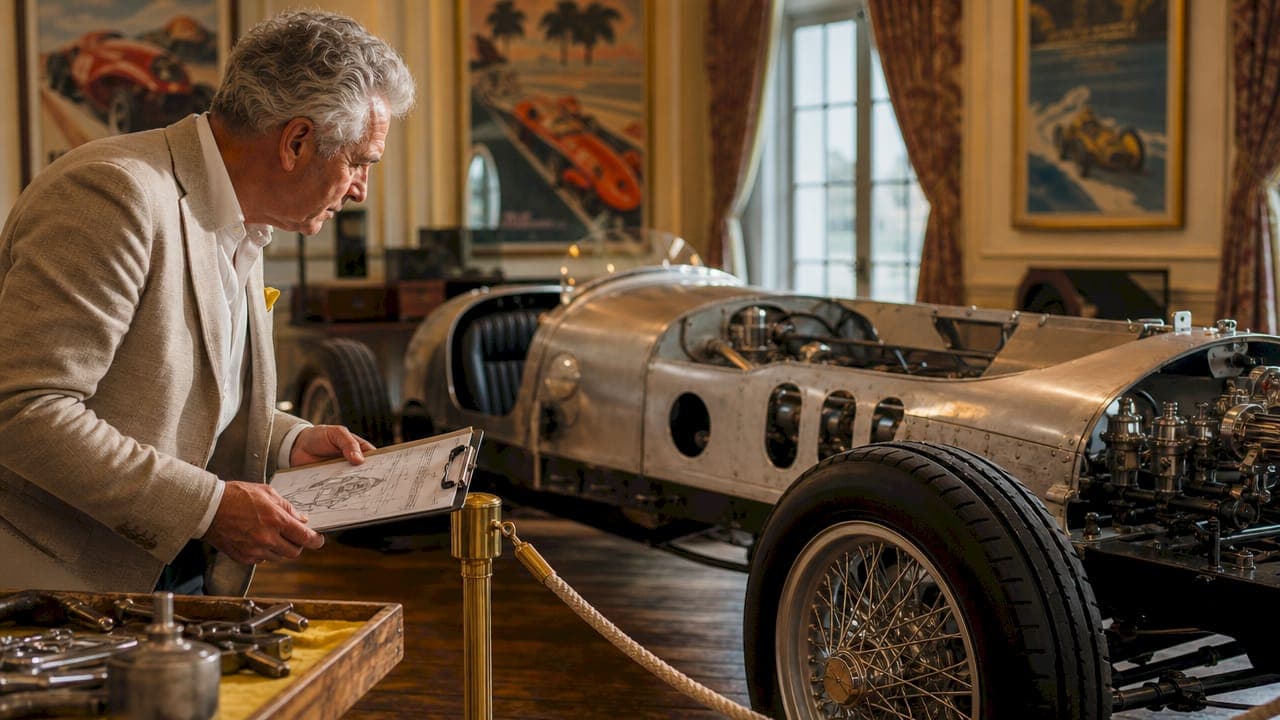
A prototype classic car is a pre-production or experimental vehicle built to test engineering, design, and function before a manufacturer commits to full-scale production. These are not concept cars dressed up for an auto show. They are working test beds, often hand-built, carrying unique parts that never made it to the assembly line. For collectors, that distinction matters enormously. A genuine prototype sits at the intersection of automotive history and scarcity, and understanding what separates one from a standard production model is the first step toward recognizing real collector value.
What is a prototype classic car, and how does it differ from a concept car?
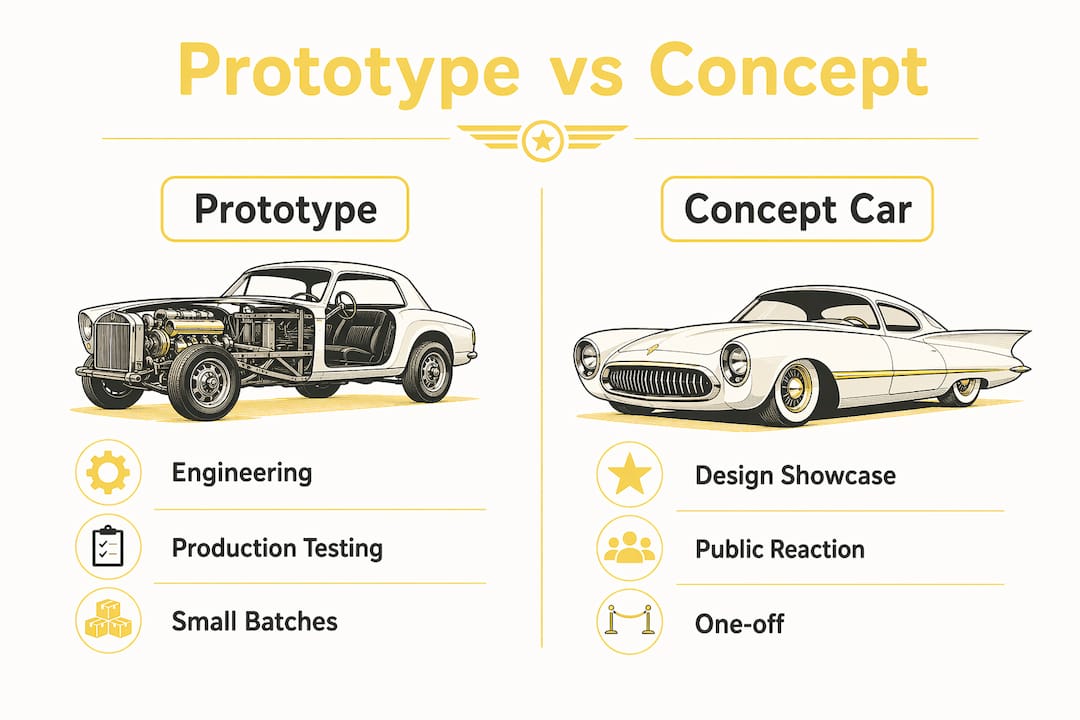
The industry term for these vehicles is "pre-production prototype," and the distinction from a concept car is functional, not cosmetic. Prototypes test engineering for production readiness, while concept cars showcase styling and technology for public or media audiences. That difference in purpose shapes everything about how each vehicle is built, used, and ultimately valued.
The 1961 Mako Shark is a textbook concept car. General Motors built it to generate excitement and gauge public reaction to futuristic Corvette styling. It was never intended to drive off a dealer lot. The 1968 Honda CB750 prototype, by contrast, was a functional engineering test unit built to verify that Honda's new four-cylinder engine and disc brake system could actually work together in a production motorcycle. One was theater. The other was a technical exam.
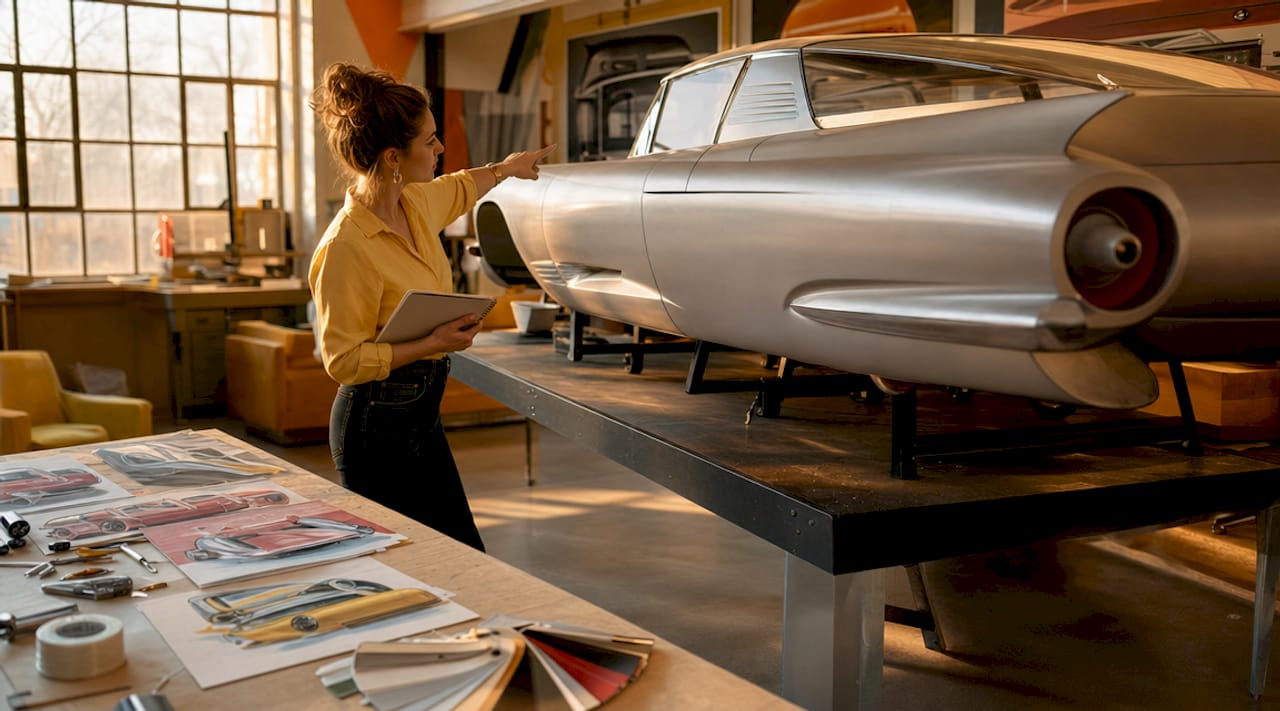
Concept cars usually remain one-offs shown to the public, then retired to a museum or destroyed. Prototypes, on the other hand, are often built in small numbers, tested hard, and sometimes survive in private hands or manufacturer archives. That survival rate is low, which is exactly why authenticated prototypes command serious collector attention.
| Feature | Prototype | Concept car |
|---|---|---|
| Primary purpose | Engineering and production testing | Styling showcase and public reaction |
| Build method | Hand-built, functional components | Often non-functional or show-quality only |
| Intended audience | Internal engineers and testers | Media, public, and auto show attendees |
| Production path | Leads directly toward production | Rarely enters production |
| Collector rarity | Extremely rare, often unique | Rare, but purpose-built for display |
Pro Tip: If a seller claims a car is a prototype but cannot produce factory engineering records or internal codenames, treat it as a heavily customized production car until proven otherwise.
Key features and characteristics of prototype classic cars
Prototypes are functional intermediate models built before mass manufacturing to test form, fit, and function. That definition carries real physical consequences you can see and feel in the car itself.
Here is what sets prototype classic cars apart from production vehicles:
- Hand-built construction. Prototype bodies and components are fabricated by skilled craftsmen, not stamped out on an assembly line. Panel gaps may be inconsistent, and fit tolerances are often looser than on production cars.
- Non-standard or experimental parts. Prototypes frequently carry components that were never released to the public. You might find a one-off carburetor, a custom suspension geometry, or a gearbox that exists nowhere else in the world.
- Mule car architecture. Some prototypes adapt existing chassis to test new technologies outside formal assembly lines. A classic muscle car body might hide an entirely different drivetrain underneath.
- Engineering quirks and compromises. Tires rubbing wheel wells, removable body panels for quick access, and unverified safety compliance are all normal on a prototype. These cars were built to be tested and modified, not driven smoothly every day.
- Factory documentation. Genuine prototypes carry a paper trail: internal engineering codenames, factory records, and provenance documentation. The Rover 75 development program, for example, used the internal designation "R40" throughout its prototype phase. Without that kind of record, a prototype may be mistaken for a custom-built car.
- Disguised bodywork. Manufacturers sometimes wrap or panel prototypes during road testing to hide final design details from competitors and media. Evidence of temporary body panels or unusual fastening points can be a genuine identifier.
Pro Tip: Request a vehicle history report and cross-reference any internal codenames against manufacturer archives or marque-specific registries before making an offer on a claimed prototype.
The Aston Martin Lagonda V8 S1 prototype is a strong real-world example of these traits. Owners and journalists who have driven it note that it does not behave like a polished production car. The engineering roughness is not a flaw. It is evidence of the development process, and that rawness is part of what makes it historically significant.
Why prototype classic cars matter to collectors
Prototype classic cars are rare pre-production vehicles with values that can exceed regular production models when condition, provenance, and historical significance align. For serious collectors, they represent something no production car can offer: a window into the decision-making process behind the vehicles we know and love.
Here is why collectors prize them, and what drives their value:
-
Unmatched rarity. A prototype may be the only one of its kind in existence. That scarcity alone places it in a different category from even the rarest production variants. Understanding what makes a car collectible starts with rarity, and prototypes sit at the top of that scale.
-
Historical narrative. Prototypes reveal the engineering struggles and design compromises behind production classics. The Cord 814 prototype, currently on display at the ACD Museum, commands museum-level interest precisely because it represents a pivotal moment in American automotive history that never reached consumers.
-
"What-if" appeal. Cancelled model prototypes are especially compelling. They represent a road not taken, a vehicle that could have changed a manufacturer's trajectory. That narrative adds emotional and financial value that production cars simply cannot replicate.
-
Investment potential with caveats. Prototypes with documented pedigree and excellent condition can appreciate significantly. However, restoration challenges are real. One-off parts cannot be sourced from a catalog, and incomplete engineering means some systems may never perform reliably.
-
Collector community recognition. Owning a verified prototype earns a different kind of respect in collector circles. These vehicles anchor collections and attract attention at concours events, auctions, and private showings.
"Rejected proposals and prototype evolutions offer significant insight into manufacturer intentions and design refinement." This is why prototype classic cars are not just rare cars. They are primary sources in automotive history.
The classic car valuation methods that apply to production vehicles still apply here, but documentation and provenance carry far more weight. A prototype without a paper trail is worth a fraction of one with factory records intact.
How to identify and verify a prototype classic car
Identifying a genuine prototype requires more than a visual inspection. Here is a practical checklist for collectors and buyers:
- Look for hand-fabricated body panels. Inconsistent panel gaps, unusual weld points, and non-standard fasteners are physical markers of hand-built construction rather than assembly-line production.
- Check for non-production components. Open the hood and look underneath. Prototype engines, carburetors, and suspension parts often carry part numbers that do not appear in any production parts catalog.
- Request factory documentation. Factory engineering records and internal designations like codenames are the gold standard for provenance verification. No documentation is a serious red flag.
- Consult manufacturer archives. Major marques including Ford, General Motors, and Chrysler maintain historical archives. Marque-specific clubs and registries can also cross-reference VINs and build records.
- Engage independent experts. A specialist in the specific marque or era is worth the consultation fee. Classic car authentication is a discipline in itself, and a trained eye catches details a general appraiser will miss.
- Distinguish from restomod and custom builds. Heavily modified production cars are sometimes misrepresented as prototypes. The key difference is origin: a prototype was built by the manufacturer for internal testing, not modified by a private owner after the fact.
- Watch for red flags. Vague provenance stories, missing VIN plates, and sellers who cannot name the specific development program the car belonged to are all warning signs. Prototypes have specific histories. If the story is fuzzy, the car probably is not what it claims to be.
Prototypes typically have incomplete or experimental engineering such as non-standard tires and removable parts. That incompleteness is actually a verification tool. If a claimed prototype is perfectly polished and drives like a production car, ask harder questions.
Key takeaways
Prototype classic cars are the rarest category in the collector market, defined by hand-built construction, non-production components, and documented factory origins that no production vehicle can replicate.
| Point | Details |
|---|---|
| Definition is functional | A prototype tests engineering for production; a concept car tests public reaction to styling. |
| Physical markers exist | Hand-built panels, non-catalog parts, and engineering quirks are physical proof of prototype origin. |
| Documentation is everything | Factory records and internal codenames separate genuine prototypes from custom builds. |
| Value requires provenance | Collector value rises sharply when condition, rarity, and a documented paper trail align. |
| Restoration is demanding | One-off parts and incomplete engineering make prototypes challenging and costly to restore. |
Why prototypes are the most honest cars ever built
I have spent years around classic cars, and I will tell you something that surprises most people when they hear it: a prototype is actually more honest than any production car you will ever own. Production cars are the result of thousands of compromises made for cost, regulation, and mass-market appeal. A prototype shows you what the engineers actually wanted to build before the accountants got involved.
That rawness is what draws me to them. The Aston Martin Lagonda V8 S1 prototype does not hide its development scars. The Rover R40 carries the fingerprints of every engineer who argued over its design. These cars were never meant to be perfect. They were meant to answer questions, and the answers are written into every non-standard part and hand-welded seam.
The practical reality is harder, though. Collecting rare classic cars requires patience, and prototypes demand more of it than anything else in the hobby. You cannot order parts. You cannot find a forum thread with the answer. You are often working from incomplete factory records and educated guesses. That is not a reason to avoid them. It is a reason to go in with your eyes open and your research done.
My honest advice: if you find a claimed prototype, spend as much time verifying the paperwork as you do inspecting the car. The car can be fixed. Missing provenance cannot be recovered.
— Tony
Find your next collector car at Butterclassics
If prototype and classic vehicles have caught your attention, Butterclassics is the place to start your search. We carry a hand-selected inventory of classic and vintage vehicles, and our Butter Certified program means every car we stand behind has been verified for authenticity and quality. No guesswork, no fuzzy provenance stories.
Whether you are hunting for a rare pre-production find or a production classic with documented history, our team is here to help you find the right car at the right price. Browse our full classic car inventory or explore our Butter Certified vehicles to see what is available right now. Call dibs before someone else does.
FAQ
What is the definition of a prototype classic car?
A prototype classic car is a pre-production vehicle built by a manufacturer to test engineering, design, and function before committing to mass production. It is hand-built, often carries non-standard components, and is at least 20 years old to qualify as a classic.
How do prototype cars differ from production classic cars?
Prototype cars are built in extremely small numbers for internal testing and carry unique, non-production parts, while production classic cars are manufactured on assembly lines to standardized specifications. Prototypes often show engineering quirks and inconsistencies that production cars do not.
How can you tell if a classic car is a genuine prototype?
Genuine prototypes show hand-fabricated body panels, non-catalog components, and carry factory documentation including internal engineering codenames and build records. Without that paper trail, a car cannot be reliably authenticated as a prototype.
Are prototype classic cars worth more than production models?
Prototype classic cars with documented provenance, excellent condition, and historical significance can command values well above comparable production models due to their extreme rarity. However, restoration costs and the difficulty of sourcing one-off parts can offset that premium.
What are the biggest risks when buying a prototype classic car?
The primary risks are misidentification and missing documentation. Heavily customized production cars are sometimes misrepresented as prototypes, and without factory records, establishing genuine prototype status is nearly impossible. Always engage a marque specialist before purchasing.