
A cosigner can help you qualify for a classic car loan, but the cosigner takes on the debt without getting the car. A co-borrower shares both the loan and the ownership. Which one you need depends on your credit, and on who you want on the title. Get your own numbers first with financing pre-qualification at Butter Classics, so the conversation with a cosigner starts from facts instead of hopes.
TL;DR
- A cosigner promises to repay if you don't, and usually isn't on the title. A co-borrower shares the loan and the ownership, and their name goes on the title (Experian).
- Lenders review the cosigner's credit and debts too. A cosigner with strong credit can improve your approval odds or your rate (CFPB).
- The loan shows up on both credit reports. A late payment hurts both of you.
- A cosigner can be released later, often after 12 to 24 months of solid payments, or by refinancing, paying off or selling the car (Bankrate).
- Sort out your budget, down payment and credit picture before you ask anyone to sign.
Table of Contents
- Cosigner or co-borrower: the real difference
- Whose credit and income does the lender look at?
- Does a cosigner own the classic car?
- What it does to your credit scores
- The risks, in plain terms
- What classic car lenders tend to want
- How to get a cosigner off the loan later
- A step-by-step plan before you ask anyone to cosign
- Perspective
- Ready to look at the cars?
- FAQ
- Sources
Cosigner or co-borrower: the real difference
People use the two words as if they were the same. They aren't, and with a collector car the difference matters more than usual, because classics are often bought as a shared passion, an inheritance project or an investment.
A cosigner helps you qualify. Their income and credit record go on your application, and they pledge to repay if you can't. They don't get the car. The loan money goes to you, and usually only your name is on the title.
A co-borrower (also called a co-applicant) is a full partner. Both of you are responsible for repayment, both names can be on the title, and a co-borrower has an equal claim to the vehicle, as Experian explains.
Here is the quick comparison:
| Cosigner | Co-borrower | |
|---|---|---|
| Responsible for repaying | Yes, if the borrower stops paying | Yes, from day one |
| Name on the title | Usually not | Usually yes |
| Right to use or sell the car | No | Yes, depending on how the title is worded |
| Loan on their credit report | Yes | Yes |
| Best fit | Someone helping a buyer qualify | Spouses, partners or friends buying together |
If you're buying a car with a partner and want both names on the title, you want a co-borrower. If a parent or friend is just lending their credit, you want a cosigner. Decide that before you apply, because the paperwork follows from it.
Whose credit and income does the lender look at?
Both. When there's a second person on the application, the lender checks both credit histories and both debt loads. Experian says a cosigner typically needs a good credit score, enough income and a debt-to-income ratio (DTI, the share of monthly income that goes to debt payments) under 50% to help you qualify. A DTI of 36% or lower helps you get better terms.
Two details trip people up:
- A cosigner with bad credit doesn't help. Bankrate notes that a lender only counts the borrower's own income toward minimum income requirements. The cosigner's role is to guarantee repayment, and they have to show they could cover the payments too.
- A co-borrower's debts count against you. A partner with lots of debt and little income can drag down the combined ratio, according to BadCredit.org.
Expect the second person to hand over a Social Security number, ID and proof of income like pay stubs or tax returns. Most lenders run a hard credit check on both people, so tell your cosigner up front.
You can't be forced into this. The CFPB says a lender generally can't require a cosigner if you qualify on your own, and can't make a spouse cosign unless you're applying jointly. For a closer look at the score ranges lenders want, see our guide to classic car loan credit.
Does a cosigner own the classic car?
No. This is the question that surprises people most. The loan agreement and the title are two separate documents. The loan is a promise to repay money. The title proves who owns the car.
A cosigner who is only on the loan has no ownership interest and no right to the keys. They can't drive it off or sell it, even if they've been making the payments to protect their credit (LegalClarity).
If a second person is on the title, the wording matters. On many titles, "or" between two names lets either owner sell the car alone, while "and" requires both signatures. That varies by state, so read your state's title rules before you list two names.
A good habit is a two-document check: read the loan contract for who promised to repay and what it says about default, notices and release. Then check the title for who legally owns the car and whose signature is needed to sell or refinance. Changing one document doesn't change the other.

What it does to your credit scores
The account and its payment history appear on both credit reports, and any late payment is marked against both of you (CFPB).
There's also a quieter effect. Even when every payment lands on time, the loan raises the cosigner's DTI. That can affect the terms they're offered on their own future loans or cards. SoFi notes that the hard inquiry can lower a score temporarily, usually by fewer than five points, and that on-time payments can help the score over time.
A worked example makes it concrete. Say a cosigner earns $6,000 a month and already pays $1,800 toward debts, a 30% DTI. Add a $700 classic car payment and their debt payments become $2,500, or about 42% of income. That's still under the 50% line Experian mentions, but well above the 36% mark that helps with better terms. If they want a mortgage next year, that $700 will be part of the picture. (This is an illustration with made-up numbers, not a quote.)

The risks, in plain terms
Cosigning is a big ask. The CFPB spells out what the cosigner takes on in its guide on whether to co-sign a car loan:
- They're equally responsible for the full debt, plus any late fees and collection costs.
- The lender can pursue the cosigner without first going after the borrower, including through a lawsuit or wage garnishment, depending on state law.
- A default can appear on their credit record.
- If the car is repossessed and sold, either person can be pursued for any remaining balance.
Federal rules require the lender to give the cosigner a written notice describing these risks before signing. Read it. Don't skip it because you trust the borrower.
If you're the cosigner, the FDIC's Money Smart guide suggests these protections:
- Ask the lender to calculate the most you could owe.
- Ask in writing to be notified if a payment is missed or the terms change. Lenders aren't required to do this on their own.
- Get copies of every loan document.
- Try to limit your liability to the principal in the contract.
- Never pledge your own property as collateral unless you're prepared to lose it.
If you're the buyer, know that you're asking someone to put their credit on the line for a car they won't drive. Say so out loud, and share the monthly statements with them.
Before you sign any dealer or sale contract, also understand your state's consumer protections. For example, consumer protection for auto purchases covers issues like vehicles sold as certified that weren't, which is worth knowing about whatever you buy.
What classic car lenders tend to want
A classic isn't a daily driver, and lenders treat it differently. Rates, age cutoffs and credit minimums vary by lender, so use the following as a map of what to prepare, not a promise.
- Vehicle age and condition. Many classic programs have an age floor, commonly 20 or 25 years, and some want the car to be largely original and not mid-restoration. Our classic car loan requirements checklist walks through what to gather.
- A real down payment. Collector car loans often expect 10% to 20% down. See our down payment target for how to plan it. A bigger down payment lowers the amount a cosigner could be on the hook for.
- Insurance. Lenders commonly ask for agreed-value coverage on classics, so line that up early.
- Shorter terms. Terms of 60 to 72 months are common.
Rates also move with the market and with your credit tier, so compare live rate pages when you shop instead of relying on any number you read in an article. If you're weighing a loan against other ways to pay, our comparison of classic car financing vs. a personal loan and our guide to cash vs. financing can help.
How to get a cosigner off the loan later
Nobody has to stay on the loan forever. Bankrate lists four exits:
- Refinance in your own name with a new lender. Scores in the 700s usually get the lowest rates, and 600 and up often works.
- Request a cosigner release from the current lender. This typically takes 12 to 24 months of solid repayment, proof of income and a credit check, and the terms may change.
- Pay off the loan. Some lenders charge a prepayment penalty, around 2% in Bankrate's example, so check your contract.
- Sell or trade the car and use the proceeds to clear the balance.
A private agreement doesn't release anyone. Changing the title doesn't either. Only the lender's release, a payoff or a replacement loan does. If you want a cosigner out in two years, ask about the release process before you sign, and keep every payment on time.
A step-by-step plan before you ask anyone to cosign
- Know your own numbers. Check your credit reports and your DTI. Our credit guide shows what to aim for.
- Get pre-qualified. A preapproval budget tells you what you can handle before you fall for a car.
- Decide the role. Cosigner (helps you qualify, no ownership) or co-borrower (shared ownership).
- Sit down with the person. Show them the car, the payment, the term and the exit plan.
- Read both documents. The loan contract and the title paperwork, as described above.
- Set up statements. Give the cosigner account access so they can see payments in real time.
- Plan the release. Pick a date to refinance or request release.
Perspective
Here's how we see it. A classic car purchase should feel exciting, not like a favor that strains a friendship. The cleanest way to ask someone to cosign is to arrive prepared: your credit picture, your budget, your down payment and an exit plan.
That's why we start buyers with financing pre-qualification before they pick a car. You learn where you stand first, and you can decide whether you need a cosigner at all. When you know the number, the conversation with a parent, partner or friend is simple and fair.
And once you've found the car, we want the rest to be smooth as butter. Our listings come with detailed photos and specs, and our certified vehicles carry our Worry Free Guarantee, so the only surprises left are the good ones, like the first drive.
Tony
Ready to look at the cars?
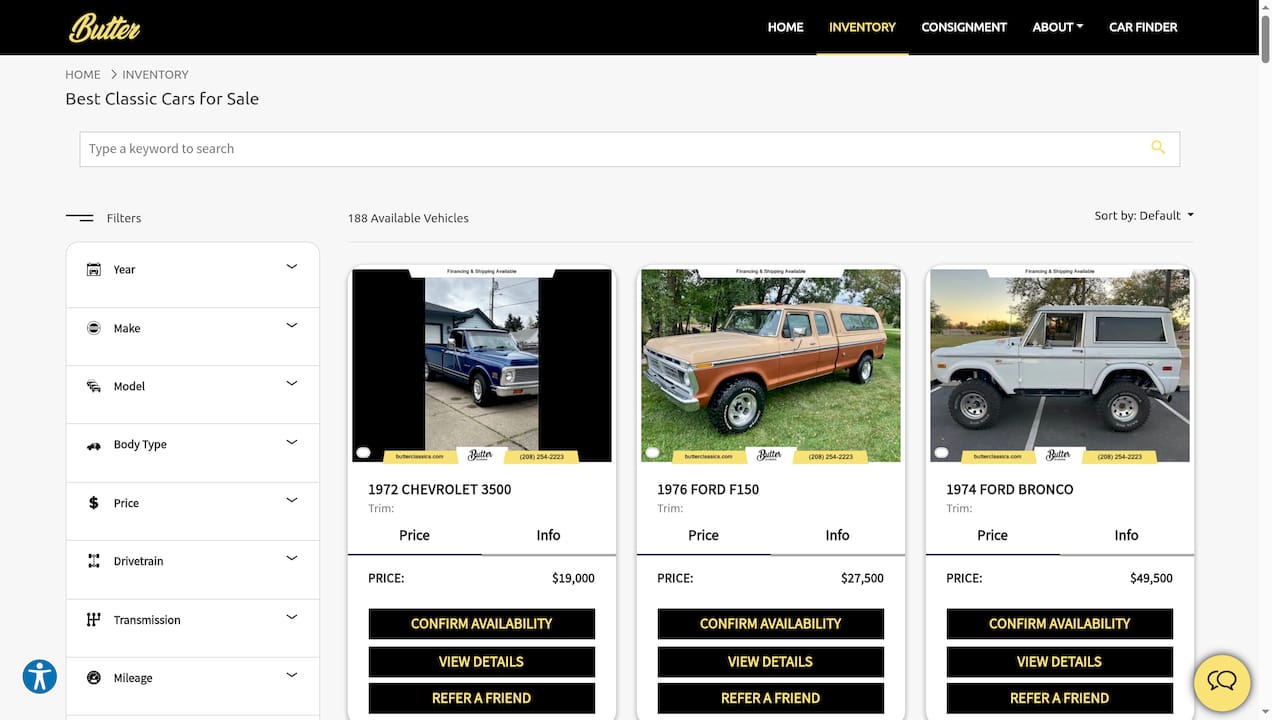
If you want to see what you can finance before you ask anyone for help, start with pre-qualification on our classic vehicle financing page. Then browse the full inventory of classic trucks, muscle cars, Broncos and more, and schedule a test drive or request a quote when one catches your eye.
Selling instead? You can consign your vehicle with us, which also helps the next buyer with their financing plans.
FAQ
Can I legally take a car I cosigned for?
No. Cosigning a loan doesn't give you title or ownership, and you can't take the car just because you're paying on it. If the borrower defaults, the lender holds the right to repossess, not you. If your name is also on the title, your rights depend on your state and on how the title is worded.
Whose credit score is used when there's a cosigner?
Both. The lender checks the borrower's and the cosigner's credit and debts. Approval and rate can improve when the cosigner has strong credit, but the lender still wants the borrower to show their own income for minimum requirements, per Bankrate.
How much will my credit score drop if I cosign?
The hard inquiry usually lowers a score by fewer than five points and the effect is temporary, according to SoFi. The bigger effect is the added debt on your reports, which raises your DTI. Late payments by the borrower would also land on your record.
Can I be a co-borrower on a classic car loan instead of a cosigner?
Yes, if the lender allows it. A co-borrower shares the loan and typically the title, and the lender reviews both people's income, credit and debts. It suits partners or friends who will both own the car.
Can a cosigner be removed from the loan?
Yes. Common routes are refinancing, a lender's cosigner release after about 12 to 24 months of on-time payments, paying the loan off, or selling the car. Ask about the release terms before signing.
Sources
- Experian: Cosigner vs. Co-Borrower for Auto Loans
- Experian: Pros and Cons of a Cosigner on a Car Loan
- CFPB: Why would I need a co-signer for an auto loan?
- CFPB: Should I agree to co-sign someone else's car loan?
- CFPB: Cosigning loans and sharing credit
- FDIC: Money Smart for Adults, Module 7
- Bankrate: How Much Does a Cosigner Help on Auto Loans?
- Bankrate: 4 Ways To Remove a Car Loan Cosigner
- BadCredit.org: Loans for Joint Applicants
- LegalClarity: Can a Cosigner Take My Car?
- SoFi: What Is the Responsibility of a Cosigner on a Loan?
- Consumer protection for auto purchases