
Yes, get preapproved before you shop. A preapproval gives you a clear borrowing limit, stronger negotiating leverage, and a faster path to closing once you find the right vehicle. It's conditional on an appraisal and clean title, but starting early still puts you ahead. Financing prequalification can help you take that first step with confidence.
TL;DR:
- Set aside 10% to 20% down, because lenders may cap financing at a share of appraised or guide value, leaving you to cover any shortfall.
- Apply to several lenders within a short shopping window; credit scoring models generally count those auto loan inquiries as one, while rates and terms can differ.
- Preapproval remains conditional on an appraisal and clean title, and offers often expire within 30 to 60 days; gather service records and comparable sales early.
- Agree on the vehicle’s out the door price before discussing monthly payments, then compare any dealer financing with your preapproval by APR and total cost.
Table of Contents
- What preapproval is and why it matters for classic-car buyers
- Who offers classic-car preapproval: banks, credit unions, and specialty lenders
- How to get preapproved for a classic car loan: step-by-step checklist
- How lenders value classic cars: appraisals, guidebooks, and comps
- Using preapproval when negotiating and budgeting
- Butter Classics perspective: how our prequalification and marketplace tools help buyers
- Editorial take: what actually matters in the preapproval process
- Start your prequalification and browse inventory that fits your budget
- FAQ
- Sources
What preapproval is and why it matters for classic-car buyers
Preapproval and prequalification sound alike, but they work differently. Prequalification is usually a quick estimate based on a soft credit pull, while preapproval involves a hard credit check and a conditional offer with real numbers attached, according to Experian's guidance on the process.
That word "conditional" matters more for classics than for a typical used car. A lender's final approval depends on the vehicle passing appraisal and the title coming back clean, not just your credit profile.
Here's why it's worth doing anyway:
- You walk into negotiations knowing your real budget, not a guess.
- You can compare total loan costs across lenders instead of accepting the first offer.
- You close faster once you've found the right car, since the paperwork is already moving.
The FTC's research on auto buyers found that many shoppers focus on the monthly payment instead of total cost, a habit preapproval helps you avoid.
Who offers classic-car preapproval: banks, credit unions, and specialty lenders
Not every lender treats a 1967 Mustang the same way they'd treat a 2022 Civic. Where you apply first can shape your rate, your terms, and how smoothly the process goes.
- Banks: Many national and regional banks offer auto loans but may cap loan amounts or require newer vehicles, so ask directly about classic-car eligibility.
- Credit unions: Often competitive on rates, though you'll typically need to join as a member, and some, like Star One Credit Union, run dedicated classic car loan programs.
- Specialty classic lenders: Built specifically for collector vehicles, these lenders understand appraisals, provenance, and title quirks that confuse general auto lenders.
- Online lenders: Fast prequalification tools, useful for comparing rates quickly, though terms for older vehicles vary widely.
Pro Tip: Start with a bank or credit union where you already have a relationship, then move to specialty classic lenders if you need more flexible valuation standards.
For a deeper breakdown of how these lender types differ, our vintage car financing options overview walks through program specifics.
How to get preapproved for a classic car loan: step-by-step checklist
Getting preapproved isn't complicated, but skipping a step can cost you time or money. Follow this order:
- Pull your credit report and check it for errors before applying. Experian's guidance on the preapproval process recommends fixing inaccuracies first, since they can lower your score unfairly.
- Set your budget and down payment target. A 10% to 20% down payment is a common benchmark for classic car loans, which also helps offset appraisal uncertainty.
- Gather your documents: government ID, Social Security number, recent pay stubs or tax returns, bank statements, proof of residence, and trade-in details if applicable. Our classic car loan requirements checklist breaks this down by lender type.
- Apply with multiple lenders within a short window. The CFPB explains that credit-scoring models treat multiple auto-loan inquiries within a short window as a single inquiry, so shopping around won't hammer your score the way you might expect.
- Read the conditional terms closely. Your offer will likely hinge on a vehicle appraisal, a clean title, and a time limit, often 30 to 60 days, according to Experian's breakdown of preapproval validity.
Credit-scoring models generally count auto-loan inquiries made within the same short window as one inquiry rather than several, per the CFPB, which is exactly why shopping multiple lenders at once makes sense.
How lenders value classic cars: appraisals, guidebooks, and comps
A classic car doesn't price itself the way a three-year-old sedan does. Lenders need something concrete to lean on, and that usually means one or more of the following:
- Collectible-value guides, such as Cars of Particular Interest (CPI), which lenders reference to estimate a baseline value.
- Recent comparable sales for the same make, model, and condition tier.
- Professional appraisals, especially for rare or heavily modified vehicles where guidebook values fall short.
Specialty lenders, including programs like Star One Credit Union's classic car loans, commonly finance up to a set percentage of the appraised or guide value rather than the full purchase price. That loan-to-value limit is exactly why your down payment matters: a lower appraisal than expected means a bigger gap you'll need to cover in cash.
Build your package before you apply. Service records, ownership history, recent comps, and photos of the vehicle's condition all help a lender land on a fair number instead of a conservative one. Our guide on setting a down payment target covers how much cushion to budget for appraisal surprises.

Using preapproval when negotiating and budgeting
Once you're preapproved, the real advantage shows up at the negotiating table. Settle the purchase price first, based on the vehicle's actual value, before you let anyone steer the conversation toward monthly payments. FTC research on auto buyer behavior found that buyers who focus on payment size instead of total cost often end up with longer loans and higher overall interest.
- Bring your preapproval letter to the dealer or seller as proof you can close without their financing.
- Compare the dealer's financing offer against your preapproval's APR and total cost, not just the payment.
- Watch for the difference between a cash price and a finance price, and question any add-ons bundled into the loan.
Pro Tip: Lock in the out-the-door price before discussing financing at all, then let your preapproval do the negotiating for you.
Preapproval offers typically last 30 to 60 days, so time your shopping to avoid letting a good rate expire before you find the right car.
Butter Classics perspective: how our prequalification and marketplace tools help buyers
We built our prequalification process to fit the reality of classic-car shopping, not the fast-moving used-car lot down the street. Buyers coming to us are usually comparing multiple vehicles across the country, which means financing clarity needs to come before the search gets serious.
- Financing prequalification can help you know your range before you start browsing listings.
- Vehicles on the marketplace typically include detailed specifications and photos, which helps when putting together documentation for a lender.
- Consignment services can provide sellers a structured path to list a vehicle, helping keep listings detailed and verifiable for buyers researching comps.
For more on documentation specifics, our classic car loan requirements checklist and our financing versus personal loan comparison go deeper into the numbers.
Editorial take: what actually matters in the preapproval process
Most advice on car financing treats preapproval like a formality, a box to check before the real shopping starts. For classic cars, that's backward. The appraisal and title check are where deals actually fall apart, not the credit pull.

Buyers who treat preapproval as a final number often get surprised when the appraised value comes in lower than expected, especially on project cars or vehicles with incomplete history. The conventional advice to "get preapproved and go shopping" skips the part that matters most: building a documentation package that supports the value you're expecting.
If you prioritize one thing, prioritize your comps and service records before you ever submit an application. A strong paper trail narrows the gap between what you think the car is worth and what the lender's appraiser decides it's worth. That gap, more than your credit score, is what determines whether your preapproval survives contact with a real vehicle.
— Tony
Start your prequalification and browse inventory that fits your budget
We make it simple to turn a budget number into an actual car. Once you know your range, our inventory is organized so you can filter by price and find vehicles that match what you're approved for, instead of guessing.
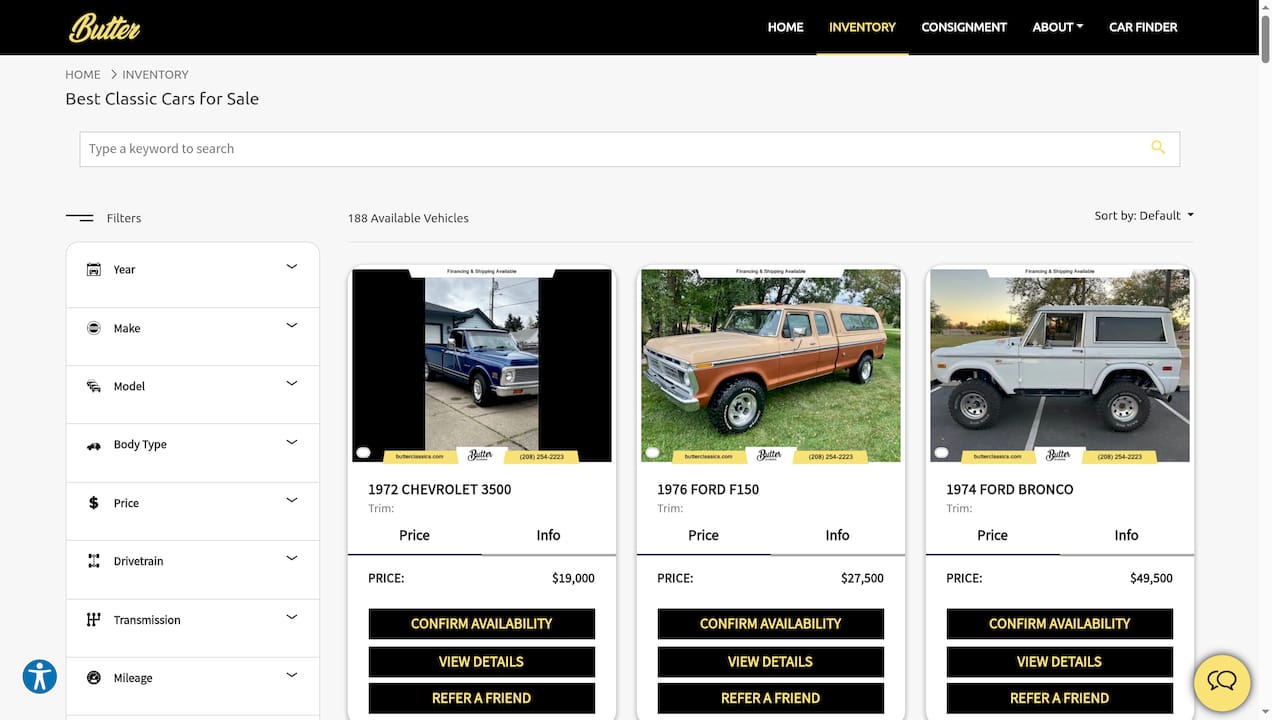
- Start financing prequalification through our homepage to see your estimated range.
- Browse classic cars, muscle cars, and vintage trucks that fit your approved amount.
- Considering selling first? Our consignment service can help fund your next purchase.
Once you've got a number in hand, gather your documents and schedule a test drive or request a quote on the vehicle you've got your eye on. For additional lender-shopping tactics, Elmwood Auto Sales also publishes a buyer's guide to preapproval worth a look.
FAQ
Which bank is best for classic car loans?
There's no single best bank for every buyer. Start with a bank or credit union where you already have an account, then compare rates against a specialty classic lender if you need more flexible valuation standards for an older or modified vehicle.
What is the $3,000 rule for cars?
This isn't an official lending rule, and definitions vary depending on where you encounter it. Some buyers use it informally to describe a minimum down payment target, but your actual down payment should be based on the vehicle's appraised value and your lender's loan-to-value limits.
How hard is it to get an auto loan for a classic car?
It's harder than financing a standard used car because approval depends on an appraisal and clean title, not just your credit. Buyers with strong credit, a solid down payment, and documentation like service records and comps tend to move through the process more smoothly.
Does GM Financial preapprove classic cars?
We don't have published details confirming whether GM Financial offers preapproval specifically for classic or collector vehicles. Check directly with the lender, or consider a credit union or specialty classic lender that explicitly advertises classic car loan programs.
Sources
For more detail, see the CFPB, FTC, and Experian resources linked throughout this guide.
- The Auto Buyer Study: Lessons from in-depth consumer interviews and related research — FTC
- How to get preapproved for a car loan — Experian
- CFPB: How will shopping for an auto loan affect my credit?