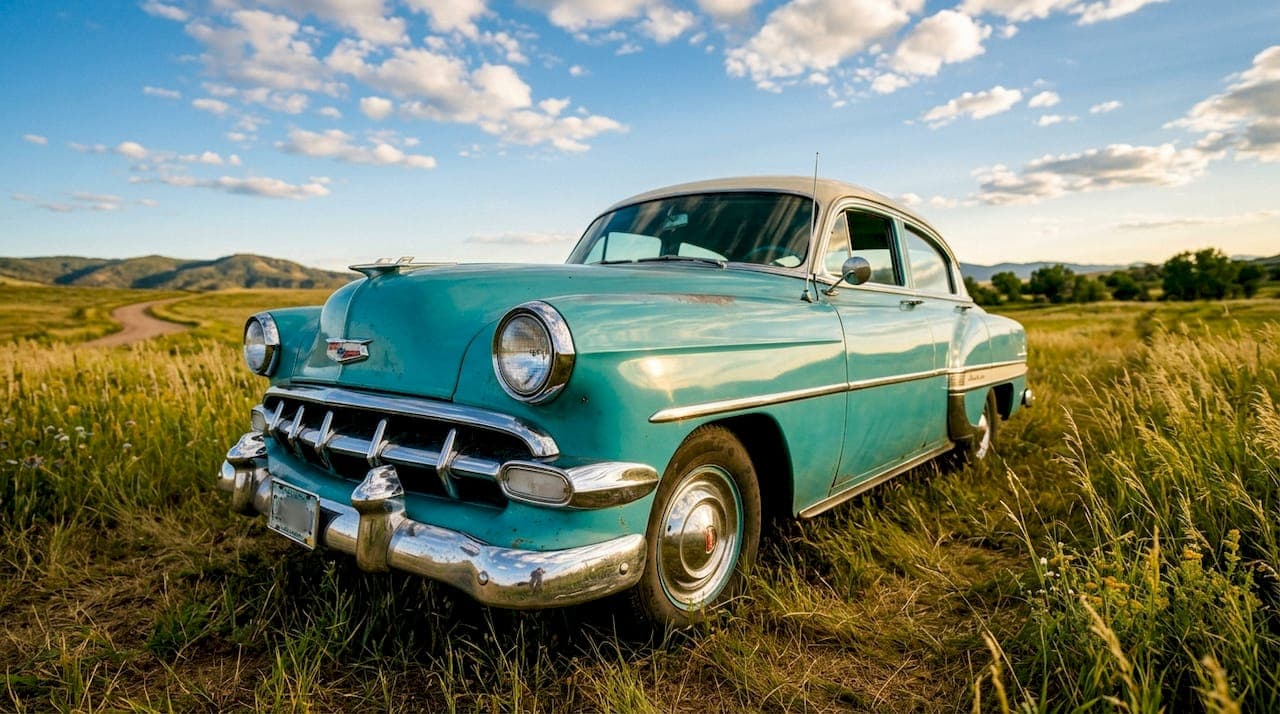
Chrome trim is the single most recognizable feature that separates a true vintage automobile from everything else on the road. No other design element captures the spirit of mid-century American car culture the way a mirror-bright bumper or a gleaming grille does. Understanding why chrome trim defines vintage cars means understanding the intersection of art, engineering, and cultural ambition that produced the greatest automotive era in history. For collectors and enthusiasts, chrome is not decoration. It is provenance, identity, and value rolled into one brilliant surface.
Why chrome trim defines vintage cars through design
Chrome trim earns its place on a vintage car by doing something no paint or plastic can replicate: it catches and reflects light in a way that makes every curve feel intentional. The reflective quality of polished chrome acts as a visual amplifier. It draws the eye along a fender line, frames a headlight housing, and gives a grille the kind of presence that stops people cold in a parking lot.
The design function of chrome goes well beyond decoration. Chrome frames key structural features, including window surrounds, door handles, hood ornaments, and rocker panels, turning functional hardware into deliberate design statements. The contrast between a deep lacquer body color and a chrome accent creates visual depth that flat or matte finishes simply cannot achieve. That contrast is why a 1957 Chevrolet Bel Air or a 1955 Ford Thunderbird reads as a complete, finished design rather than a collection of parts.
Collectors who have studied classic car designers know that the great stylists of the postwar era, from Harley Earl at General Motors to Virgil Exner at Chrysler, used chrome as a compositional tool. Chrome defined the horizontal speed lines that made cars look fast at a standstill. It capped tailfins and wrapped bumpers to give mass to the rear of a vehicle. Every piece of trim was placed with purpose.
- Reflectivity: Chrome catches ambient light and creates highlights that emphasize body sculpting.
- Contrast: Dark body colors paired with chrome produce depth that increases perceived quality.
- Framing: Chrome surrounds windows, grilles, and headlights to organize the visual hierarchy of a car's face.
- Continuity: Horizontal chrome strips unify a car's side profile and create a sense of forward motion.
- Finish quality: The condition of chrome signals overall care and restoration quality to any informed buyer.
Pro Tip: When evaluating a vintage car, crouch to eye level and look along the chrome strips in natural light. Waves, pits, or dull patches visible from that angle indicate deeper problems than surface polishing can fix.
What made chrome the symbol of an era?

Chrome trim symbolized post-war optimism, economic prosperity, and the "Jet Age" ethos that defined American culture through the 1950s and into the early 1960s. After years of wartime rationing and industrial austerity, American consumers wanted abundance. Automakers delivered it in chrome.
The numbers confirm how total that commitment was. In the 1950s, chrome comprised 80–90% of the decorative exterior trim on U.S. vehicles. That figure reflects a deliberate industry decision to make chrome the default language of quality and aspiration. A car without generous chrome trim was a car that looked unfinished, or worse, cheap.
"Chrome was a potent cultural symbol representing a golden era where automotive design celebrated optimism, innovation, and prosperity. It offered a visual bridge that made radical avant-garde designs more accessible by providing familiar luxury cues to consumers."
— Chrome and Confidence: The Golden Age of American Car Design
That cultural function mattered commercially. Chrome balanced avant-garde engineering with consumer-friendly design cues, easing market acceptance of new styles. Buyers who might have been unsettled by a dramatically new body shape felt reassured by the familiar gleam of chrome trim. It was the design equivalent of a firm handshake.
The commercial stakes were real. Cars with insufficient chrome struggled in the marketplace during the 1950s, showing how deeply consumer expectations were tied to chrome as a standard of quality. The Studebaker Hawk's commercial difficulties before Brooks Stevens added chrome detailing stand as a clear case study. Chrome was not optional. It was the price of admission.

Technical benefits of chrome on classic vehicles
Chrome plating provides a measurable protective function, not just a visual one. The electroplating process bonds a layer of chromium to a base metal, creating a barrier against moisture, road salt, and oxidation. That barrier is why original chrome trim on a well-maintained 1960s vehicle can still look presentable today, decades after production.
Maintenance determines how long that protection lasts. The sequence below reflects what professional restorers recommend for keeping vintage chrome in top condition.
- Wash regularly with a pH-neutral soap to remove road grime before it bonds to the surface.
- Dry immediately after washing to prevent water spots, which etch into chrome over time.
- Apply a dedicated chrome polish using a soft microfiber cloth in straight, overlapping strokes.
- Inspect for early pitting by running a fingertip across the surface. Rough texture signals oxidation beneath the plating.
- Seal with a chrome protectant or carnauba wax to slow future oxidation.
Pro Tip: Pitting in chrome results from oxidation beneath the plating layer, not on top of it. Surface polishing offers only temporary improvement once pitting begins. Catch it early, or plan for rechroming.
When original chrome reaches the end of its serviceable life, professional rechroming is the correct path for a serious restoration. Triple-plate rechroming, the process used for concours-quality work, costs £150–£400 per bumper and produces finishes that last 15–20 years under proper maintenance. That investment is significant, but it is the only way to restore the depth and reflectivity that original factory chrome delivers.
| Restoration option | Quality level | Typical longevity |
|---|---|---|
| Original factory chrome | Highest depth and reflectivity | Decades with proper care |
| Professional triple-plate rechrome | Concours-grade finish | 15–20 years |
| Reproduction aftermarket trim | Variable, often inferior | Shorter, finish-dependent |
| Donor vehicle original trim | High, if condition is good | Matches original lifespan |
How does chrome condition affect vintage car value?
Chrome condition is one of the first things a knowledgeable collector checks, and it directly affects what a car is worth. Original chrome plating has superior reflectivity and depth compared to most reproduction parts, making it the preferred choice for concours-level restorations and investment-grade purchases. A car with original, unrestored chrome in excellent condition commands a premium that reproduction trim simply cannot justify.
Collectors weigh several factors when assessing chrome's impact on value:
- Originality: Matching numbers trim with factory chrome carries the highest provenance value.
- Condition grade: Pitting, peeling, or bubbling chrome signals deferred maintenance and reduces asking price.
- Reproduction quality: Not all aftermarket trim is equal. Thin-plate reproductions look flat and age poorly.
- Sourcing difficulty: Rare or model-specific trim pieces are hard to replace. Their presence in good condition adds real value.
- Restoration documentation: Receipts for professional rechroming from a reputable shop support a higher asking price.
For rare vintage models, sourcing original chrome trim from donor vehicles is often more practical than aftermarket reproductions. Specialized pieces, including rubber-inlaid strips and model-specific body-side trim, are frequently unavailable in reproduction form or available only in inferior quality. A collector who locates a clean donor car with intact trim has found something genuinely useful.
The classic car market trends in 2026 confirm that chrome authenticity remains a top-tier valuation factor. The global automotive chrome trim market is projected to grow at a 5.6% CAGR from 2026 through 2034. That growth reflects renewed collector and enthusiast demand, not just new vehicle production. Chrome is not fading. It is appreciating.
Key Takeaways
Chrome trim defines vintage car identity through its reflective design function, cultural symbolism, protective properties, and direct impact on collector value.
| Point | Details |
|---|---|
| Chrome dominated 1950s design | 80–90% of exterior trim on U.S. vehicles in the 1950s was chrome, setting the standard for quality. |
| Cultural symbol of prosperity | Chrome represented post-war optimism and made bold new designs feel familiar and desirable to buyers. |
| Protection and longevity | Chrome plating resists corrosion; professional rechroming lasts 15–20 years with proper upkeep. |
| Original chrome commands a premium | Factory chrome's depth and reflectivity outperform reproductions and directly raise a car's market value. |
| Early maintenance prevents costly repairs | Pitting originates beneath the plating; catching oxidation early avoids full rechroming expenses. |
Chrome never gets old, and here's why that matters to me
I have looked at a lot of vintage cars over the years, and the ones that stop me every single time are the ones with chrome that still does its job. Not polished to a showroom trick, but genuinely right. Deep, reflective, and honest about what the car is.
The mistake I see collectors make most often is treating chrome as a cosmetic afterthought. They budget for paint, for mechanical work, for upholstery, and then they run out of money before addressing trim that is pitting or peeling. That is backwards. Chrome condition is the first thing a serious buyer reads. It tells them whether the previous owner cared, and whether the car was stored properly, and whether the restoration was done right or done cheap.
What surprises people is how much the chrome restoration process varies in quality. Triple-plate rechroming from a reputable shop looks nothing like a thin-plate job from a budget plater. The difference shows immediately in natural light. If you are buying a restored car, ask specifically who did the chrome work and whether you can see receipts.
Chrome is also the one element of vintage car design that modern vehicles have genuinely failed to replace. Plastic chrome film, anodized trim, and painted accents all try to approximate what real electroplated chromium does. None of them succeed. That gap is exactly why original chrome on a well-preserved classic feels so irreplaceable. It is not nostalgia. It is quality that the industry has not matched since.
— Tony
Authentic chrome trim at Butterclassics
Butterclassics specializes in classic and vintage vehicles where chrome condition is part of every evaluation. If you have read this far, you already know that chrome is not a detail. It is a signal of the whole car's quality and history.

The Butterclassics certified vehicle inventory includes cars where chrome authenticity has been assessed as part of the certification process. Whether you are looking for a 1950s cruiser with factory trim intact or a muscle car with professionally restored brightwork, the team at Butterclassics can point you in the right direction. Browse the full classic car inventory and reach out directly if you want expert guidance on what to look for in chrome condition before you buy.
FAQ
Why is chrome trim so common on vintage cars?
Chrome trim dominated vintage car design because it signaled quality, luxury, and modernity to postwar American consumers. In the 1950s, chrome comprised 80–90% of decorative exterior trim on U.S. vehicles, making it the industry standard for prestige.
Does chrome condition affect a classic car's resale value?
Yes, directly. Original chrome in excellent condition commands a premium over reproduction trim because of its superior depth, reflectivity, and provenance value. Pitting or peeling chrome reduces asking price and signals deferred maintenance to informed buyers.
What is the difference between original and reproduction chrome trim?
Original factory chrome has greater depth and reflectivity than most aftermarket reproductions. For concours-level restorations, professional triple-plate rechroming is the preferred alternative when original trim is beyond saving.
How do you stop chrome from pitting on a vintage car?
Pitting originates from oxidation beneath the chrome layer, so surface polishing alone will not stop it. Early detection through regular inspection, combined with proper sealing and protection, is the only way to prevent pitting from becoming irreversible damage.
Is chrome trim still relevant for collectors in 2026?
Absolutely. The global automotive chrome trim market is projected to grow at a 5.6% CAGR from 2026 through 2034, driven by collector demand and restoration activity. Chrome authenticity remains one of the top valuation factors in the classic car market.